Human Impact: Biodiversity, Pollution & Conservation
Học bằng cách chơi
Trả lời những câu hỏi này để kiếm năng lượng, rồi câu cá và khám phá. Không cần tài khoản.
Ghi chú bài học
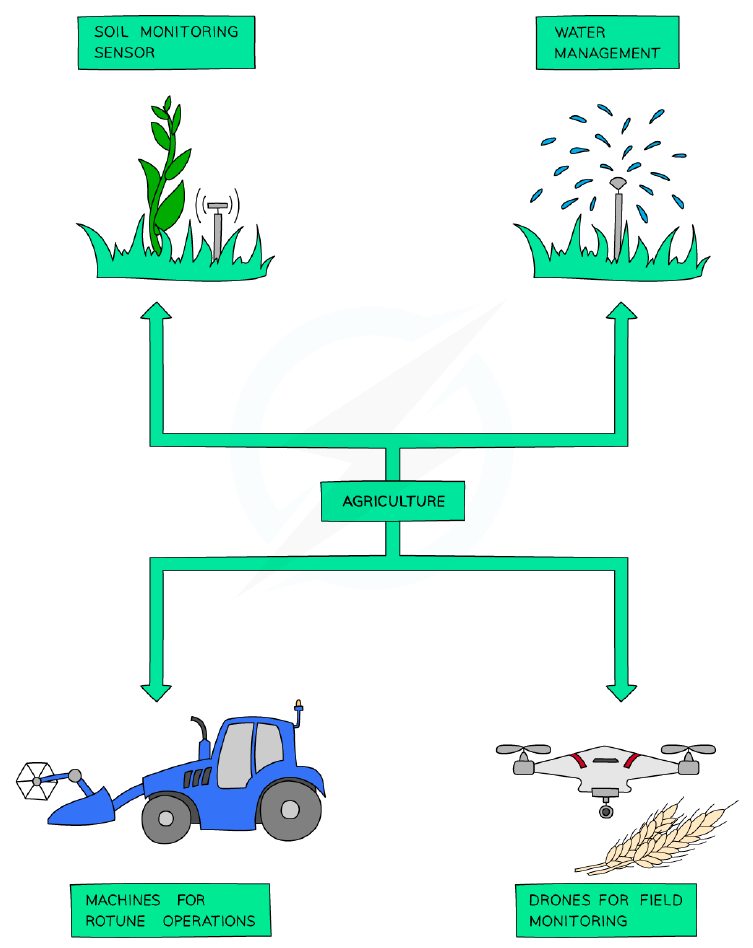
Ensuring Food Supply
- Intensive food production uses modern technology to produce food more efficiently on finite land.
- Agricultural machinery enables farming of larger areas, replacing human labour.
- Chemical fertilisers increase soil nutrient availability, boosting plant growth and yield.
- Insecticides kill pests that damage crops; herbicides remove competing weeds.
- Selective breeding produces high-yielding crop varieties and livestock breeds.
- Intensive livestock farming reduces energy loss by keeping animals in small spaces, feeding high-energy food, using antibiotics, and maintaining warm temperatures.
- Advantages: less land needed, year-round production, lower costs. Disadvantages: ethical concerns, habitat destruction, reduced biodiversity, methane emissions, water pollution from waste.
Modern intensive agricultural technology
Monocultures
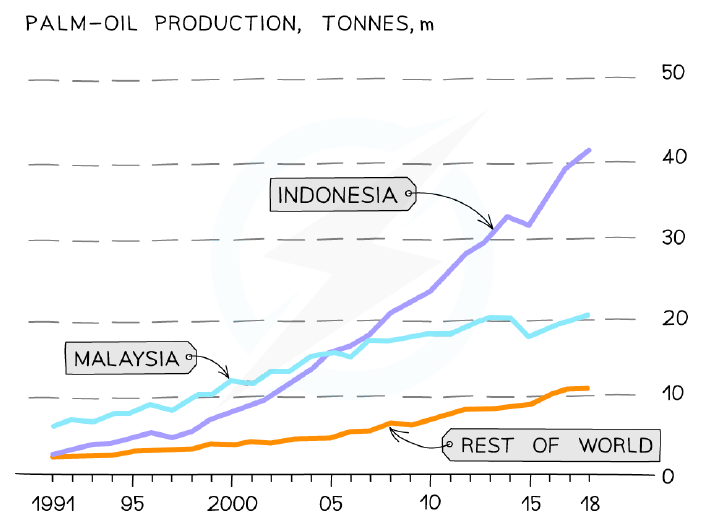
- Monoculture is growing only one crop species over a large area (e.g., palm oil plantations).
- Advantages: specialised machinery, optimised conditions, higher yields.
- Disadvantages: reduces biodiversity – few herbivore species can feed, so few predators survive.
- Pest populations increase due to abundant food; repeated insecticide use leads to pesticide resistance and kills non-target insects.
Palm oil production as a monoculture
The Importance of Biodiversity
- Biodiversity is the number of different species in an area; high biodiversity is needed for stable ecosystems.
- Human activities, especially habitat destruction, reduce biodiversity.
- Habitat destruction is driven by the increasing human population needing space for agriculture, housing, and industry.
- Destruction of habitats interrupts food chains and webs, causing further species loss.
Deforestation
- Deforestation is large-scale clearing of trees, often for cattle grazing, monocultures, or building.
- If trees are replanted, it can be sustainable; otherwise, it causes severe environmental harm.
- Undesirable effects: extinction of species, loss of soil (erosion), flooding, and increased CO₂ in the atmosphere.
Water Pollution
- Water pollutants include untreated sewage, excess fertilisers, and industrial/agricultural chemicals.
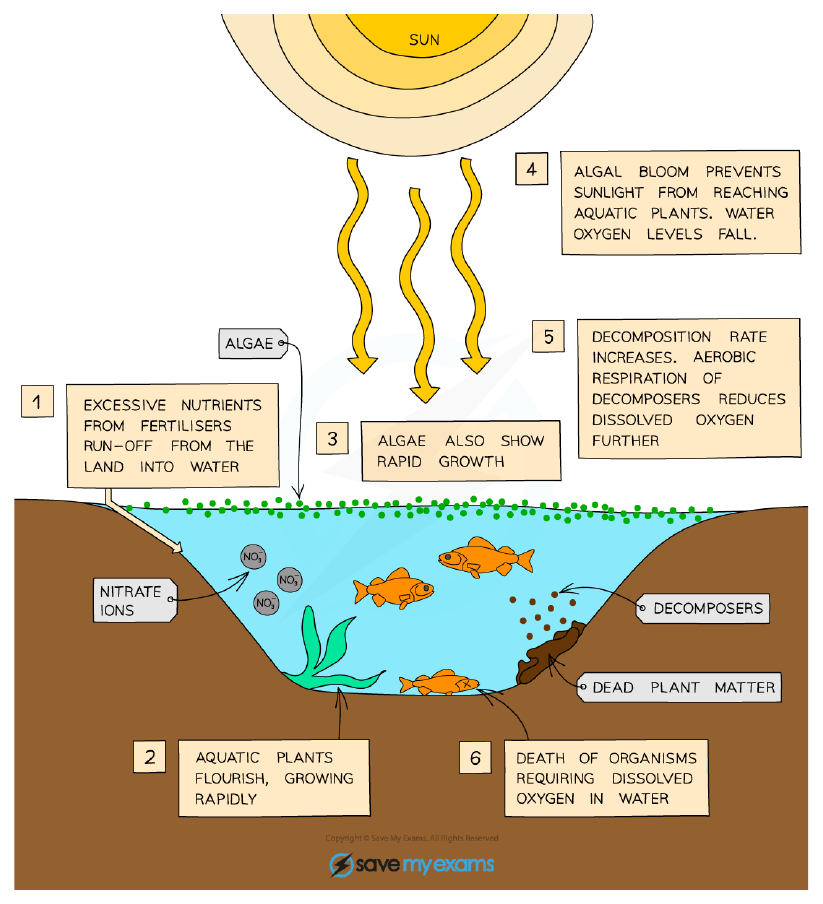
- Untreated sewage increases bacteria, which deplete oxygen, killing aquatic life (eutrophication).
- Excess fertiliser runoff causes algal blooms that block sunlight; plants die, decomposers use up oxygen, leading to fish kills.
- Other sources: oil spills, toxic chemicals from industry, and plastic waste.
Sequence of events causing eutrophication
Other Pollution
- Plastic pollution: non-biodegradable; animals ingest or become entangled; toxins enter food chains; on land, landfills release toxins into soil.
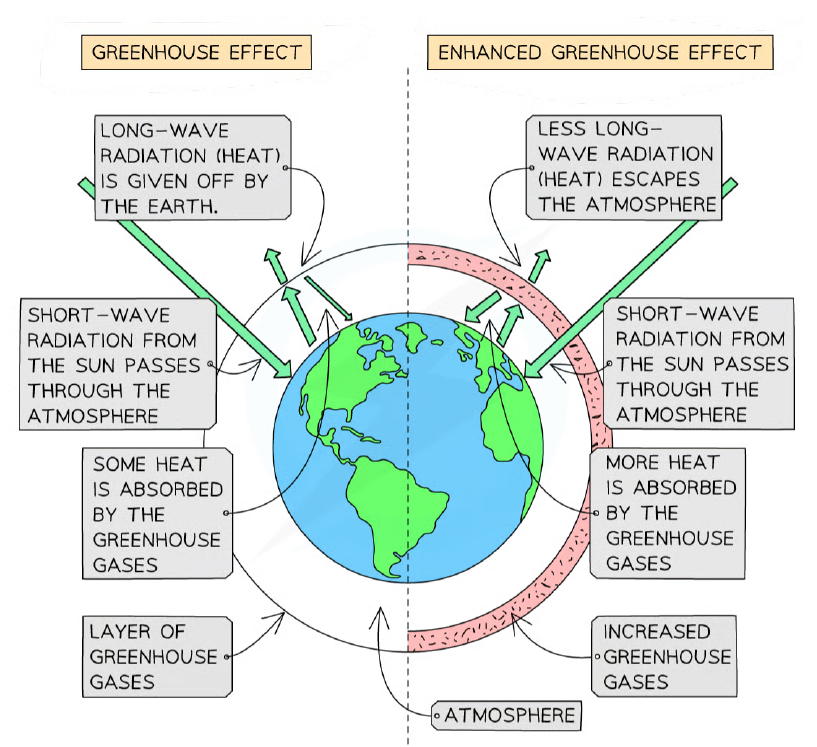
- Air pollution: methane (from cattle, rice paddies, landfills) and carbon dioxide (from burning fossil fuels/deforestation) are greenhouse gases.
- Increased greenhouse gases cause global warming and climate change; melting permafrost releases more methane.
The greenhouse effect and enhanced greenhouse effect
Sustainability
- A sustainable resource is produced as fast as it is used, so it does not run out.
- Fossil fuels are non-renewable; we must reduce use and find alternatives.
- Recycling paper, plastic, glass, and metal reduces waste and raw material demand.
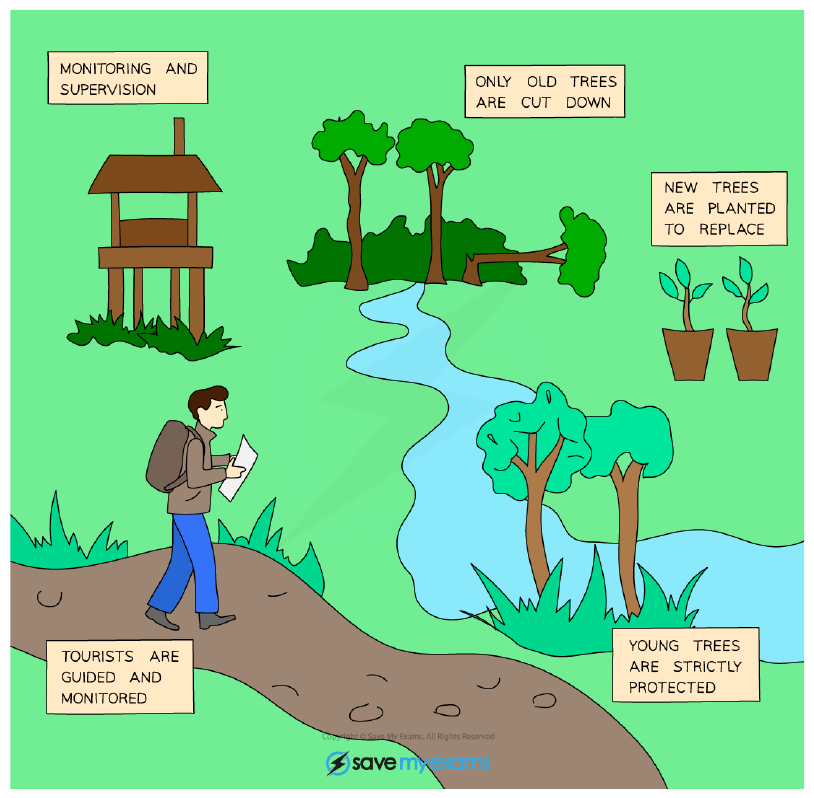
- Sustainable forestry: replant trees, use certification schemes (e.g., Forestry Stewardship Council), educate consumers.
- Sustainable fishing: quotas, size limits, seasonal bans, restocking, and consumer education.
Sustainable forest management
Endangered Species & Conservation
- An endangered species is at risk of extinction due to hunting, climate change, pollution, habitat loss, or invasive species.
- Conservation measures: education programmes, captive breeding, legal protection of species and habitats, seed banks for plants.
- Captive breeding can use artificial insemination (AI) to transport sperm between zoos, and in vitro fertilisation (IVF) to maintain genetic diversity.
- Low genetic variation makes a species more vulnerable to environmental change and extinction.
Reasons for Conservation
- Conservation maintains biodiversity for stable ecosystems, reduces extinction, and protects vulnerable habitats.
- It maintains ecosystem functions like nutrient cycling (e.g., carbon cycle).
- Provides resources: food, drugs (plant-based remedies), fuel, and genes for wide gene pools.
- Moral, cultural, and scientific reasons: preserving species for future generations and potential discoveries.
Slide
Sign up free to view the lesson slides
Step through every slide for this topic — plus flashcards and revision notes — with a free account.
Câu hỏi luyện tập
Xem trước miễn phí — 8 trên 65 câu hỏi. Đăng ký để xem tất cả.
1.Which of the following is a greenhouse gas released by cattle farming?
Easy- AMethane
- BOxygen
- CNitrogen
- DHydrogen
2.What is the definition of biodiversity?
Easy- AThe number of different species in a particular area
- BThe total number of organisms in an ecosystem
- CThe variety of genes within a population
- DThe range of different habitats in a region
3.Which of the following is an undesirable effect of deforestation?
Easy- AIncrease in carbon dioxide in the atmosphere
- BDecrease in soil erosion
- CIncrease in biodiversity
- DDecrease in flooding
4.Which method is used to conserve endangered plant species by storing seeds?
Easy- ASeed banks
- BCaptive breeding
- CArtificial insemination
- DIn vitro fertilisation
5.In eutrophication, what causes the decrease in dissolved oxygen in water?
Medium- ADecomposing bacteria respiring aerobically
- BAlgae producing oxygen during photosynthesis
- CFish consuming oxygen
- DFertilisers directly reacting with water
6.Which of the following is a sustainable resource?
Easy- AWood from replanted forests
- BCoal
- COil
- DNatural gas
7.Which of the following is a reason for conserving biodiversity?
Easy- ATo maintain nutrient cycles
- BTo increase the rate of extinction
- CTo reduce the number of species
- DTo decrease ecosystem stability
8.Why does a monoculture increase pest populations?
Medium- AIt provides a continuous food supply for the pest
- BIt reduces the number of predators
- CIt increases genetic diversity of the crop
- DIt eliminates all other plant species
Unlock all 65 questions & more
Tạo tài khoản miễn phí để xem mọi câu hỏi, slide, thẻ ghi nhớ và ghi chú ôn tập cho chủ đề này.