Inheritance, Genes & Cell Division
Học bằng cách chơi
Trả lời những câu hỏi này để kiếm năng lượng, rồi câu cá và khám phá. Không cần tài khoản.
Ghi chú bài học
Chromosomes, Genes & Proteins
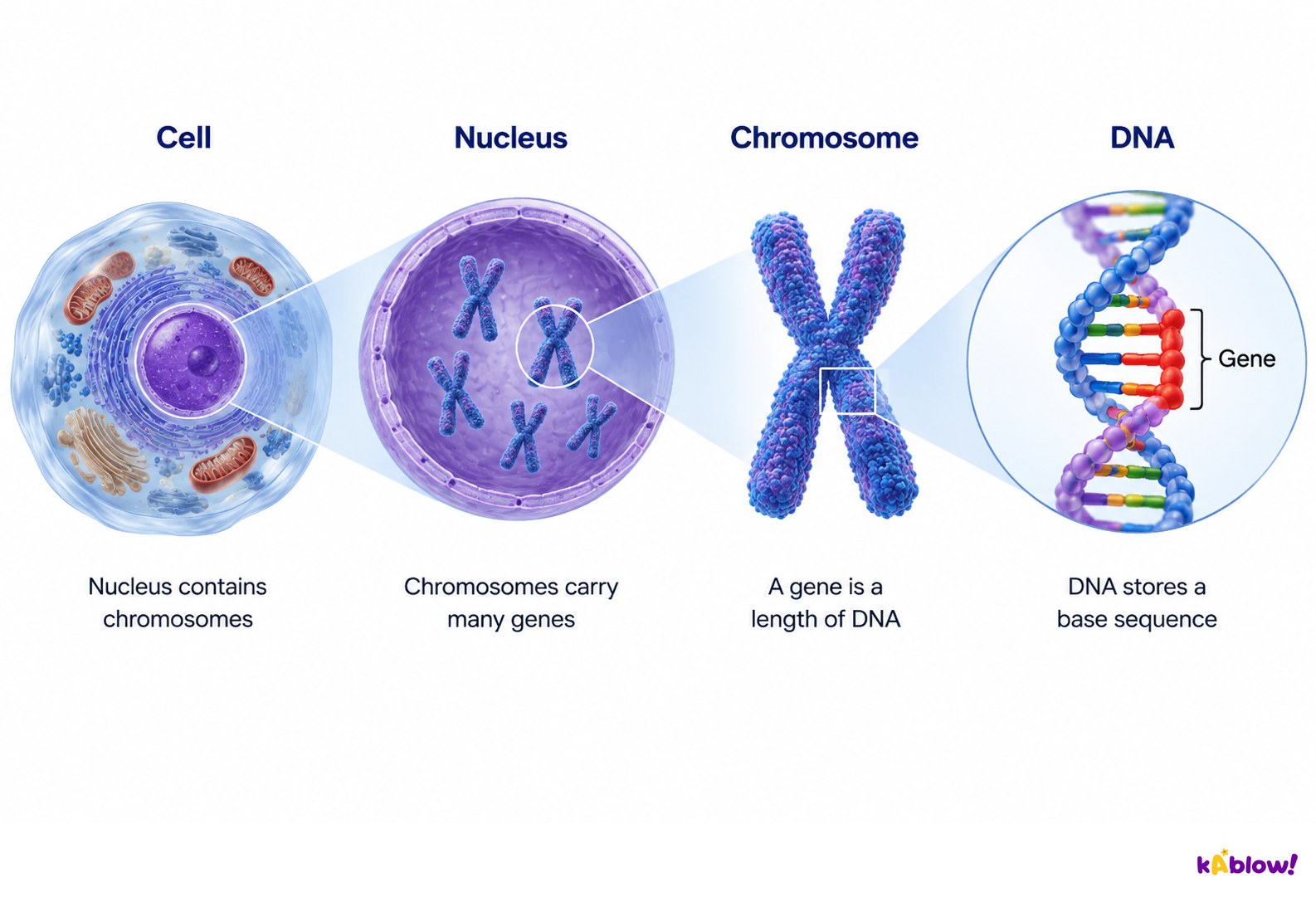
- Inheritance is the transmission of genetic information from generation to generation.
- Chromosomes are thread-like structures of DNA in the nucleus, carrying genes.
- A gene is a short length of DNA on a chromosome that codes for a specific protein.
- Alleles are different versions of the same gene; individuals inherit two alleles (one from each parent).
- The sequence of bases in a gene determines the sequence of amino acids in a protein.
Zooming from cell to gene
The Inheritance of Sex
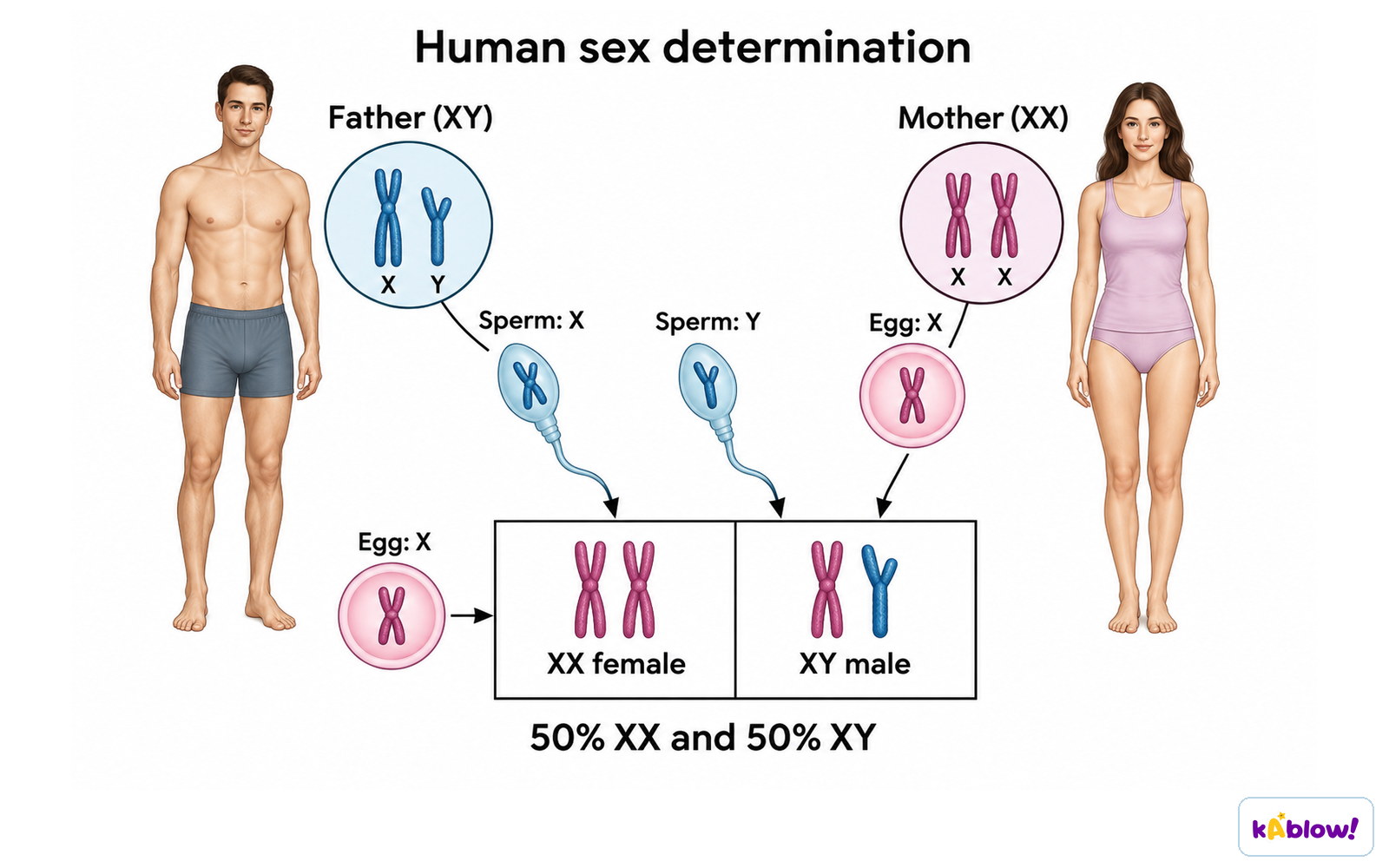
- Sex is determined by the sex chromosomes: XX = female, XY = male.
- The father determines the sex of offspring because he can pass on either an X or a Y chromosome.
- Half of sperm carry X, half carry Y; if an X sperm fertilises the egg, the baby is female (XX); if a Y sperm, male (XY).
- A Punnett square with X and Y chromosomes shows a 1:1 ratio of male:female offspring.
Protein Synthesis (Extended)
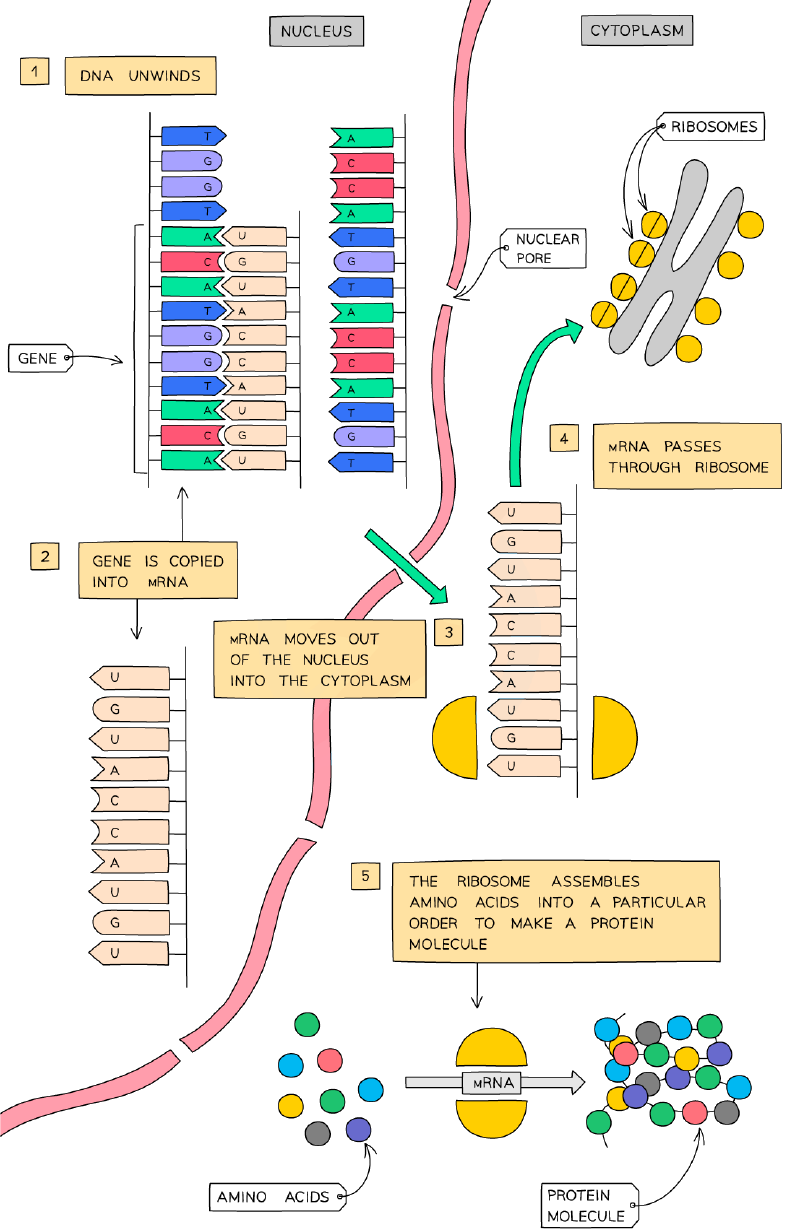
- Transcription: DNA base code is copied onto mRNA in the nucleus.
- Translation: mRNA attaches to a ribosome; the ribosome reads codons (triplets) and assembles amino acids.
- tRNA brings specific amino acids to the ribosome, matching anticodons to mRNA codons.
- The amino acid chain folds to form a functional protein (e.g., enzyme, antibody).
Protein synthesis
Which Proteins are Synthesised? (Extended)
- Gene expression controls whether a gene is transcribed/translated in a cell.
- Most genes are 'switched off' to save energy; only essential genes are expressed.
- All body cells contain the same genes, but different cells express different genes.
- DNA controls cell function by directing protein production.
Mitosis
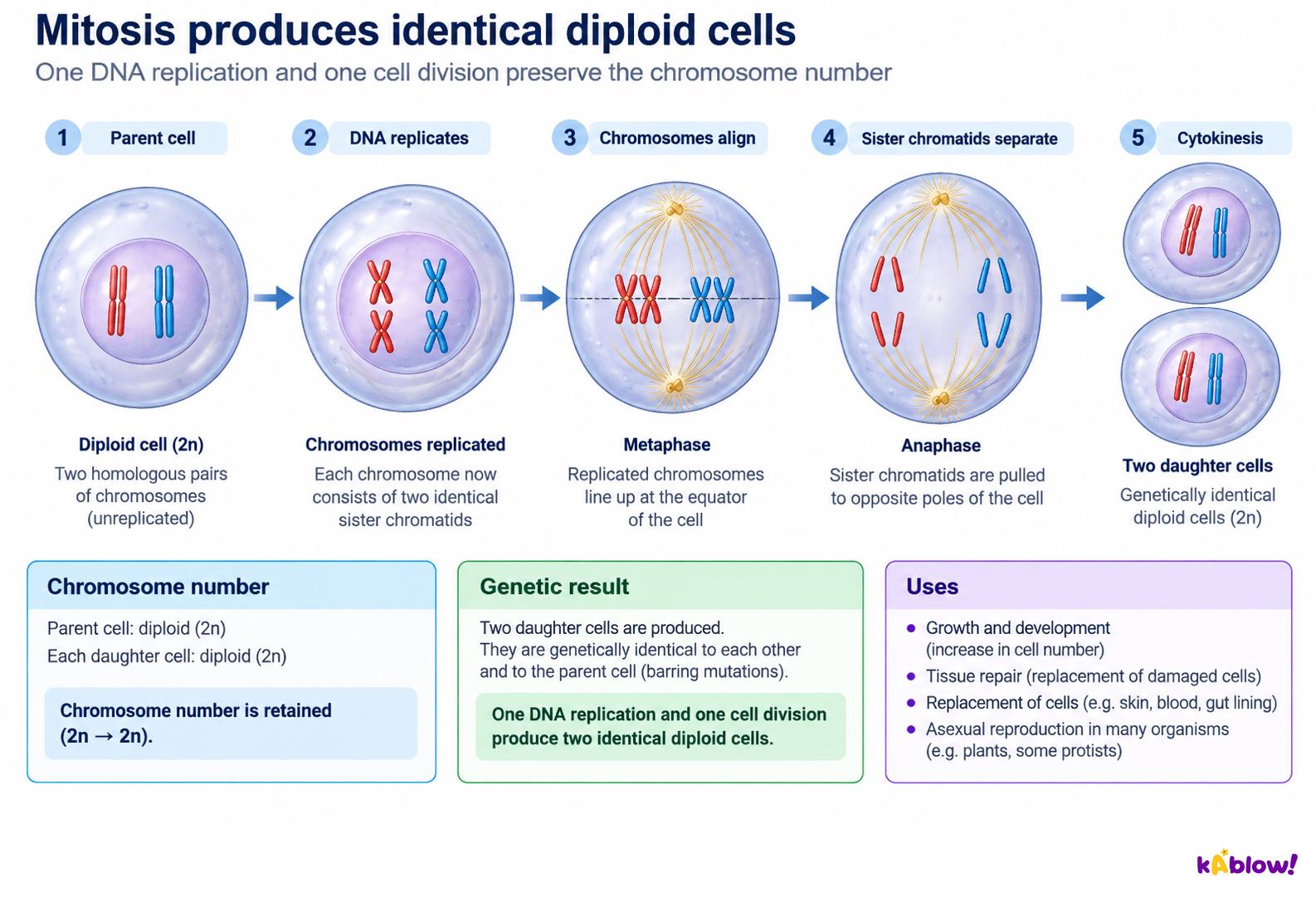
- Mitosis is nuclear division producing two genetically identical daughter cells.
- Chromosomes duplicate before division, then line up and are pulled apart.
- Used for growth, repair, replacement of cells, and asexual reproduction.
- Daughter cells are diploid (same chromosome number as parent).
Mitosis
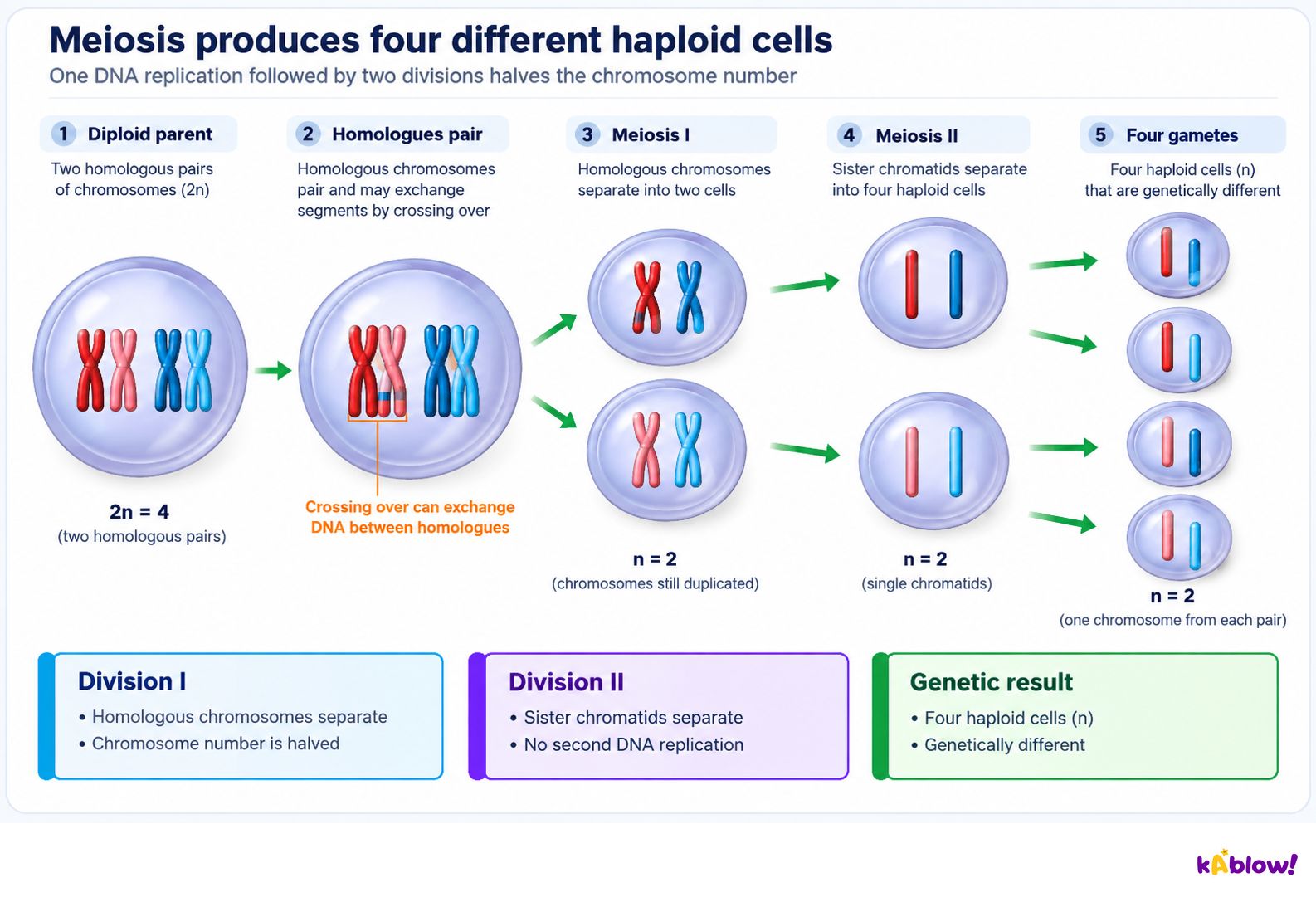
Meiosis (Extended)
- Meiosis is a reduction division producing four haploid gametes (genetically different).
- Chromosomes duplicate, then the cell divides twice; homologous chromosomes separate in the first division.
- Produces genetic variation via recombination and independent assortment.
- Gametes (sperm, egg) have half the chromosome number of body cells.
Meiosis
Monohybrid Inheritance
- Monohybrid inheritance involves a single gene with two alleles (dominant/recessive).
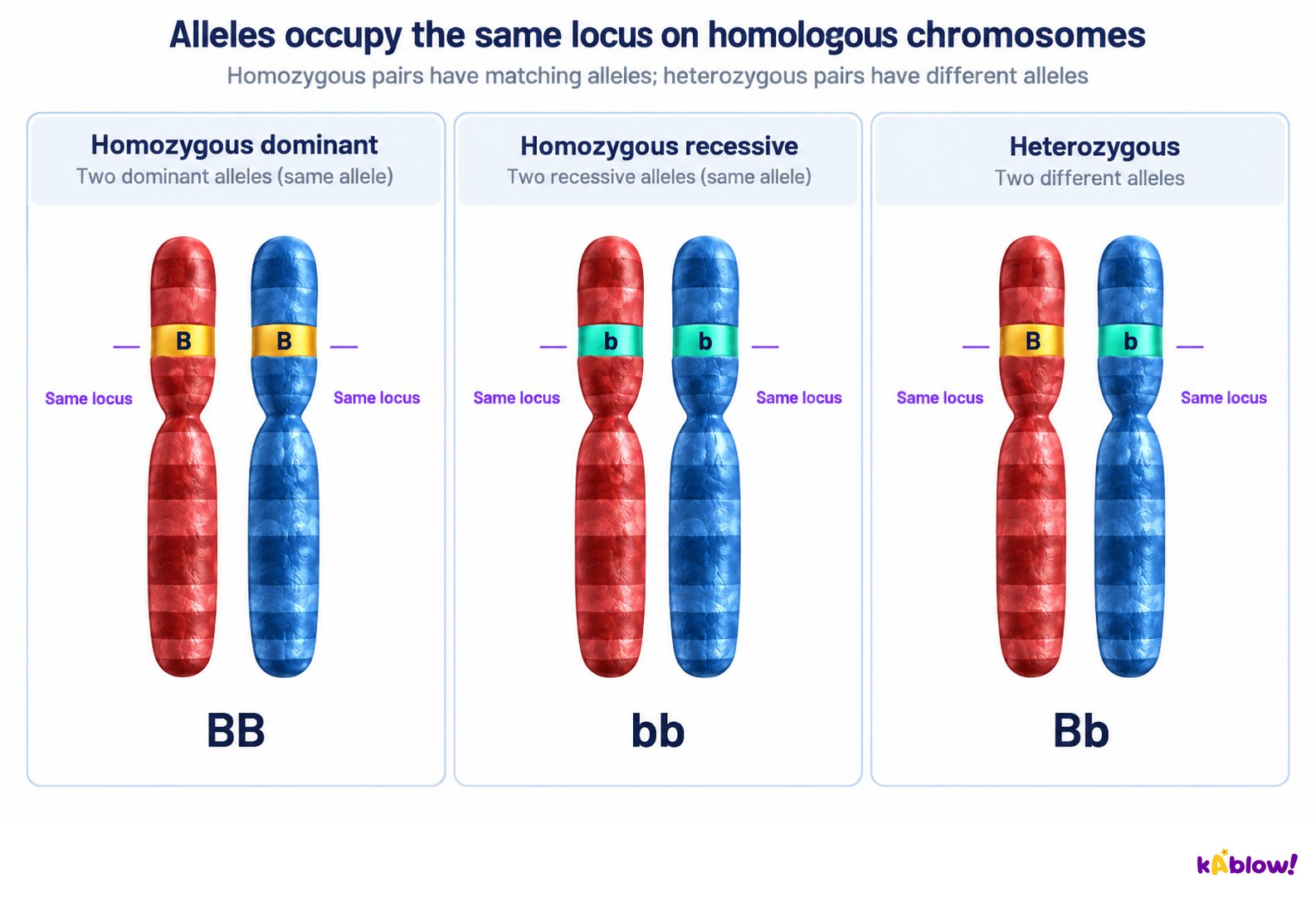
- Genotype = allele combination; phenotype = observable characteristic.
- Homozygous = two identical alleles; heterozygous = two different alleles.
- A Punnett square predicts offspring genotypes and phenotypes; e.g., Tt × tt gives 1:1 tall:short.
- Test cross (cross with recessive homozygote) reveals if a dominant phenotype is homozygous or heterozygous.
Codominance & Sex-Linked Characteristics (Extended)
- Codominance: both alleles contribute to phenotype (e.g., ABO blood groups: IA and IB are codominant).
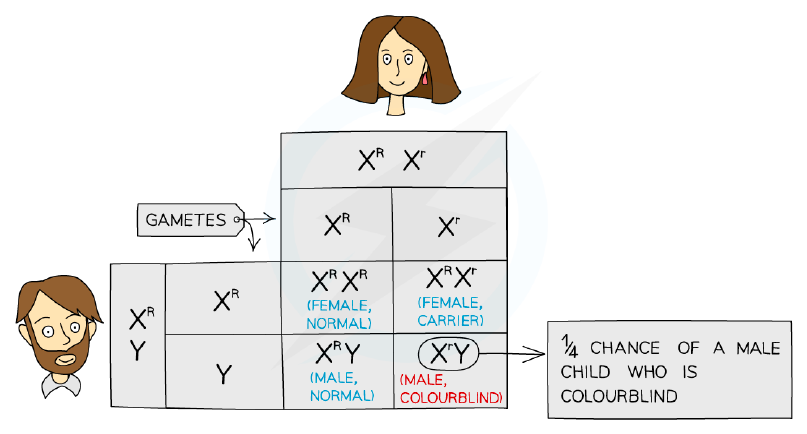
- Sex-linked genes are on the X chromosome; males (XY) are more likely to show recessive conditions (e.g., colour blindness).
- Females can be carriers (heterozygous) and pass the allele to sons.
- Punnett squares for sex-linked traits use X and Y chromosomes with alleles as superscripts.
Punnett square for a sex-linked condition
Slide
Sign up free to view the lesson slides
Step through every slide for this topic — plus flashcards and revision notes — with a free account.
Câu hỏi luyện tập
Xem trước miễn phí — 8 trên 52 câu hỏi. Đăng ký để xem tất cả.
1.What does the term haploid mean?
Easy- AA nucleus containing two sets of chromosomes.
- BA nucleus containing a single set of chromosomes.
- CA person with only one X chromosome.
- DA person with XXY chromosomes.
2.When a somatic (body) cell undergoes cell division, two daughter cells are produced with the same chromosome number as the parent cell. Which type of division has taken place?
Easy- AMeiosis producing genetically different cells.
- BMitosis producing genetically identical cells.
- CMeiosis producing genetically identical cells.
- DMitosis producing genetically different cells.
3.Which shows the correct size order of structures, starting with the smallest?
Easy- Agene → DNA strand → chromosomes → nucleus
- BDNA strand → chromosomes → gene → nucleus
- Cchromosomes → gene → DNA strand → nucleus
- Dnucleus → chromosomes → DNA strand → gene
4.Males and females have a unique set of chromosomes. What is the correct combination of male and female chromosomes?
Easy- AMale XY, Female YY
- BMale YX, Female XY
- CMale XY, Female XX
- DMale XX, Female XY
5.Albinism is a condition caused by a recessive allele. If both parents have albinism, what are the chances of the offspring being an albino child?
Easy- A0%
- B25%
- C75%
- D100%
6.Which of the following structures in plant cells carry out protein synthesis under the control of the nucleus?
Easy- ARibosomes
- BChloroplasts
- CMitochondria
- DCell walls
7.A woman who is a carrier for a recessive sex-linked condition has a child with a man who is unaffected. What is the percentage chance that their daughter will show the condition?
Medium- A0%
- B25%
- C50%
- D75%
- 8.Medium
Which row in the table shows a comparison between meiosis and mitosis?
Process Number of daughter cells Genetic variation Chromosome number in daughter cells Number of cell divisions Mitosis 2 Identical Diploid 1 Meiosis 4 Different Haploid 2 - Amitosis produces 4 daughter cells; meiosis produces 2 daughter cells
- Bmitosis produces genetically identical cells; meiosis produces cloned cells
- Cmitosis daughter cells are diploid; meiosis daughter cells are haploid
- Dmitosis involves two cell divisions; meiosis involves four cell divisions
Unlock all 52 questions & more
Tạo tài khoản miễn phí để xem mọi câu hỏi, slide, thẻ ghi nhớ và ghi chú ôn tập cho chủ đề này.