Reproduction In Plants & Humans
Học bằng cách chơi
Trả lời những câu hỏi này để kiếm năng lượng, rồi câu cá và khám phá. Không cần tài khoản.
Ghi chú bài học
Asexual Reproduction
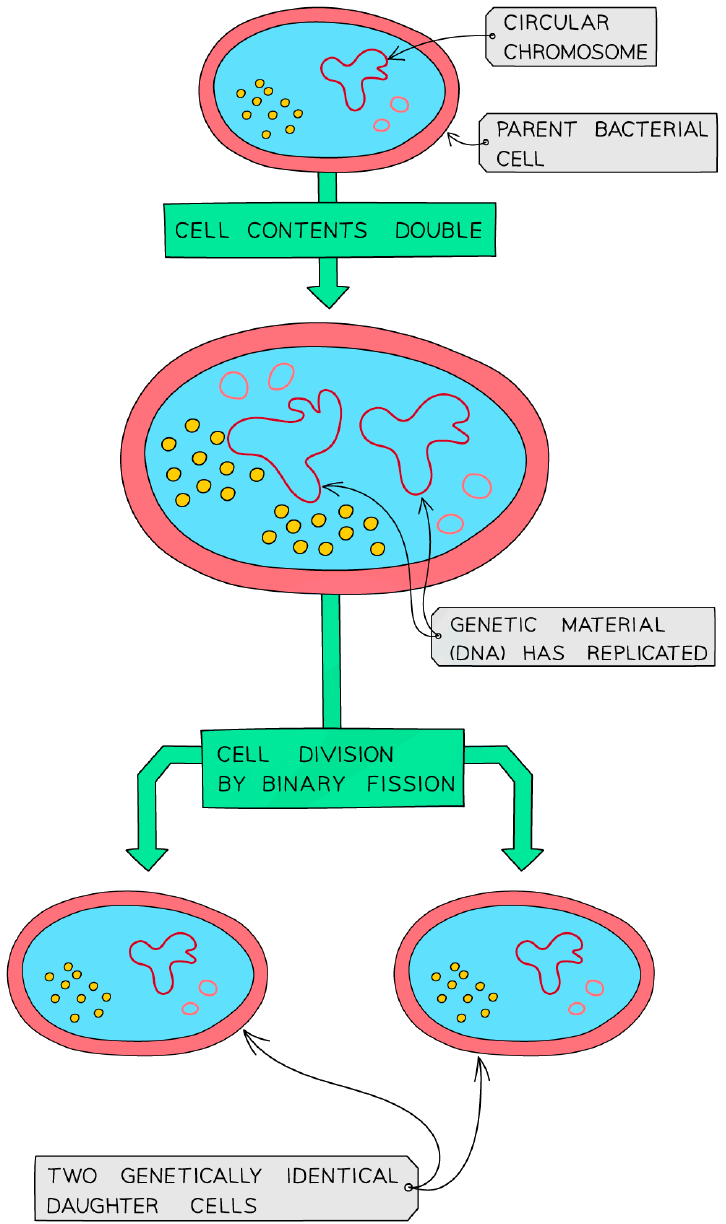
- Asexual reproduction involves one parent, no gametes, no fertilisation.
- Offspring are genetically identical to the parent (clones).
- Examples: bacteria by binary fission; plants by bulbs, tubers, runners.
- Advantages: rapid population growth, exploits suitable environments, energy-efficient.
- Disadvantages: no genetic variation, vulnerable to disease/environmental change.
Binary fission in bacteria
Sexual Reproduction & Gametes
- Sexual reproduction involves fusion of male and female gamete nuclei to form a zygote.
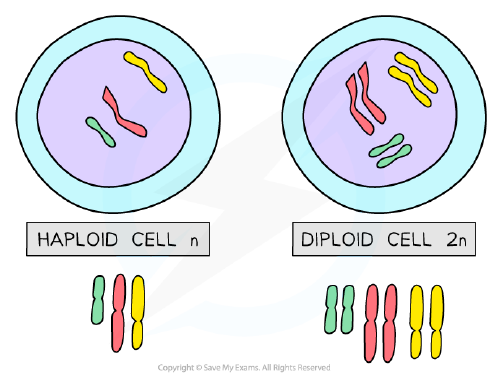
- Gametes have a haploid nucleus (half the chromosome number; in humans, 23).
- The zygote has a diploid nucleus (full chromosome number; in humans, 46).
- Fertilisation = fusion of gamete nuclei, producing genetically varied offspring.
- Advantages: genetic variation helps adaptation; disadvantages: may produce less successful offspring.
Haploid and diploid cells
Sexual Reproduction in Plants
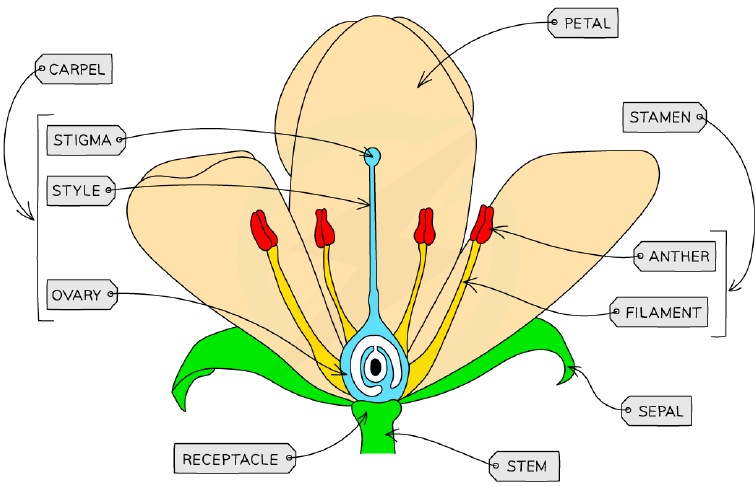
- Flowers are reproductive organs; male gametes in pollen grains, female in ovules.
- Pollination = transfer of pollen from anther to stigma (not fertilisation).
- Insect-pollinated flowers: large, bright petals, scent, nectar, sticky stigma, anthers inside.
- Wind-pollinated flowers: small, dull petals, no scent/nectar, long filaments, feathery stigma.
- After pollination, a pollen tube grows down the style; pollen nuclei fuse with ovum (fertilisation).
- Seed germination requires water, oxygen, and warmth; carbon dioxide not needed.
Structure of an insect-pollinated flower
Male Reproductive System (Human)
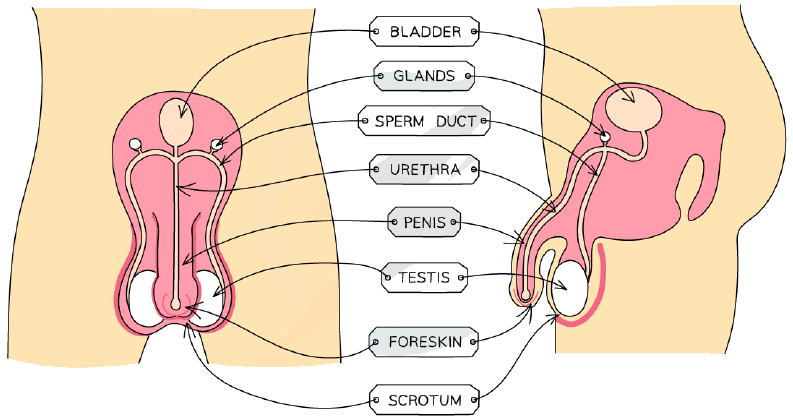
- Testes produce sperm and testosterone; held in scrotum (temperature regulation).
- Sperm duct carries sperm to urethra; prostate gland adds fluid to form semen.
- Urethra runs through penis; carries urine or semen (muscle prevents mixing).
- Penis deposits semen into vagina during intercourse.
The male reproductive system
Female Reproductive System (Human)
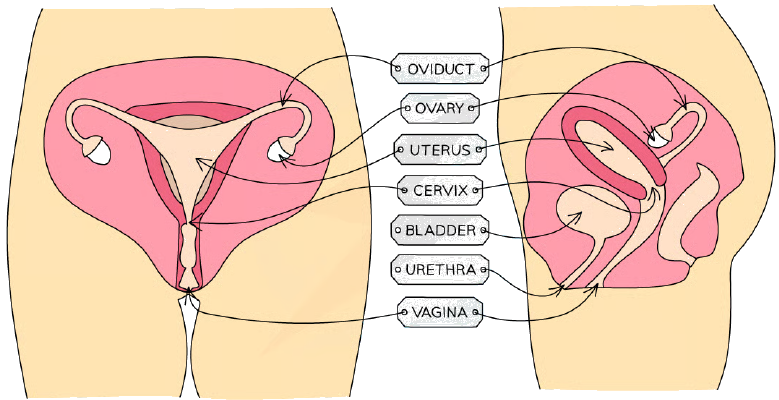
- Ovaries produce ova (eggs) and oestrogen.
- Oviduct (fallopian tube) is site of fertilisation; lined with cilia to move egg.
- Uterus has thick lining for implantation; cervix is ring of muscle at lower end.
- Vagina receives penis and sperm during intercourse.
The female reproductive system
Gametes & Fertilisation
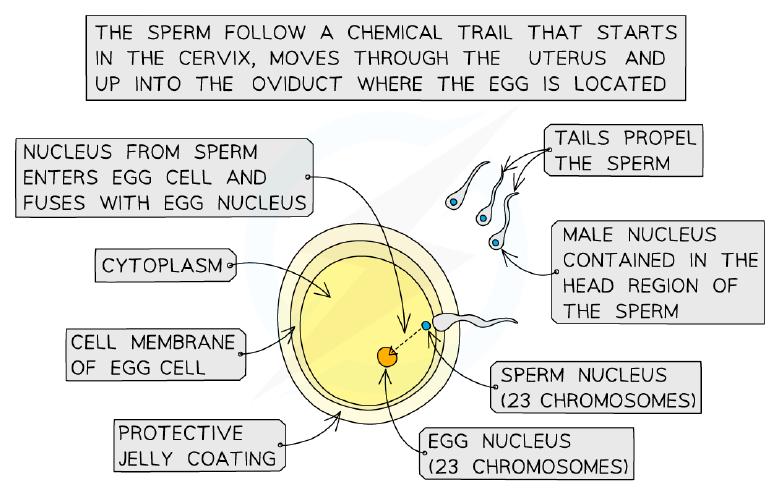
- Sperm adapted: flagellum (swim), mitochondria (energy), acrosome enzymes (penetrate egg).
- Egg adapted: large cytoplasm (food store), jelly coat (prevents multiple sperm after fertilisation).
- Fertilisation occurs in the oviduct; zygote divides to form embryo.
- Embryo implants in uterus lining; becomes fetus after 12 weeks.
Fertilisation of the egg by a sperm
Pregnancy & Placenta
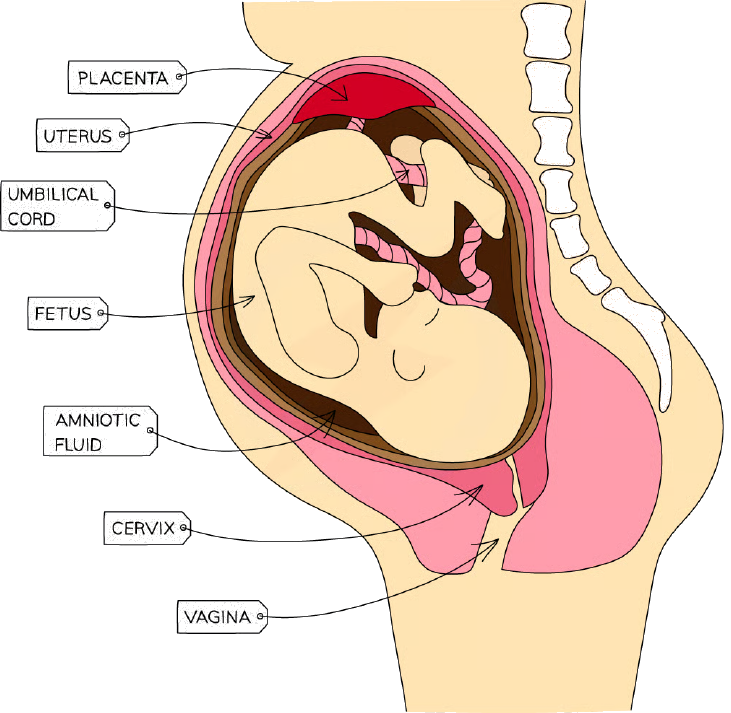
- Placenta exchanges nutrients (glucose, amino acids, oxygen) and wastes (CO₂, urea) by diffusion.
- Umbilical cord connects fetus to placenta; blood flows opposite directions, never mixing.
- Placenta acts as barrier to some toxins/pathogens (but not all, e.g., nicotine).
- Amniotic fluid cushions the fetus.
The fetus in the uterus
Sexual Hormones & Menstrual Cycle
- Testosterone (testes) and oestrogen (ovaries) control secondary sexual characteristics.
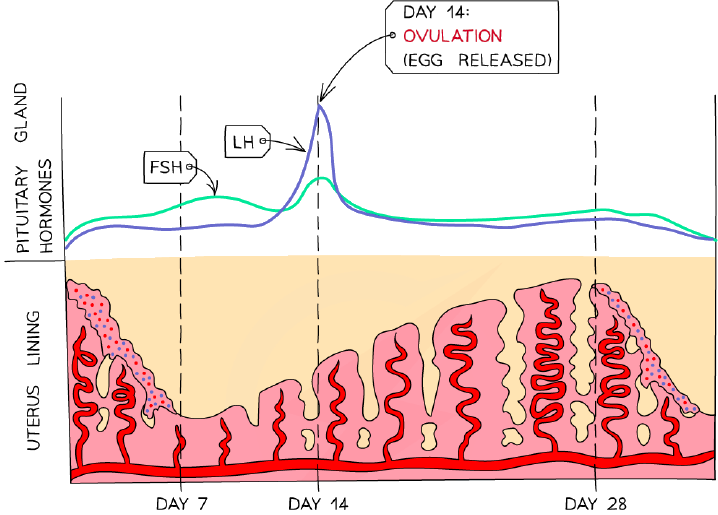
- Menstrual cycle (~28 days): FSH (pituitary) stimulates follicle growth and oestrogen release.
- Oestrogen thickens uterus lining and triggers LH surge (pituitary) causing ovulation (day ~14).
- After ovulation, progesterone from corpus luteum maintains lining; if no fertilisation, progesterone falls → menstruation.
Hormone levels during the menstrual cycle
Sexually Transmitted Infections (STIs)
- STIs spread via exchange of body fluids during unprotected sex.
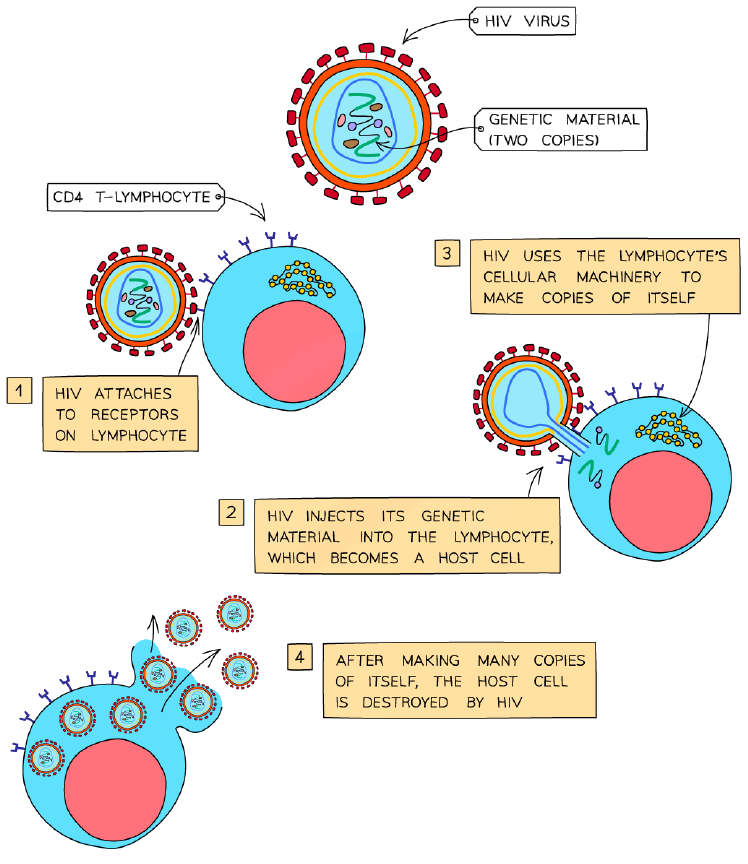
- HIV (virus) infects lymphocytes, reducing immune function, leading to AIDS.
- Spread controlled by: limiting partners, using condoms, testing, education.
- Other STIs: chlamydia (bacterial, treatable with antibiotics).
How HIV affects lymphocytes
Slide
Sign up free to view the lesson slides
Step through every slide for this topic — plus flashcards and revision notes — with a free account.
Câu hỏi luyện tập
Xem trước miễn phí — 8 trên 52 câu hỏi. Đăng ký để xem tất cả.
1.Which of the following is a characteristic of asexual reproduction?
Easy- AIt involves the fusion of male and female gametes.
- BIt produces genetically identical offspring from one parent.
- CIt increases genetic variation in offspring.
- DIt requires two parents.
2.Which structure in a flower produces pollen grains?
Easy- AStigma
- BStyle
- CAnther
- DOvary
3.Which hormone is primarily responsible for the development of secondary sexual characteristics in males?
Easy- AOestrogen
- BProgesterone
- CTestosterone
- DFSH
4.Which of the following is an advantage of sexual reproduction over asexual reproduction?
Easy- AOffspring are genetically identical to the parent.
- BIt is faster and requires less energy.
- CIt produces genetic variation in offspring.
- DIt does not require a mate.
5.Which of the following correctly describes the function of the placenta?
Easy- AIt produces oestrogen and progesterone.
- BIt allows the exchange of nutrients and waste between mother and fetus.
- CIt is the site of fertilisation.
- DIt protects the fetus from all pathogens.
6.What is the role of luteinising hormone (LH) in the menstrual cycle?
Medium- AIt stimulates the development of the follicle.
- BIt causes ovulation and stimulates progesterone production.
- CIt maintains the uterine lining.
- DIt inhibits FSH release.
7.A student sets up an experiment to investigate conditions for germination. Four test tubes contain cress seeds on cotton wool. Tube A: dry cotton wool, 20°C; Tube B: moist cotton wool, 20°C; Tube C: moist cotton wool, 4°C; Tube D: moist cotton wool with a layer of oil on top, 20°C. Which tube would not germinate due to lack of oxygen?
Medium- ATube A
- BTube B
- CTube C
- DTube D
8.Which of the following statements about HIV is correct?
Easy- AHIV is a bacterium that destroys red blood cells.
- BHIV infects lymphocytes, reducing the body's ability to fight infections.
- CHIV can be cured with antibiotics.
- DHIV is only transmitted through sexual contact.
Unlock all 52 questions & more
Tạo tài khoản miễn phí để xem mọi câu hỏi, slide, thẻ ghi nhớ và ghi chú ôn tập cho chủ đề này.