Biological Molecules
Học bằng cách chơi
Trả lời những câu hỏi này để kiếm năng lượng, rồi câu cá và khám phá. Không cần tài khoản.
Ghi chú bài học
Chemical Elements in Living Organisms
- Most biological molecules are organic, meaning they contain carbon.
- The three main groups are carbohydrates, proteins, and lipids.
- These molecules are built from smaller subunits joined together.
Carbohydrates
- Carbohydrates are long chains of simple sugars (monosaccharides).
- Glucose is a monosaccharide; two glucose molecules join to form maltose (a disaccharide).
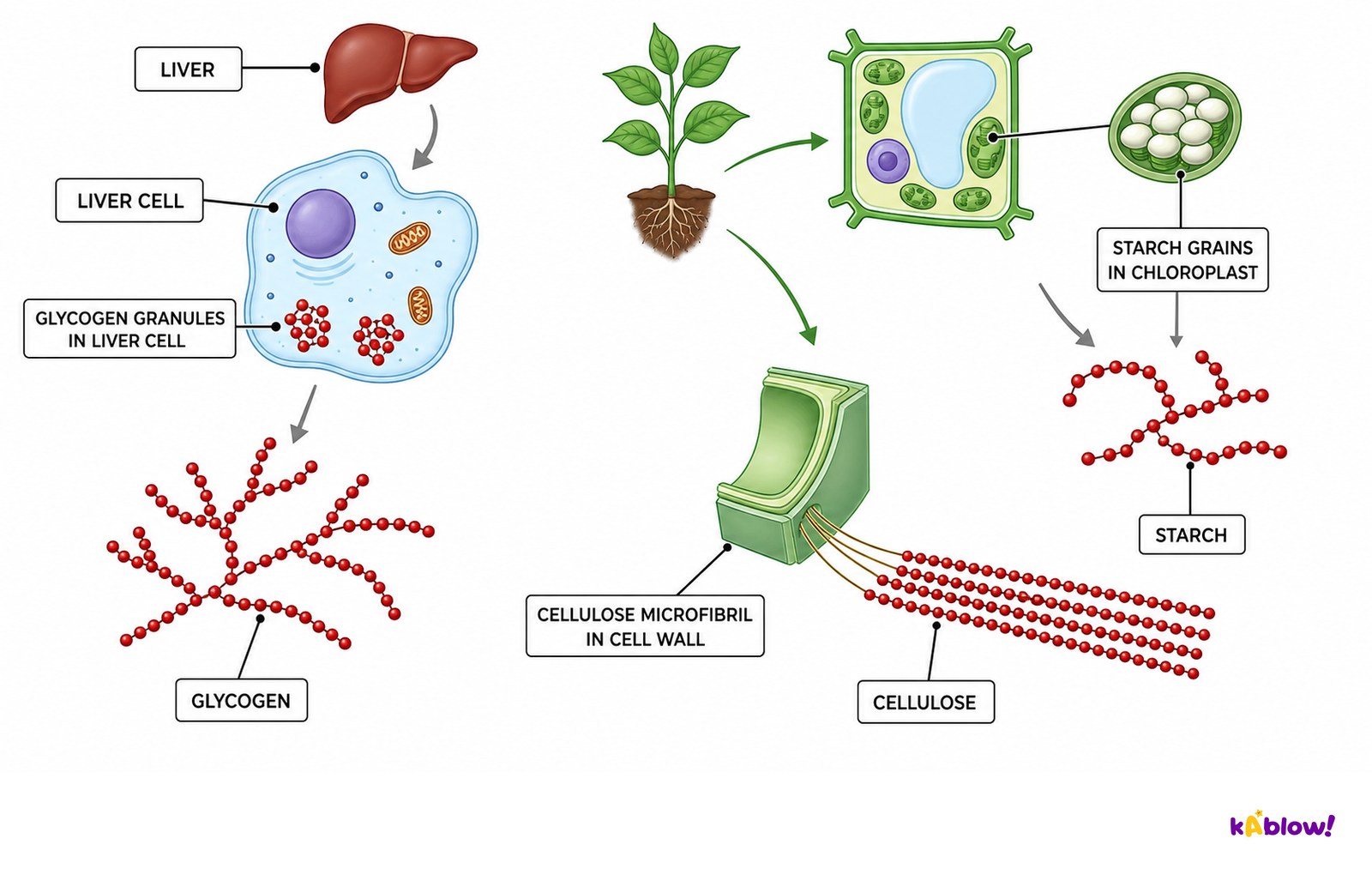
- Many glucose molecules join to form starch, glycogen, or cellulose (polysaccharides).
- Starch, glycogen, and cellulose are all made from glucose.
Glycogen, cellulose and starch are all made from glucose molecules
Lipids (Fats and Oils)
- Most lipids are triglycerides, made of 1 glycerol molecule bonded to 3 fatty acid chains.
- Fatty acids vary in size and structure.
- Fats are solid at room temperature; oils are liquid at room temperature.
Structure of a triglyceride: one glycerol molecule bonded to three fatty acid chains.
Proteins
- Proteins are long chains of amino acids (about 20 different types).
- All amino acids have the same basic structure but differ in their R group.
- The sequence of amino acids determines the protein; even a small change produces a different protein.
General structure of an amino acid: central carbon bonded to amino group, carboxyl group, hydrogen, and R group.
Food Tests
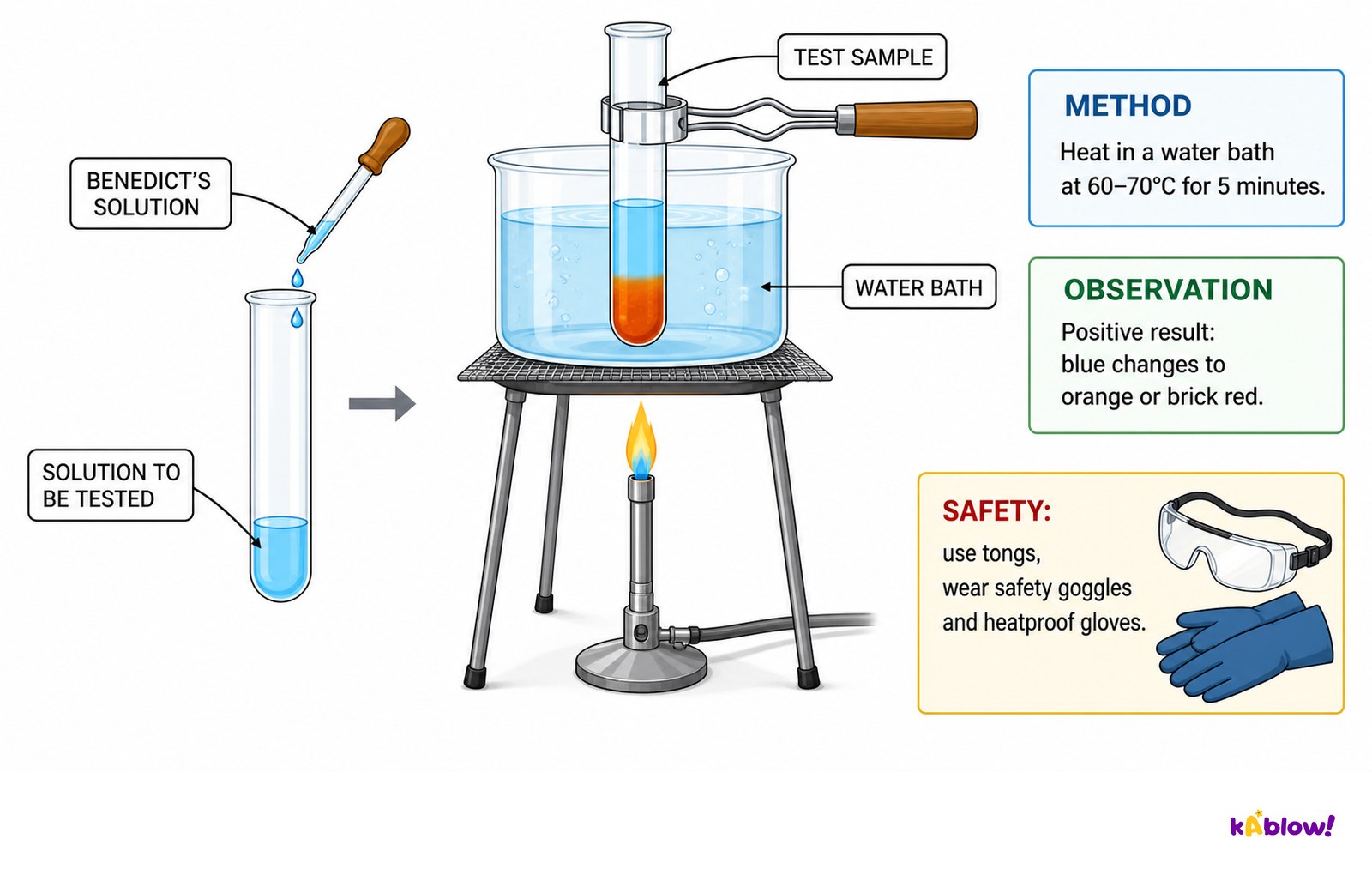
- Benedict's test for reducing sugars: add Benedict's solution, heat at 60–70°C for 5 min; positive: blue → orange/brick red.
- Iodine test for starch: add iodine solution; positive: orange-brown → blue-black.
- Biuret test for protein: add Biuret solution; positive: blue → violet/purple.
- Emulsion test for lipids: mix sample with ethanol, then add cold water; positive: cloudy emulsion forms.
- DCPIP test for vitamin C: add sample to DCPIP solution; positive: blue colour disappears.
The Benedict's test for glucose
Slide
Sign up free to view the lesson slides
Step through every slide for this topic — plus flashcards and revision notes — with a free account.
Câu hỏi luyện tập
Xem trước miễn phí — 8 trên 48 câu hỏi. Đăng ký để xem tất cả.
1.Which elements are present in all carbohydrates, proteins, and lipids?
Easy- ACarbon, hydrogen, oxygen
- BCarbon, hydrogen, oxygen, nitrogen
- CCarbon, hydrogen, oxygen, nitrogen, sulfur
- DCarbon, hydrogen, oxygen, phosphorus
2.What is the basic structural unit of a carbohydrate?
Easy- AAmino acid
- BSimple sugar (monosaccharide)
- CGlycerol
- DFatty acid
3.Which test is used to detect the presence of starch?
Easy- ABenedict's test
- BIodine test
- CBiuret test
- DEmulsion test
4.What colour change indicates a positive result for the Benedict's test for reducing sugars?
Easy- ABlue to violet
- BOrange-brown to blue-black
- CBlue to orange/brick red
- DColourless to cloudy white
5.A student tests a food sample with Biuret solution and observes a colour change from blue to violet. Which nutrient is present?
Easy- AStarch
- BGlucose
- CProtein
- DLipid
6.Which of the following is a disaccharide formed when two glucose molecules join together?
Easy- AStarch
- BGlycogen
- CMaltose
- DCellulose
7.What are the building blocks of proteins?
Easy- AMonosaccharides
- BGlycerol and fatty acids
- CNucleotides
- DAmino acids
8.A student adds DCPIP solution to a fruit juice sample. The blue colour disappears. What does this indicate?
Medium- AThe juice contains reducing sugar
- BThe juice contains starch
- CThe juice contains vitamin C
- DThe juice contains protein
Unlock all 48 questions & more
Tạo tài khoản miễn phí để xem mọi câu hỏi, slide, thẻ ghi nhớ và ghi chú ôn tập cho chủ đề này.