Cell Structure And Size Of Specimens
Học bằng cách chơi
Trả lời những câu hỏi này để kiếm năng lượng, rồi câu cá và khám phá. Không cần tài khoản.
Ghi chú bài học
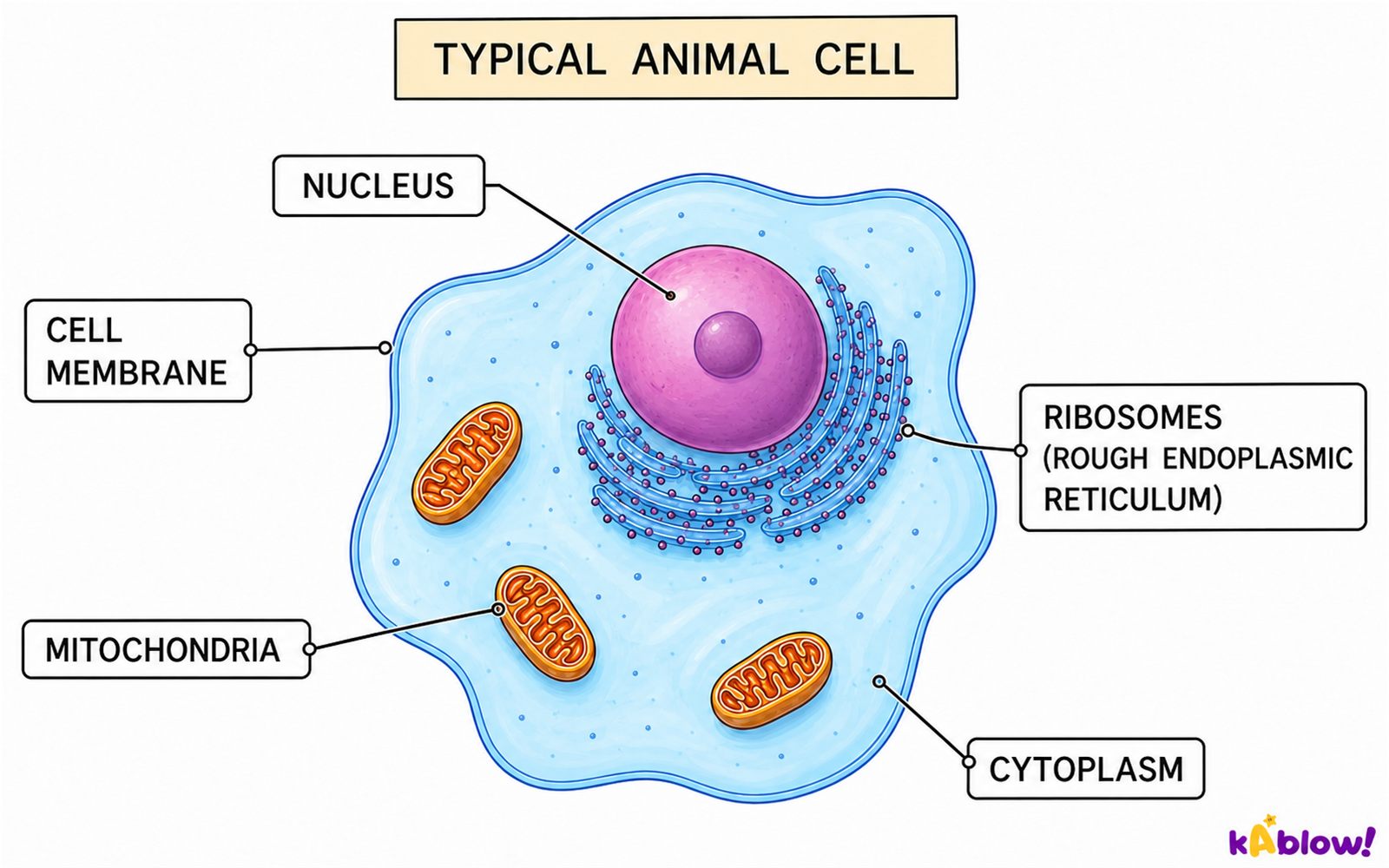
Cell Structure: Animal Cells
- Animal cells have a cell membrane that separates them from surroundings.
- They contain cytoplasm, a gel-like liquid where chemical reactions occur.
- The nucleus contains the genetic material (DNA).
- Mitochondria are the site of aerobic respiration, releasing energy.
- Ribosomes are the site of protein synthesis.
A typical animal cell
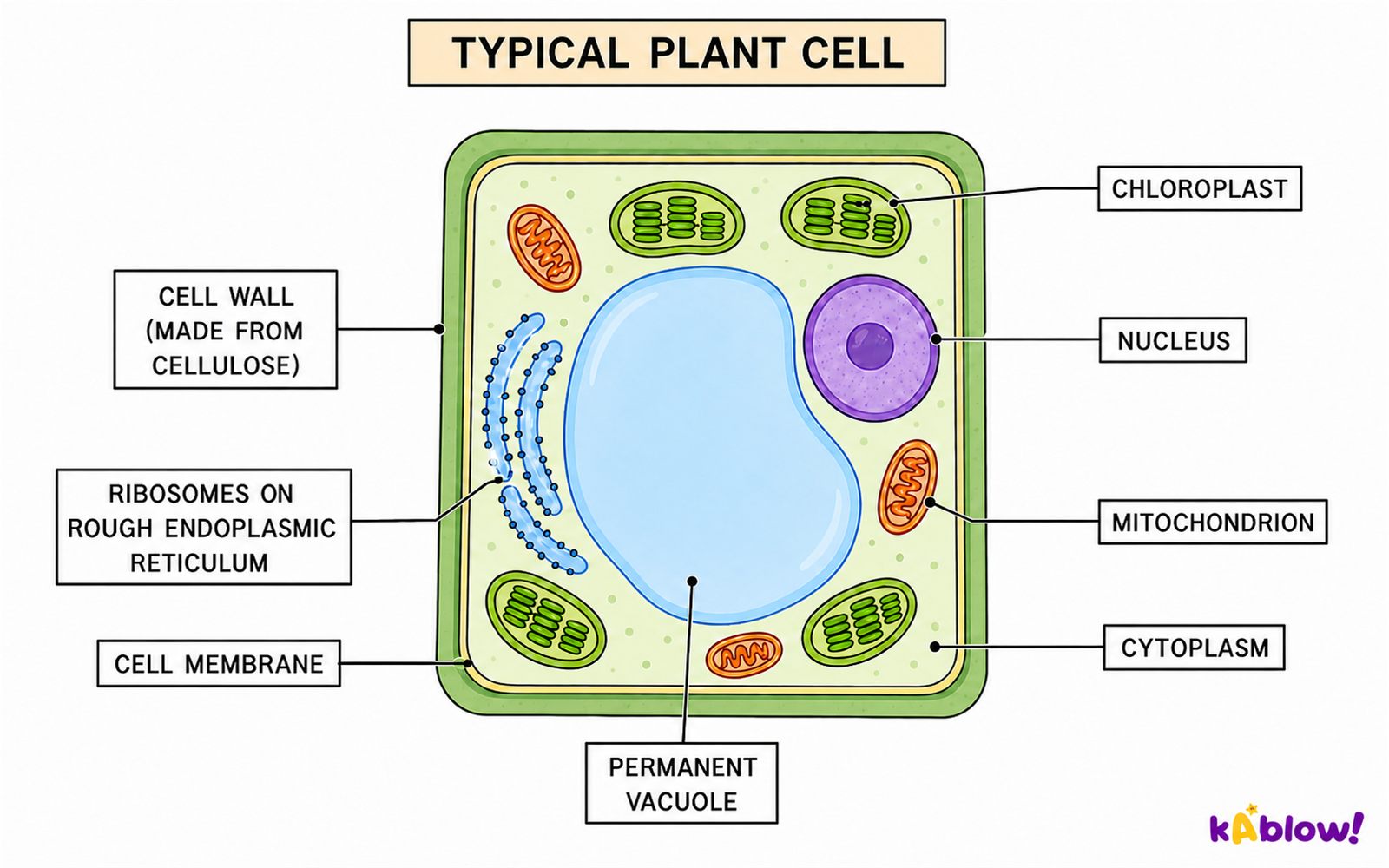
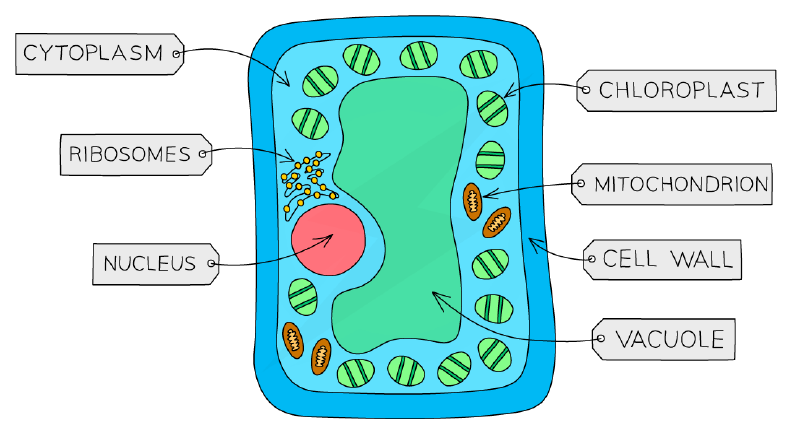
Cell Structure: Plant Cells
- Plant cells have all animal cell structures: cell membrane, cytoplasm, nucleus, mitochondria, ribosomes.
- Additionally, they have a cellulose cell wall for structural support.
- Chloroplasts contain chlorophyll and absorb light energy for photosynthesis.
- A permanent vacuole stores cell sap and provides support.
A typical plant cell
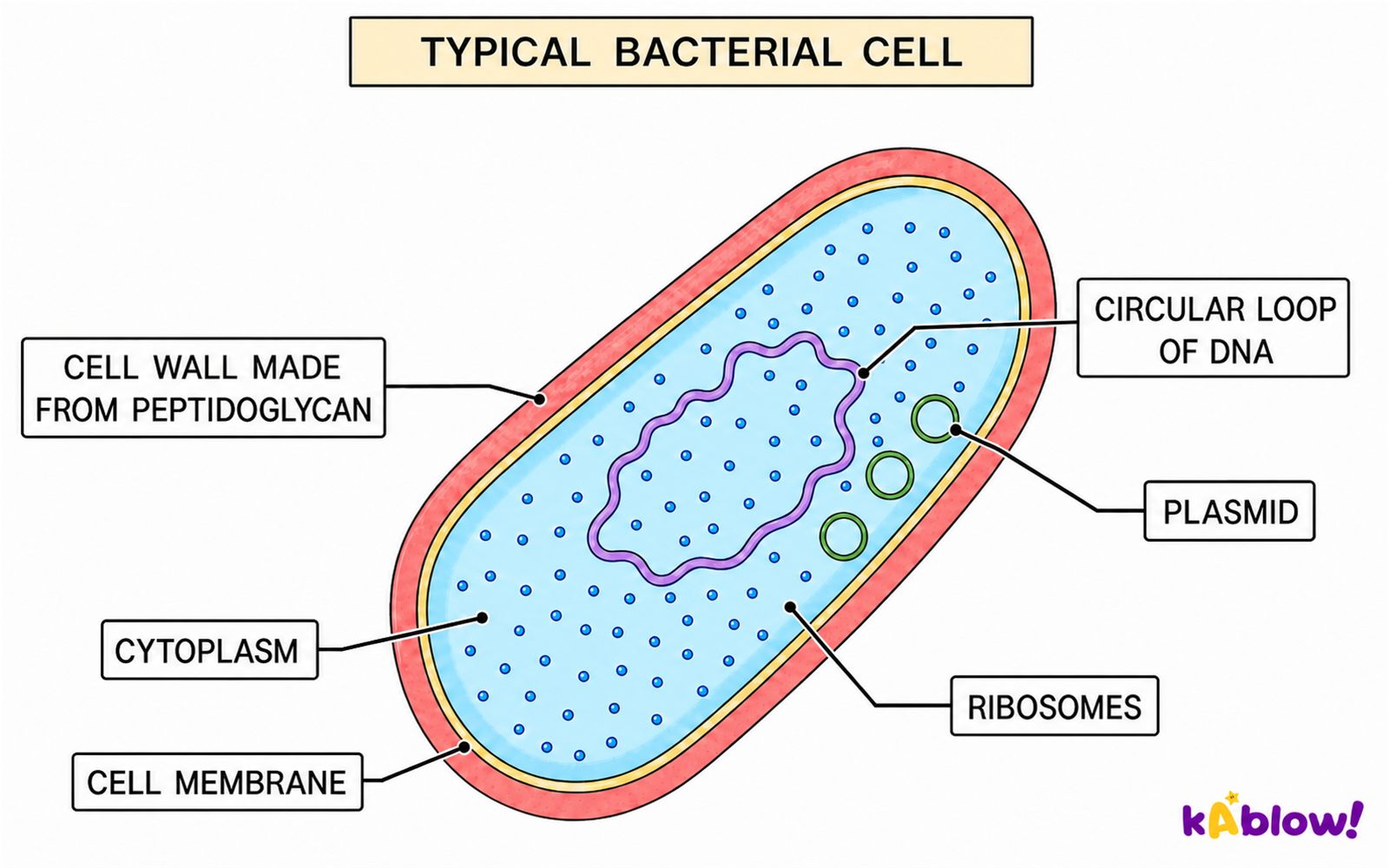
Bacterial Cells (Prokaryotes)
- Bacteria have a cell wall made of peptidoglycan (not cellulose).
- They have a cell membrane, cytoplasm, and ribosomes.
- DNA is circular and not enclosed in a nucleus; some have plasmids.
- Bacteria lack internal membranes: no nucleus, mitochondria, or chloroplasts.
A typical bacterial cell
Functions of Cellular Structures
- Cell membrane: controls passage of substances into/out of the cell.
- Nucleus: contains DNA, controls cell activities (animal/plant only).
- Mitochondria: site of aerobic respiration (animal/plant).
- Ribosomes: protein synthesis (all cell types).
- Chloroplasts: photosynthesis (plant only).
- Cell wall: provides support and shape (cellulose in plants, peptidoglycan in bacteria).
- Permanent vacuole: storage and support (plant only).
- Plasmids: small DNA loops carrying extra genes (bacteria).
Specialised Cells
- Cells differentiate (become specialised) to carry out specific functions in the body.
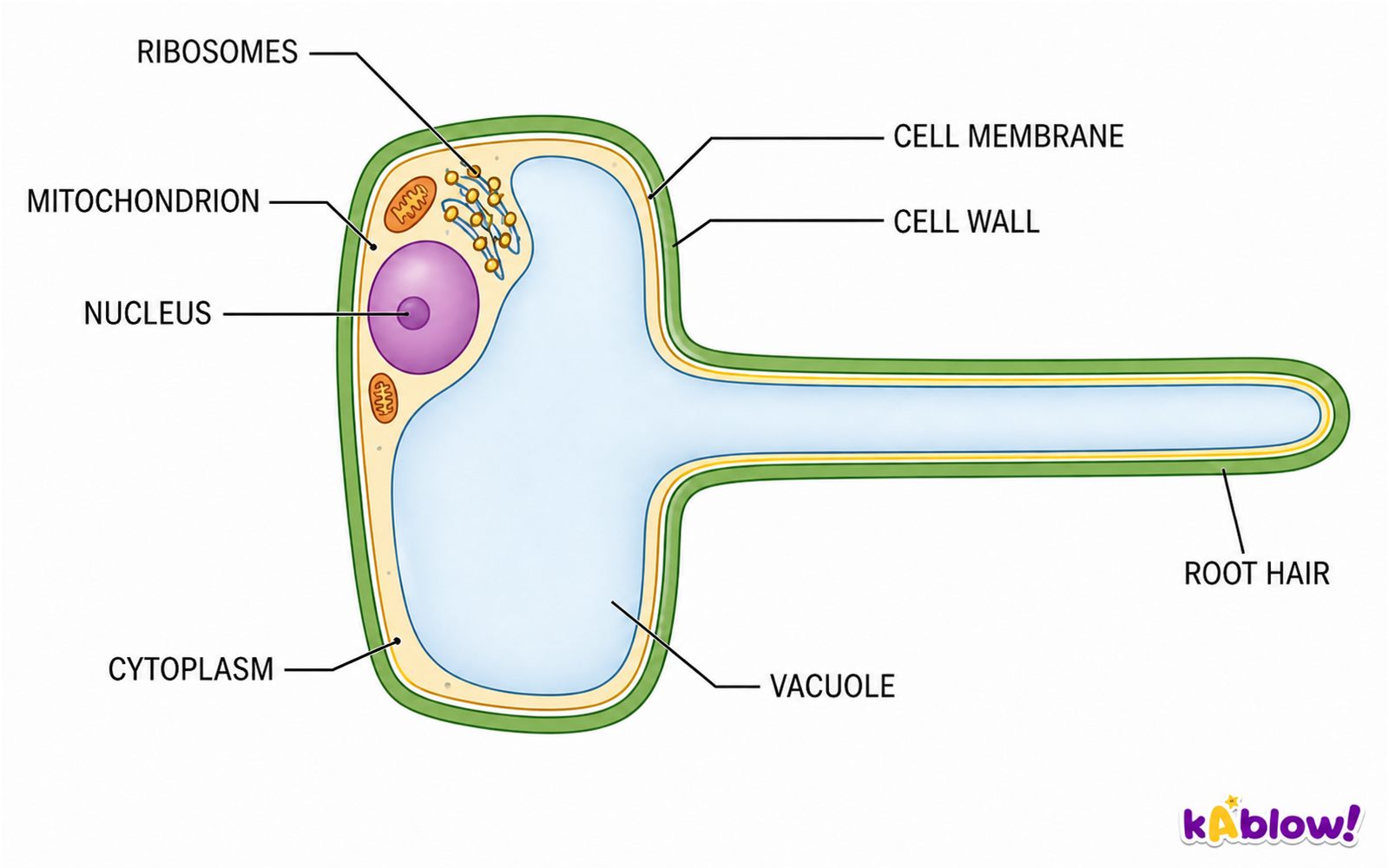
- Root hair cell: has a long extension (root hair) that increases surface area for absorption of water and mineral ions; thin walls let water move through quickly; no chloroplasts (underground, no light).
- Xylem vessel: dead cells with no top/bottom walls, forming a continuous tube for water transport; walls thickened with lignin for support.
- Palisade mesophyll cell: column-shaped to pack many cells under the leaf's upper surface and contains many chloroplasts for maximum photosynthesis.
Root hair cell
Organisation of Cells
- Cells divide to produce new cells for growth and repair.
- Cells can become specialised to carry out specific functions.
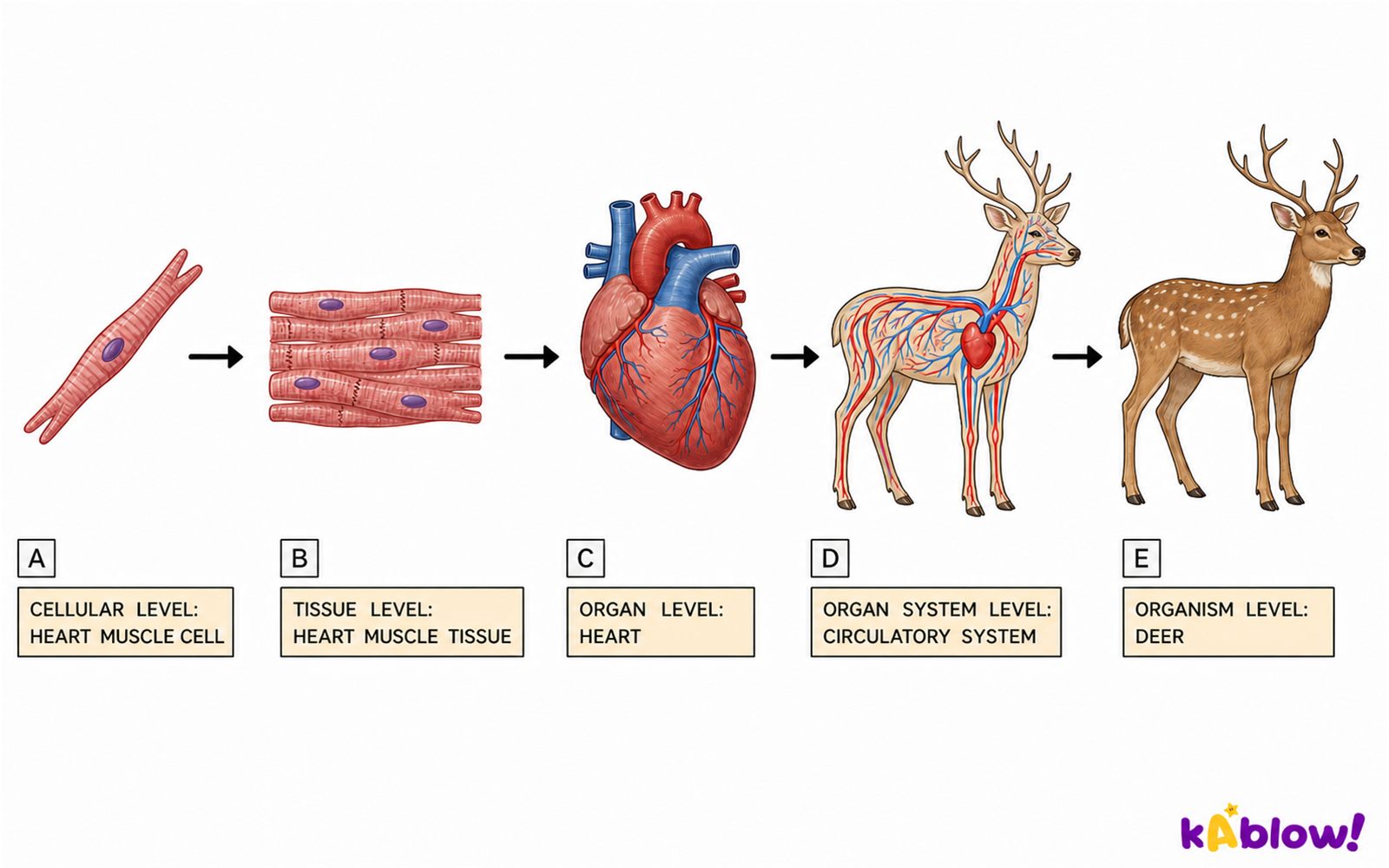
- Levels of organisation: cells → tissues → organs → organ systems → organism.
- Examples: palisade mesophyll cells form leaf tissue; leaf is an organ.
Levels of organisation
Magnification Formula
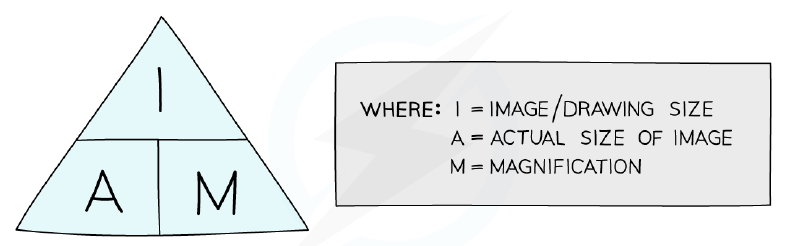
- Formula: magnification = image size ÷ actual size.
- Equation triangle: M = I / A; I = M × A; A = I / M.
- Units must be the same (e.g., both in mm or both in μm).
- Magnification has no units (e.g., ×10, ×3000).
Magnification equation triangle
Converting Between Units
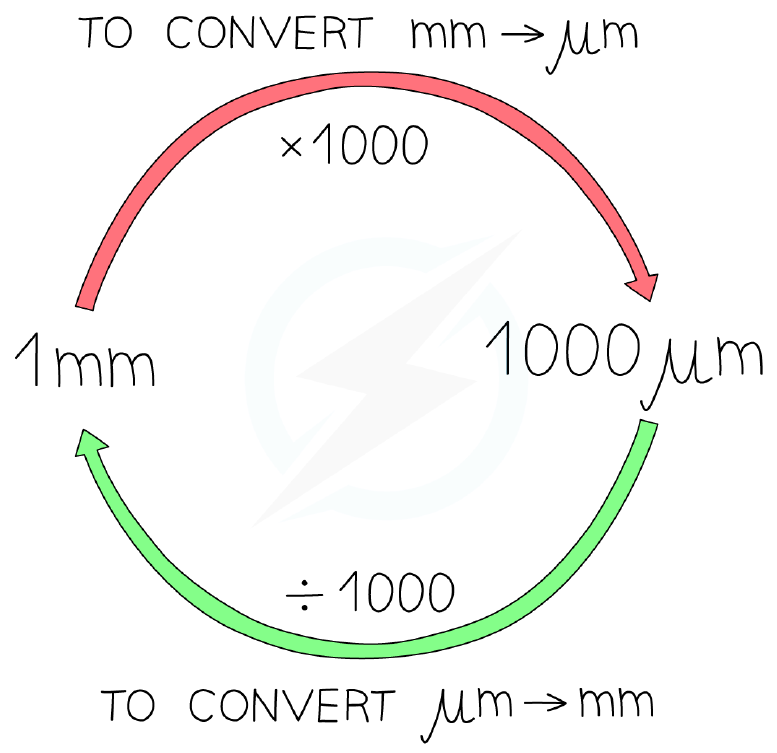
- 1 mm = 1000 μm (micrometres).
- To convert μm to mm, divide by 1000; to convert mm to μm, multiply by 1000.
- Common error: forgetting to convert units before using magnification formula.
Converting mm to μm
Slide
Sign up free to view the lesson slides
Step through every slide for this topic — plus flashcards and revision notes — with a free account.
Câu hỏi luyện tập
Xem trước miễn phí — 8 trên 52 câu hỏi. Đăng ký để xem tất cả.
1.Which of the following structures is found in both animal and plant cells?
Easy- ACell wall
- BChloroplast
- CNucleus
- DPermanent vacuole
2.Bacterial cells contain a nucleus.
EasyTrue or false?
3.State one function of the cell membrane.
Easy4.Match each cell structure to its function.
Medium- Nucleus
- Chloroplast
- Ribosome
- Contains genetic material
- Site of photosynthesis
- Site of protein synthesis
5.Arrange the following levels of biological organisation from smallest to largest:
Easy- Tissue
- Organ
- Cell
- Organ system
6.Which of the following is present in a bacterial cell but not in an animal cell?
Medium- AMitochondrion
- BCell wall made of peptidoglycan
- CNucleus
- DRibosome
7.A student measures the length of a bacterium as 2 μm. She draws it with a length of 50 mm. What is the magnification of her drawing?
Medium- A27500
- B25000
- C30000
- D22500
8.Name the structure that contains chlorophyll in a plant cell.
Easy
Unlock all 52 questions & more
Tạo tài khoản miễn phí để xem mọi câu hỏi, slide, thẻ ghi nhớ và ghi chú ôn tập cho chủ đề này.