Inheritance Genes And Cell Division
Học bằng cách chơi
Trả lời những câu hỏi này để kiếm năng lượng, rồi câu cá và khám phá. Không cần tài khoản.
Ghi chú bài học
Chromosomes, Genes & Proteins
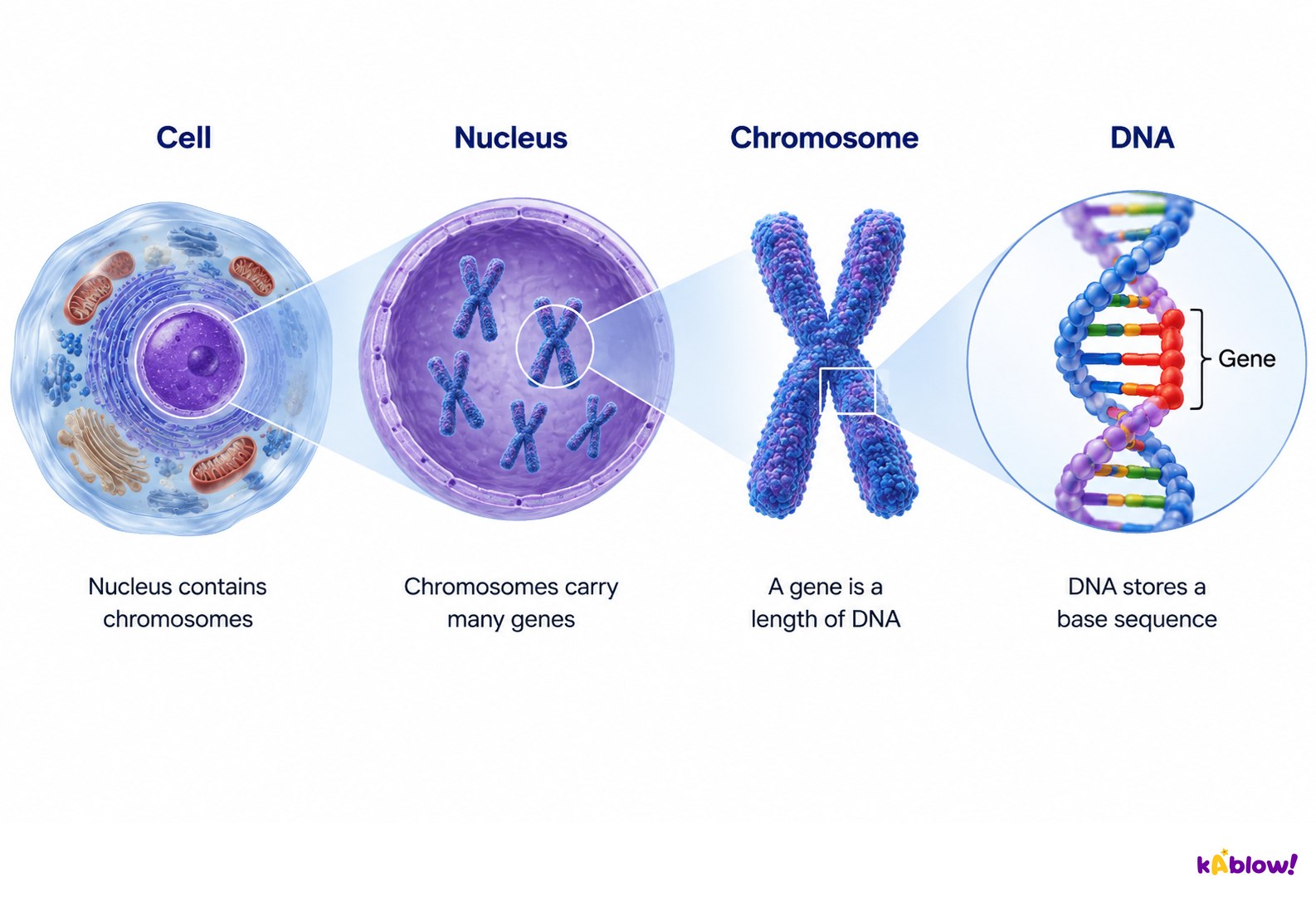
- Chromosomes are thread-like structures in the nucleus made of DNA.
- A gene is a short length of DNA on a chromosome that codes for a specific protein (e.g., collagen, enzyme, hormone).
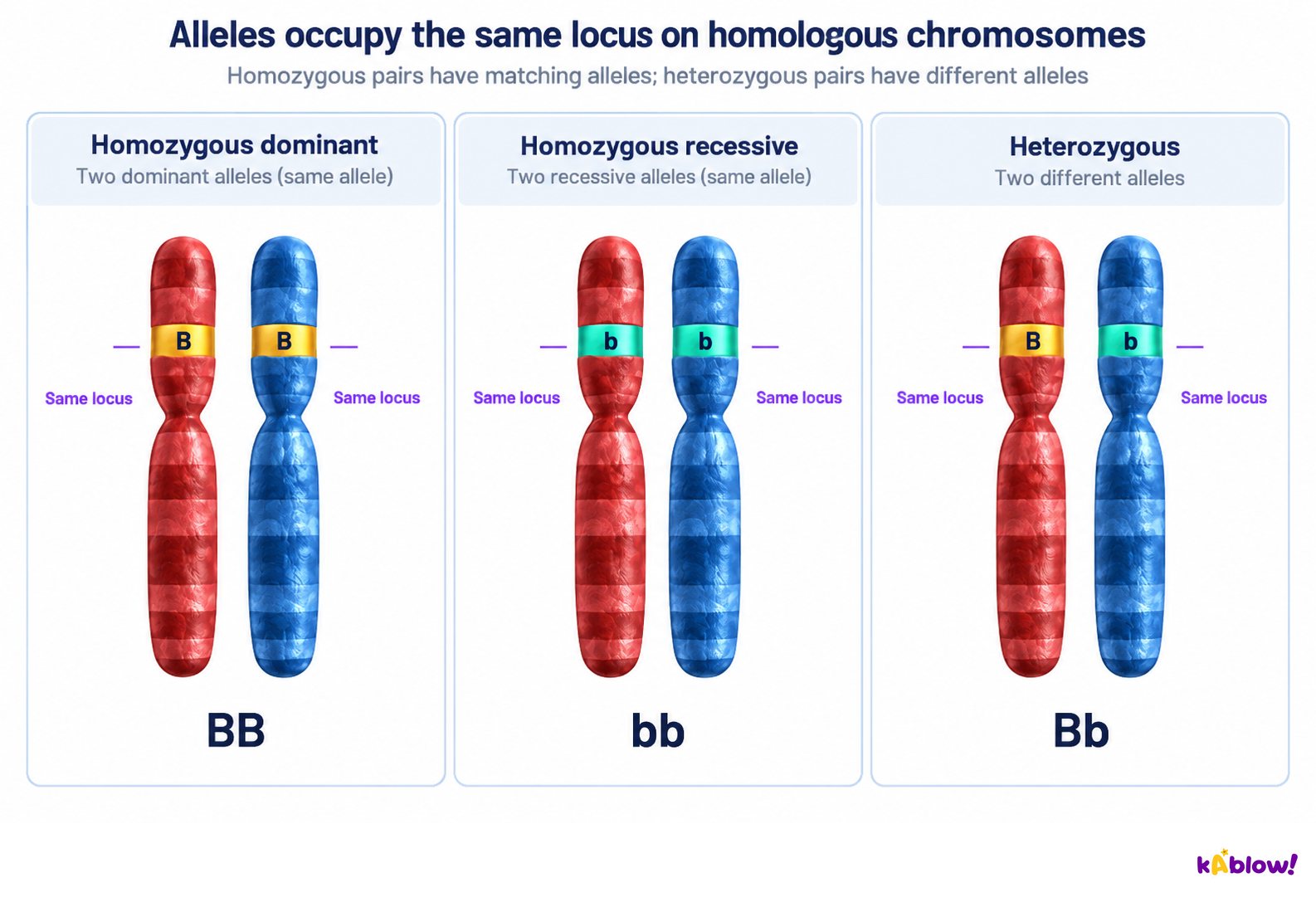
- Alleles are alternative forms of a gene (e.g., blue, green, brown alleles for eye colour).
- Genes determine characteristics by coding for proteins.
The Inheritance of Sex
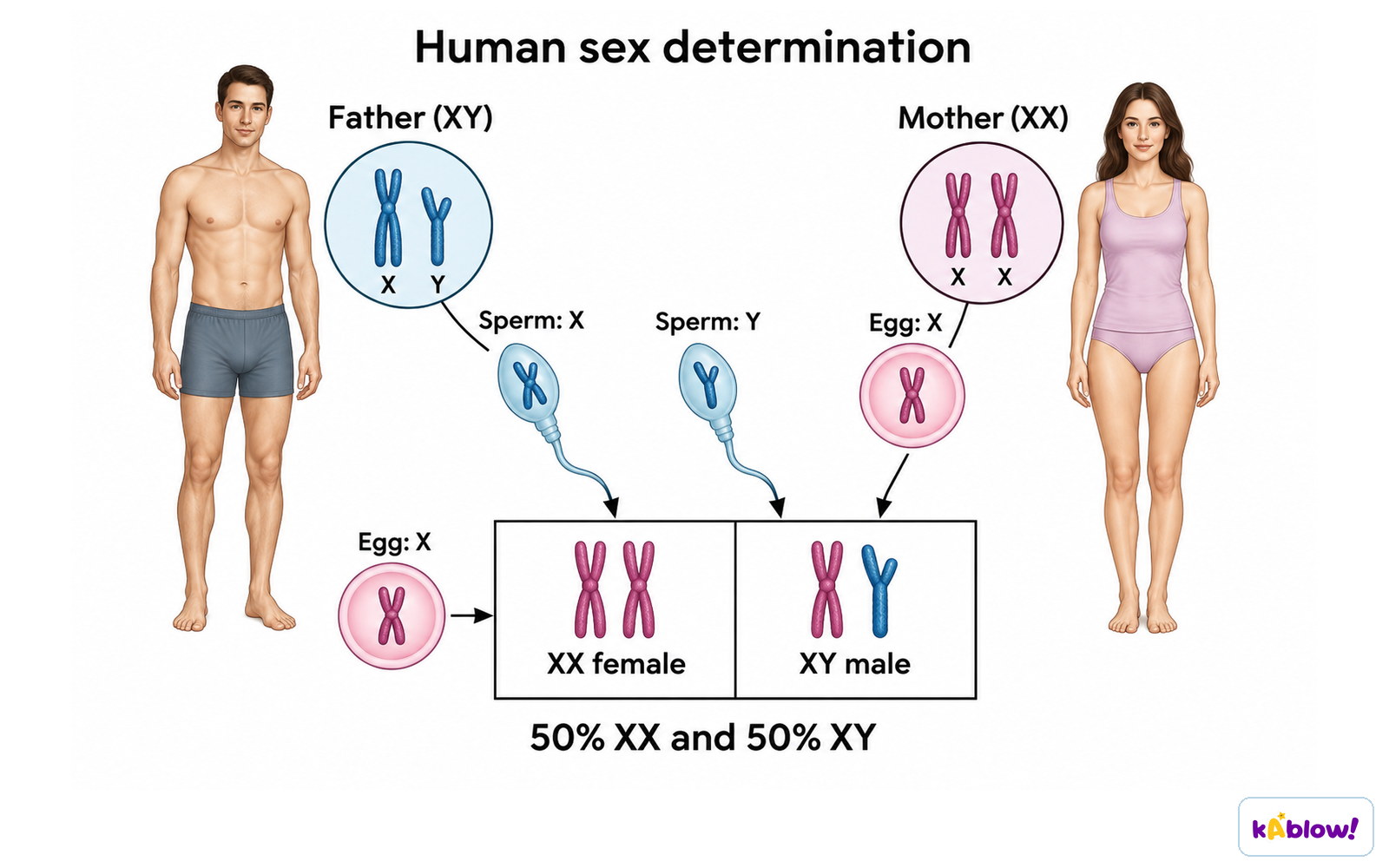
- Sex is determined by sex chromosomes: females are XX, males are XY.
- Only males can pass on a Y chromosome, determining the child's sex.
- Half of sperm carry X, half carry Y; if X fertilises egg (X), offspring is female (XX); if Y fertilises egg, offspring is male (XY).
- Punnett square for sex inheritance shows 50% probability of each sex.
Control of Gene Expression (Extended)
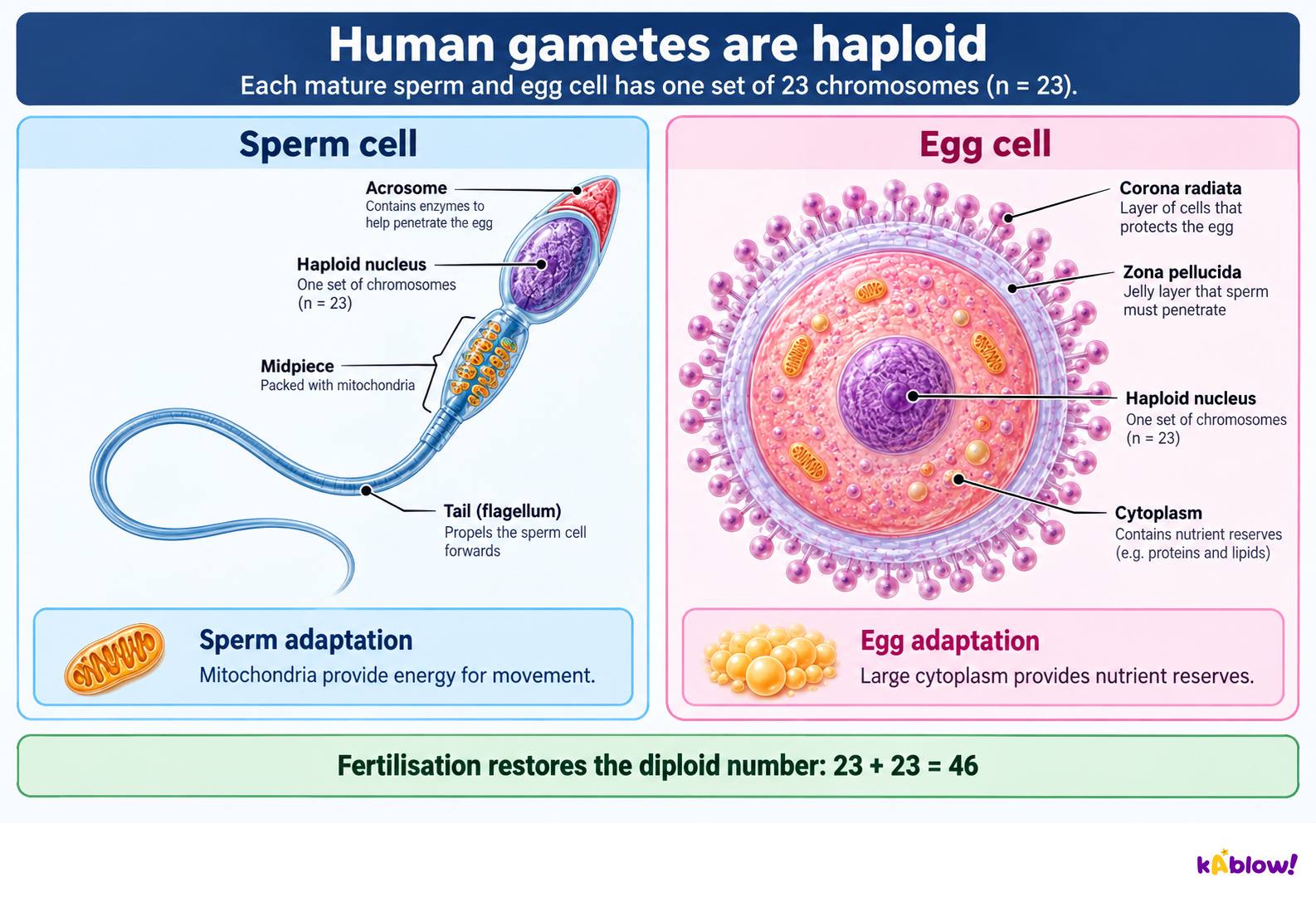
- Diploid cells have two sets of chromosomes (e.g., human body cells: 46 chromosomes).
- Haploid cells have one set of chromosomes (e.g., human gametes: 23 chromosomes).
- Gametes (sperm and egg) are haploid; fertilisation restores diploid number.
Mitosis (Extended)
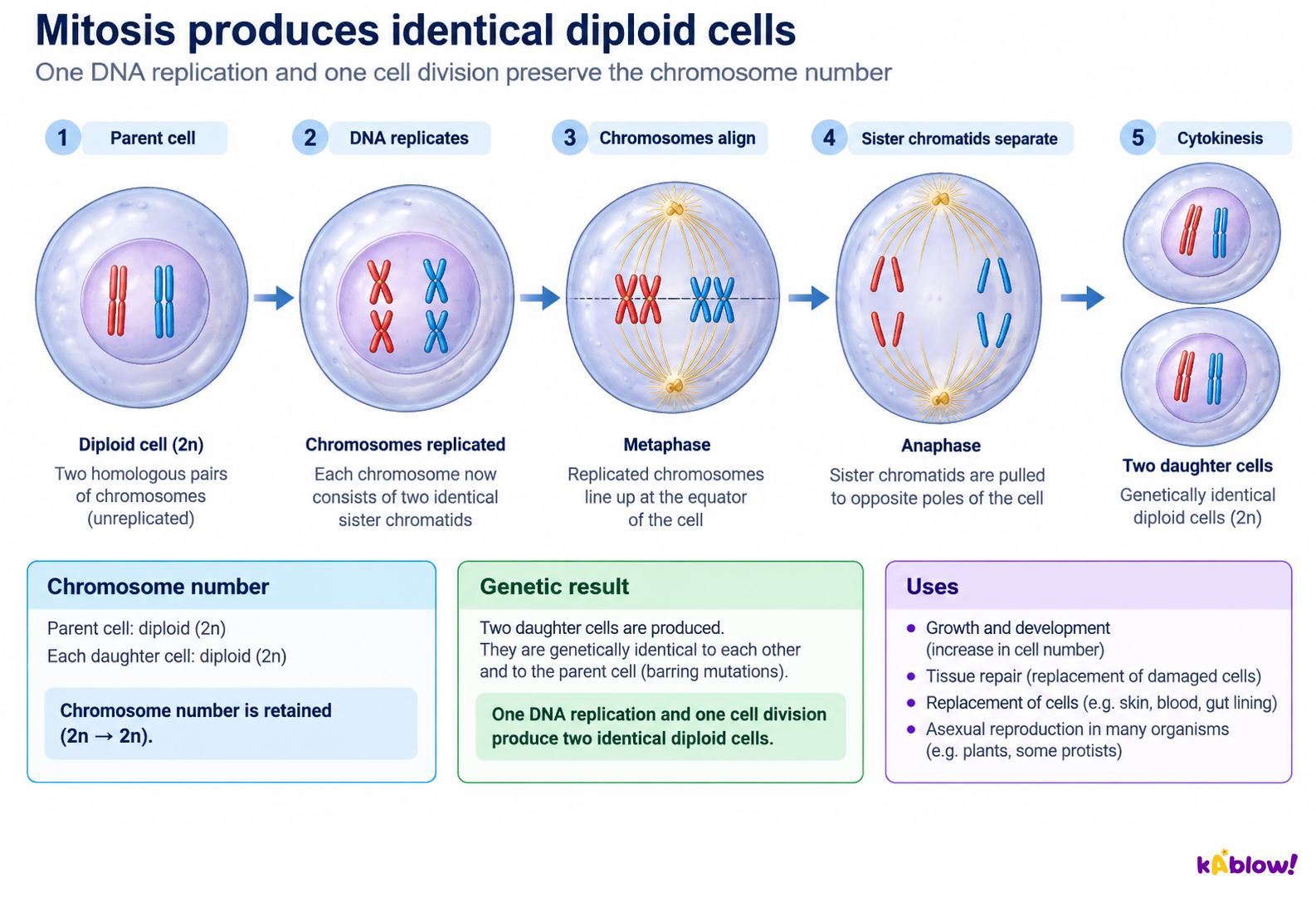
- Mitosis is nuclear division producing genetically identical diploid cells.
- Chromosomes replicate before division, ensuring each daughter cell has the same number of chromosomes.
- Mitosis is used for growth, repair of damaged tissues, replacement of cells, and asexual reproduction.
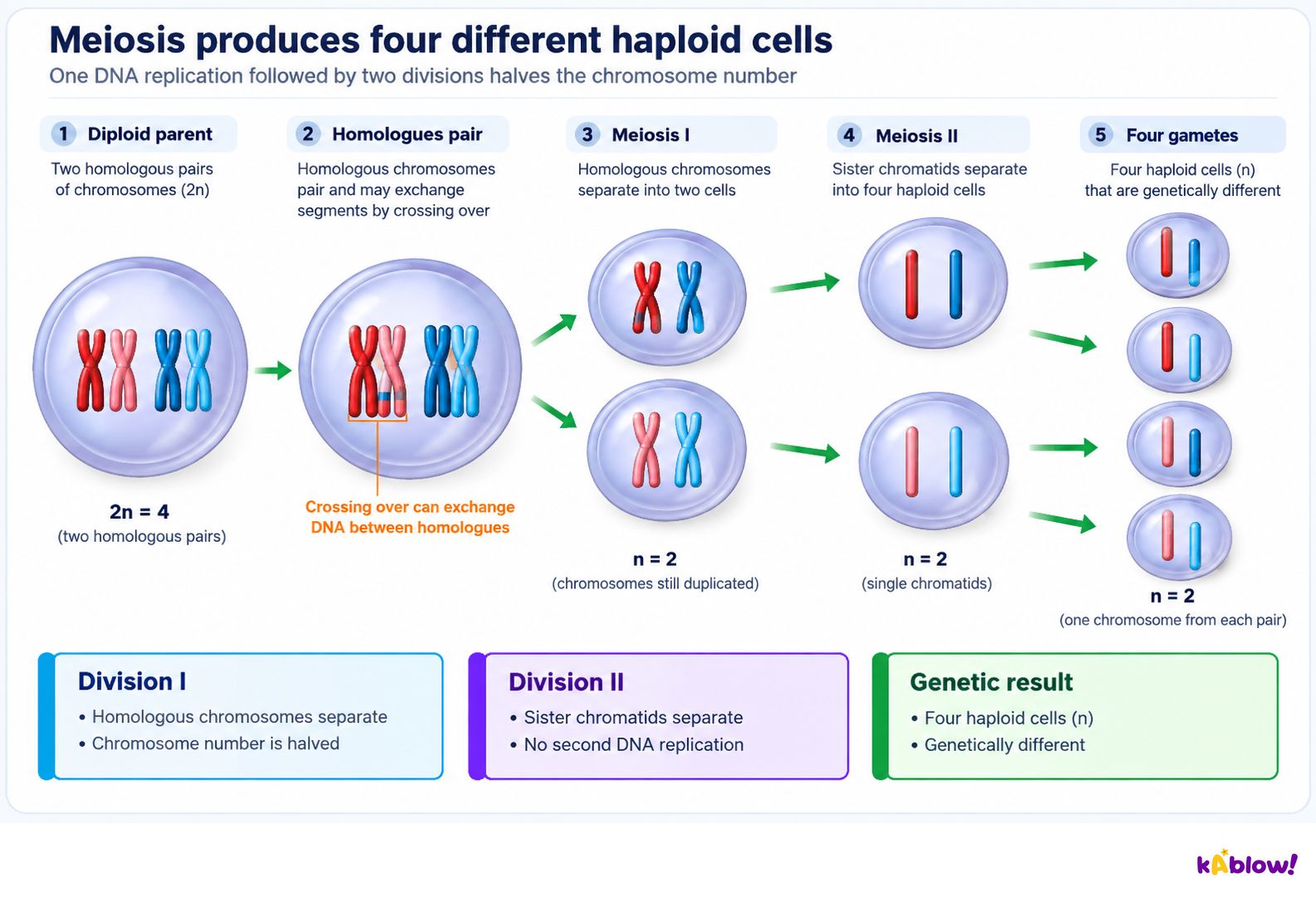
Meiosis (Extended)
- Meiosis is a reduction division that halves chromosome number from diploid to haploid.
- It produces four genetically different haploid cells (gametes).
- Meiosis ensures genetic variation and maintains constant chromosome number after fertilisation.
Monohybrid Inheritance
- Inheritance is the transmission of genetic information from parents to offspring.
- Genotype is the combination of alleles; phenotype is the observable characteristic.
- Dominant allele masks a recessive allele; recessive only shows when homozygous.
- Homozygous = two identical alleles; heterozygous = two different alleles.
- Monohybrid inheritance involves a single gene; Punnett squares predict offspring ratios.
- Example: tall (T) dominant over short (t); cross TT × tt gives all Tt (tall); Tt × Tt gives 3:1 ratio tall:short.
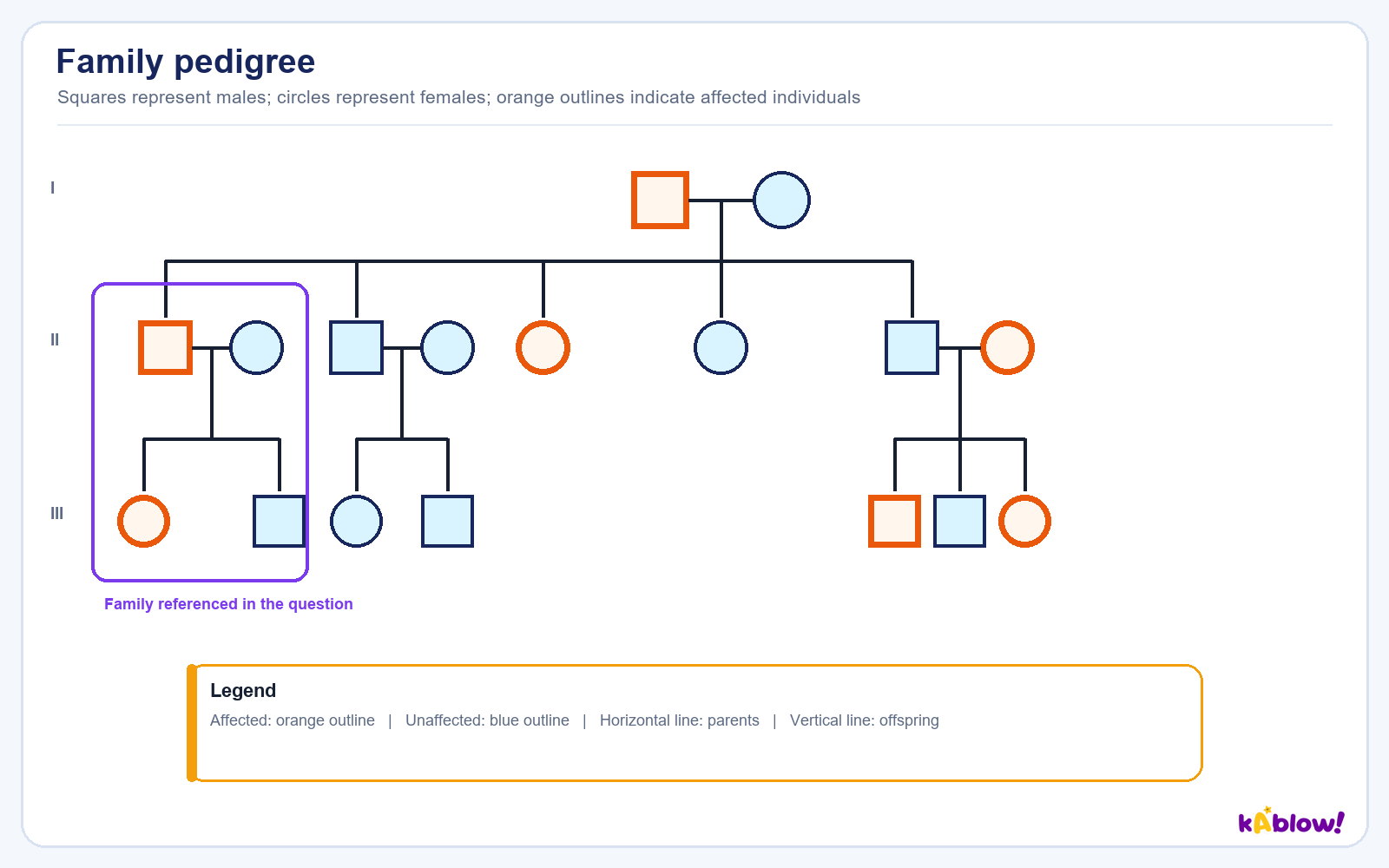
- Pedigree charts trace inheritance patterns through families, using squares (males) and circles (females).
Slide
Sign up free to view the lesson slides
Step through every slide for this topic — plus flashcards and revision notes — with a free account.
Câu hỏi luyện tập
Xem trước miễn phí — 8 trên 59 câu hỏi. Đăng ký để xem tất cả.
1.Where are chromosomes located in a cell?
Easy- AIn the cytoplasm
- BIn the nucleus
- COn the cell membrane
- DIn the mitochondria
2.What is a short length of DNA that codes for a specific protein called?
Easy3.Biological females have the sex chromosomes XY.
EasyTrue or false?
4.Complete the sentence about cell division.
EasyMitosis produces genetically ____ cells.
5.How many chromosomes are in a human diploid cell?
Easy- A46
- B41
- C51
- D56
6.Match each cell division type to its description.
Medium- Mitosis
- Meiosis
- Produces genetically identical cells
- Produces genetically different cells
- Reduces chromosome number by half
7.Arrange the following events in the correct order for meiosis:
Medium- Chromosomes replicate
- Homologous chromosomes separate
- Cell divides twice
- Four haploid cells are formed
8.In a monohybrid cross between two heterozygous tall plants (Tt x Tt), what is the expected phenotypic ratio?
Medium- A1:2:1
- B3:1
- C1:1
- D9:3:3:1
Unlock all 59 questions & more
Tạo tài khoản miễn phí để xem mọi câu hỏi, slide, thẻ ghi nhớ và ghi chú ôn tập cho chủ đề này.