Energy Work And Power
Học bằng cách chơi
Trả lời những câu hỏi này để kiếm năng lượng, rồi câu cá và khám phá. Không cần tài khoản.
Ghi chú bài học
Energy Stores & Transfers
- Energy is a property stored or transferred, measured in joules (J).
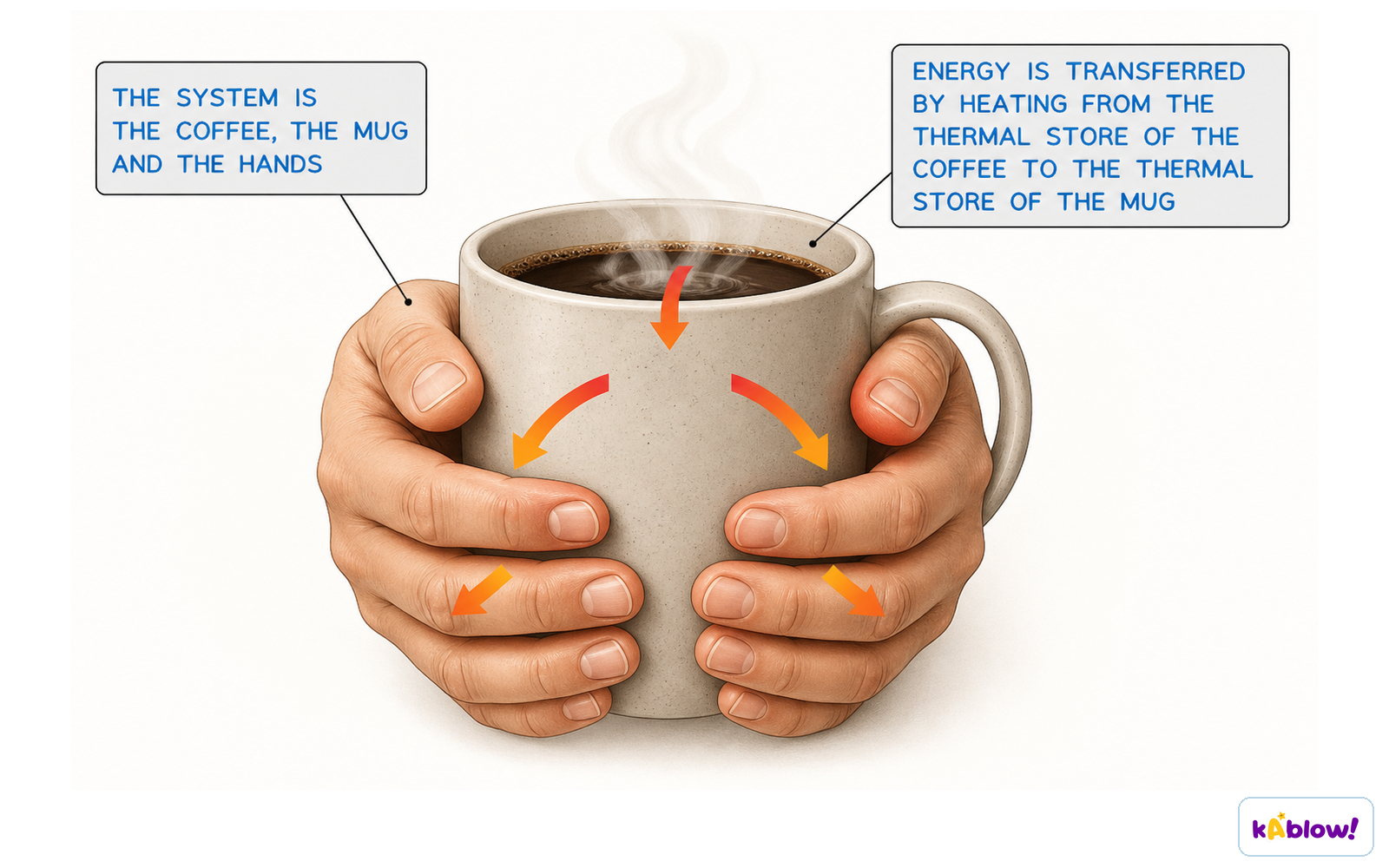
- A system is an object or group of objects; a change in a system involves energy transfer.
- Energy stores include: kinetic, gravitational potential, elastic, magnetic, electrostatic, chemical, nuclear, thermal.
- Energy transfer pathways: mechanical (force), electrical (charge flow), heating (particle collision), radiation (electromagnetic waves).
- Example: a battery powering a torch transfers energy electrically from the chemical store of the battery to the thermal store of the bulb.
Energy transfer by heating from a hot coffee mug to cold hands
Kinetic Energy
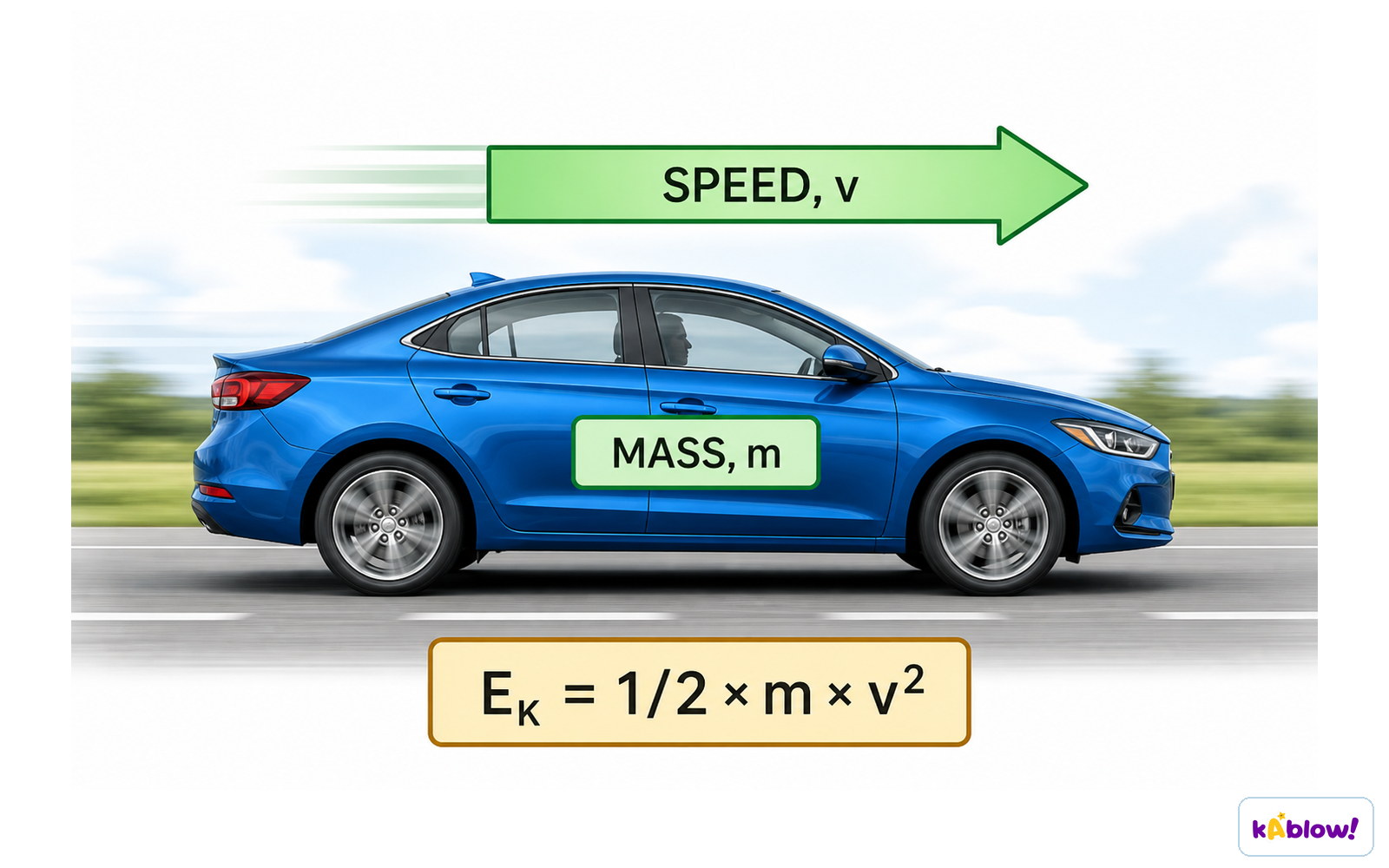
- Kinetic energy is the energy an object has due to its mass and speed: Ek = \frac{1}{2}mv2.
- Kinetic energy is directly proportional to mass (Ek \propto m) and to the square of speed (Ek \propto v2).
- Doubling speed quadruples kinetic energy; doubling mass doubles kinetic energy.
- Always square the speed when calculating Ek.
Kinetic energy of a moving car
Gravitational Potential Energy
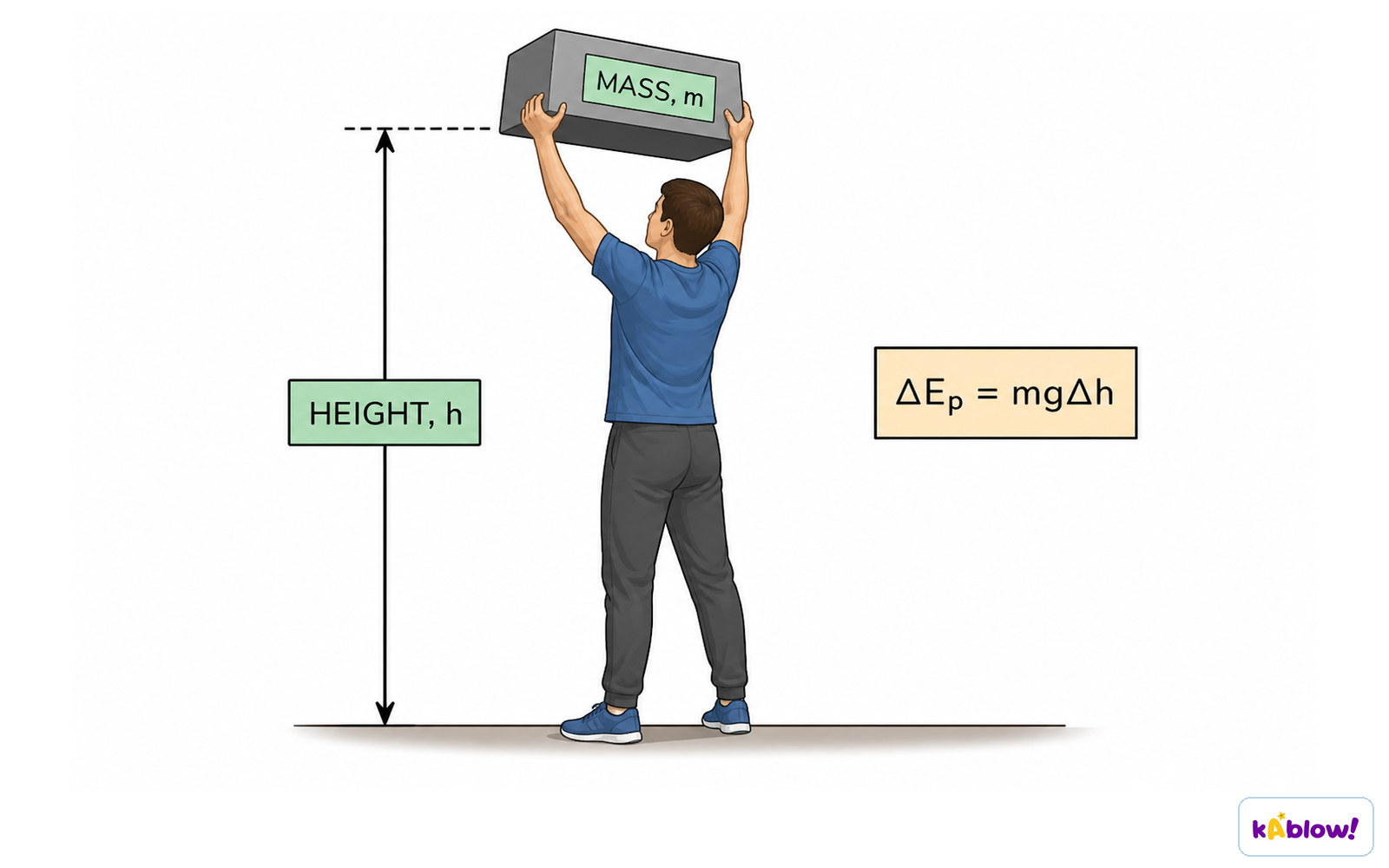
- Gravitational potential energy is the energy an object has due to its height in a gravitational field: \Delta Ep = mg\Delta h.
- Work is done against weight to lift an object, transferring energy to its gravitational potential store.
- Gravitational field strength on Earth is g = 9.8\,\text{N/kg}.
- Round final answers to the lowest number of significant figures in the input values.
Gravitational potential energy of a lifted mass
Conservation of Energy
- Energy cannot be created or destroyed, only transferred from one store to another.
- In a closed system, total energy is constant: total energy in = total energy out.
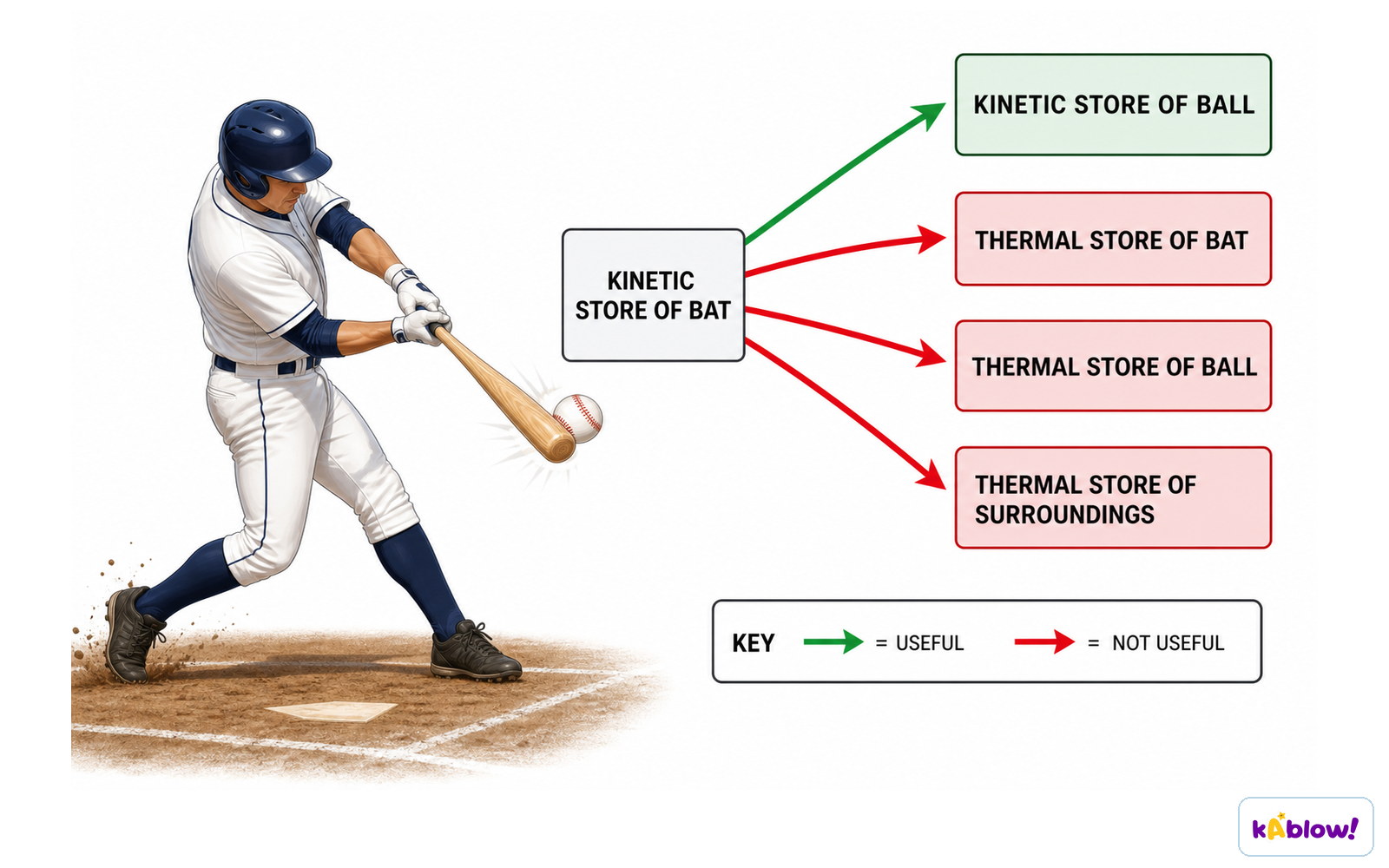
- Dissipated energy is spread out to the surroundings (often as thermal energy) and is usually wasted.
- Energy flow diagrams show stores (labels) and transfers (arrows); the total energy is conserved.
Conservation of energy: a bat hitting a ball
Work Done
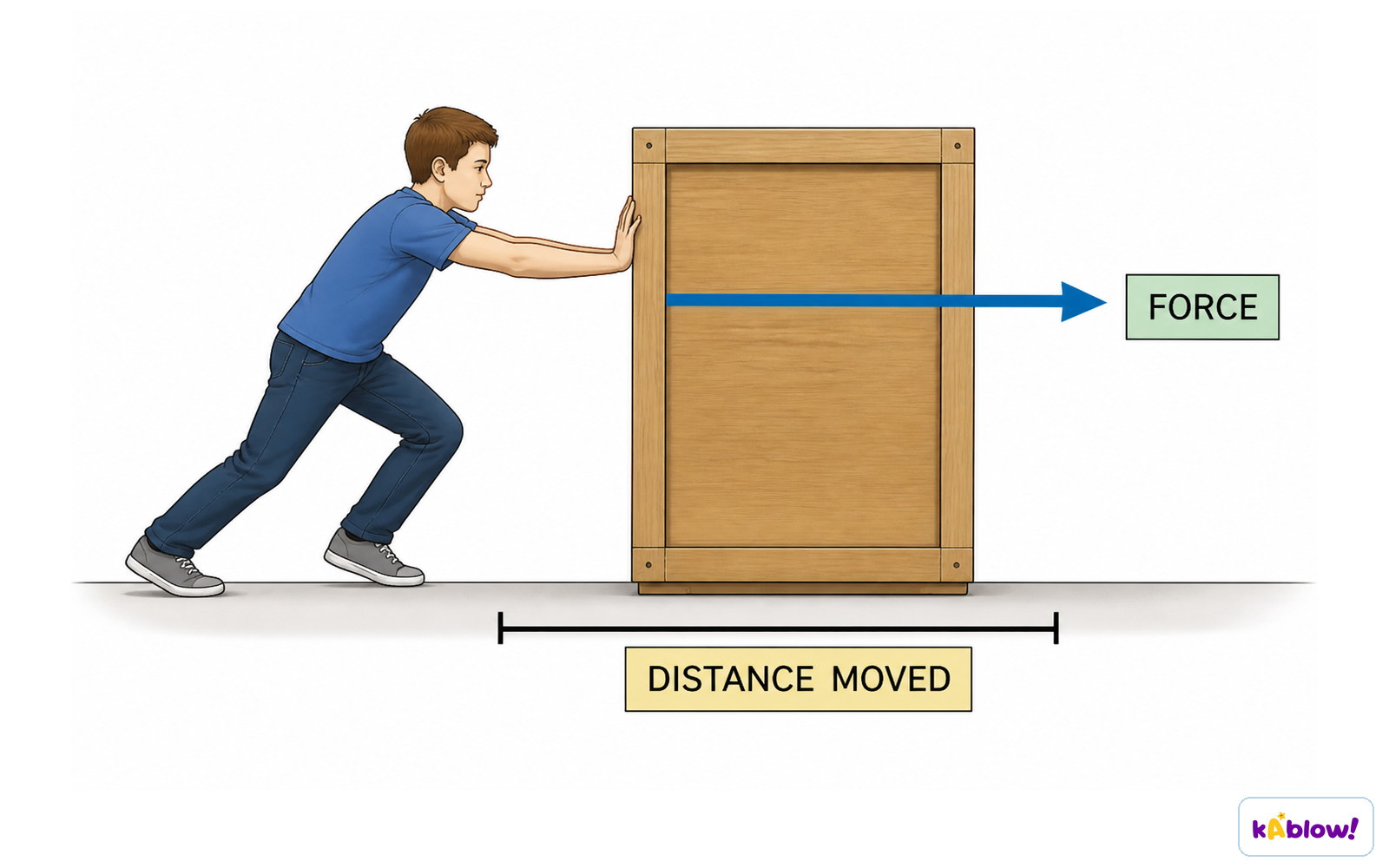
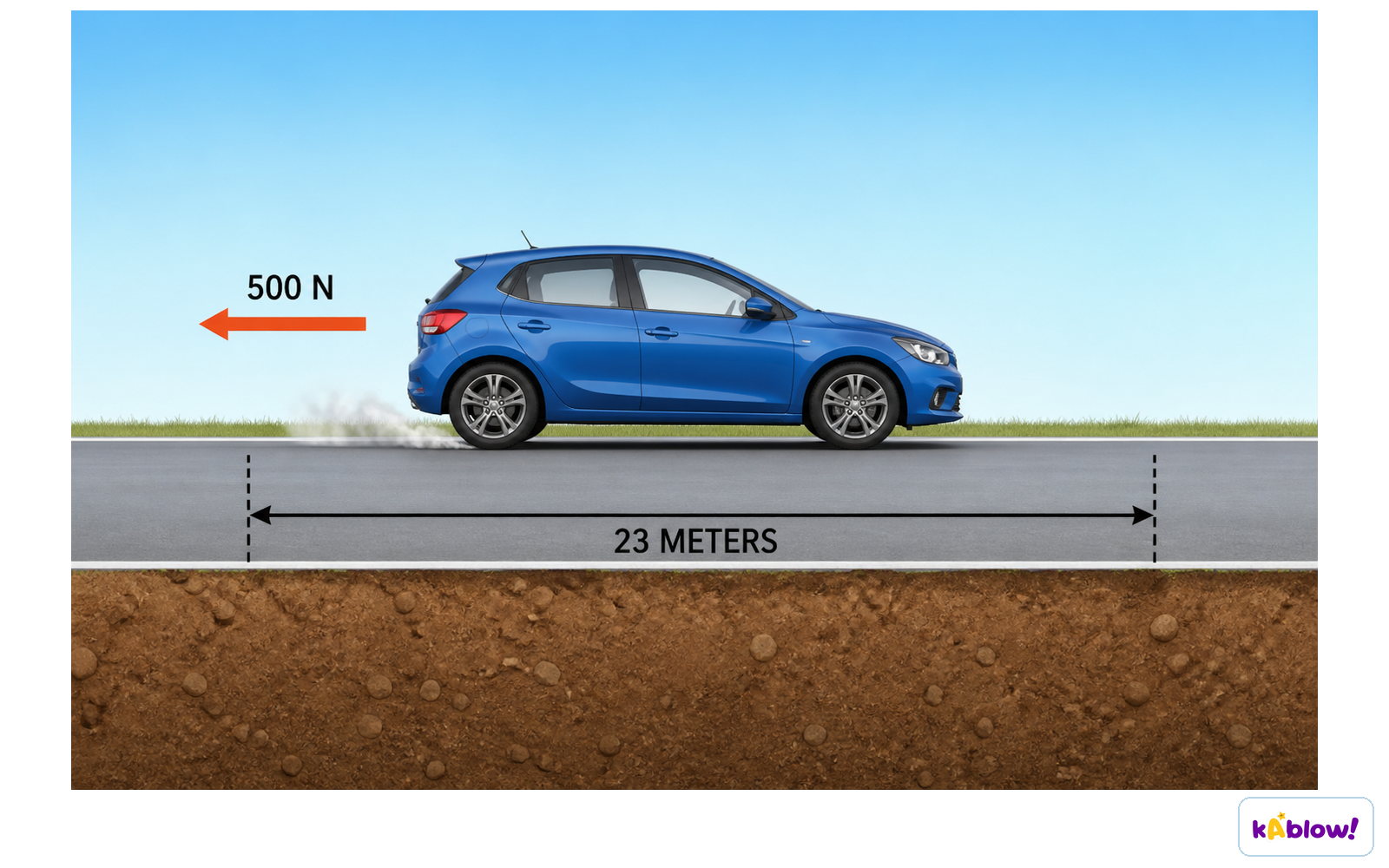
- Work is done when a force moves an object over a distance in the direction of the force: W = Fd = \Delta E.
- Work done and energy transferred are equivalent: 1 N m = 1 J.
- No work is done if the object does not move (e.g., pushing against a wall).
- Example: a bird flying does work against air resistance (drag).
Work done pushing a box
Power
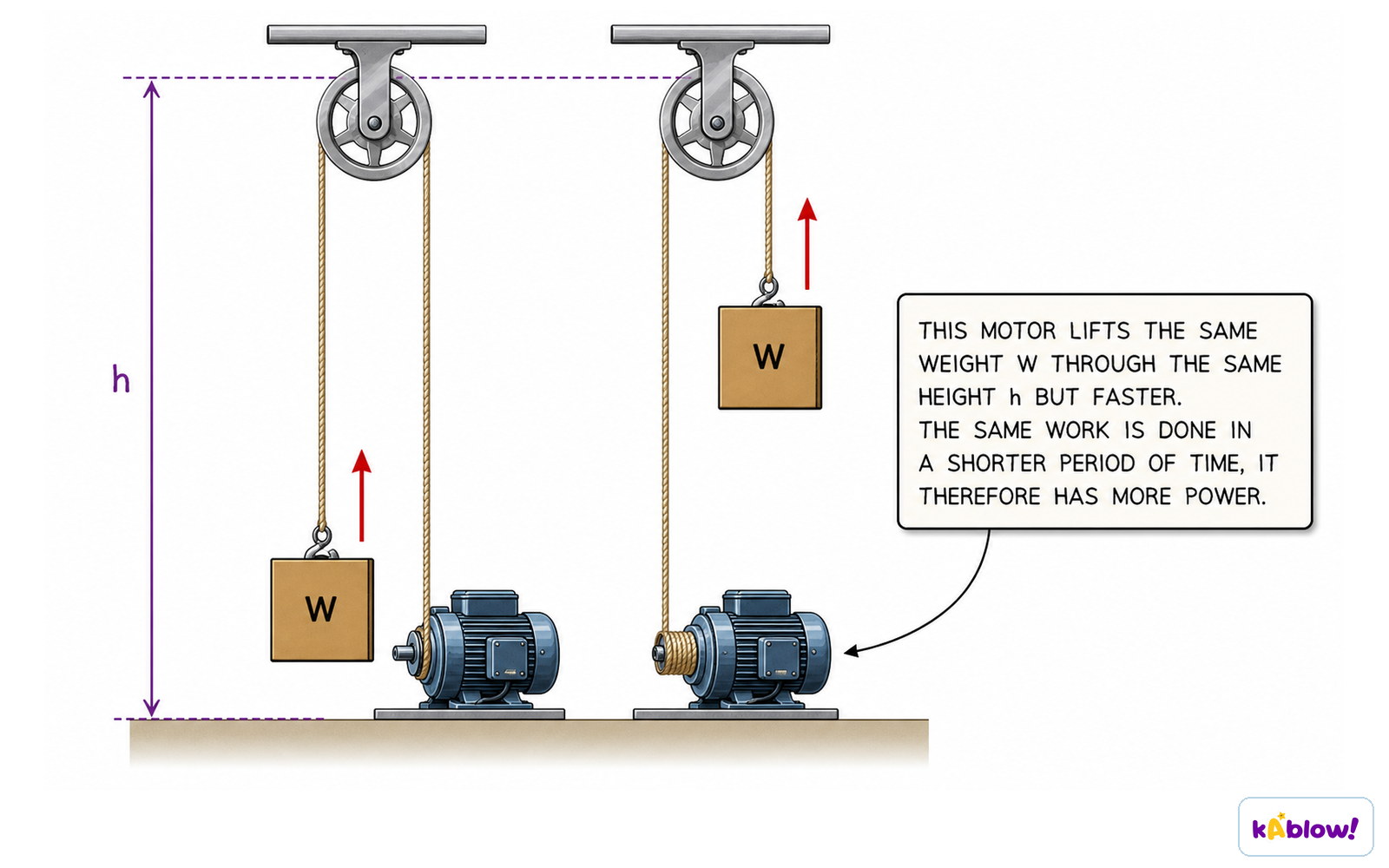
- Power is the rate of work done or energy transferred: P = \frac{W}{t} = \frac{\Delta E}{t}.
- Power is measured in watts (W); 1 W = 1 J/s.
- Common power ratings: torch 1 W, light bulb 100 W, large power station 10 GW.
- A more powerful machine does the same work in less time.
Two motors lifting the same weight at different speeds
Efficiency
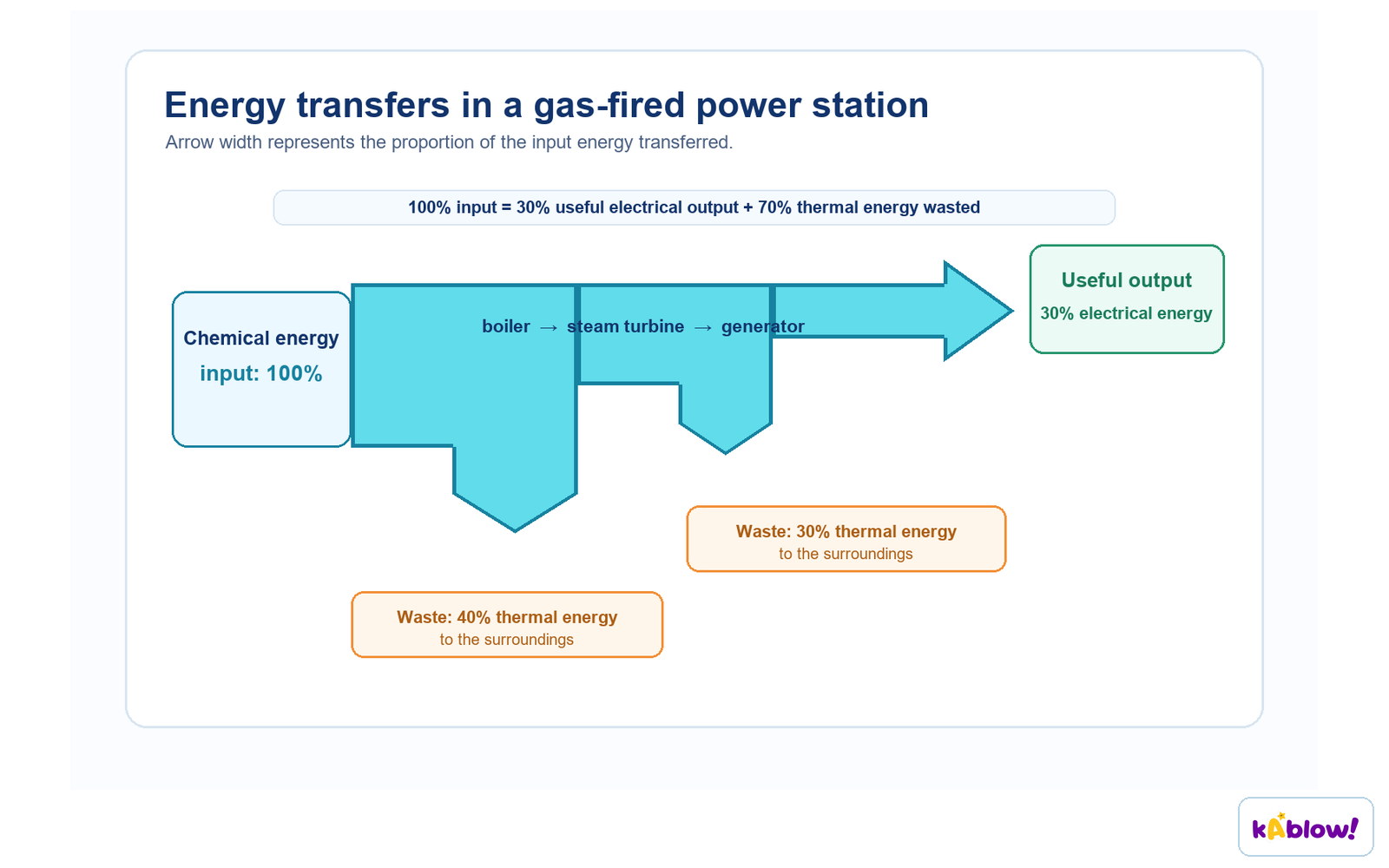
- Efficiency is the ratio of useful energy (or power) output to total energy (or power) input.
- Efficiency = (useful energy output / total energy input) × 100%.
- Efficiency = (useful power output / total power input) × 100%.
- Efficiency has no units; it can be a decimal (0–1) or percentage (0–100%).
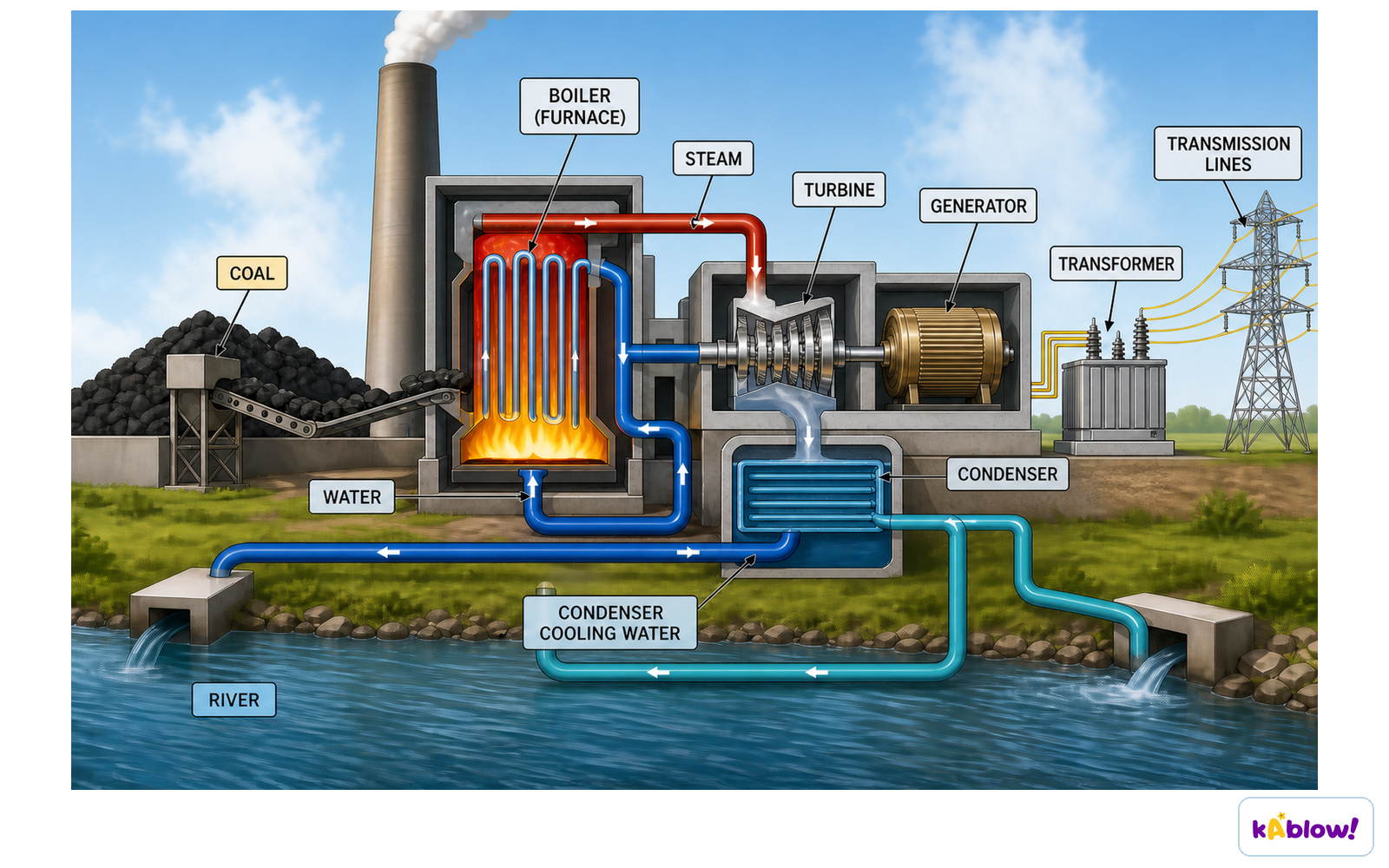
- Example: a typical thermal power station is about 30% efficient; 70% of energy is wasted.
Sankey diagram of a gas-fired power station
Energy Resources
- Solar cells convert sunlight directly into electricity (photovoltaic effect); solar panels heat water using infrared radiation.
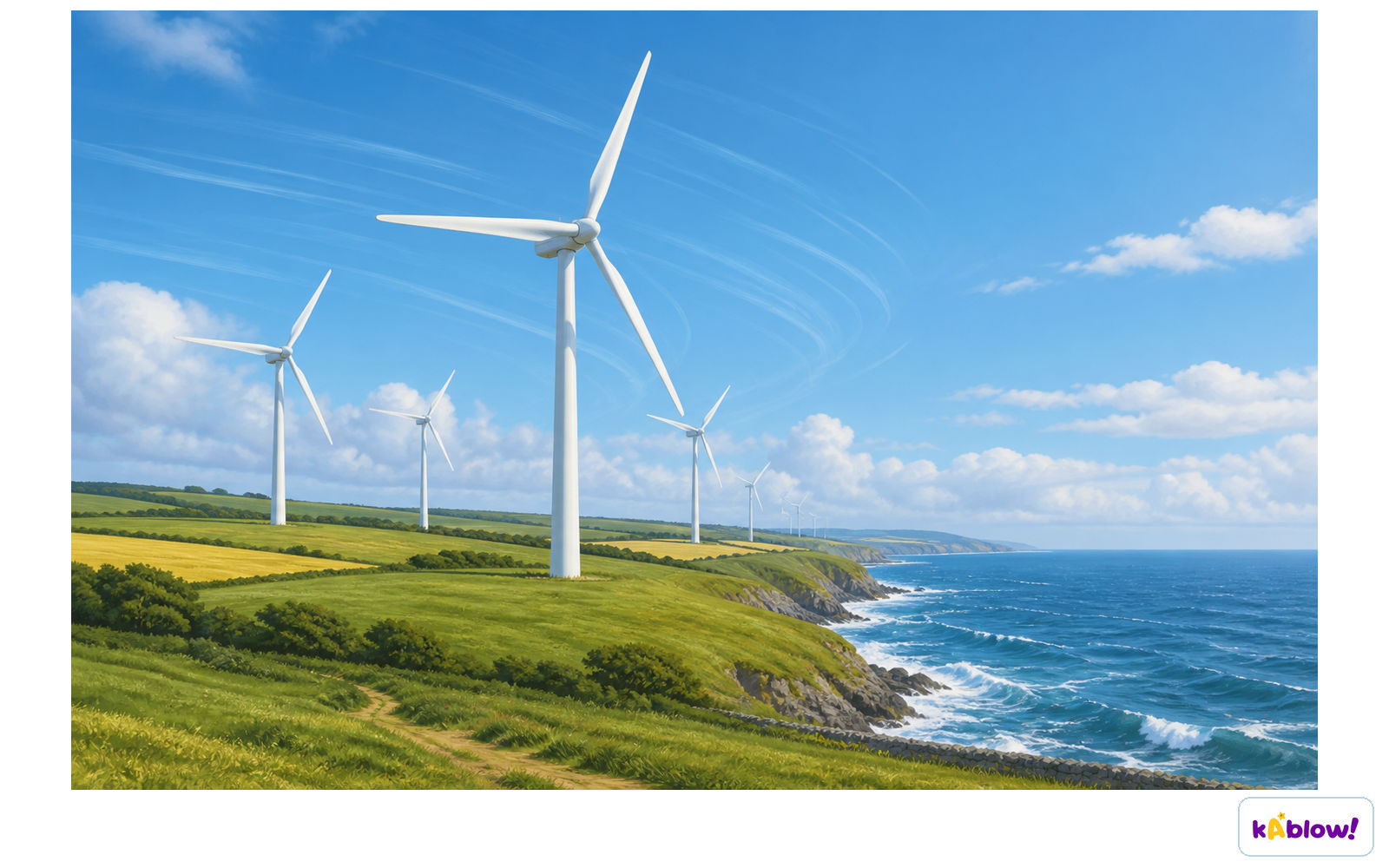
- Wind turbines transfer kinetic energy of wind to electricity; efficiency ~50%.
- Fossil fuels (coal, oil, gas) are non-renewable; burning releases CO₂ and SO₂.
- Biofuels are renewable and carbon-neutral in principle, but have lower energy density.
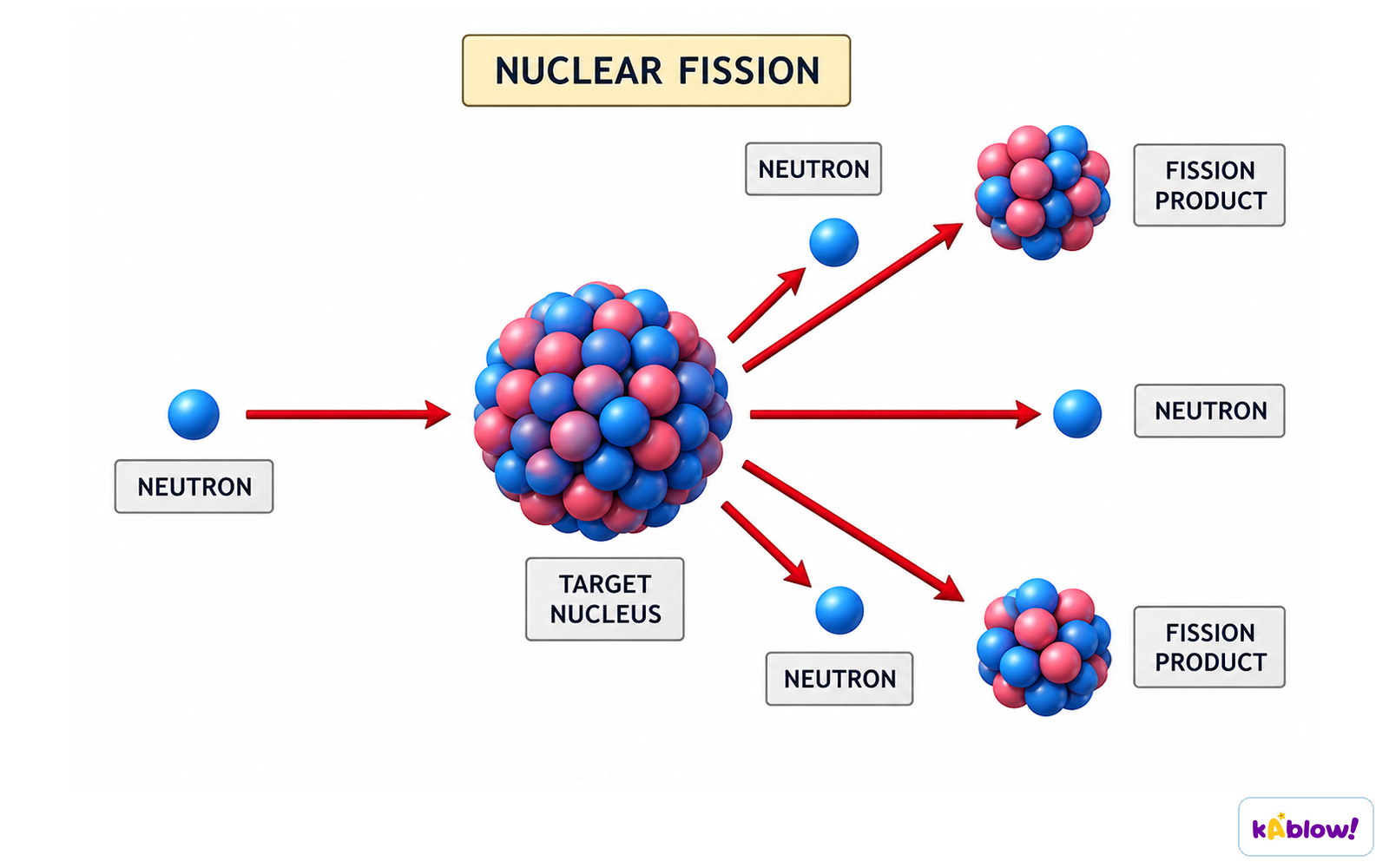
- Nuclear fission splits large nuclei to release energy; used in power stations.
- Hydroelectric, wave, and tidal power use water movement to turn turbines.
- Geothermal energy uses heat from Earth's core; renewable but location-dependent.
Wind turbines on a coastal wind farm
Nuclear Fission & Fusion
- Nuclear fission: splitting a large nucleus into two smaller nuclei, releasing energy.
- Nuclear fusion: joining two small nuclei to form a larger nucleus, releasing huge energy (occurs in stars).
- Fission is used in nuclear power stations; fusion requires extremely high temperatures and pressures.
Nuclear fission of a target nucleus
Slide
Sign up free to view the lesson slides
Step through every slide for this topic — plus flashcards and revision notes — with a free account.
Câu hỏi luyện tập
Xem trước miễn phí — 8 trên 56 câu hỏi. Đăng ký để xem tất cả.
1.Which of the following is a correct unit for energy?
Easy- Ajoule
- Bwatt
- Cnewton
- Dmetre
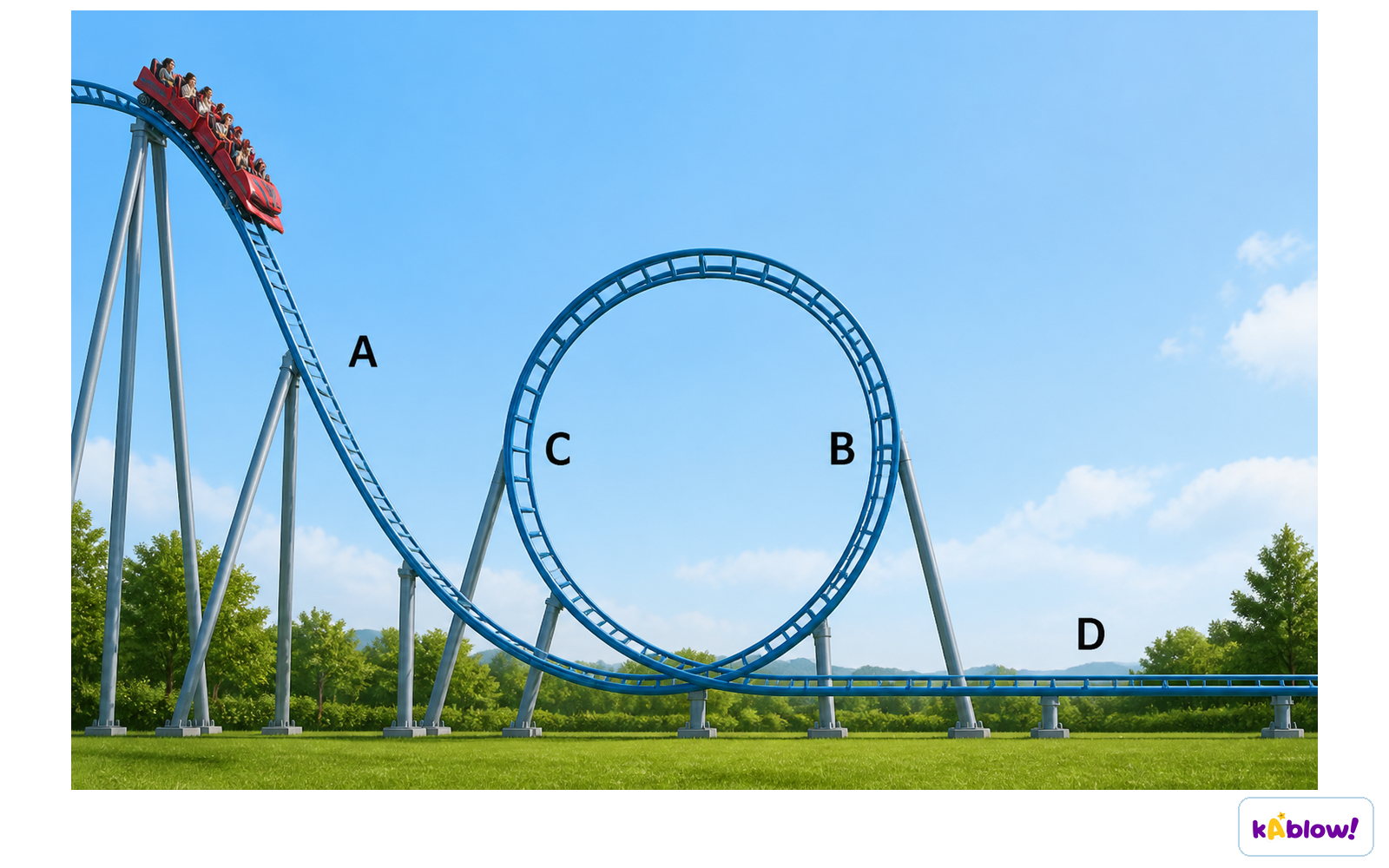
2.A ball is dropped from a height. As it falls, what happens to its gravitational potential energy and kinetic energy?
Easy- Agravitational potential energy increases, kinetic energy decreases
- Bgravitational potential energy decreases, kinetic energy increases
- Cboth gravitational potential energy and kinetic energy increase
- Dboth gravitational potential energy and kinetic energy decrease
3.State the principle of conservation of energy.
Easy4.Complete the sentence about power.
EasyPower is the rate at which ____ is done or energy is transferred.
5.Name one energy resource that does not come from the Sun.
Easy6.An electric motor has an efficiency of 35%. It lifts a 7.2 kg load through 5 m in 3 s. What is the power input to the motor? (g = 9.8 N/kg)
Hard- A117.6 W
- B336 W
- C352.8 W
- D100.8 W
7.Explain the difference between nuclear fission and nuclear fusion.
Medium8.Which energy store is associated with a moving object?
Easy- Akinetic
- Bgravitational potential
- Cchemical
- Delastic potential
Unlock all 56 questions & more
Tạo tài khoản miễn phí để xem mọi câu hỏi, slide, thẻ ghi nhớ và ghi chú ôn tập cho chủ đề này.