Physical Quantities And Measurement Techniques
Học bằng cách chơi
Trả lời những câu hỏi này để kiếm năng lượng, rồi câu cá và khám phá. Không cần tài khoản.
Ghi chú bài học
Measurement of Length
- Rulers measure small distances (cm) to the nearest millimetre.
- Tape measures measure lengths of tens of centimetres.
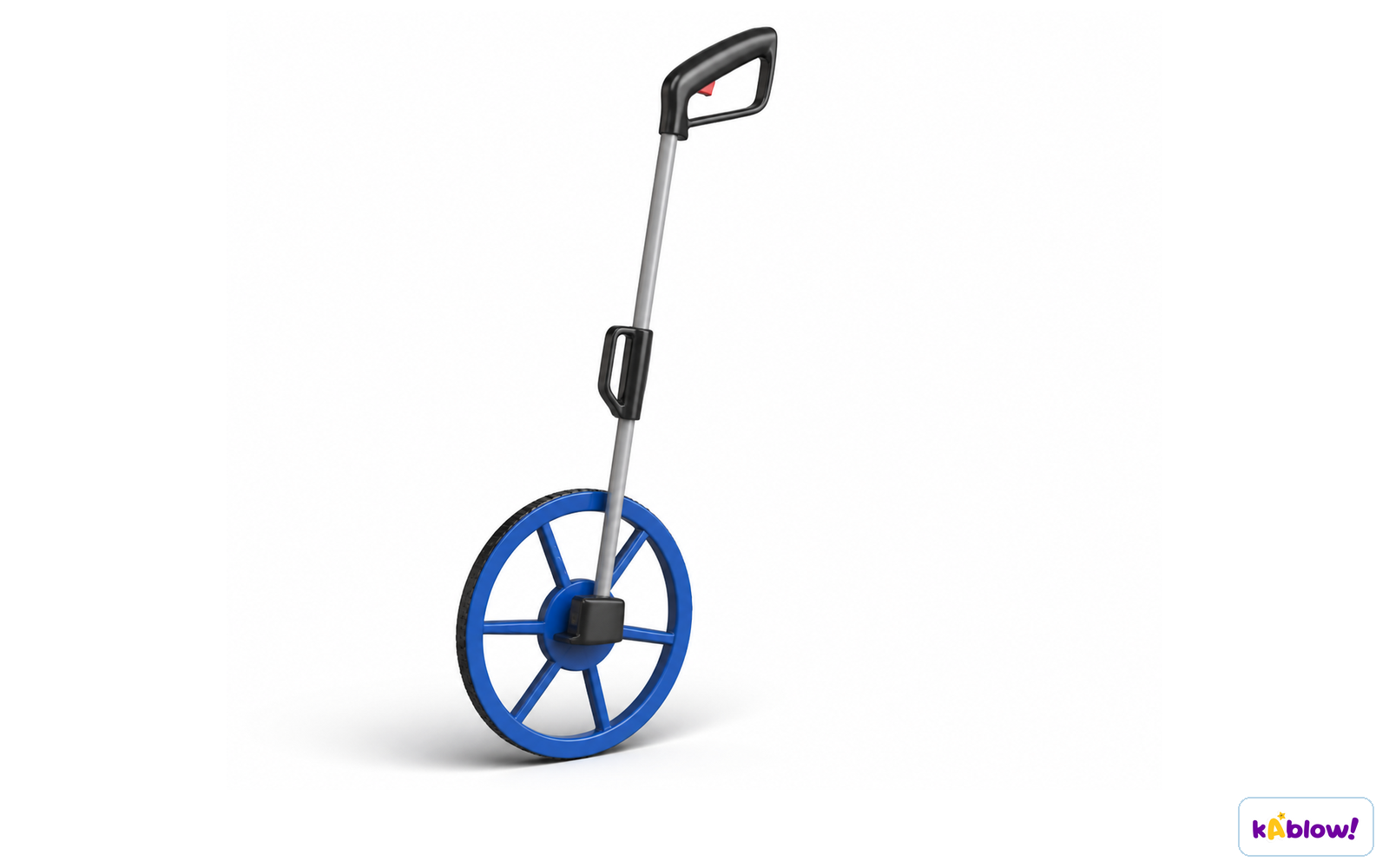
- Trundle wheels measure lengths of tens of metres.
- For small objects, measure multiple (e.g., 4 ball-bearings) and divide by the number to find one dimension.
Trundle wheel
Measurement of Volume
- Measuring cylinders measure the volume of liquids directly.
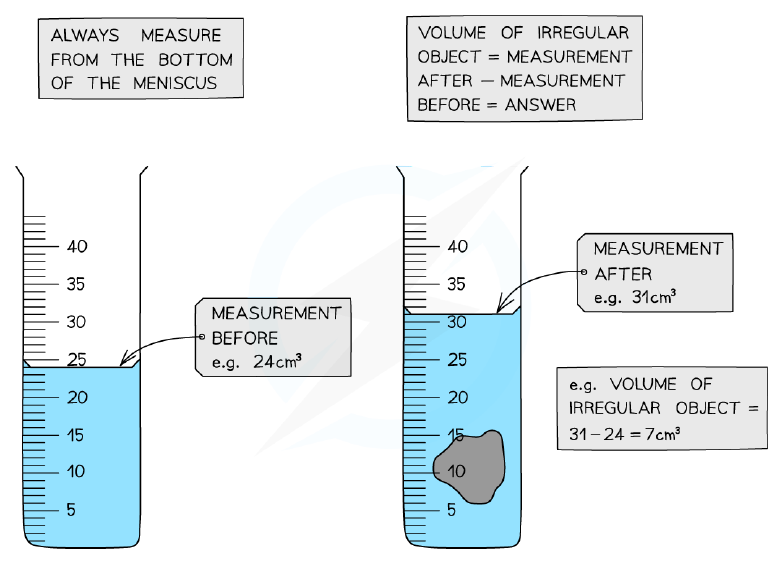
- The volume of an irregular solid is found by the displacement method: measure the change in liquid volume.
- Read the bottom of the meniscus at eye level for accuracy.
Measuring cylinders showing before and after readings
Measurement of Time
- Stop-clocks and stopwatches measure time intervals.
- Human reaction time (≈0.25 s) can cause significant error for short intervals.
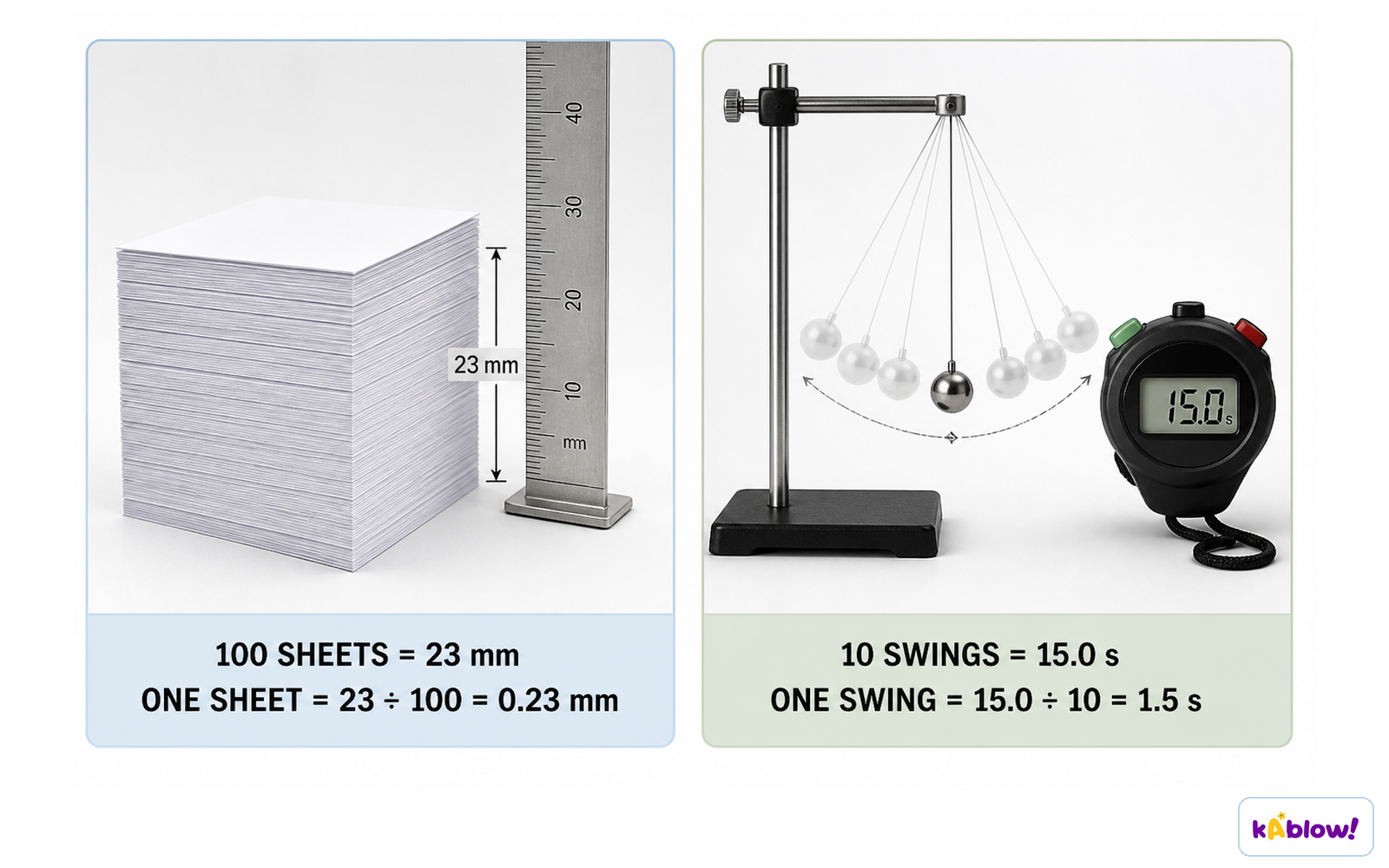
- To reduce uncertainty, measure the time for multiple oscillations (e.g., 10 swings) and divide by the number.
- Use a fiducial marker (e.g., a line at equilibrium) to improve timing accuracy.
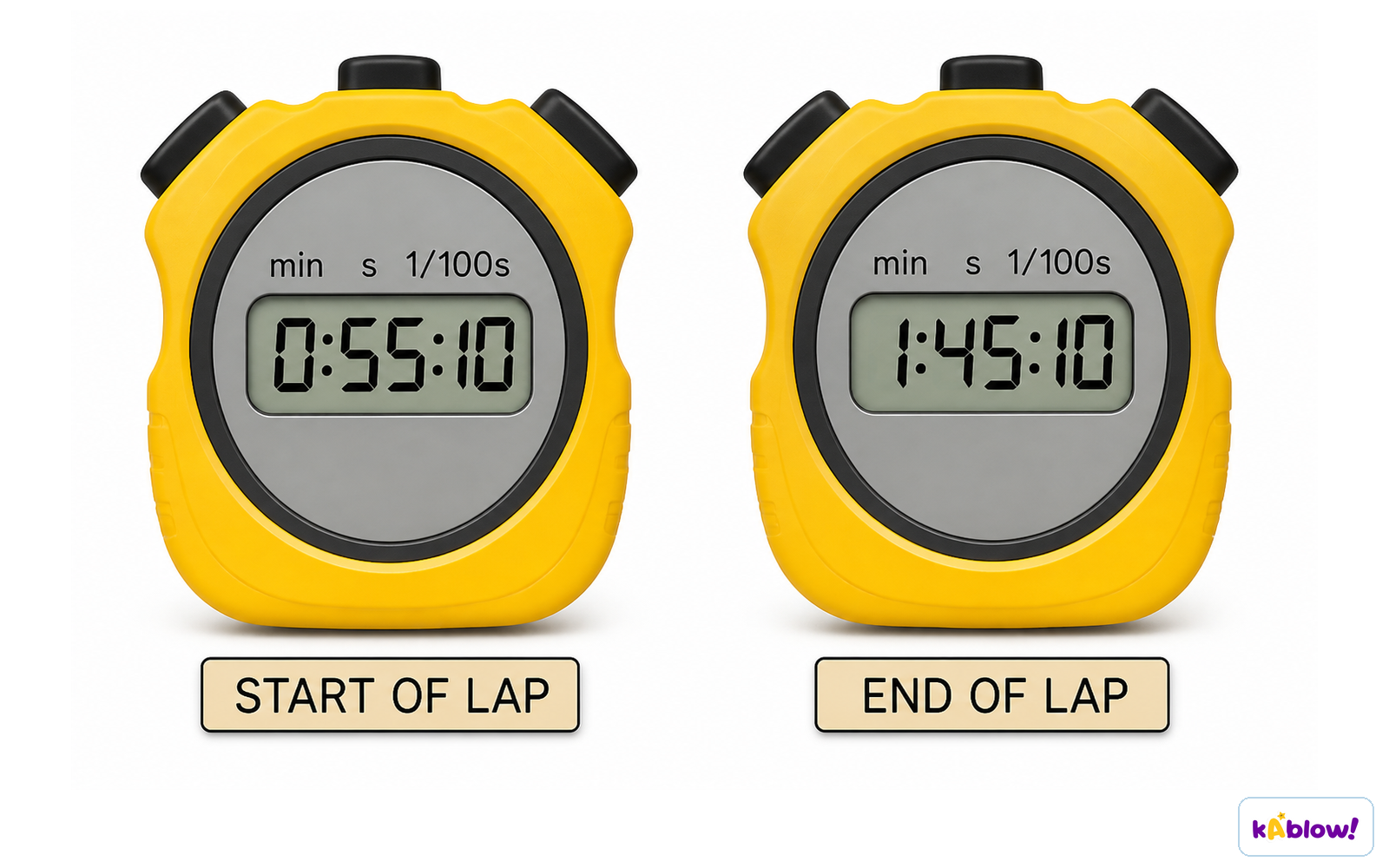
Two stopwatches showing the start and end of a lap
Multiple Readings & Accuracy
- Taking multiple readings reduces the impact of random errors.
- Example: measure thickness of 100 sheets of paper, then divide by 100 for average thickness of one sheet.
- Two measurements are considered equal within experimental accuracy if they differ by less than 10%.
Taking multiple readings to improve accuracy
Scalars & Vectors
- Scalar quantities have magnitude only (e.g., mass, distance, speed, energy).
- Vector quantities have both magnitude and direction (e.g., weight, displacement, velocity, force).
- Distance is the total path length (scalar); displacement is the straight‑line distance from start to finish (vector).
- Speed is distance per unit time (scalar); velocity is displacement per unit time (vector).
- An object can have constant speed but changing velocity if it changes direction.
Distance vs displacement
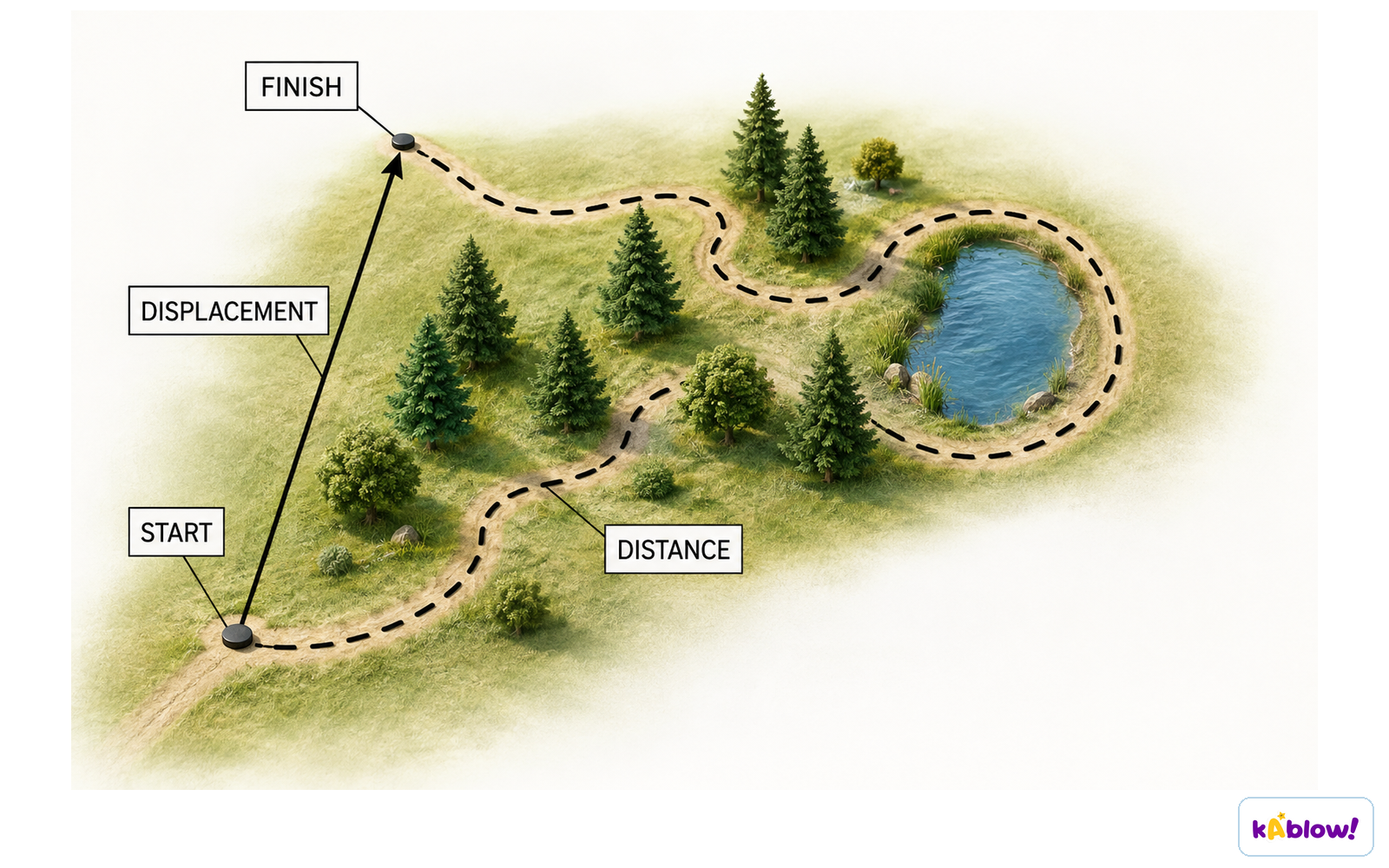
Examples of Scalars & Vectors
- Scalars: distance, speed, mass, energy, volume, density, temperature, power.
- Vectors: displacement, velocity, weight, force, acceleration, momentum.
- Mass is a scalar; weight is a vector (force due to gravity).
- Mass does not change with location; weight depends on gravitational field strength.
Examples of scalar and vector quantities
Slide
Sign up free to view the lesson slides
Step through every slide for this topic — plus flashcards and revision notes — with a free account.
Câu hỏi luyện tập
Xem trước miễn phí — 8 trên 34 câu hỏi. Đăng ký để xem tất cả.
1.The diagram shows four identical ball-bearings placed between two blocks on a steel ruler. The total length of the four ball-bearings is 8 cm. Calculate the diameter of one ball-bearing in cm.
Easy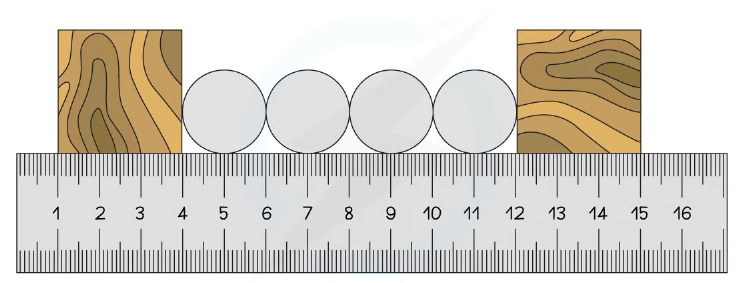
- A1
- B2
- C3
- D4
2.A stopwatch reads 0:55:10 at the start of a lap and 1:45:10 at the end. Calculate the time taken for the lap in seconds.
Easy- A45
- B55
- C50
- D60
3.State the typical human reaction time for an alert person.
Easy4.What is a scalar quantity?
Easy5.What is a vector quantity?
Easy6.Distance is a scalar quantity.
EasyTrue or false?
7.Displacement is a scalar quantity.
EasyTrue or false?
8.Match each quantity to its type (scalar or vector).
Easy- distance
- displacement
- speed
- velocity
- scalar
- vector
Unlock all 34 questions & more
Tạo tài khoản miễn phí để xem mọi câu hỏi, slide, thẻ ghi nhớ và ghi chú ôn tập cho chủ đề này.