Simple Phenomena Of Magnetism
Học bằng cách chơi
Trả lời những câu hỏi này để kiếm năng lượng, rồi câu cá và khám phá. Không cần tài khoản.
Ghi chú bài học
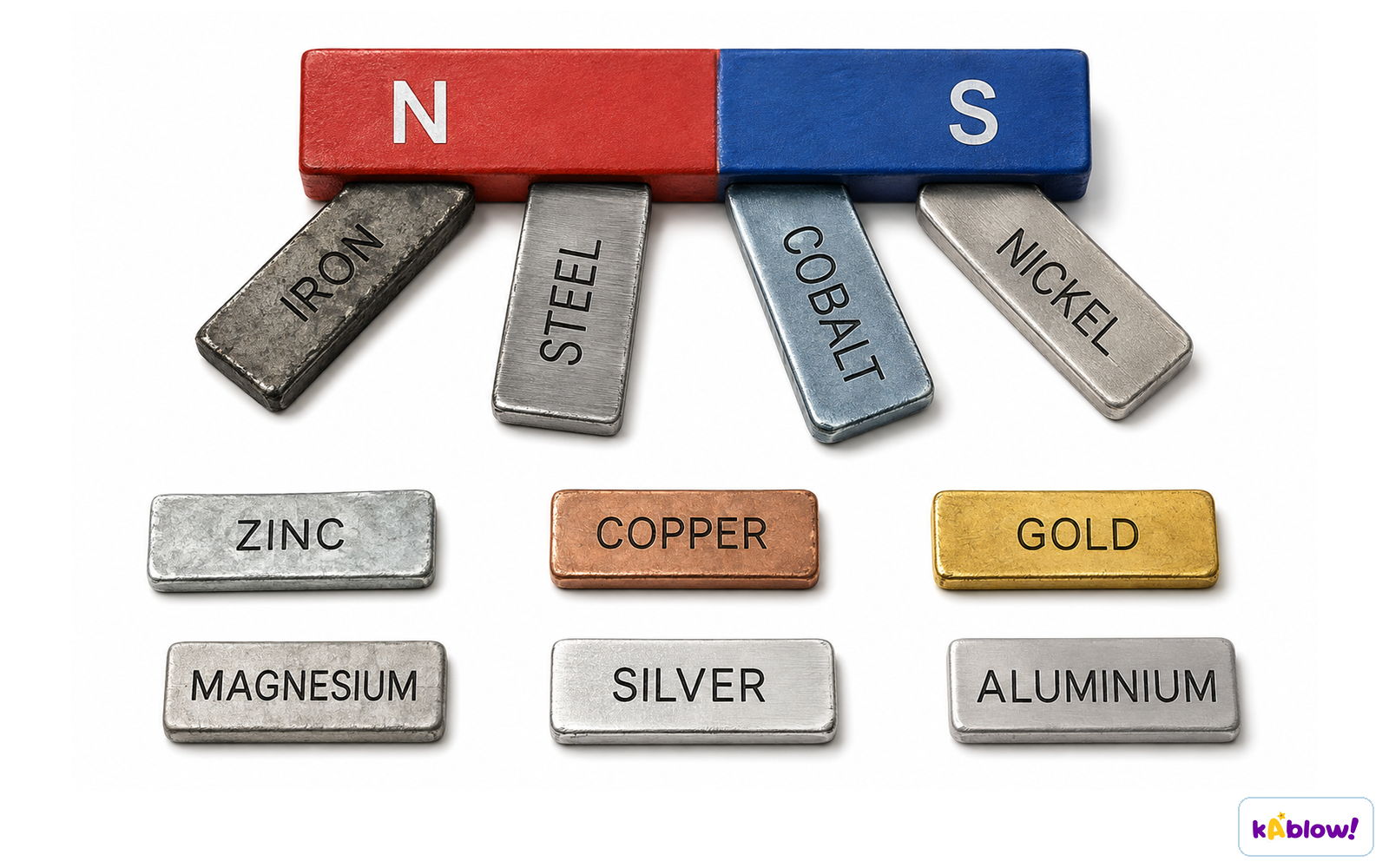
Magnetic and Non-Magnetic Materials
- Only iron, cobalt, nickel, and steel (an alloy containing iron) are magnetic.
- Magnetic materials are attracted to a magnet; non-magnetic materials are not.
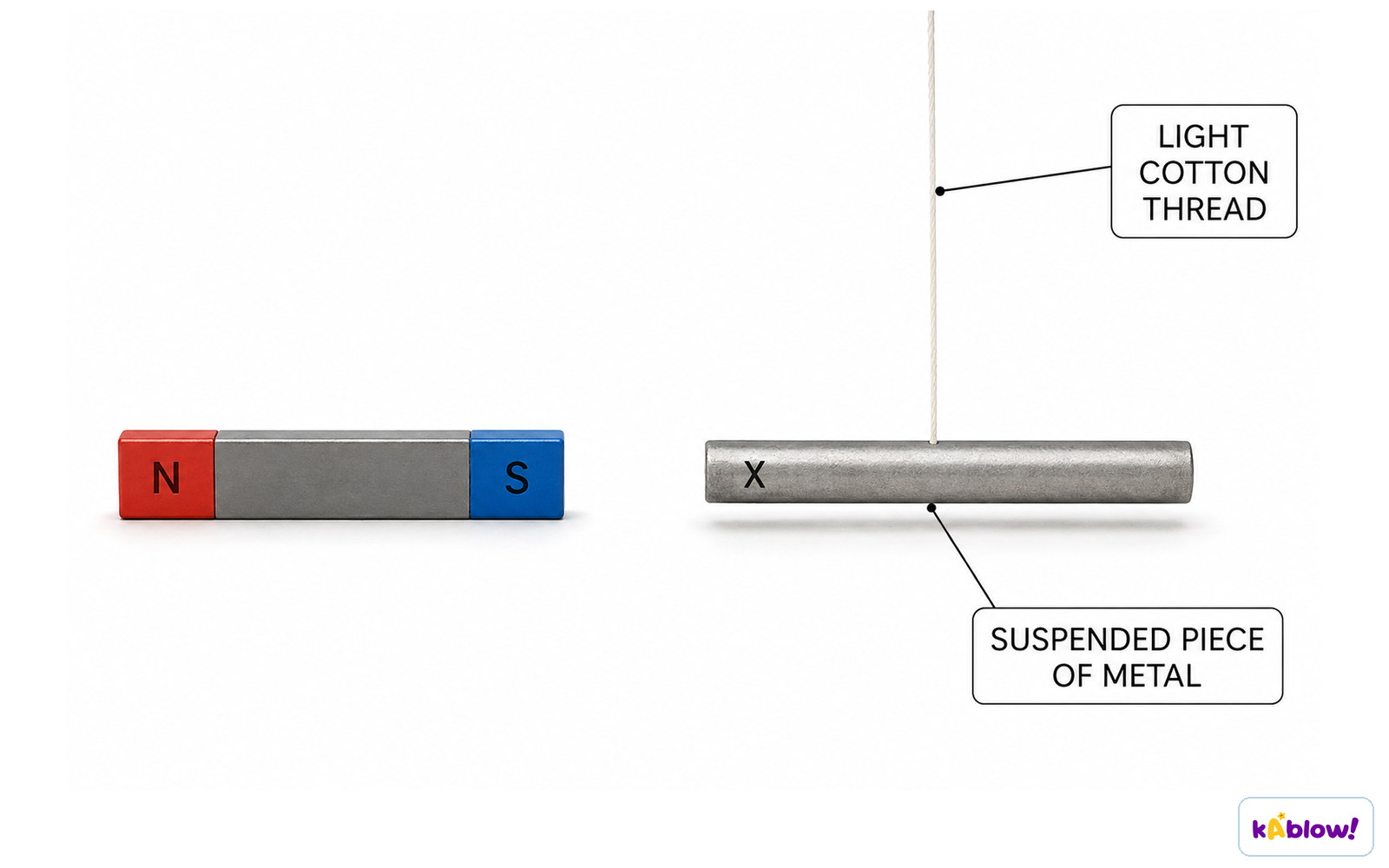
- A magnetic material (not a magnet) is attracted to both poles of a permanent magnet.
- To test a material: if repelled by a known magnet, it is a magnet; if attracted, it is a magnetic material; if neither, it is non-magnetic.
Magnetic materials
Forces Between Magnetic Poles
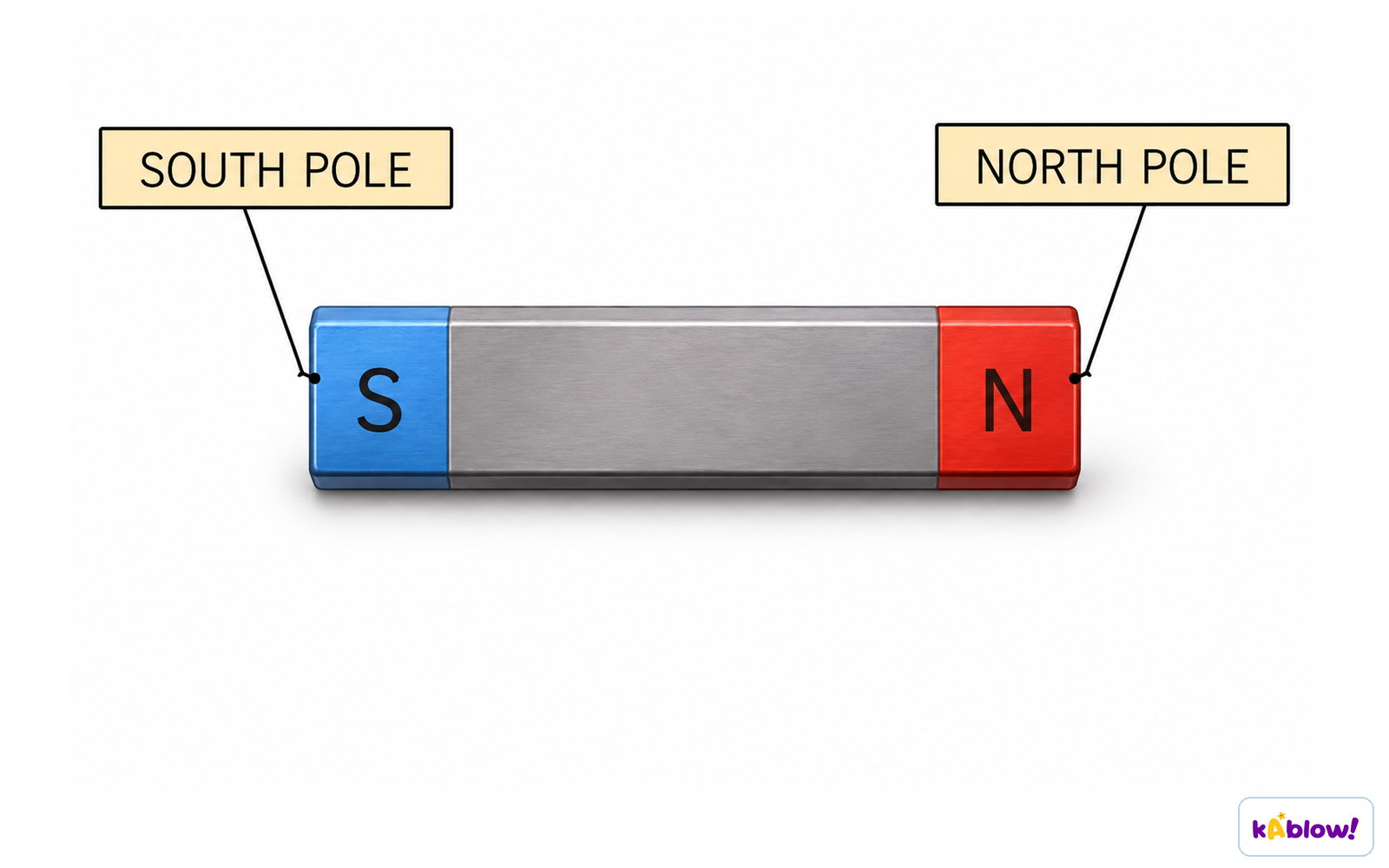
- Every magnet has a north pole and a south pole; magnetic forces are strongest at the poles.
- Like poles repel: north–north or south–south push apart.
- Opposite poles attract: north–south pull together.
- The force between a magnet and a magnetic material is always attractive due to induced magnetism.
Poles of a Magnet
Induced Magnetism
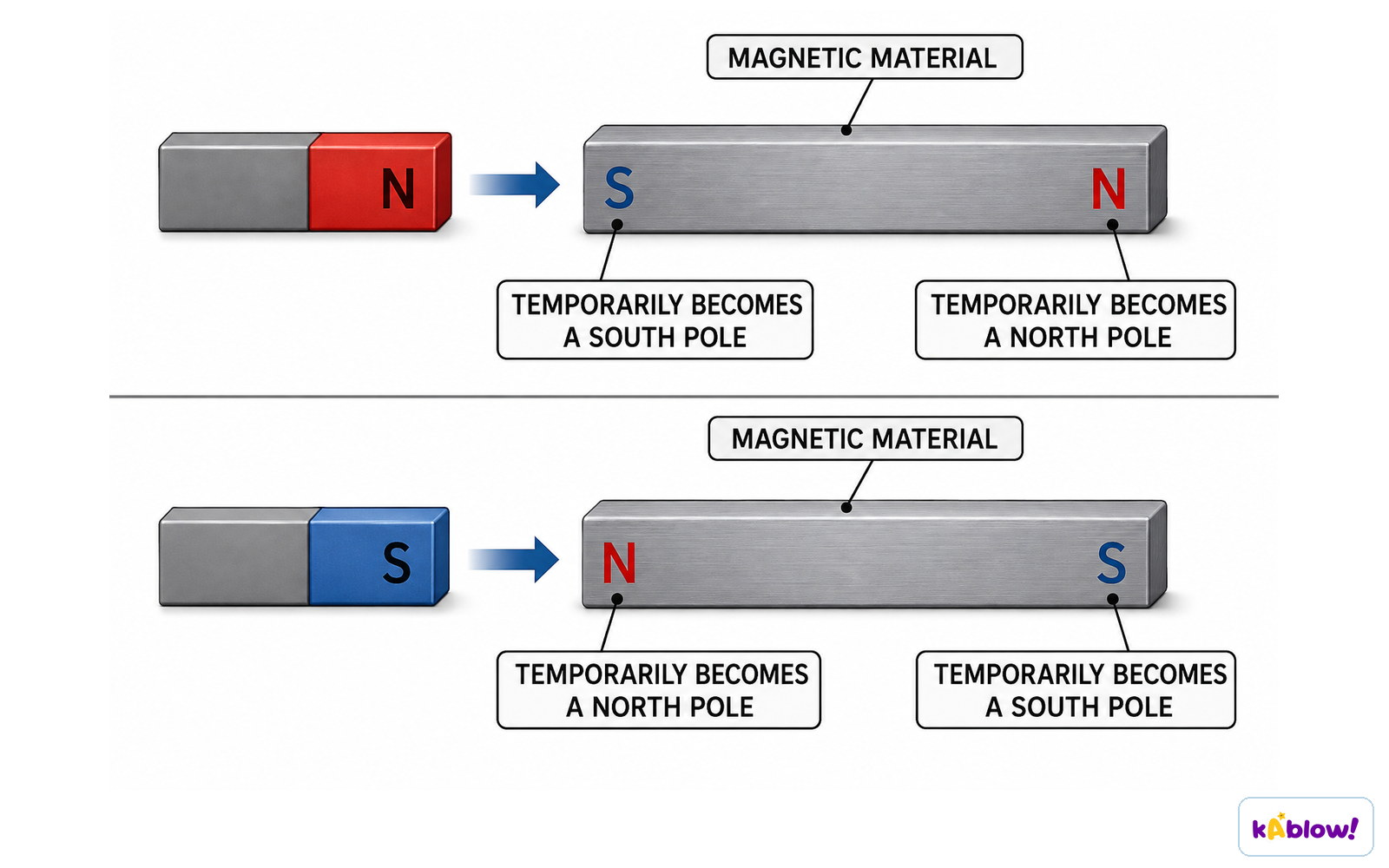
- An induced magnet is a material (e.g., soft iron) that becomes a magnet temporarily in a magnetic field.
- The end of the material nearest the magnet acquires the opposite pole to the magnet’s pole.
- When removed from the field, the material loses its magnetism quickly.
- Induced magnetism always causes attraction between the magnet and the material.
Inducing magnetism in a magnetic material
Permanent and Temporary Magnets
- Permanent magnets (e.g., steel) produce their own magnetic field and do not lose magnetism easily.
- Temporary (induced) magnets (e.g., soft iron) are magnetic only while in an external field.
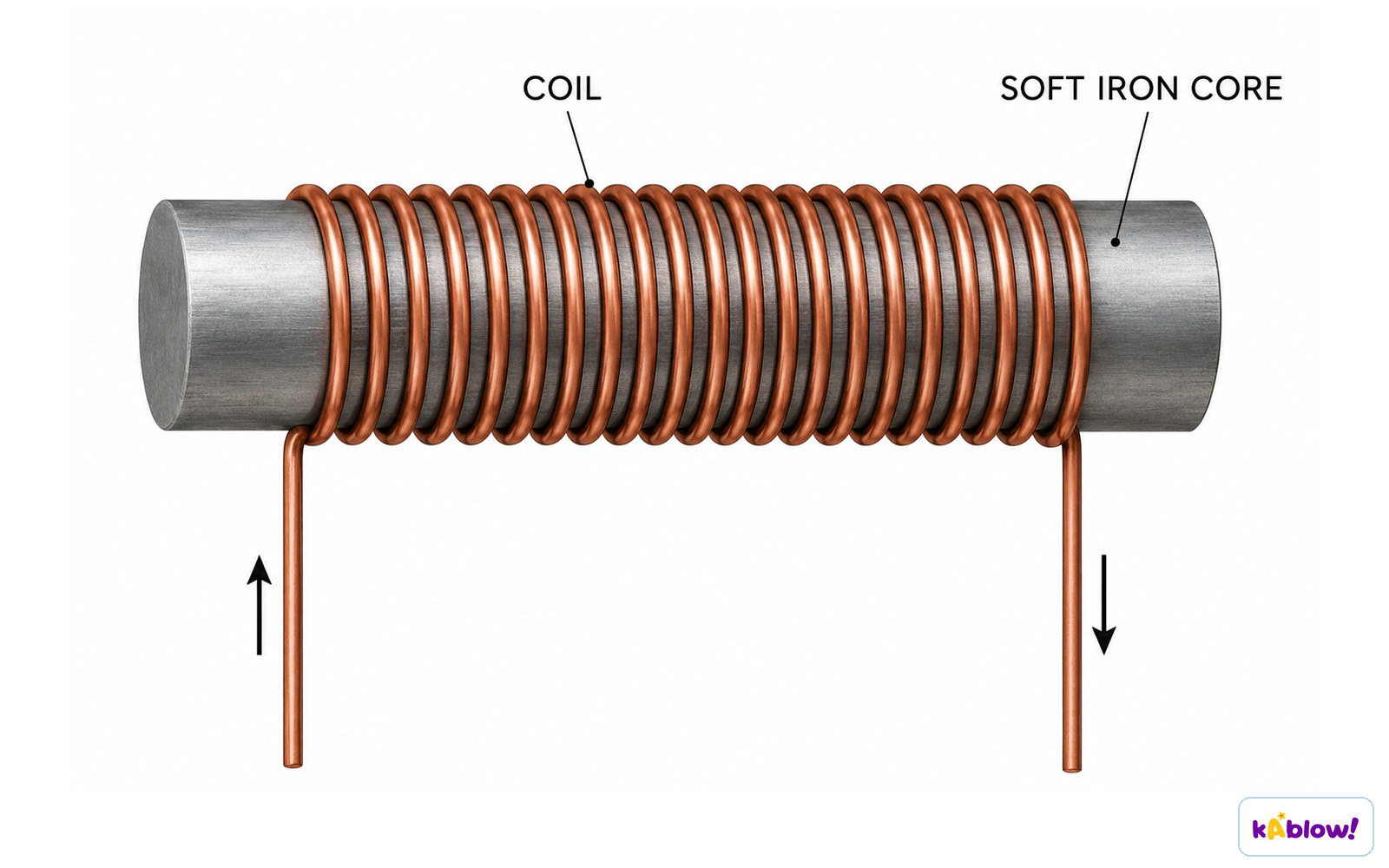
- An electromagnet consists of coils of wire around a soft iron core; it can be switched on/off.
- Strength of an electromagnet can be increased by: increasing current, increasing number of turns, or adding a soft iron core.
Electromagnet diagram
Uses of Magnets
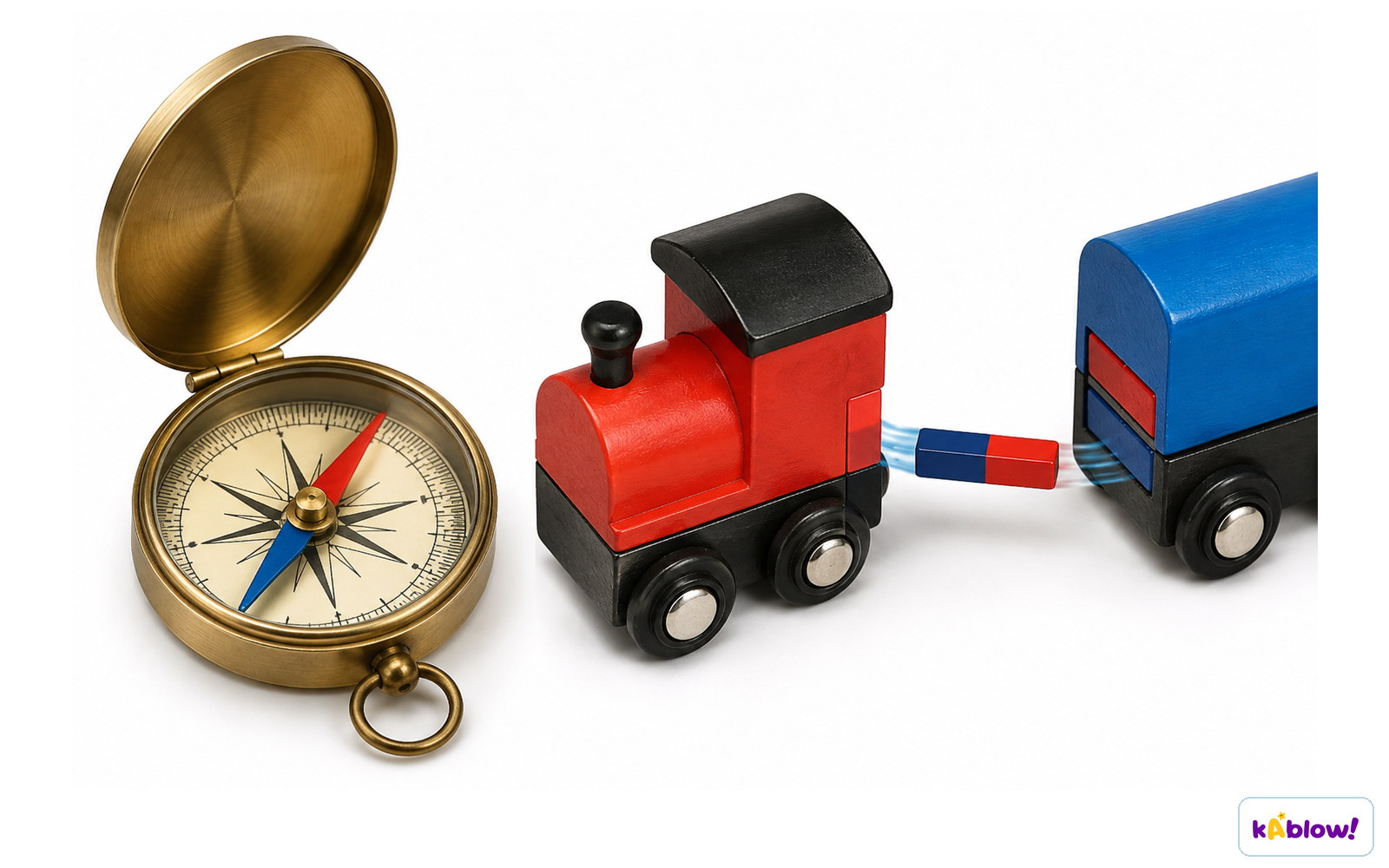
- Permanent magnets are used in compasses, fridge magnets, toys, and school experiments.
- Electromagnets are used in MRI scanners, speakers, recycling (lifting scrap metal), and Mag-Lev trains.
Uses of permanent magnets
Magnetic Fields
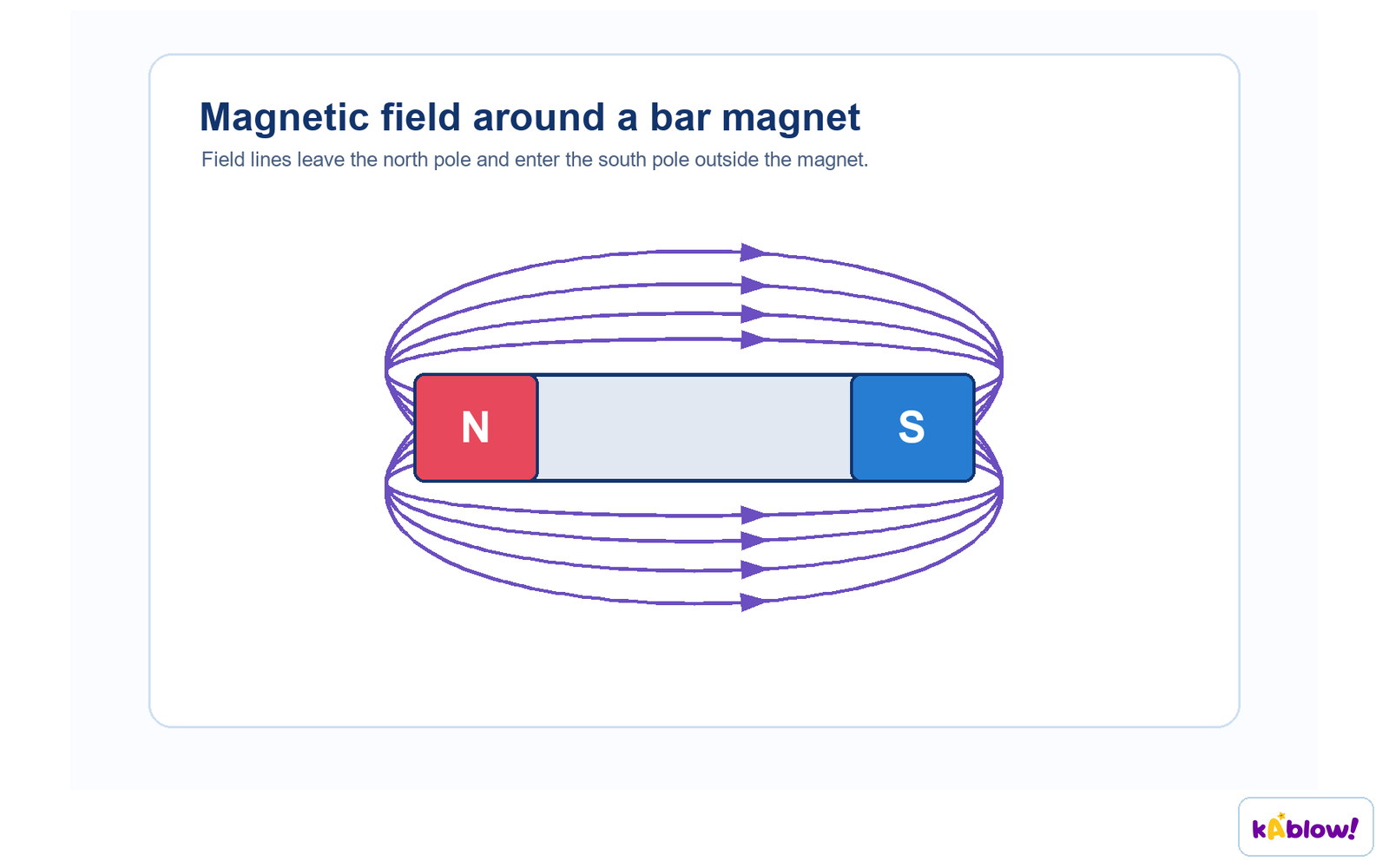
- A magnetic field is a region where a magnetic pole experiences a force.
- Field lines go from north to south; arrows show the direction of force on a north pole.
- Field is strongest at the poles (lines are closer together) and weakens with distance (lines spread out).
- The direction of the field at a point is the direction of the force on a north pole placed there.
The magnetic field around a bar magnet
Slide
Sign up free to view the lesson slides
Step through every slide for this topic — plus flashcards and revision notes — with a free account.
Câu hỏi luyện tập
Xem trước miễn phí — 8 trên 50 câu hỏi. Đăng ký để xem tất cả.
1.Which of the following metals is magnetic?
Easy- ACopper
- BAluminium
- CNickel
- DZinc
2.Two magnets are brought close together. The north pole of one magnet is placed near the north pole of the other magnet. What happens?
Easy- AThey attract each other
- BThey repel each other
- CNo force is exerted
- DThey become demagnetised
3.A bar magnet is brought near a piece of metal. The metal is attracted to the magnet. Which of the following could be the metal?
Easy- AAluminium
- BCopper
- CSteel
- DZinc
4.Magnetic materials are attracted to both poles of a permanent magnet.
EasyTrue or false?
5.An induced magnet can be switched on and off.
MediumTrue or false?
6.State the two magnetic metals (other than steel).
Easy7.Explain why a magnetic material is always attracted to a magnet, regardless of which pole is held close to it.
Medium8.Complete the sentence:
EasyLike magnetic poles ____ and opposite magnetic poles ____.
Unlock all 50 questions & more
Tạo tài khoản miễn phí để xem mọi câu hỏi, slide, thẻ ghi nhớ và ghi chú ôn tập cho chủ đề này.