Sound
Học bằng cách chơi
Trả lời những câu hỏi này để kiếm năng lượng, rồi câu cá và khám phá. Không cần tài khoản.
Ghi chú bài học
Sound Waves
- Sound waves are produced by vibrating sources.
- A medium is required to transmit sound; sound cannot travel through a vacuum.
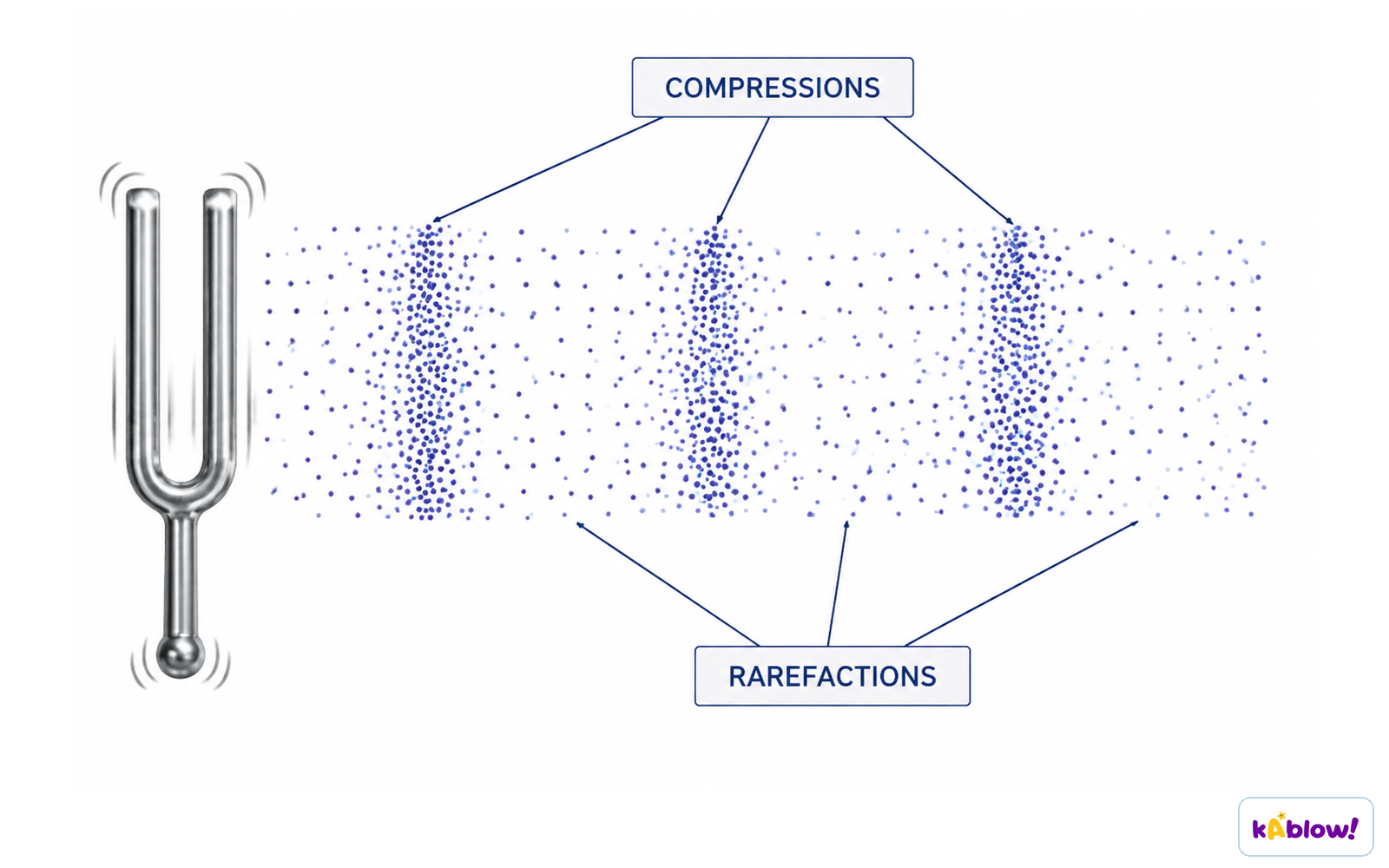
- Sound waves are longitudinal waves consisting of compressions (high pressure) and rarefactions (low pressure).
- When a sound wave meets a solid, the vibrations are transferred to the solid (e.g., can shatter glass).
Compressions and rarefactions
Measuring the Speed of Sound
- Speed of sound in air ≈ 340 m/s; fastest in solids (~5000 m/s), slowest in gases.
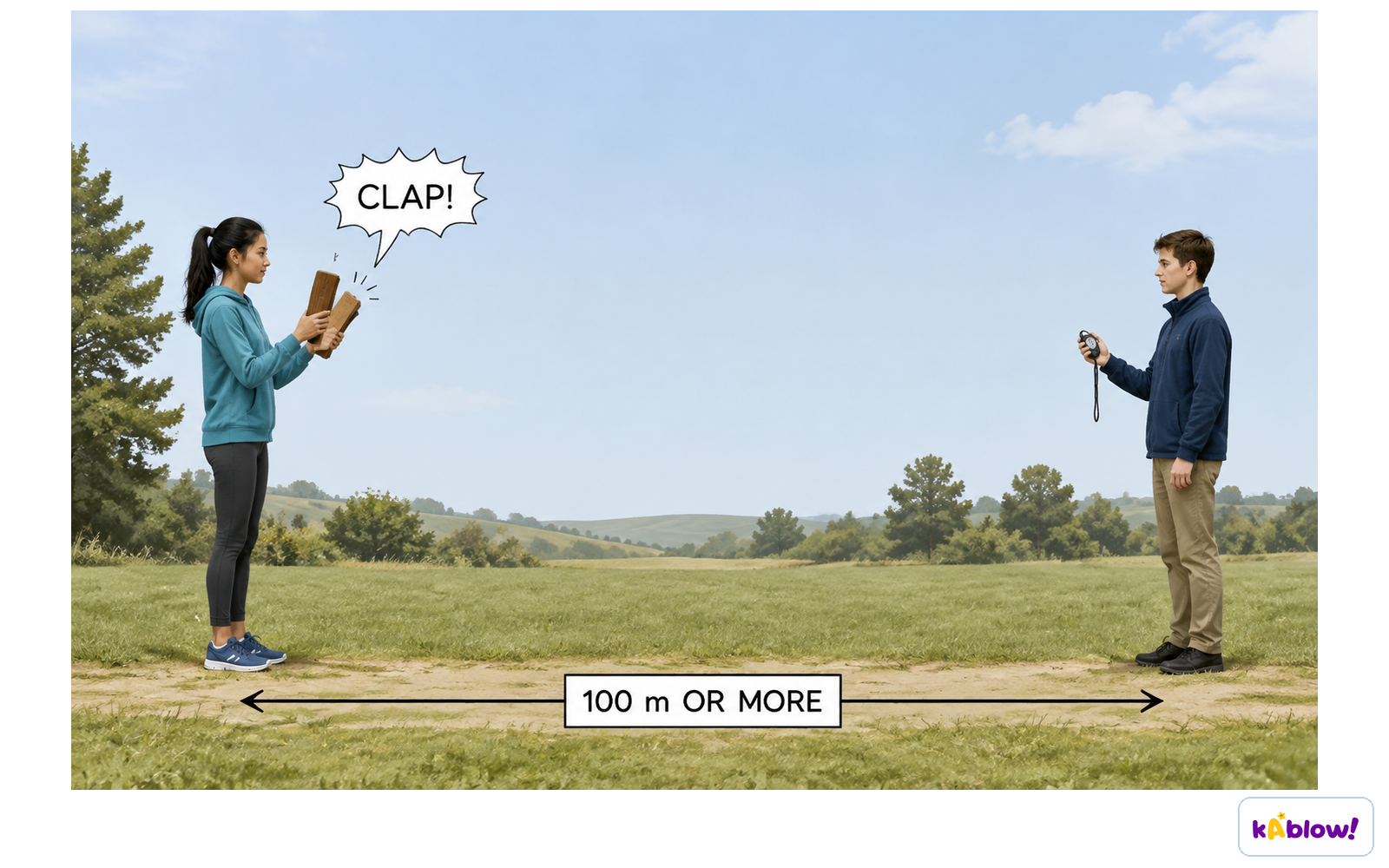
- Experiment 1: Two people at measured distance (e.g., 100 m); one bangs blocks, other starts stopwatch on sight and stops on sound. Repeat and average time.
- Experiment 2: Two microphones connected to an oscilloscope placed ~2 m apart; clap near first mic; oscilloscope measures time difference between mic signals.
- Speed = distance / time. Experiment 2 is more accurate because timing is automatic.
- Random errors in Experiment 1 due to reaction time; use larger distances and repeat readings to reduce error.
Measuring the speed of sound between two points
Pitch and Loudness
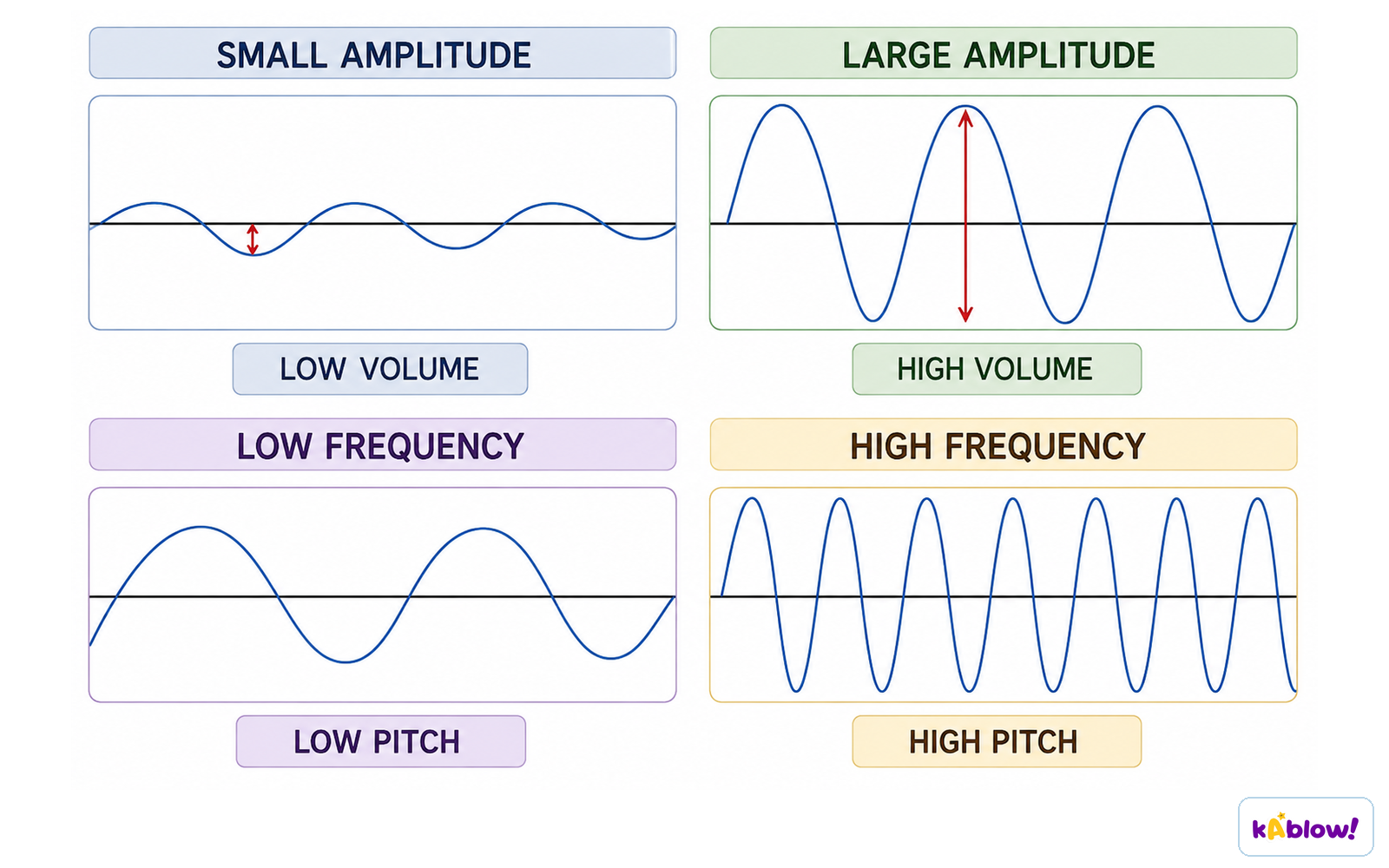
- Frequency determines pitch: high frequency → high pitch; low frequency → low pitch.
- Amplitude determines loudness: large amplitude → loud sound; small amplitude → quiet sound.
- Sound waves reflect off hard surfaces; the reflected sound is called an echo.
Pitch and amplitude of a sound wave
Ultrasound
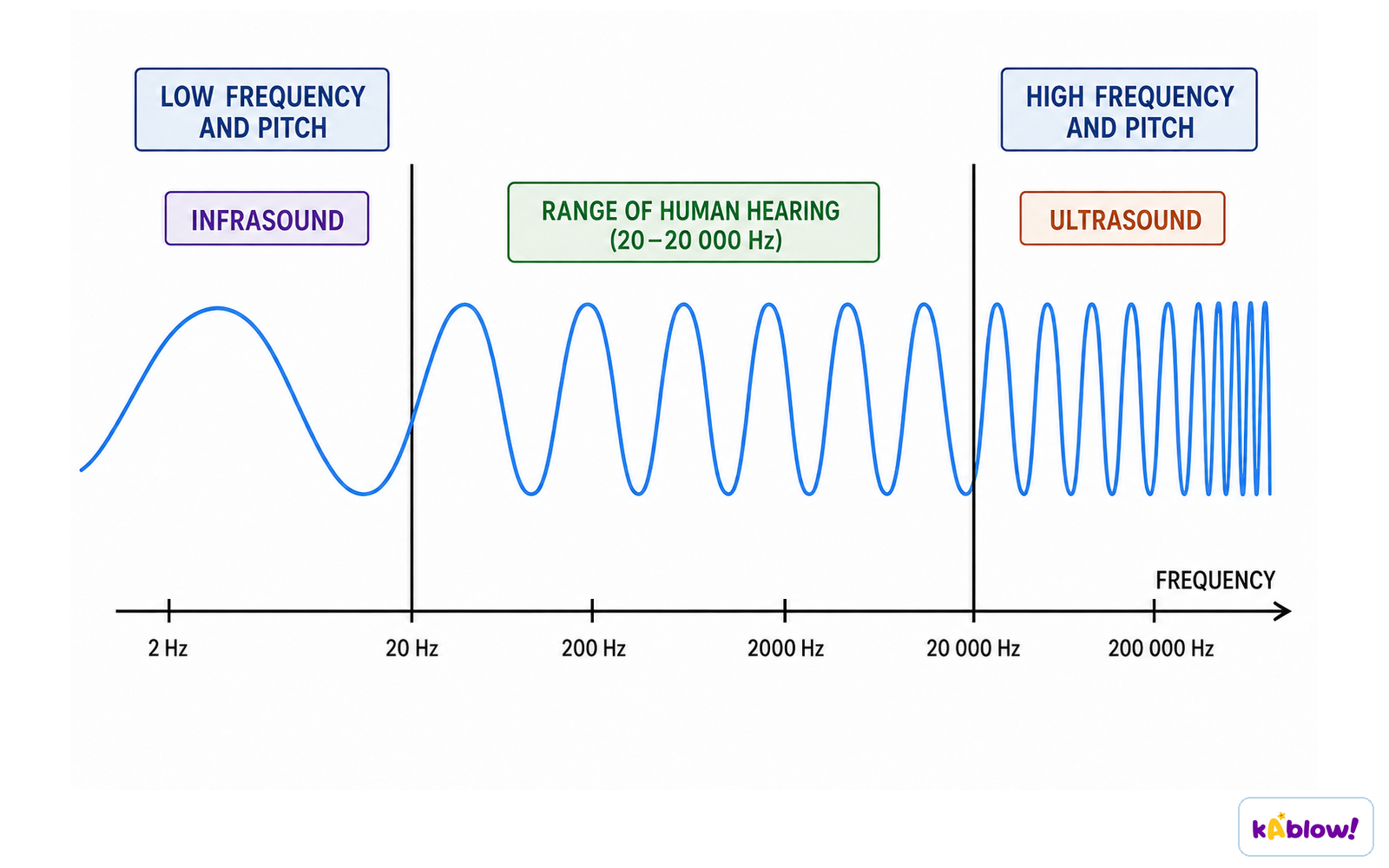
- Human hearing range: 20 Hz to 20 kHz (decreases with age).
- Ultrasound is sound with frequency higher than 20 kHz.
- Ultrasound is used in medical imaging (e.g., sonograms) and industrial testing.
Frequencies of ultrasound
Slide
Sign up free to view the lesson slides
Step through every slide for this topic — plus flashcards and revision notes — with a free account.
Câu hỏi luyện tập
Xem trước miễn phí — 8 trên 52 câu hỏi. Đăng ký để xem tất cả.
1.What type of wave is a sound wave?
Easy- ATransverse
- BLongitudinal
- CElectromagnetic
- DStationary
2.Sound waves can travel through a vacuum.
EasyTrue or false?
3.Complete the sentence.
EasySound waves consist of regions of higher pressure called ____ and regions of lower pressure called ____.
4.State the approximate range of frequencies audible to humans.
Easy5.Which of the following materials does sound travel fastest through?
Easy- AAir
- BWater
- CSteel
- DVacuum
6.A sound wave with a high frequency has a low pitch.
EasyTrue or false?
7.Match each term to its correct description.
Medium- Amplitude
- Frequency
- Wavelength
- Determines loudness
- Determines pitch
- Distance between compressions
8.Arrange the following media in order of increasing speed of sound (slowest first).
Easy- Gas
- Liquid
- Solid
Unlock all 52 questions & more
Tạo tài khoản miễn phí để xem mọi câu hỏi, slide, thẻ ghi nhớ và ghi chú ôn tập cho chủ đề này.