Encryption
Học bằng cách chơi
Trả lời những câu hỏi này để kiếm năng lượng, rồi câu cá và khám phá. Không cần tài khoản.
Ghi chú bài học
What is Encryption?
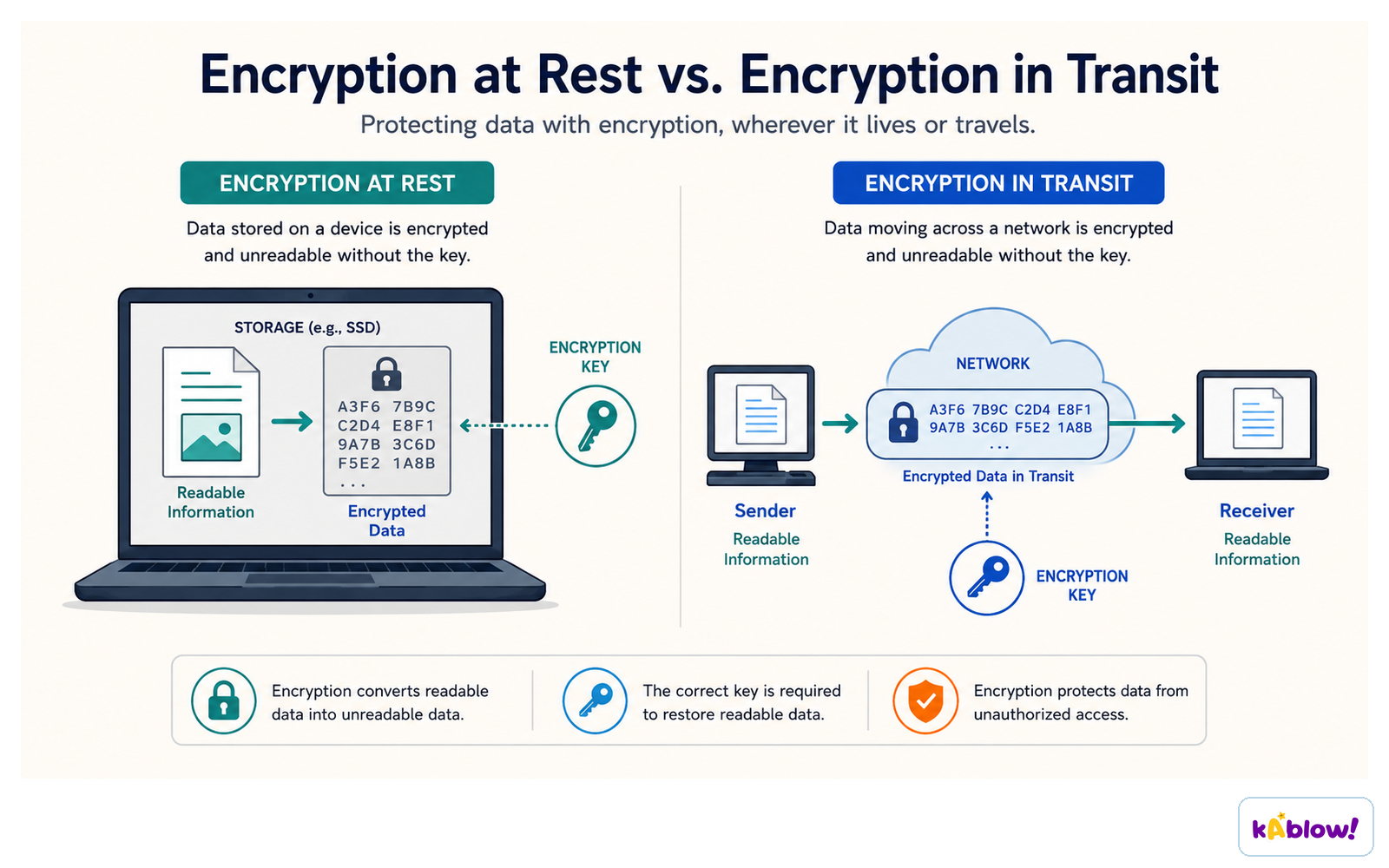
- Encryption is a method of scrambling data before transmission across a network.
- It protects data from unauthorised access by making it meaningless.
- Encryption is especially important on wireless networks because data is sent over radio waves and can be easily intercepted.
Encryption at rest protects data stored on a device; encryption in transit protects data moving across a network.
Wireless Network Encryption
- Wireless networks use an SSID and password to create a master key.
- Connected devices receive a copy of the master key.
- Data is encrypted into ciphertext using the master key before transmission.
- The receiver uses the same master key to decrypt the ciphertext back to plaintext.
- The master key is never transmitted to ensure security.
- Protocols like WPA2 are used for Wi-Fi security.
Wired Network Encryption
- Wired networks also use a master key to encrypt and decrypt data.
- Encryption on wired networks is often handled by individual applications (e.g., HTTPS).
Symmetric Encryption
- Both sender and receiver share an identical secret key.
- The same key is used to encrypt and decrypt data.
- If a hacker obtains the key, they can decrypt intercepted data.
- The key can be shared in person, by post, or via a non-electronic algorithm.
Asymmetric Encryption
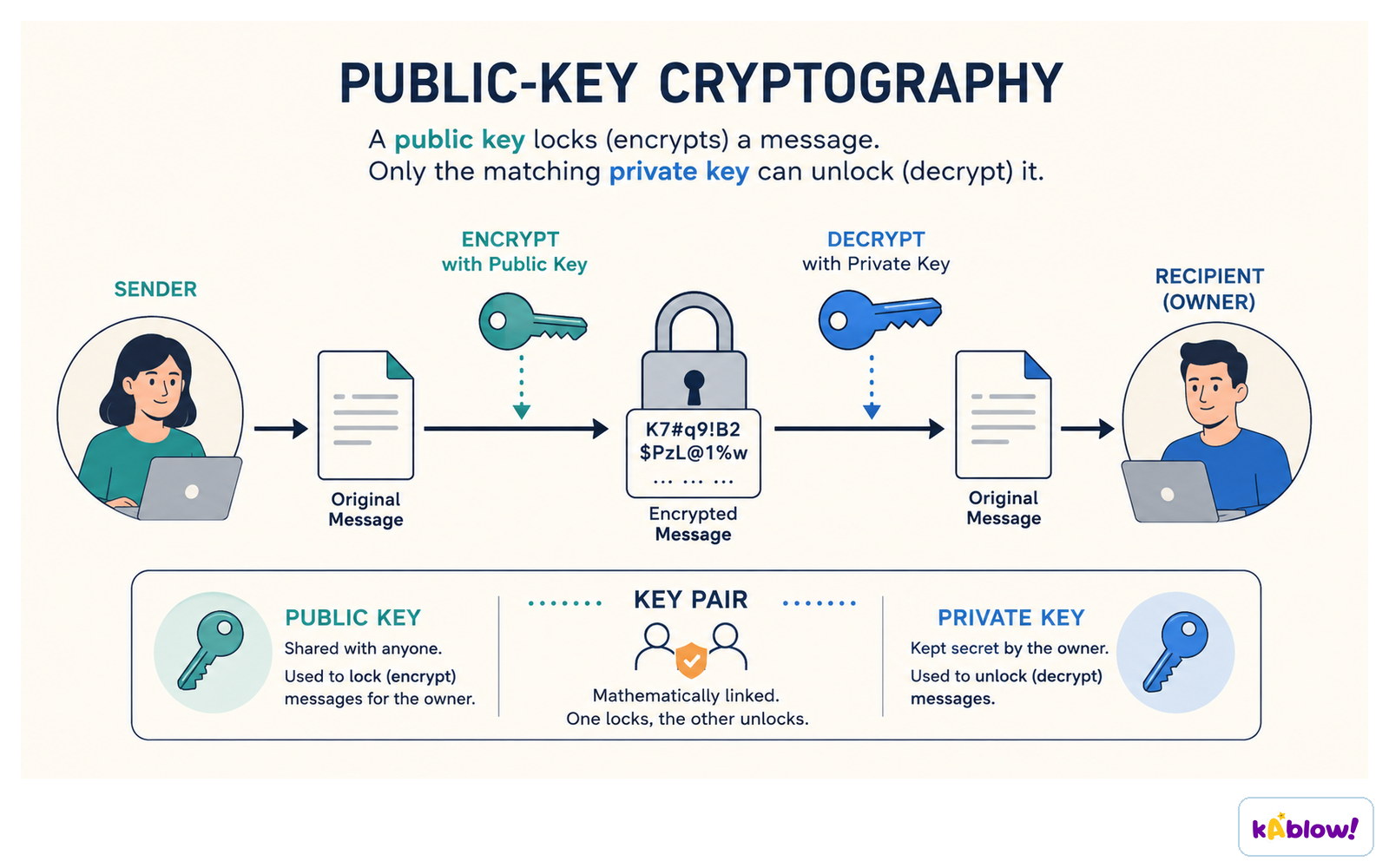
- Uses two keys: a public key (known to everyone) and a private key (known only to the receiver).
- The sender encrypts the message with the public key.
- The receiver decrypts the message with their private key.
- The private key is never sent over the network.
- Large keys (e.g., 100 bits) have billions of combinations, making them hard to crack.
In public-key cryptography the public key encrypts the message and only the matching private key can decrypt it.
Key Terminology
- Plaintext: data before encryption.
- Ciphertext: data after encryption.
- Key: a binary string used by an encryption algorithm to encrypt/decrypt data.
- Encryption prevents data from being understood by unauthorised parties.
Slide
Sign up free to view the lesson slides
Step through every slide for this topic — plus flashcards and revision notes — with a free account.
Câu hỏi luyện tập
Xem trước miễn phí — 8 trên 59 câu hỏi. Đăng ký để xem tất cả.
1.What is the name for data before it is encrypted?
Easy- APlaintext
- BCiphertext
- CCleartext
- DKeytext
2.What is the name for data after it has been encrypted?
Easy- APlaintext
- BCiphertext
- CCleartext
- DKeytext
3.Which of the following is used to encrypt and decrypt data in symmetric encryption?
Easy- AA single shared secret key
- BA public key and a private key
- CA password only
- DA digital certificate
4.In asymmetric encryption, which key is used to encrypt a message?
Easy- AThe recipient's public key
- BThe recipient's private key
- CThe sender's public key
- DA shared secret key
5.Which of the following best describes why encryption is especially important on wireless networks?
Easy- AData is transmitted over radio waves which are easy to intercept
- BWireless networks are slower than wired networks
- CWireless networks use a different protocol stack
- DWireless networks cannot use firewalls
6.What is the purpose of a master key in wireless network encryption?
Medium- ATo encrypt data into ciphertext before transmission
- BTo identify the network (SSID)
- CTo provide a password for user login
- DTo authenticate users via a certificate
7.In asymmetric encryption, if a hacker intercepts the public key, what can they do?
Medium- AEncrypt messages but not decrypt them
- BDecrypt messages sent to the owner
- CBoth encrypt and decrypt messages
- DOnly read the encrypted messages
8.A 100-bit key can generate over 1.27 × 1030 different combinations. Why does this make encryption secure?
Medium- AIt is computationally infeasible to try all combinations
- BThe key is too long to store
- CAll combinations are equally likely
- DThe key is randomly generated each time
Unlock all 59 questions & more
Tạo tài khoản miễn phí để xem mọi câu hỏi, slide, thẻ ghi nhớ và ghi chú ôn tập cho chủ đề này.