Compound Measures
Học bằng cách chơi
Trả lời những câu hỏi này để kiếm năng lượng, rồi câu cá và khám phá. Không cần tài khoản.
Ghi chú bài học
Compound Measures
- A compound measure uses more than one measurement (e.g., speed = distance ÷ time).
- Compound measures measure rates: how one quantity changes per unit of another.
- Examples: speed, density, pressure, flow rate, population density, fuel consumption.
- Units derive from the formula: e.g., speed in km/h means distance (km) per time (h).
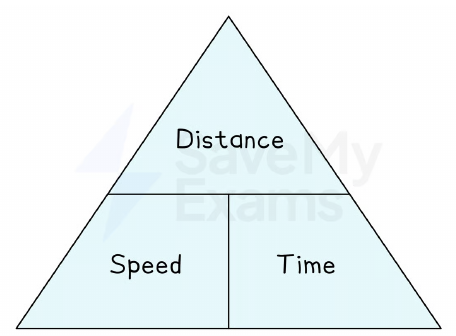
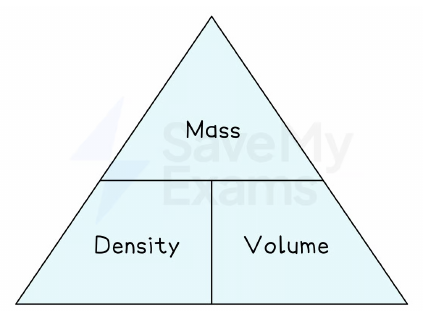
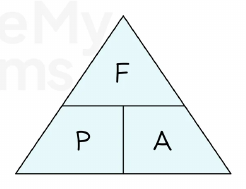
- A formula triangle helps rearrange: top variable = product of bottom two; bottom variable = top ÷ other bottom.
Speed, Distance & Time
- Speed = distance ÷ time (average speed over whole journey).
- Common units: m/s, km/h, miles per hour (mph).
- Distance = speed × time; Time = distance ÷ speed.
- For multi-part journeys, calculate each part separately then combine.
- Ensure consistent units: convert minutes to hours, metres to km, etc.
Speed, Distance, Time Formula Triangle
Density, Mass & Volume
- Density = mass ÷ volume (mass per unit volume).
- Common units: g/cm³, kg/m³.
- Mass = density × volume; Volume = mass ÷ density.
- Check unit consistency: e.g., convert kg to g if density is in g/cm³.
- May need to calculate volume from geometry first (e.g., cuboid, cylinder).
Density, Mass, Volume Formula Triangle
Pressure, Force & Area
- Pressure = force ÷ area (force per unit area).
- Common units: N/m² (Pascals, Pa).
- Force = pressure × area; Area = force ÷ pressure.
- Weight is a force (different from mass).
- Area must be in m² when pressure is in N/m².
Pressure, Force, Area Formula Triangle
Unit Conversions
- Convert speed: m/s to km/h multiply by 3.6; km/h to m/s divide by 3.6.
- Convert time: hours to minutes multiply by 60; minutes to seconds multiply by 60.
- Convert mass: kg to g multiply by 1000; g to kg divide by 1000.
- Convert volume: m³ to cm³ multiply by 1,000,000; cm³ to m³ divide by 1,000,000.
- Always check final answer units required by the question.
Problem-Solving Tips
- Use formula triangles to rearrange equations quickly.
- For multi-stage problems, break into steps: find missing variable for each stage.
- Watch for mixed units (e.g., minutes and hours) – convert to same unit.
- When using density, ensure mass and volume units match.
- In pressure problems, remember that force may be given as weight.
Slide
Sign up free to view the lesson slides
Step through every slide for this topic — plus flashcards and revision notes — with a free account.
Câu hỏi luyện tập
Xem trước miễn phí — 8 trên 73 câu hỏi. Đăng ký để xem tất cả.
1.The density of a substance is 2.5 g/cm³. What is the mass of a block of this substance with volume 400 cm³?
Easy- A1000 g
- B160 g
- C100 g
- D1000 kg
2.A car travels 120 km in 2 hours. What is its average speed?
Easy- A60 km/h
- B240 km/h
- C0.0167 km/h
- D120 km/h
3.Pressure is defined as:
Easy- Aforce × area
- Bforce ÷ area
- Carea ÷ force
- Dmass ÷ volume
4.A force of 200 N acts on an area of 5 m². What is the pressure?
Easy- A40 Pa
- B1000 Pa
- C0.025 Pa
- D40 N
5.A solid metal cuboid has mass 4 kg and volume 600 cm³. Calculate its density in g/cm³.
Medium- A6.67 g/cm³
- B0.00667 g/cm³
- C0.15 g/cm³
- D2400 g/cm³
6.A box exerts a pressure of 42 N/m² on a table. The face in contact is 2 m by 1.25 m. Find the force exerted by the box on the table.
Medium- A105 N
- B84 N
- C52.5 N
- D16.8 N
7.A car travels at 108 km/h for 20 seconds. How far does it travel in metres?
Medium- A600 m
- B2160 m
- C540 m
- D3000 m
8.A gold bar has mass 12.5 kg and density 19.3 g/cm³. Find its volume correct to 3 significant figures.
Medium- A648 cm³
- B0.648 cm³
- C6480 cm³
- D241 cm³
Unlock all 73 questions & more
Tạo tài khoản miễn phí để xem mọi câu hỏi, slide, thẻ ghi nhớ và ghi chú ôn tập cho chủ đề này.