Bioaccumulation
Học bằng cách chơi
Trả lời những câu hỏi này để kiếm năng lượng, rồi câu cá và khám phá. Không cần tài khoản.
Ghi chú bài học
Definition of Bioaccumulation
- Bioaccumulation is the process by which toxic substances build up in the tissues of organisms over time.
- Toxic substances include pesticides, heavy metals (e.g., mercury, lead), and other pollutants.
- These toxins enter the environment through air, water, or soil.
- Once in an ecosystem, toxins move through the food chain and become more concentrated in animals higher up.
Example: Mercury
- Mercury is a heavy metal released from industrial processes like coal burning.
- In aquatic ecosystems, mercury is absorbed by plankton.
- Small fish eat plankton and accumulate mercury in their bodies.
- Larger fish (e.g., tuna, trout) eat smaller fish, increasing mercury concentration.
- Top predators (including humans) can have dangerously high mercury levels, leading to neurological disorders.
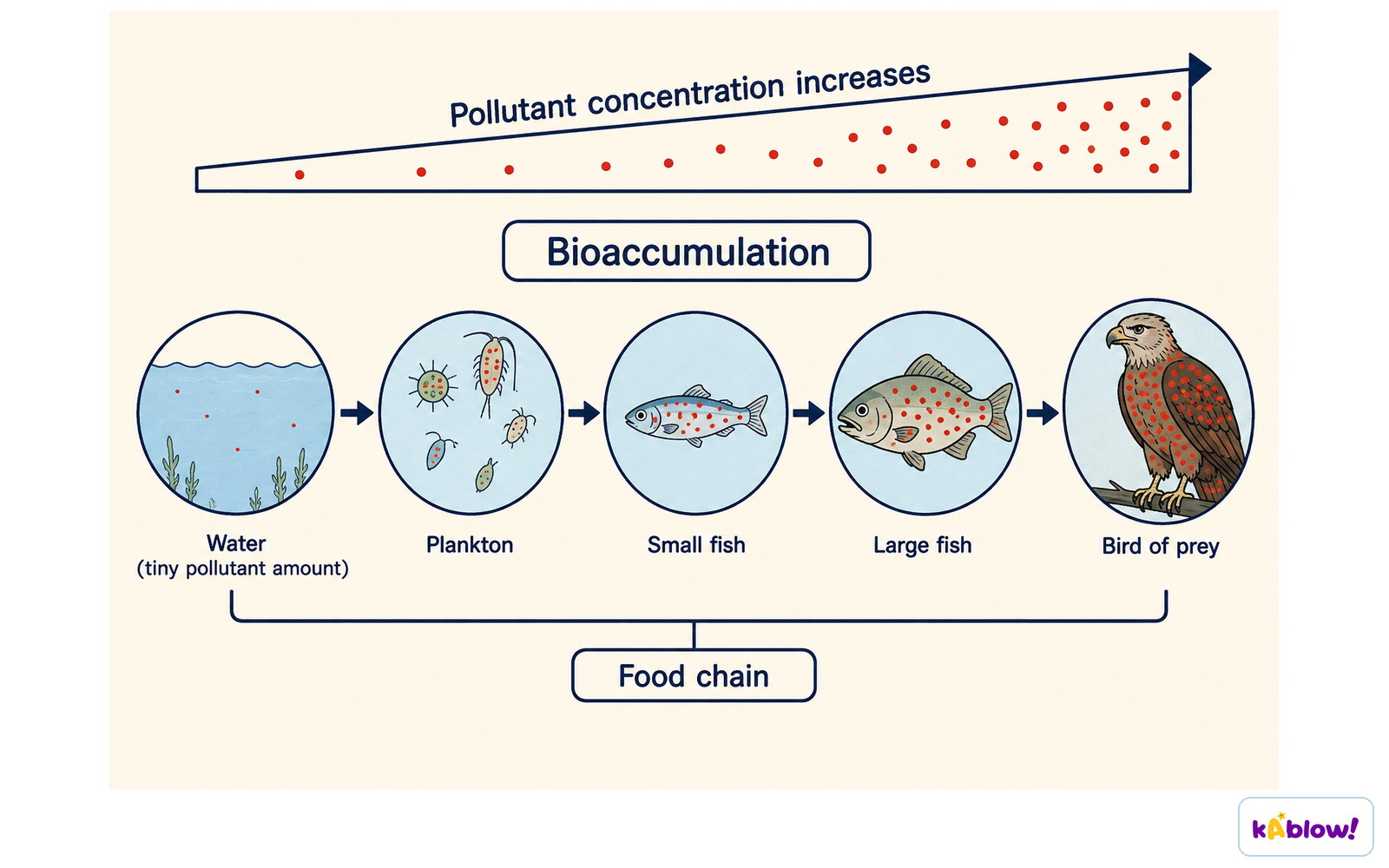
Pollutants accumulate in organisms and can become more concentrated at successive feeding levels. This increase along a food chain is biomagnification.
Example: DDT
- DDT was a pesticide used extensively in agriculture.
- It accumulated in the environment, especially in aquatic ecosystems.
- Small organisms absorbed DDT; it became highly concentrated in birds of prey (e.g., eagles, ospreys).
- High DDT levels caused birds to lay eggs with very thin shells, which often broke before hatching.
- This led to a significant decline in bird populations, and DDT was banned in many countries.
Preventing Bioaccumulation
- Reduce the release of harmful chemicals and pollutants into the environment.
- Use less toxic alternatives to pesticides.
- Enforce stricter regulations on industrial waste.
- Ensure proper disposal of toxic materials.
Key Points
- Bioaccumulation leads to higher toxin concentrations in organisms at higher trophic levels.
- Human activities (e.g., industry, agriculture) contribute to the release of toxins.
- Health risks include neurological disorders (mercury) and reproductive failure (DDT).
- NHS advises limiting tuna consumption to 2 steaks per week due to mercury bioaccumulation.
Energy pyramid showing bioaccumulation: toxin concentration increases at higher trophic levels.
Slide
Sign up free to view the lesson slides
Step through every slide for this topic — plus flashcards and revision notes — with a free account.
Câu hỏi luyện tập
Xem trước miễn phí — 8 trên 55 câu hỏi. Đăng ký để xem tất cả.
1.What is bioaccumulation?
Easy- AThe increase in concentration of a toxic substance in the tissues of organisms over time
- BThe breakdown of toxic substances in the environment
- CThe movement of organisms from one habitat to another
- DThe process by which organisms produce toxins
2.Which of the following is an example of a toxic substance that can bioaccumulate?
Easy- AOxygen
- BWater
- CMercury
- DCarbon dioxide
3.Bioaccumulation occurs when toxic substances build up in which part of an organism?
Easy- AThe digestive system only
- BThe tissues
- CThe fur or feathers
- DThe external environment
4.A small fish in a polluted river absorbs 2 units of a toxin. If a larger fish eats 10 of these small fish, how many units of toxin does the larger fish accumulate?
Medium- A2 units
- B10 units
- C20 units
- D12 units
5.A top predator in a food chain eats 15 animals, each with 10 units of toxin. How many units of the toxin does the predator accumulate from eating these animals?
Medium- A10 units
- B15 units
- C150 units
- D25 units
6.Why is it advised that adults eat no more than 2 tuna steaks per week?
Easy- ATuna is low in protein
- BTuna may contain high levels of mercury due to bioaccumulation
- CTuna is difficult to digest
- DTuna is an endangered species
7.Why was the pesticide DDT banned in many countries?
Easy- AIt was ineffective against insects
- BIt caused birds to lay eggs with thin shells that broke easily
- CIt increased crop yields too much
- DIt was too expensive to produce
8.Which of the following best explains why top predators are most affected by bioaccumulation?
Medium- AThey eat only plants
- BThey are at the highest trophic level and accumulate toxins from all lower levels
- CThey have larger bodies that produce more toxins
- DThey are exposed to toxins directly from the environment
Unlock all 55 questions, flashcards & more
Tạo tài khoản miễn phí để xem mọi câu hỏi, slide, thẻ ghi nhớ và ghi chú ôn tập cho chủ đề này.