DNA and inheritance
Học bằng cách chơi
Trả lời những câu hỏi này để kiếm năng lượng, rồi câu cá và khám phá. Không cần tài khoản.
Ghi chú bài học
Inheritance
- Inheritance is the passing on of traits from one generation to the next.
- Characteristics like eye colour and height are inherited from parents.
- You inherit one chromosome of each pair from your mother and the other from your father.
Chromosomes
- Chromosomes are thread-like structures found in the nucleus of every cell.
- Humans have 46 chromosomes arranged in 23 pairs.
- Each parent contributes one chromosome to each pair.
DNA
- DNA (deoxyribonucleic acid) is the molecule that makes up chromosomes.
- DNA carries genetic instructions that tell cells how to function and determine traits.
- DNA has a double-helix structure, like a twisted ladder.
Genes
- Genes are specific segments of DNA that carry instructions for a specific characteristic.
- For example, one gene determines eye colour, another determines blood type.
- Humans have thousands of genes that work together to determine physical traits and some aspects of personality.
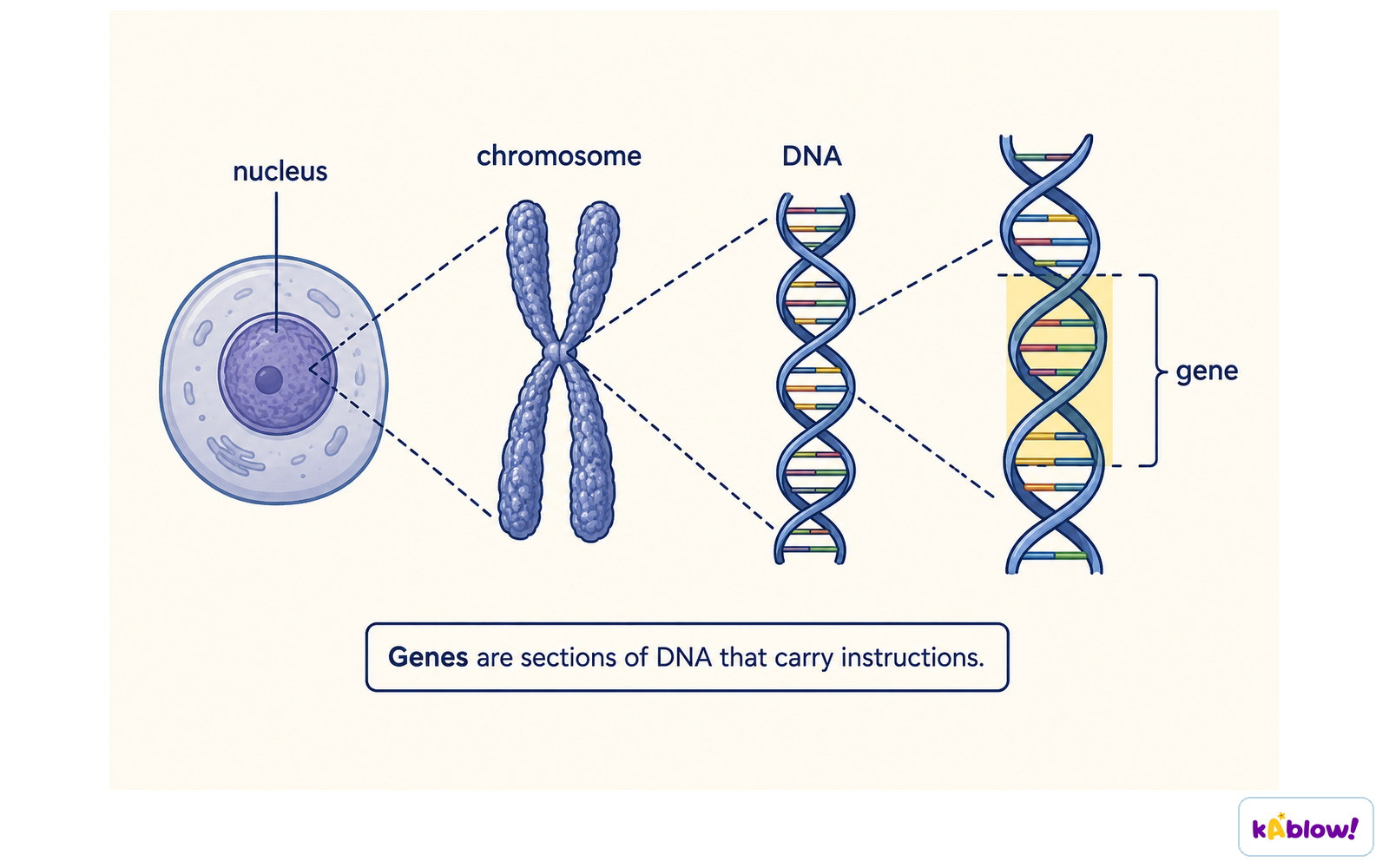
Chromosomes in the nucleus contain DNA. A gene is a section of DNA that carries genetic instructions.
Dominant and Recessive Genes
- Dominant genes: if you inherit the dominant version from one parent, that trait is more likely to show.
- Recessive genes: the trait only appears if you inherit the recessive version from both parents.
Discovery of DNA Structure
- In the 1950s, James Watson and Francis Crick determined the structure of DNA.
- They built on the work of Rosalind Franklin and Maurice Wilkins using X-ray crystallography.
- Raymond Gosling produced Photo 51, which provided crucial clues for the double-helix model.
DNA double helix structure with sugar–phosphate backbones and complementary base pairs (A–T, C–G).
Monohybrid cross showing dominant and recessive inheritance with 3:1 phenotype ratio.
Slide
Sign up free to view the lesson slides
Step through every slide for this topic — plus flashcards and revision notes — with a free account.
Câu hỏi luyện tập
Xem trước miễn phí — 8 trên 56 câu hỏi. Đăng ký để xem tất cả.
1.What does DNA stand for?
Easy- ADeoxyribonucleic acid
- BDeoxyribose nucleic acid
- CRibonucleic acid
- DDeoxyribonucleotide acid
2.How many chromosomes do humans have in each cell?
Easy- A46
- B23
- C92
- D48
3.What is the shape of the DNA molecule?
Easy- ADouble helix
- BSingle helix
- CTriple helix
- DStraight ladder
4.Which of the following correctly describes the relationship between chromosomes, DNA, and genes?
Easy- AChromosomes are made of DNA, and genes are segments of DNA.
- BDNA is made of chromosomes, and genes are segments of chromosomes.
- CGenes are made of chromosomes, and DNA is a type of gene.
- DChromosomes are made of genes, and DNA is a type of chromosome.
5.If a trait is recessive, when will it appear in an individual?
Easy- AOnly if the individual inherits the recessive version from both parents
- BIf the individual inherits the recessive version from at least one parent
- COnly if the individual inherits the dominant version from both parents
- DIt always appears regardless of inheritance
6.Who produced 'Photo 51', which was crucial in determining the structure of DNA?
Easy- ARaymond Gosling
- BRosalind Franklin
- CMaurice Wilkins
- DJames Watson
7.Where are chromosomes found in a cell?
Easy- ANucleus
- BCytoplasm
- CCell membrane
- DMitochondria
8.What is a gene?
Easy- AA segment of DNA that carries instructions for a specific characteristic
- BA type of chromosome
- CThe entire DNA molecule
- DA protein that determines traits
Unlock all 56 questions, flashcards & more
Tạo tài khoản miễn phí để xem mọi câu hỏi, slide, thẻ ghi nhớ và ghi chú ôn tập cho chủ đề này.