Photosynthesis
Học bằng cách chơi
Trả lời những câu hỏi này để kiếm năng lượng, rồi câu cá và khám phá. Không cần tài khoản.
Ghi chú bài học
What is Photosynthesis?
- Photosynthesis is a chemical reaction that produces glucose (a type of sugar).
- Glucose is used for respiration, where cells release energy.
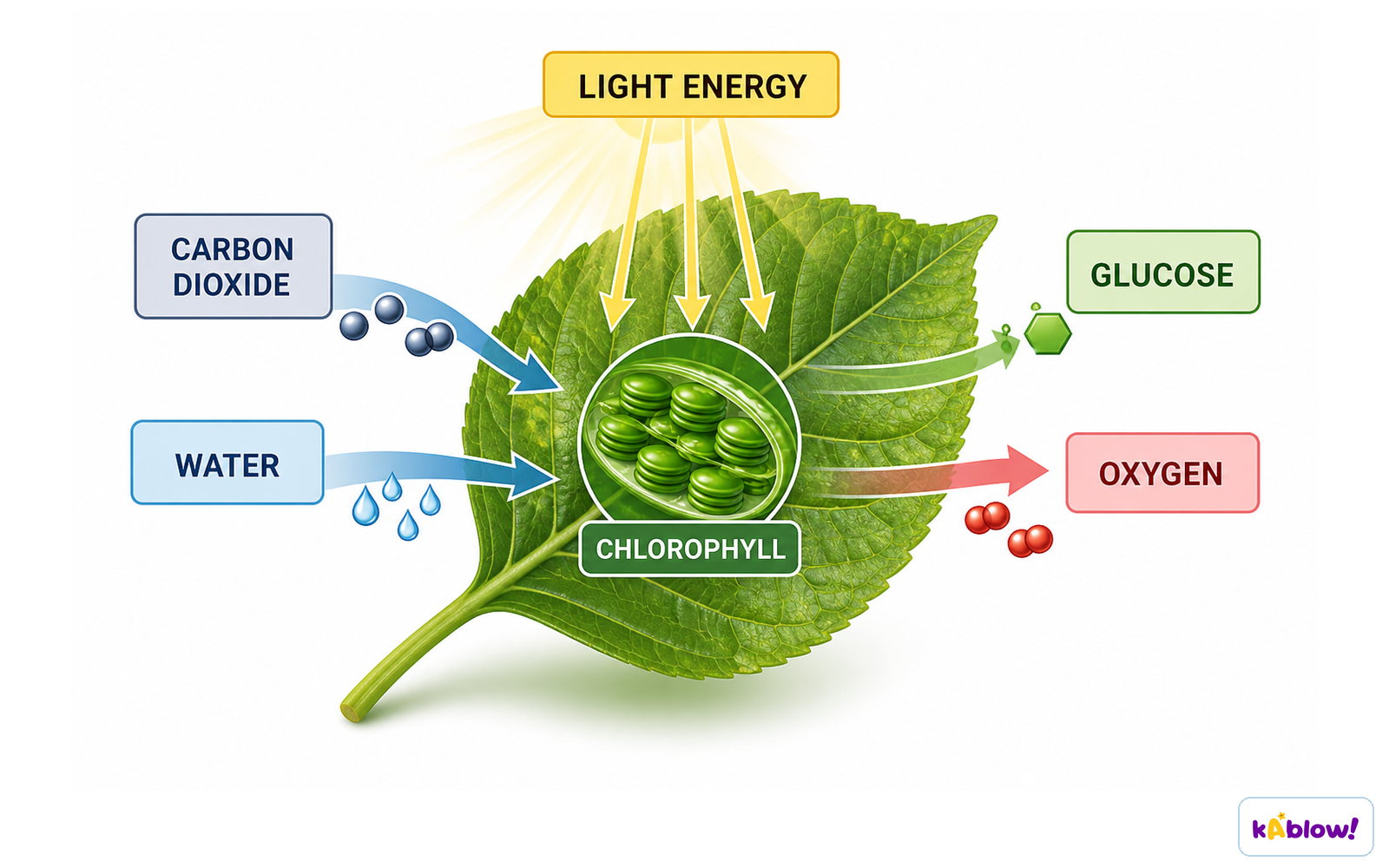
- Plants use sunlight to turn carbon dioxide and water into glucose and oxygen.
- Word equation: carbon dioxide + water → glucose + oxygen.
Carbon dioxide and water are converted into glucose and oxygen using light energy absorbed by chlorophyll.
Where Does Photosynthesis Happen?
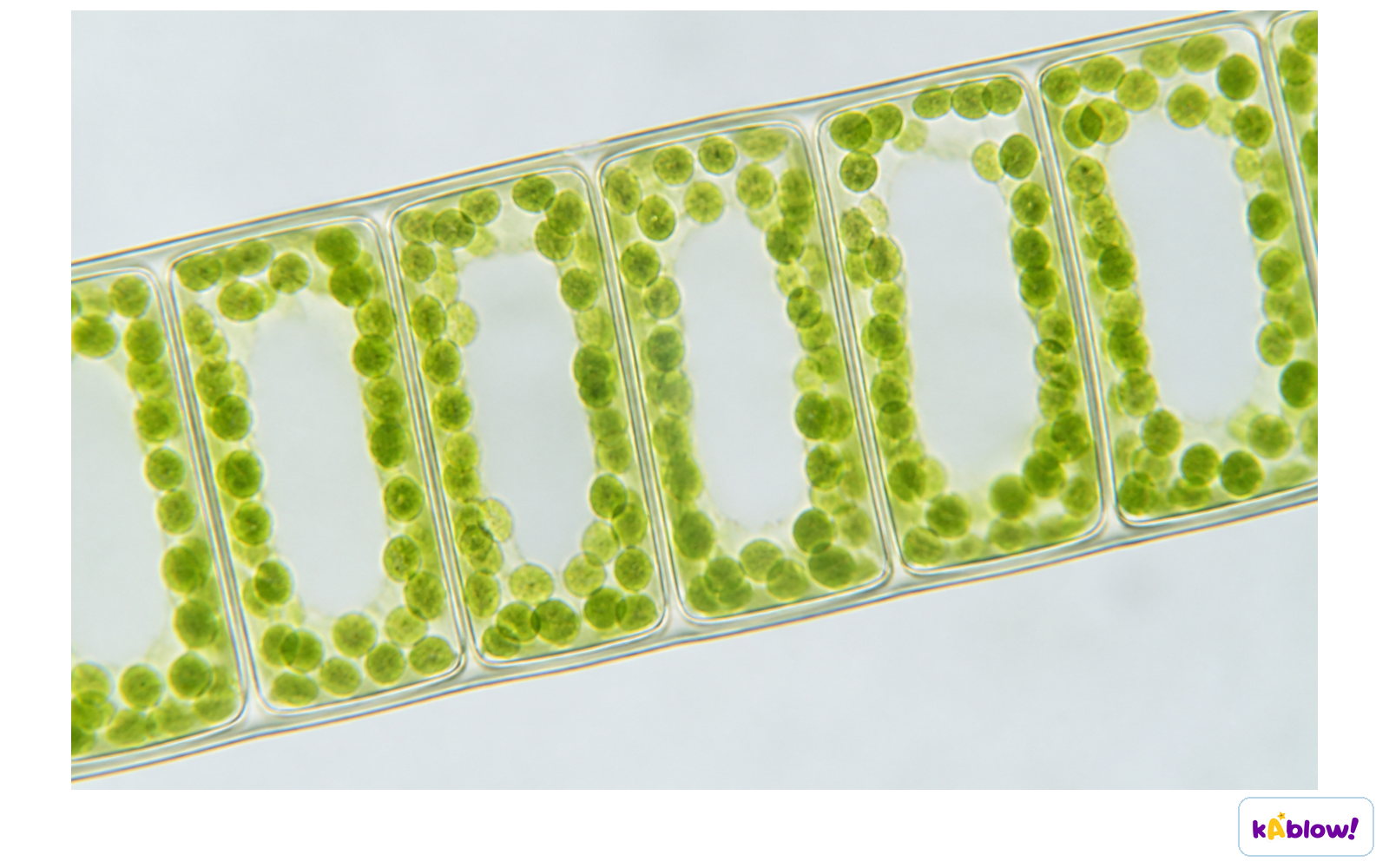
- Photosynthesis occurs in chloroplasts, which contain the green pigment chlorophyll.
- Chloroplasts are an organelle found mainly in leaf palisade cells.
- Palisade cells are near the top of a leaf to get the most light.
- Leaves are adapted with a large surface area for photosynthesis.
Chloroplasts appear green because chlorophyll inside them absorbs light energy.
How Does Carbon Dioxide Enter the Leaf?
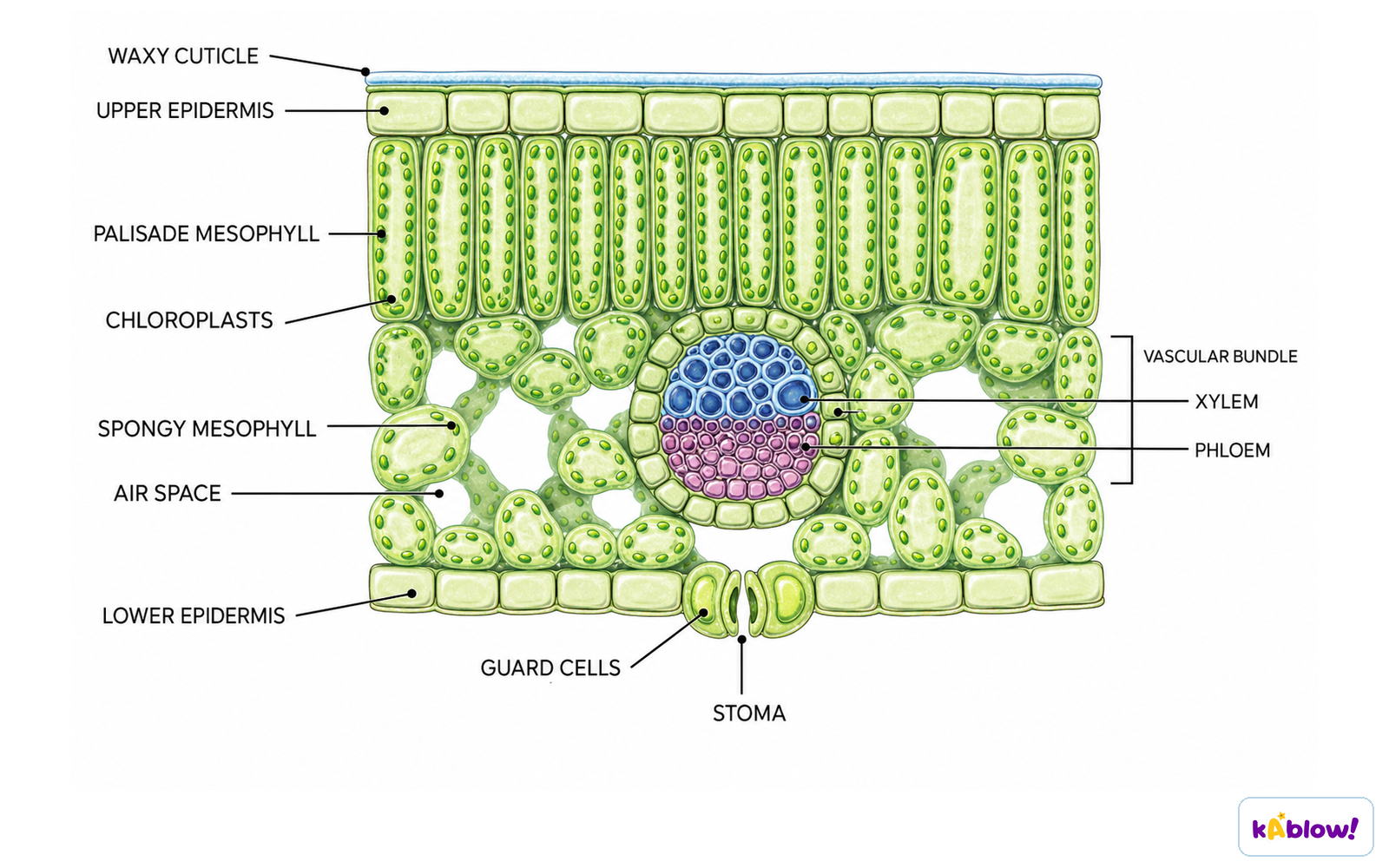
- Carbon dioxide enters the underside of a leaf through stomata.
- The spongy mesophyll layer has loosely arranged cells with air spaces.
- Air spaces allow carbon dioxide to diffuse through the leaf to palisade cells.
A dicotyledonous leaf cross-section showing epidermal layers, mesophyll, air spaces, a vascular bundle, chloroplasts and guard cells.
Factors Affecting the Rate of Photosynthesis
- The rate is affected by light intensity, carbon dioxide concentration, temperature, and water availability.
- An experiment can measure the rate using pondweed in water.
- Cover pondweed with an inverted funnel and place a water-filled test tube over it to capture oxygen.
- Count oxygen bubbles released in one minute to estimate the rate.
- Adjust variables like light intensity or temperature to observe effects.
Internal structure of a leaf showing palisade and spongy mesophyll, stomata, and air spaces.
Chloroplast structure: envelope, stroma, grana, thylakoids, lamellae, and starch grain.
Slide
Sign up free to view the lesson slides
Step through every slide for this topic — plus flashcards and revision notes — with a free account.
Câu hỏi luyện tập
Xem trước miễn phí — 8 trên 54 câu hỏi. Đăng ký để xem tất cả.
1.Photosynthesis is a chemical reaction that produces which type of sugar?
Easy- AGlucose
- BSucrose
- CFructose
- DStarch
2.Which of the following statements about photosynthesis is true?
Easy- APhotosynthesis occurs in mitochondria.
- BPhotosynthesis produces carbon dioxide and water.
- CPhotosynthesis is a chemical reaction that produces glucose.
- DPlants do not carry out respiration.
3.Where does photosynthesis occur in plant cells?
Easy- ANucleus
- BChloroplast
- CMitochondrion
- DVacuole
4.What are the products of photosynthesis?
Easy- AGlucose and oxygen
- BCarbon dioxide and water
- CGlucose and carbon dioxide
- DOxygen and water
5.Which leaf cells contain the most chloroplasts and are located near the top of the leaf?
Easy- ASpongy mesophyll cells
- BPalisade cells
- CGuard cells
- DEpidermal cells
6.What is the function of the air spaces in the spongy mesophyll layer?
Medium- AThey allow carbon dioxide to diffuse through the leaf to the palisade cells.
- BThey store water for the leaf.
- CThey provide structural support to the leaf.
- DThey absorb light for photosynthesis.
7.In an experiment using pondweed to measure the rate of photosynthesis, what is collected to estimate the rate?
Easy- ACarbon dioxide bubbles
- BOxygen bubbles
- CGlucose produced
- DChlorophyll released
8.Euglena is a unicellular organism that carries out photosynthesis. Which organelle must it contain?
Medium- AChloroplast
- BMitochondrion
- CNucleus
- DRibosome
Unlock all 54 questions, flashcards & more
Tạo tài khoản miễn phí để xem mọi câu hỏi, slide, thẻ ghi nhớ và ghi chú ôn tập cho chủ đề này.