Pollination
Học bằng cách chơi
Trả lời những câu hỏi này để kiếm năng lượng, rồi câu cá và khám phá. Không cần tài khoản.
Ghi chú bài học
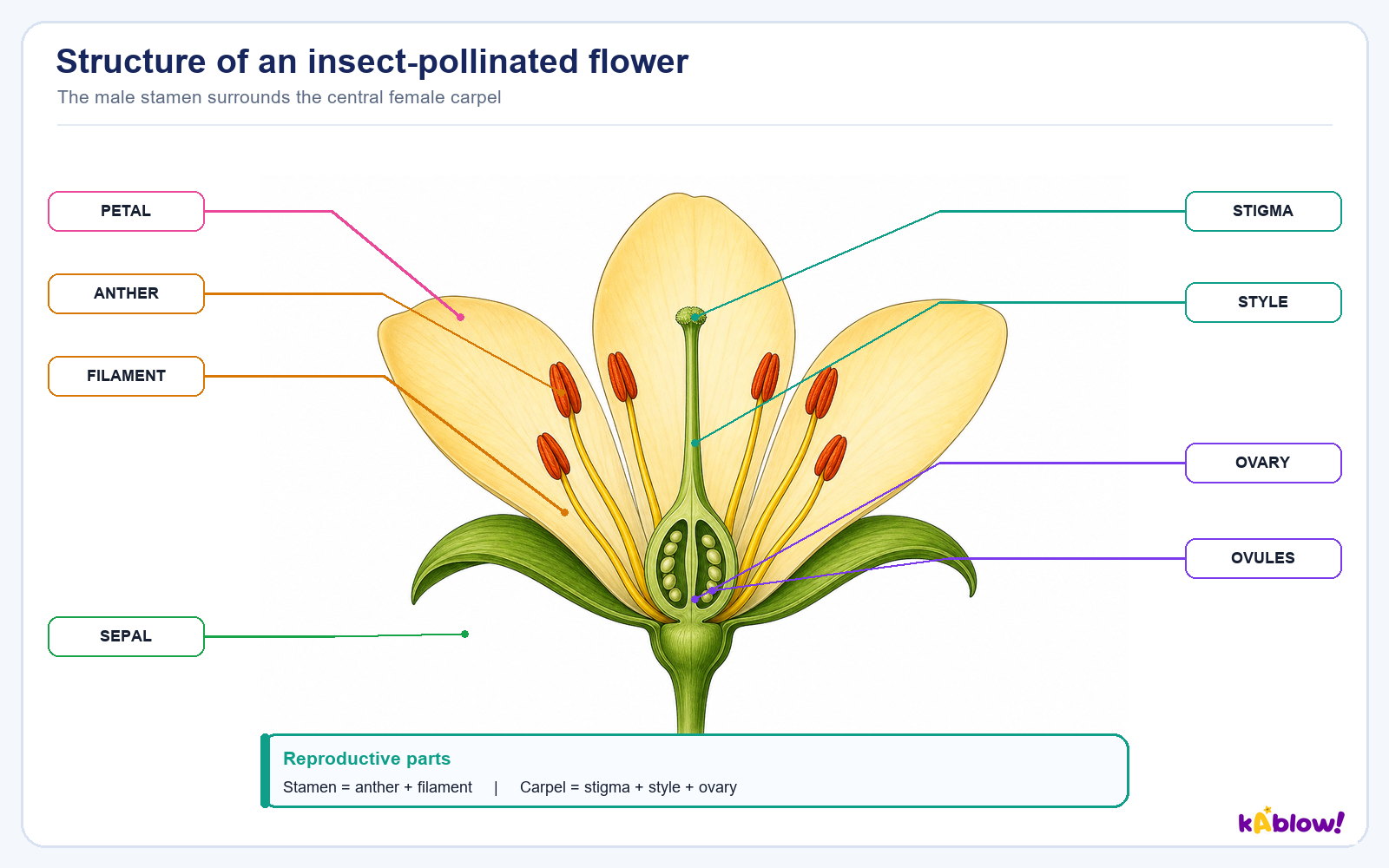
Flower Structure
- The stamen is the male reproductive part, consisting of the anther (produces pollen) and the filament (supports the anther).
- The carpel is the female reproductive part, comprising the stigma (sticky tip), style (tube), and ovary (contains ovules with female sex cells).
- Petals are often brightly coloured to attract pollinators like bees and butterflies.
- Sepals are green, leaf-like structures that protect the flower bud before it opens.
The parts of a flower, the reproductive organ of a plant.
What is Pollination?
- Pollination is the transfer of pollen from the stamen (male part) to the carpel (female part) of a flower.
- It allows plants to reproduce and produce seeds for the next generation.
- Pollen grains contain the male sex cells; they land on the stigma to enable fertilisation.
Self-Pollination
- Pollen from the anther lands on the stigma of the same flower or another flower on the same plant.
- It can occur without external pollinators.
- Leads to less genetic variation in offspring.
Cross-Pollination
- Pollen is transferred from the anther of one flower to the stigma of a flower on a different plant of the same species.
- Often requires pollinators such as insects (bees, butterflies) or wind.
- Increases genetic variation, which can improve survival.
Pollinators
- Common insect pollinators include bees and butterflies.
- Wind can also carry pollen between flowers.
- Brightly coloured petals and scent attract insect pollinators.
Slide
Sign up free to view the lesson slides
Step through every slide for this topic — plus flashcards and revision notes — with a free account.
Câu hỏi luyện tập
Xem trước miễn phí — 8 trên 55 câu hỏi. Đăng ký để xem tất cả.
1.Which part of the flower produces pollen grains?
Easy- AAnther
- BFilament
- CStigma
- DOvary
2.What is the function of the stigma?
Easy- ATo produce pollen
- BTo capture pollen
- CTo support the anther
- DTo produce ovules
3.Which of the following is the male reproductive part of a flower?
Easy- ACarpel
- BStamen
- CSepal
- DPetal
4.What is the difference between self-pollination and cross-pollination?
Medium- ASelf-pollination uses wind; cross-pollination uses insects
- BSelf-pollination transfers pollen within the same plant; cross-pollination transfers pollen to a different plant
- CSelf-pollination requires pollinators; cross-pollination does not
- DSelf-pollination produces seeds; cross-pollination does not
5.Which of the following is NOT a pollinator?
Easy- ABee
- BButterfly
- CWind
- DAnther
6.After pollination, where does the pollen grain land?
Easy- AAnther
- BFilament
- CStigma
- DOvary
7.What is the function of the filament?
Easy- ATo produce pollen
- BTo capture pollen
- CTo support the anther
- DTo connect stigma to ovary
8.Which of the following statements about pollination is correct?
Medium- APollination is the transfer of pollen from carpel to stamen
- BPollination allows fertilisation to occur
- CPollination occurs after seed formation
- DPollination only occurs in insect-pollinated plants
Unlock all 55 questions, flashcards & more
Tạo tài khoản miễn phí để xem mọi câu hỏi, slide, thẻ ghi nhớ và ghi chú ôn tập cho chủ đề này.