Ceramics, polymers and composites
Học bằng cách chơi
Trả lời những câu hỏi này để kiếm năng lượng, rồi câu cá và khám phá. Không cần tài khoản.
Ghi chú bài học
Ceramics
- Made by heating materials (e.g., clay) to high temperatures in a kiln.
- The heating process changes the properties of the starting material.
- Ceramics are hard but brittle – they break if dropped.
- They are resistant to high temperatures, making them suitable for cookware.
- Examples: pottery, bricks, tiles.
Polymers
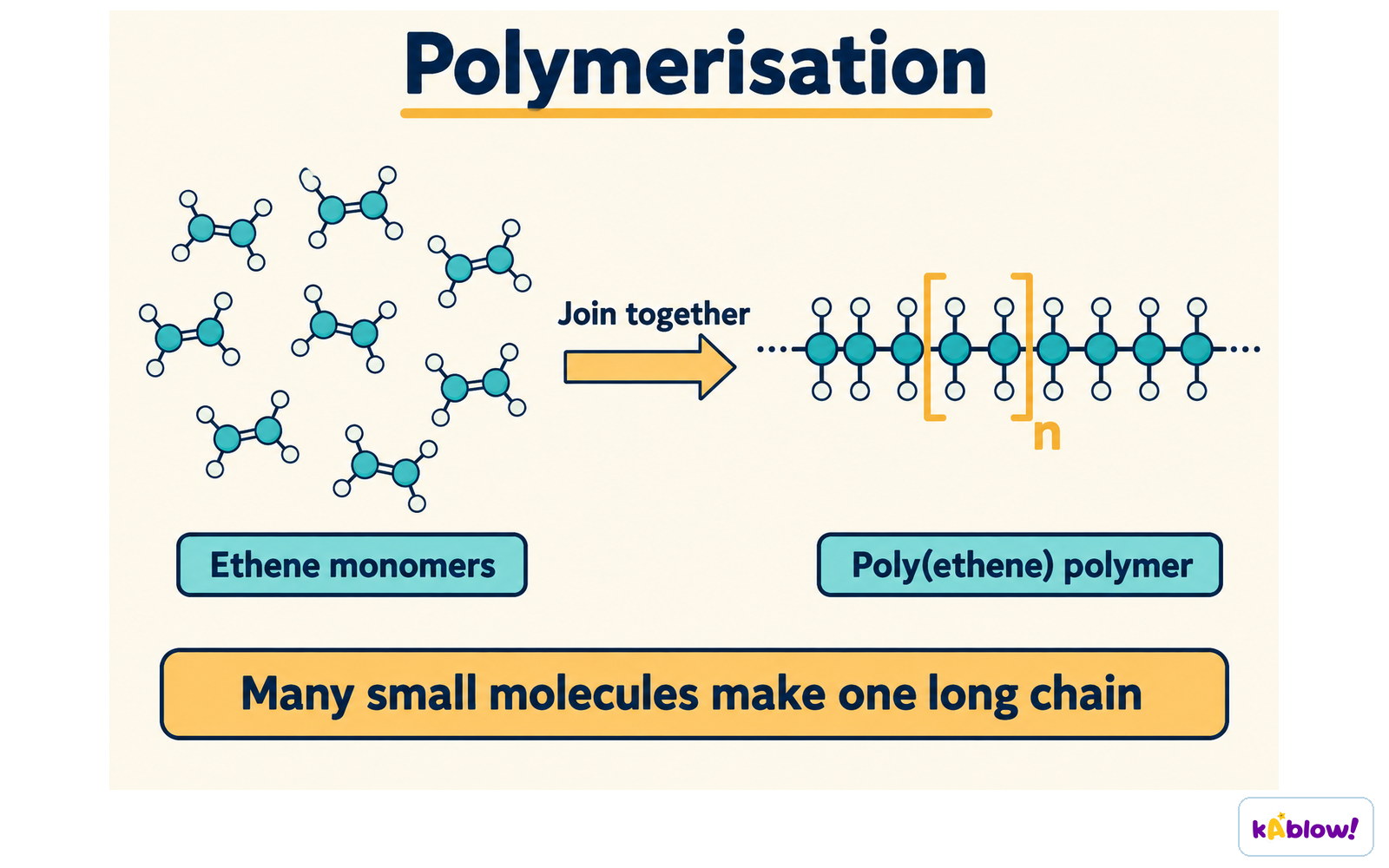
- Polymers are long chains of molecules made by joining many small molecules called monomers.
- Two main types: natural (e.g., rubber, silk) and synthetic (e.g., polythene, PVC).
- Polymers can be flexible or rigid, are lightweight, and can be moulded into shapes.
- They are electrical and thermal insulators – e.g., PVC insulates electrical wires.
- Polymers are very unreactive – useful for water bottles but causes environmental challenges as they do not break down quickly.
Ethene monomers join to form poly(ethene). The polymer contains a repeating chain of carbon atoms joined by single bonds.
Composites
- Composites are made by combining two or more different materials to create a new material with improved properties.
- Each material in a composite keeps its own properties, but together they make the composite stronger, lighter, or more durable.
- Fibreglass: glass fibres + plastic – lightweight like plastic, strong like glass; used for boat and car bodies.
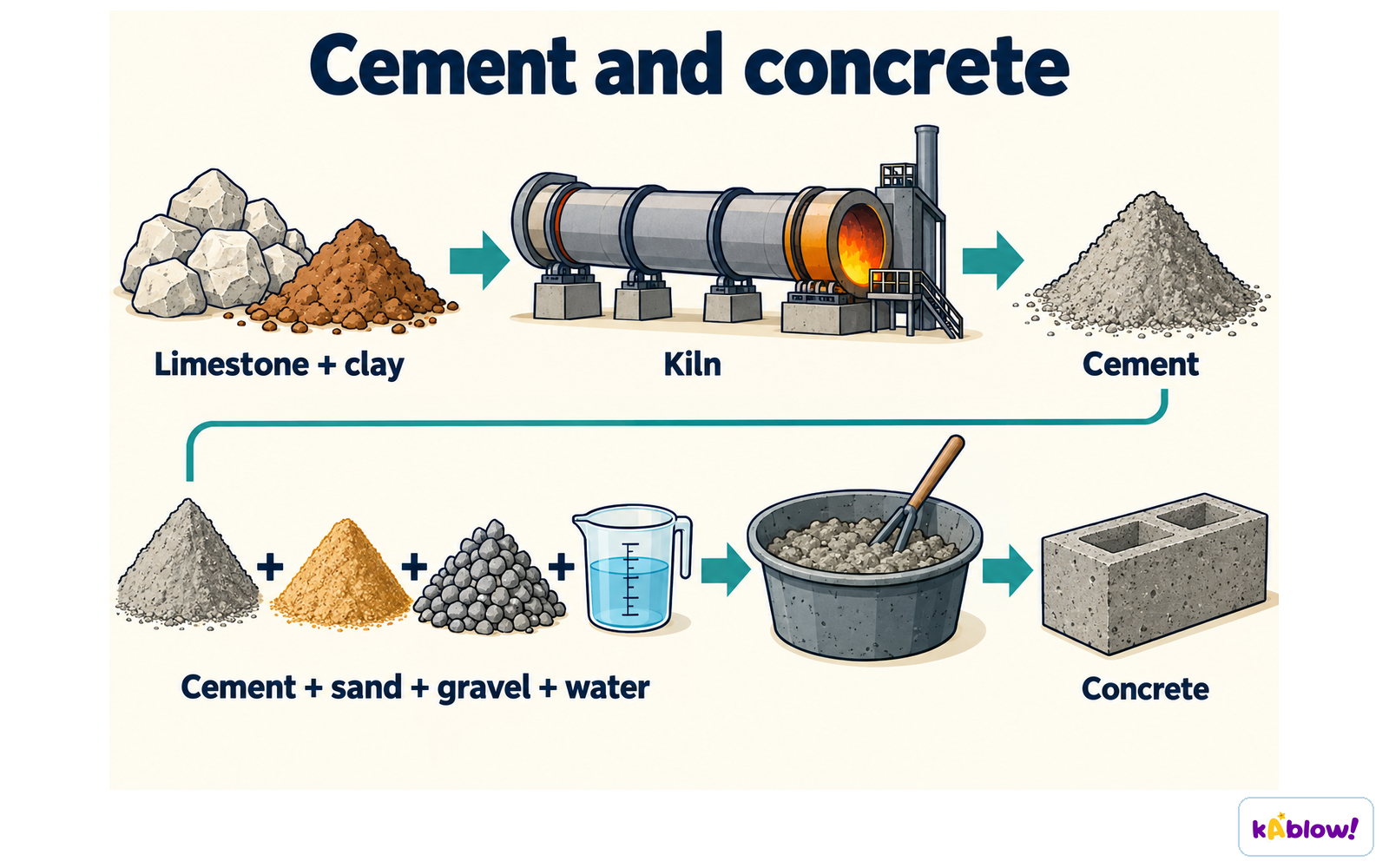
- Concrete: cement + sand + gravel – withstands high compressive forces; used in bridges, roads, buildings.
- Carbon fibre: carbon fibres + polymers – strong and lightweight; used in high-end sports cars, bicycles, sports equipment.
Concrete is a composite made using cement, sand, gravel and water. Cement is manufactured by heating limestone and clay in a kiln.
Key Comparisons
- Ceramics are hard and brittle; polymers are flexible and lightweight; composites combine properties of different materials.
- Polymers are insulators; ceramics are heat-resistant; composites can be designed for specific strengths.
Particle arrangement in solids, liquids, and gases – relevant to understanding material properties.
Slide
Sign up free to view the lesson slides
Step through every slide for this topic — plus flashcards and revision notes — with a free account.
Câu hỏi luyện tập
Xem trước miễn phí — 8 trên 61 câu hỏi. Đăng ký để xem tất cả.
1.Which of the following is a property of ceramics?
Easy- AThey are hard and brittle.
- BThey are flexible and lightweight.
- CThey conduct electricity well.
- DThey are made by joining monomers.
2.Which of the following is a natural polymer?
Easy- APolythene
- BPVC
- CSilk
- DFibreglass
3.Concrete is an example of which type of material?
Easy- ACeramic
- BPolymer
- CComposite
- DMonomer
4.Which of the following statements about polymers is true?
Easy- AThey are good conductors of electricity.
- BThey are usually very reactive.
- CThey are electrical and thermal insulators.
- DThey are made by heating clay in a kiln.
5.Which material is used as an electrical insulator around wires?
Easy- AClay
- BPVC
- CFibreglass
- DConcrete
6.What is the difference between a polymer and a monomer?
Easy- APolymers are small molecules; monomers are long chains.
- BMonomers join together to form polymers.
- CPolymers are natural; monomers are synthetic.
- DMonomers are made from polymers.
7.Which of the following is a composite material?
Easy- ASilk
- BPolythene
- CCarbon fibre
- DClay
8.Why are ceramics suitable for use in cookware?
Easy- AThey are good conductors of heat.
- BThey are resistant to high temperatures.
- CThey are flexible and lightweight.
- DThey are unreactive with food.
Unlock all 61 questions, flashcards & more
Tạo tài khoản miễn phí để xem mọi câu hỏi, slide, thẻ ghi nhớ và ghi chú ôn tập cho chủ đề này.