Metals and non-metals
Học bằng cách chơi
Trả lời những câu hỏi này để kiếm năng lượng, rồi câu cá và khám phá. Không cần tài khoản.
Ghi chú bài học
Organising Elements
- There are over 100 known elements.
- Elements are organised in the periodic table according to their properties and atomic number (number of protons).
- Elements are categorised as metals and non-metals based on their properties.
Electrical Conductivity
- Metals are good electrical conductors (low resistance).
- Non-metals are poor electrical conductors (electrical insulators, high resistance).
- Example: Copper is used for electrical wires because it is a good electrical conductor.
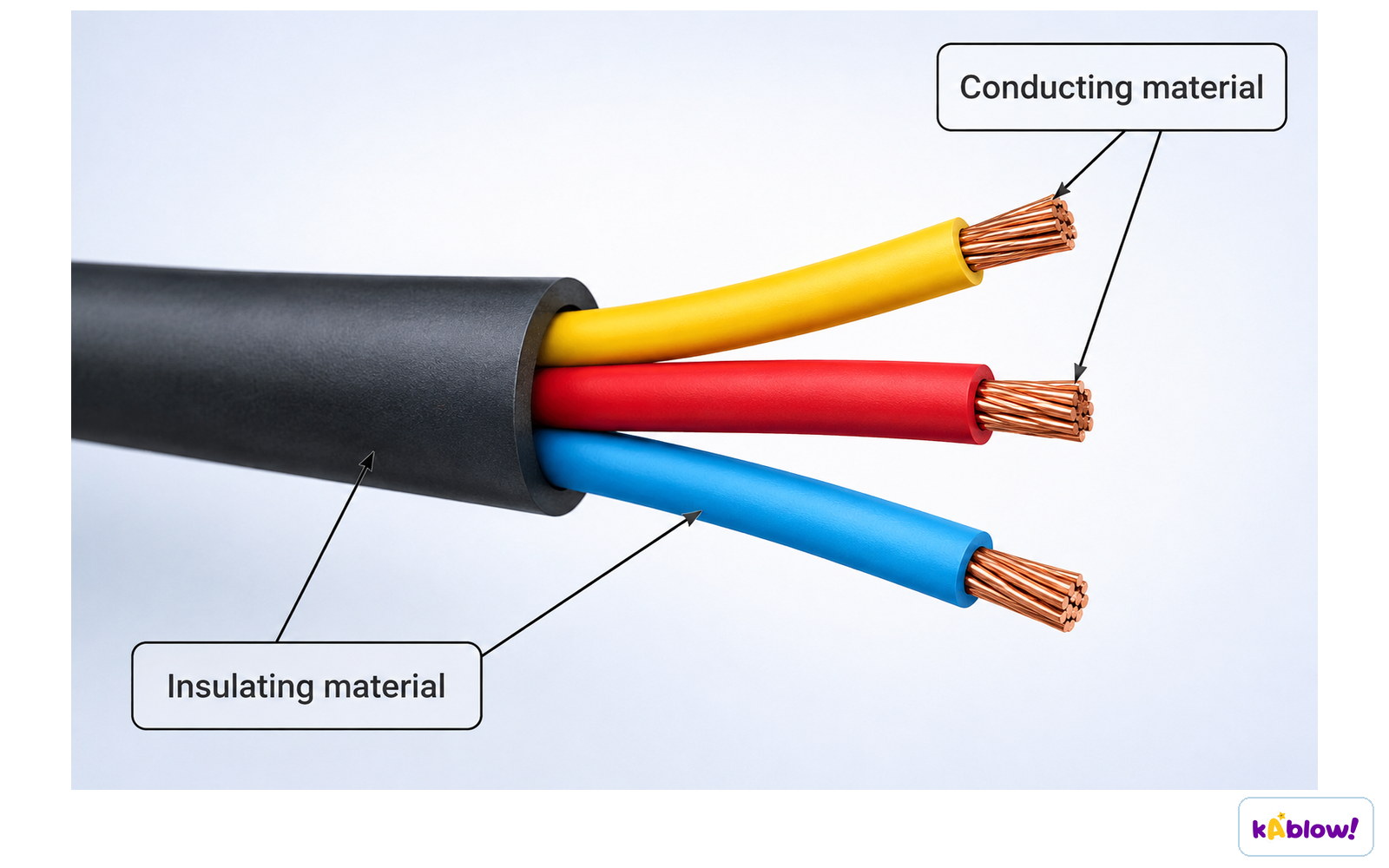
A cable's conducting wires (here, copper) carry the electric current; the surrounding insulating material stops the current escaping.
Thermal Conductivity
- Metals are good thermal conductors (conduct heat well).
- Non-metals are usually thermal insulators (poor conductors of heat).
- Example: Aluminium is used for cooking pans because it is a good thermal conductor.
Malleability, Ductility, and Strength
- Metals are generally malleable (can be shaped), ductile (drawn into wires), and strong.
- Non-metals are generally brittle (break easily).
- Example: Steel is used in construction for its strength; copper is used for wires because it is ductile.
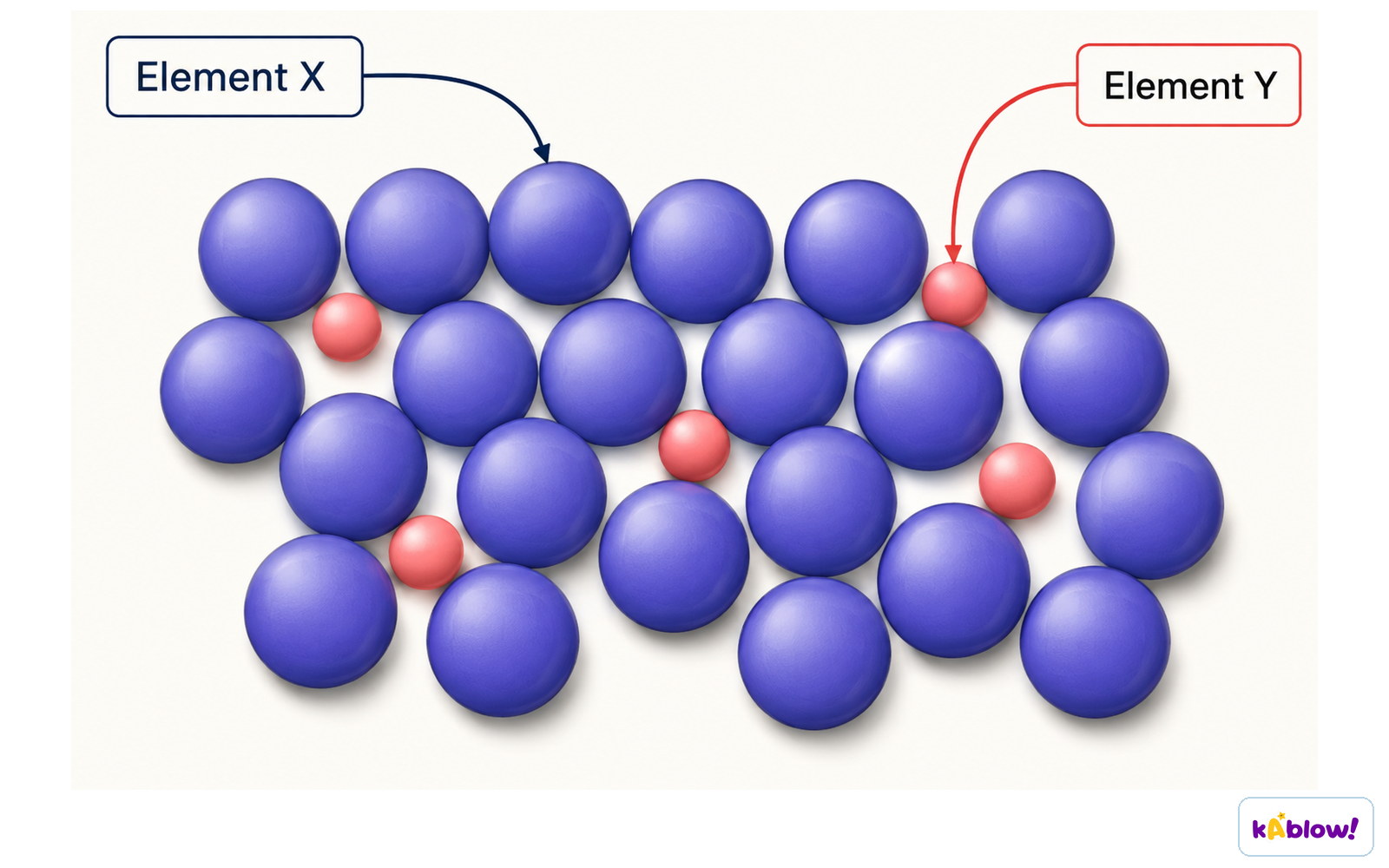
In an alloy, atoms of a different size (Element Y) sit among the host metal's atoms (Element X), disrupting the regular arrangement so the layers cannot slide over each other easily.
Melting and Boiling Points
- Metals usually have high melting and boiling points.
- Non-metals often have low melting and boiling points; many are gases at room temperature.
- Example: Iron melts at 1500 °C, oxygen melts at -220 °C.
Summary of Properties
- Metals: good electrical and thermal conductors, malleable, ductile, strong, high melting/boiling points.
- Non-metals: poor electrical and thermal conductors (insulators), brittle, low melting/boiling points, often gases.
Bohr model of iron (Fe), a typical metal, showing its electron configuration.
Particle arrangement in solids (metal), liquids, and gases (non-metal). Metals are usually solid at room temperature; many non-metals are gases.
Slide
Sign up free to view the lesson slides
Step through every slide for this topic — plus flashcards and revision notes — with a free account.
Câu hỏi luyện tập
Xem trước miễn phí — 8 trên 53 câu hỏi. Đăng ký để xem tất cả.
1.Which of the following is a property of metals?
Easy- AGood electrical conductors
- BPoor thermal conductors
- CBrittle
- DLow melting points
2.Which statement about non-metals is correct?
Easy- ANon-metals are usually ductile.
- BNon-metals are often good electrical insulators.
- CNon-metals have high melting points.
- DNon-metals are generally strong.
3.What does the atomic number of an element represent?
Easy- ANumber of neutrons
- BNumber of protons
- CNumber of electrons and neutrons
- DNumber of nucleons
4.Copper is often used for electrical wires. Which two properties make it suitable?
Medium- AGood electrical conductor and ductile
- BGood thermal conductor and malleable
- CStrong and brittle
- DHigh melting point and low density
5.Why are cooking pans often made of aluminium?
Easy- AAluminium is a good electrical conductor.
- BAluminium is a good thermal conductor.
- CAluminium is brittle and light.
- DAluminium has a low melting point.
6.Which of the following is true about the melting points of metals compared to non-metals?
Easy- AMetals usually have lower melting points than non-metals.
- BMetals usually have higher melting points than non-metals.
- CMetals and non-metals have similar melting points.
- DNon-metals always have higher melting points than metals.
7.What does it mean if a material is malleable?
Easy- AIt can be drawn out into thin wires.
- BIt can be hammered or rolled into thin sheets.
- CIt is a good conductor of electricity.
- DIt breaks easily when hit.
8.Which of the following is a property of non-metals?
Easy- AGood electrical conductors
- BMalleable
- CBrittle
- DHigh melting points
Unlock all 53 questions, flashcards & more
Tạo tài khoản miễn phí để xem mọi câu hỏi, slide, thẻ ghi nhớ và ghi chú ôn tập cho chủ đề này.