Physical changes and chemical reactions
Học bằng cách chơi
Trả lời những câu hỏi này để kiếm năng lượng, rồi câu cá và khám phá. Không cần tài khoản.
Ghi chú bài học
Physical Changes
- In a physical change, the chemical composition of a substance does not change.
- Physical changes are reversible.
- Example: ice melting to water – both are H₂O.
- All state changes (melting, freezing, boiling, condensing, subliming) are physical changes.
- Another example: dissolving sugar in water – can be reversed by evaporation.
- Mass is conserved in a physical change (e.g., 100 g ice → 100 g water).
Chemical Reactions
- In a chemical reaction, the chemical composition of substances changes.
- Example: iron rusting – iron reacts with oxygen to form iron oxide (colour change grey/silver → reddish/brown).
- Chemical reactions are not easily reversible.
- Mass is conserved in a chemical reaction: mass of reactants = mass of products.
- Example: 70 g iron + 30 g oxygen → 100 g iron oxide.
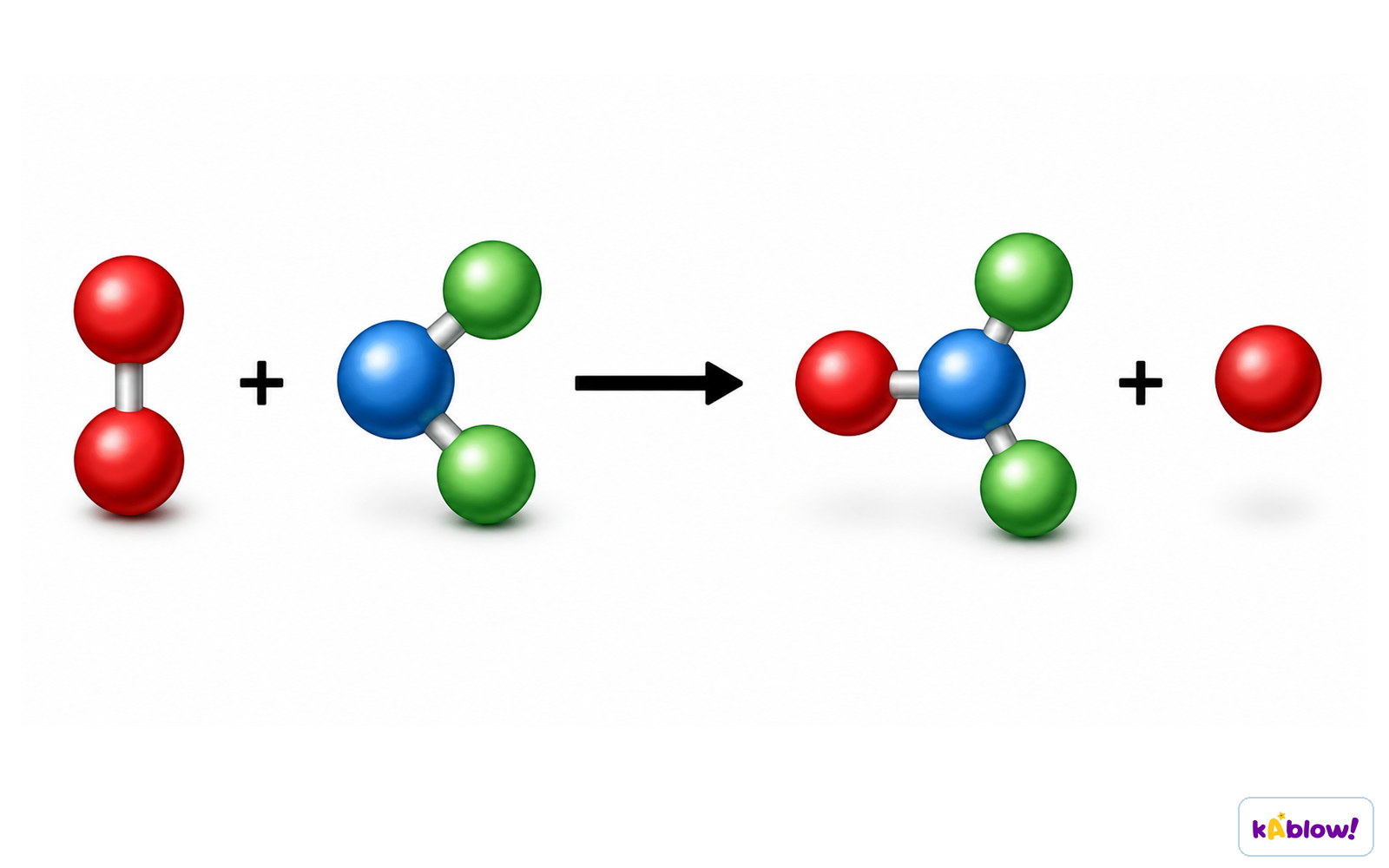
A successful collision has enough energy to break bonds, so the reactant particles rearrange to form the products.
Signs of a Chemical Reaction
- Colour change (e.g., iron rusting).
- Temperature change (usually rise).
- Gas given out – may show as effervescence (bubbles).
- Light emitted.
- Precipitation – a solid (precipitate) forms.
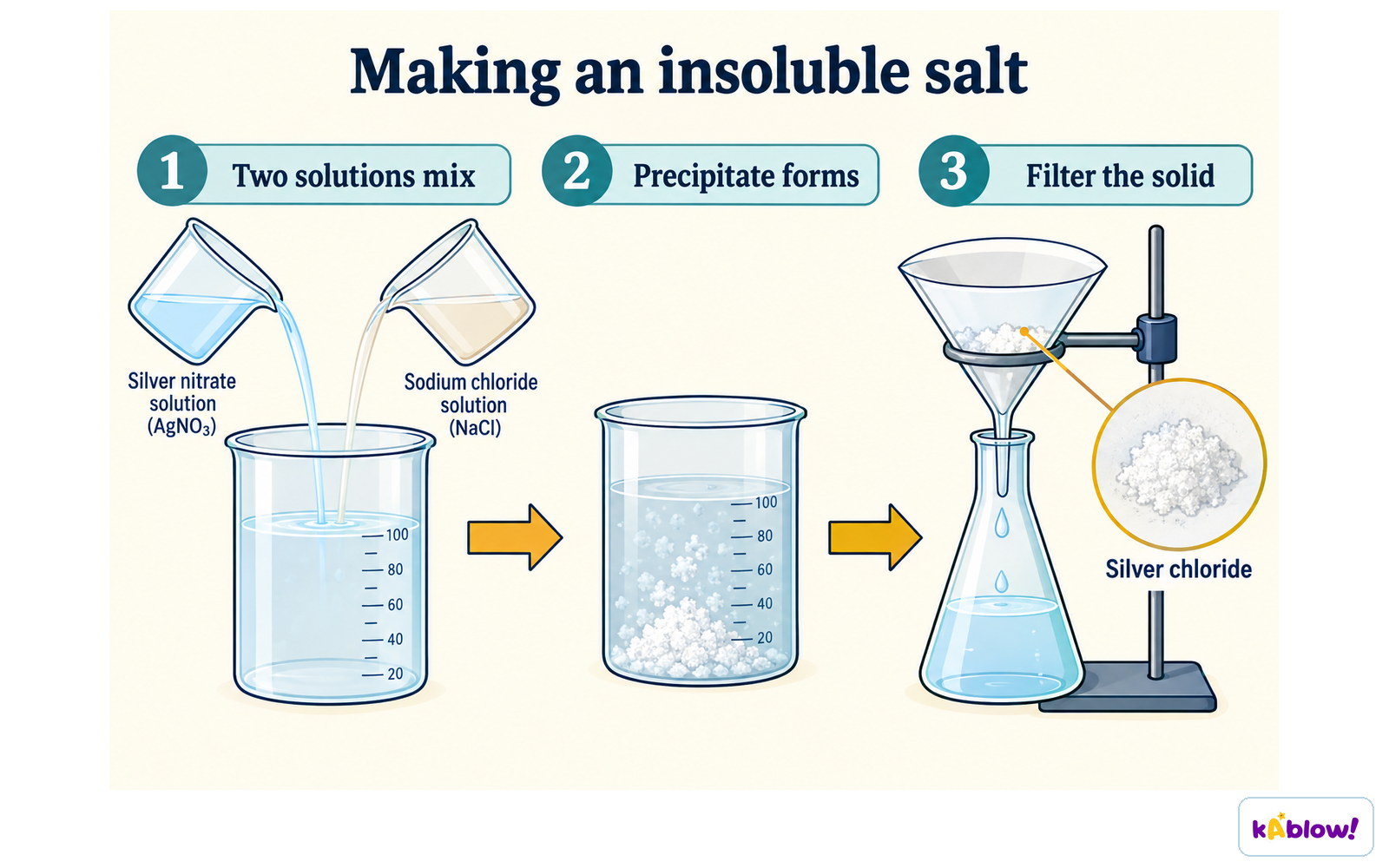
Mixing silver nitrate and sodium chloride solutions forms an insoluble silver chloride precipitate, which can be collected by filtration.
Conservation of Mass
- In both physical and chemical changes, mass is conserved.
- The total mass before the change equals the total mass after.
- For a chemical reaction: mass of reactants = mass of products.
- Example: 50 g copper + 12 g oxygen → 62 g copper oxide.
Reversing Physical Changes
- Physical changes can be reversed by changing conditions.
- Melting/freezing: change temperature.
- Dissolving: evaporate the solvent to recover the solute.
- Example: heat salt solution until water evaporates, leaving salt behind.
Particle arrangement in solid, liquid and gas – all state changes are physical changes.
Slide
Sign up free to view the lesson slides
Step through every slide for this topic — plus flashcards and revision notes — with a free account.
Câu hỏi luyện tập
Xem trước miễn phí — 8 trên 59 câu hỏi. Đăng ký để xem tất cả.
1.Which of the following is a sign that a chemical reaction has taken place?
Easy- AA colour change
- BA change of state
- CDissolving
- DA change of shape
2.What is the name of the state change from gas to liquid?
Easy- ACondensation
- BEvaporation
- CMelting
- DFreezing
3.Which of the following is a physical change?
Easy- AIce melting to form water
- BIron rusting to form iron oxide
- CBurning wood
- DCooking an egg
4.A mass of 50 g of copper reacts with 12 g of oxygen to form copper oxide. What is the mass of copper oxide formed?
Medium- A62 g
- B50 g
- C12 g
- D38 g
5.When 200 g of water evaporates, what is the mass of the water vapour formed?
Easy- A200 g
- BLess than 200 g
- CMore than 200 g
- D0 g
6.Which of the following is NOT a sign of a chemical reaction?
Easy- AA change of state
- BA temperature change
- CGas being given out
- DLight being emitted
7.What is meant by the conservation of mass?
Easy- AThe mass of the reactants equals the mass of the products
- BMass is always lost during a reaction
- CMass is created during a chemical reaction
- DThe mass of the products is always greater than the reactants
8.Which of the following is a chemical reaction?
Easy- ADissolving sugar in water
- BMelting ice
- CRusting of iron
- DBoiling water
Unlock all 59 questions, flashcards & more
Tạo tài khoản miễn phí để xem mọi câu hỏi, slide, thẻ ghi nhớ và ghi chú ôn tập cho chủ đề này.