Pressure in gases
Học bằng cách chơi
Trả lời những câu hỏi này để kiếm năng lượng, rồi câu cá và khám phá. Không cần tài khoản.
Ghi chú bài học
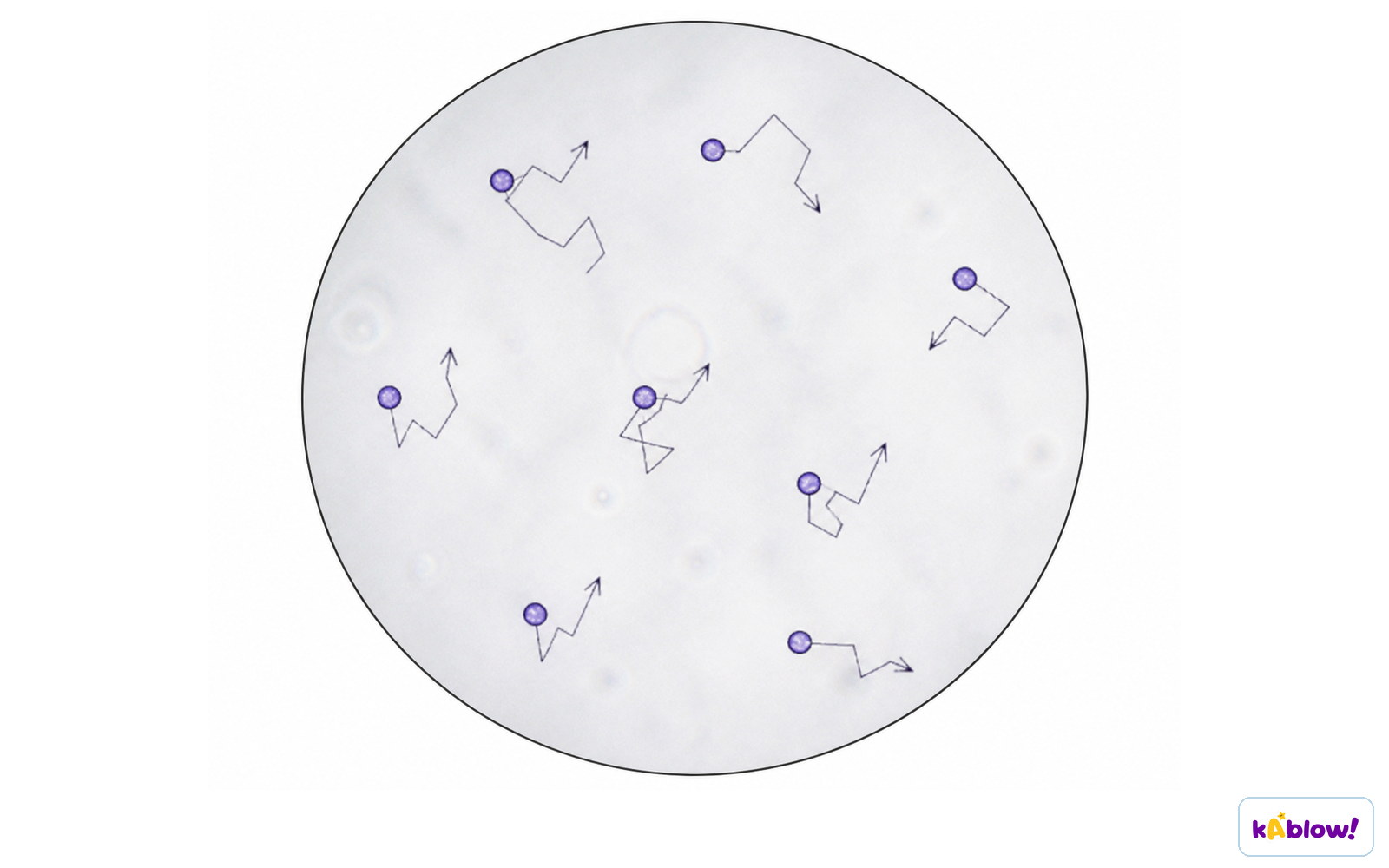
Brownian Motion
- Brownian motion is the random movement of particles in a fluid (gas or liquid).
- It was observed by Robert Brown in 1827 when he saw pollen grains moving randomly in water.
- Smoke particles in air also show Brownian motion due to collisions with fast-moving air particles.
- Gas particles move in random directions at a range of speeds.
- Collisions with invisible gas particles cause larger visible particles to jitter.
Brownian motion: the random motion of particles (e.g. pollen) when observed through a microscope.
Gas Pressure from Particle Collisions
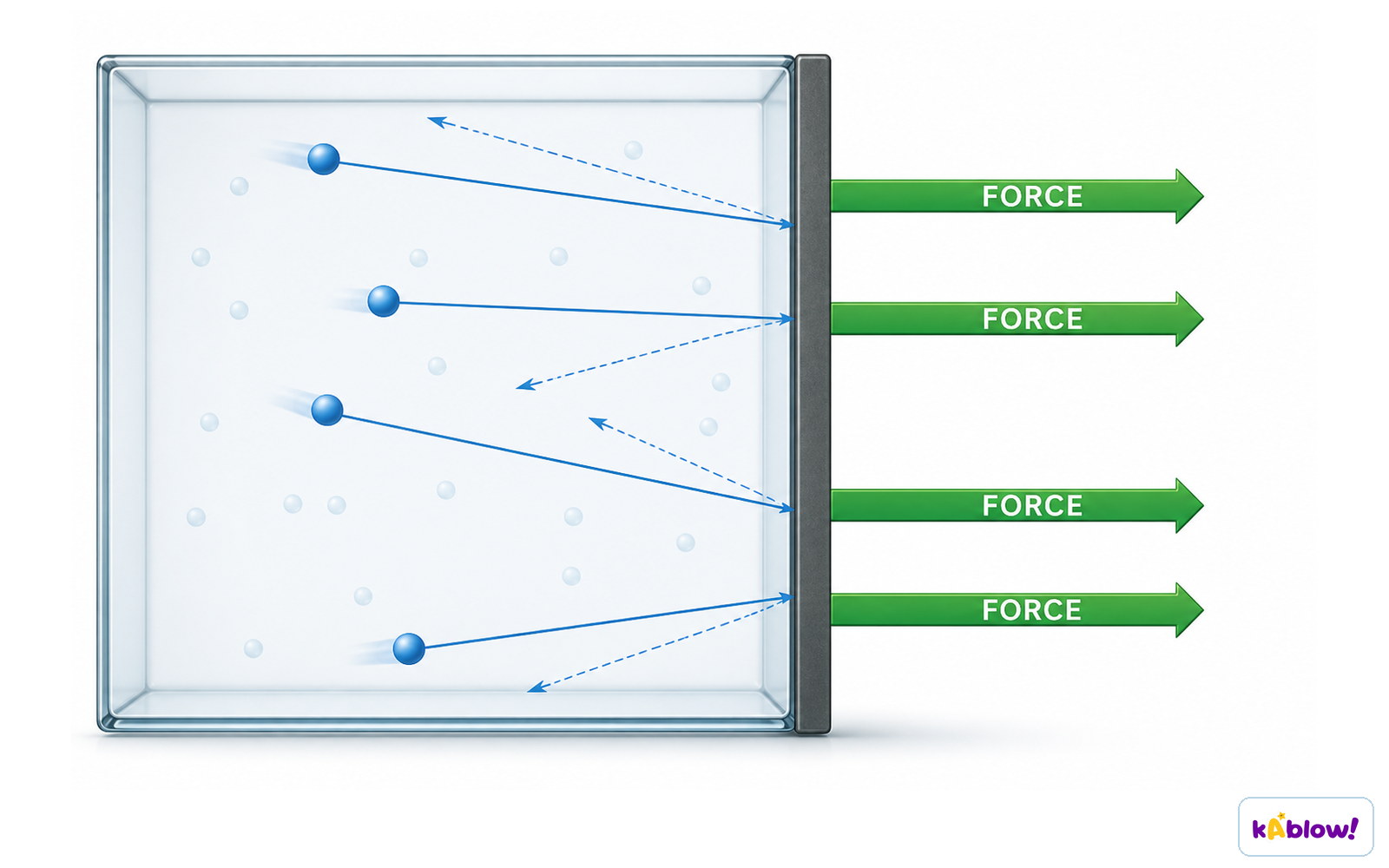
- Gas particles exert pressure when they collide with a surface.
- Each collision exerts a tiny force on the surface; many collisions produce measurable pressure.
- Pressure = force per unit area on the walls of the container.
Gas molecules bouncing off the walls of a container exert a force perpendicular to the surface.
Effect of Adding More Gas
- Adding more gas particles (e.g., pumping air into a balloon) increases the number of particles.
- More particles lead to more frequent collisions with the walls.
- More collisions increase the force on the walls, raising the pressure.
- Higher pressure causes the balloon to expand until internal and external pressures balance.
Effect of Decreasing Volume
- Reducing the volume of a container (e.g., squeezing a gas) forces particles into a smaller space.
- Particles collide with the walls more often because they have less distance to travel.
- More frequent collisions increase the force and therefore the pressure.
Effect of Increasing Temperature
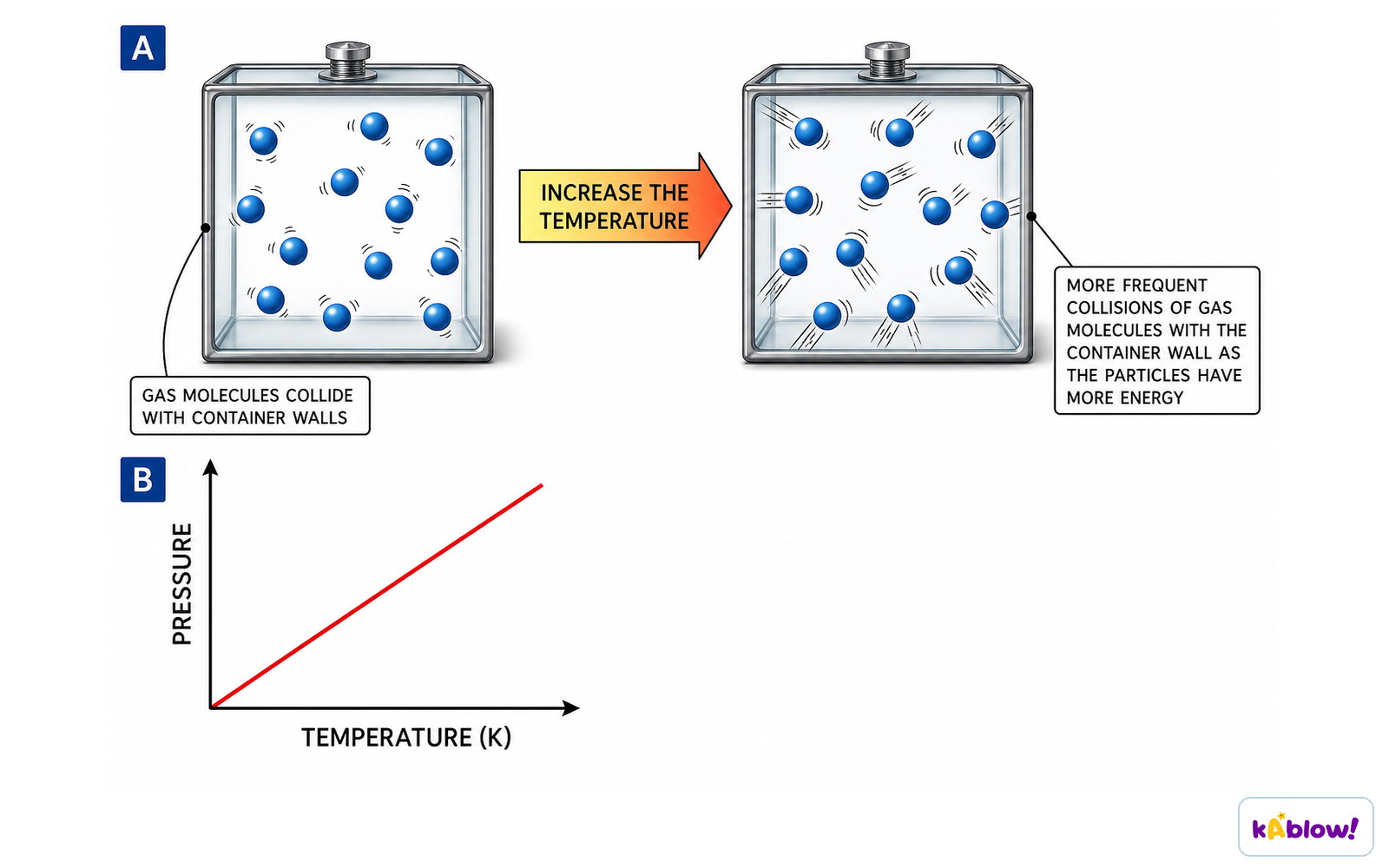
- Heating a gas increases the kinetic energy and speed of its particles.
- Faster particles collide with the walls more often and with greater force.
- This raises the pressure inside the container.
- If the container is flexible (e.g., a balloon), it expands as pressure increases.
At constant volume, an increase in the temperature of the gas increases the pressure due to more collisions on the container walls.
Effect of Decreasing Temperature
- Cooling a gas reduces the kinetic energy and speed of particles.
- Slower particles collide less often and with less force.
- Pressure inside the container decreases.
- A flexible container (e.g., a balloon) will shrink as internal pressure drops.
Particle model of a gas: particles are far apart, moving randomly at high speed.
Slide
Sign up free to view the lesson slides
Step through every slide for this topic — plus flashcards and revision notes — with a free account.
Câu hỏi luyện tập
Xem trước miễn phí — 8 trên 62 câu hỏi. Đăng ký để xem tất cả.
1.What is the name of the process where smoke particles move in a random way due to collisions with air particles?
Easy- ABrownian motion
- BDiffusion
- COsmosis
- DEvaporation
2.What happens to the number of collisions between air particles and the walls of a balloon when more air is pumped into it?
Easy- AIncreases
- BDecreases
- CStays the same
- DBecomes zero
3.When the volume of a container is reduced, what happens to the pressure of the gas inside?
Easy- AIncreases
- BDecreases
- CStays the same
- DBecomes zero
4.Two containers have the same amount of gas particles. Container A is smaller than container B. Which container has the higher pressure?
Medium- AContainer A
- BContainer B
- CBoth have the same pressure
- DCannot be determined
5.Two containers have the same amount of gas particles. Container A is at a lower temperature than container B. Which container has the higher pressure?
Medium- AContainer B
- BContainer A
- CBoth have the same pressure
- DCannot be determined
6.What happens to the average speed of gas particles when the temperature is increased?
Easy- AIncreases
- BDecreases
- CStays the same
- DBecomes zero
7.A balloon is cooled. What happens to its size?
Easy- AIt shrinks
- BIt expands
- CIt stays the same
- DIt bursts
8.What is the cause of pressure exerted by a gas on the walls of its container?
Easy- ACollisions of gas particles with the walls
- BThe weight of the gas particles
- CThe attraction between gas particles
- DThe repulsion between gas particles
Unlock all 62 questions, flashcards & more
Tạo tài khoản miễn phí để xem mọi câu hỏi, slide, thẻ ghi nhớ và ghi chú ôn tập cho chủ đề này.