Introduction to magnetism
Học bằng cách chơi
Trả lời những câu hỏi này để kiếm năng lượng, rồi câu cá và khám phá. Không cần tài khoản.
Ghi chú bài học
Magnetism as a Non-Contact Force
- Magnetism is a non-contact force – it acts between objects that are not touching.
- A contact force requires objects to be physically touching (e.g., friction).
- Non-contact forces are caused by a field; for magnetism, it is a magnetic field.
Every magnet has a north pole and a south pole.
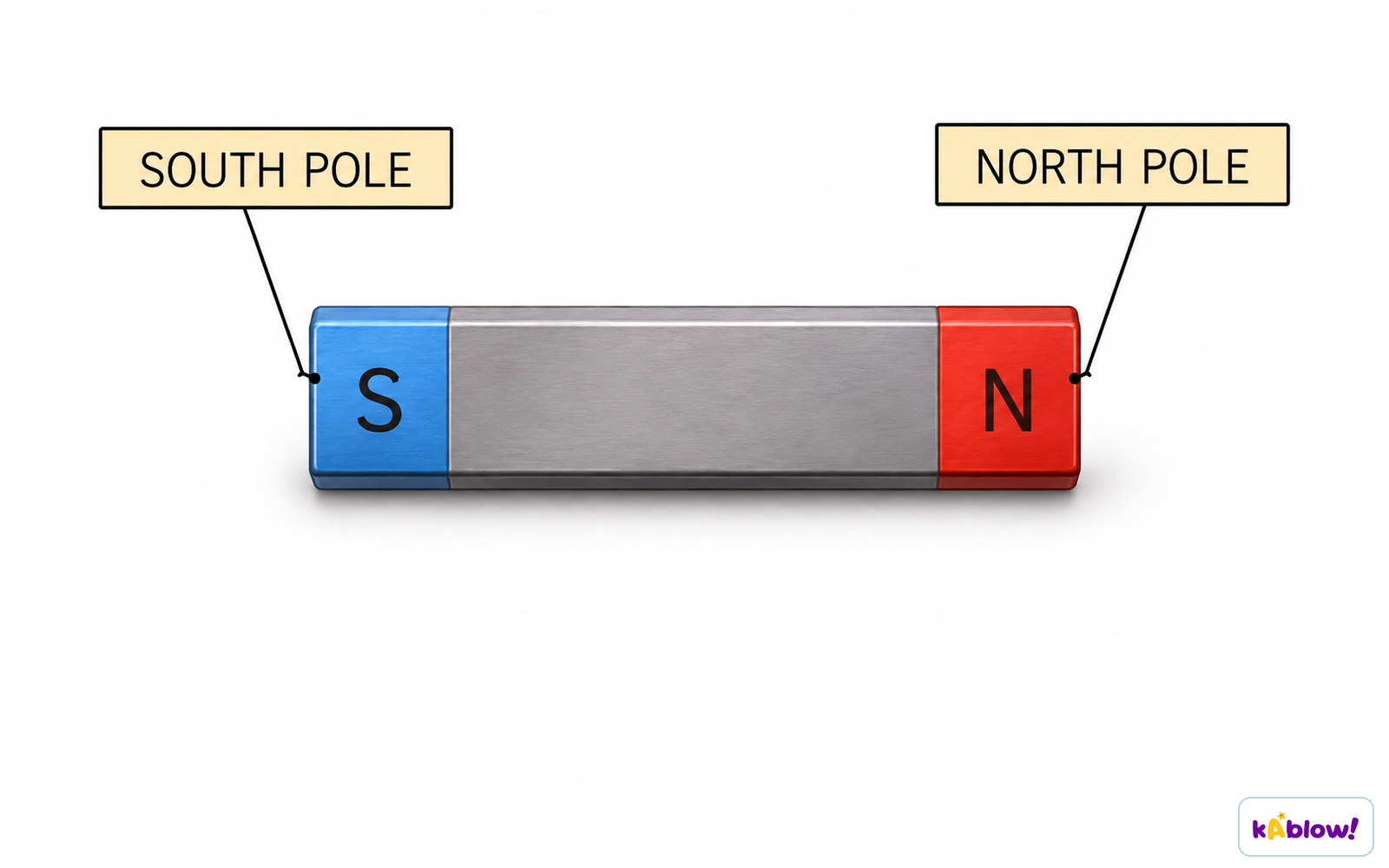
Magnetic Field Lines
- Magnetic field lines point away from the North pole and towards the South pole.
- The direction of a field line gives the direction of force on the North pole of another magnet.
- Field lines are closer together where the field is stronger (near the poles).
- Like poles repel; unlike poles attract.
Visualising Magnetic Fields
- Sprinkle iron filings on paper placed over a bar magnet to see the field pattern.
- Iron filings align along the field lines and cluster at the poles (strongest field).
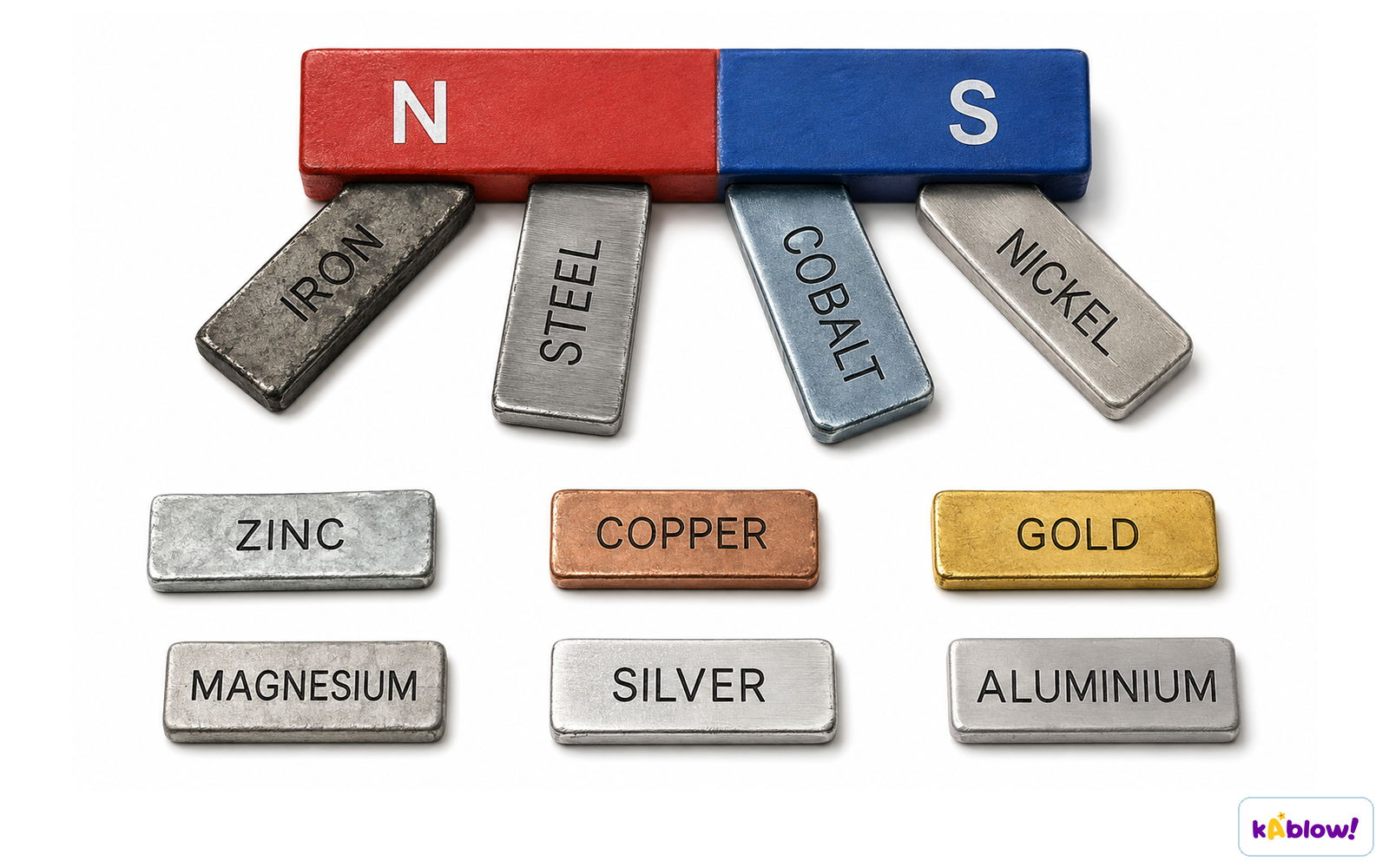
Magnetic Metals
- The three magnetic metals are iron, nickel, and cobalt.
- Steel is magnetic because it contains iron.
- Magnetic metals are attracted to permanent magnets but never repelled.
Magnetic materials (iron, steel, cobalt, nickel) are attracted to a magnet; non-magnetic materials (zinc, copper, gold, silver, magnesium, aluminium) are not.
Permanent Magnets
- A permanent magnet (e.g., bar magnet) produces its own magnetic field.
- A permanent magnet can be demagnetised by: heating, hitting with a hammer, or placing in a reversed magnetic field.
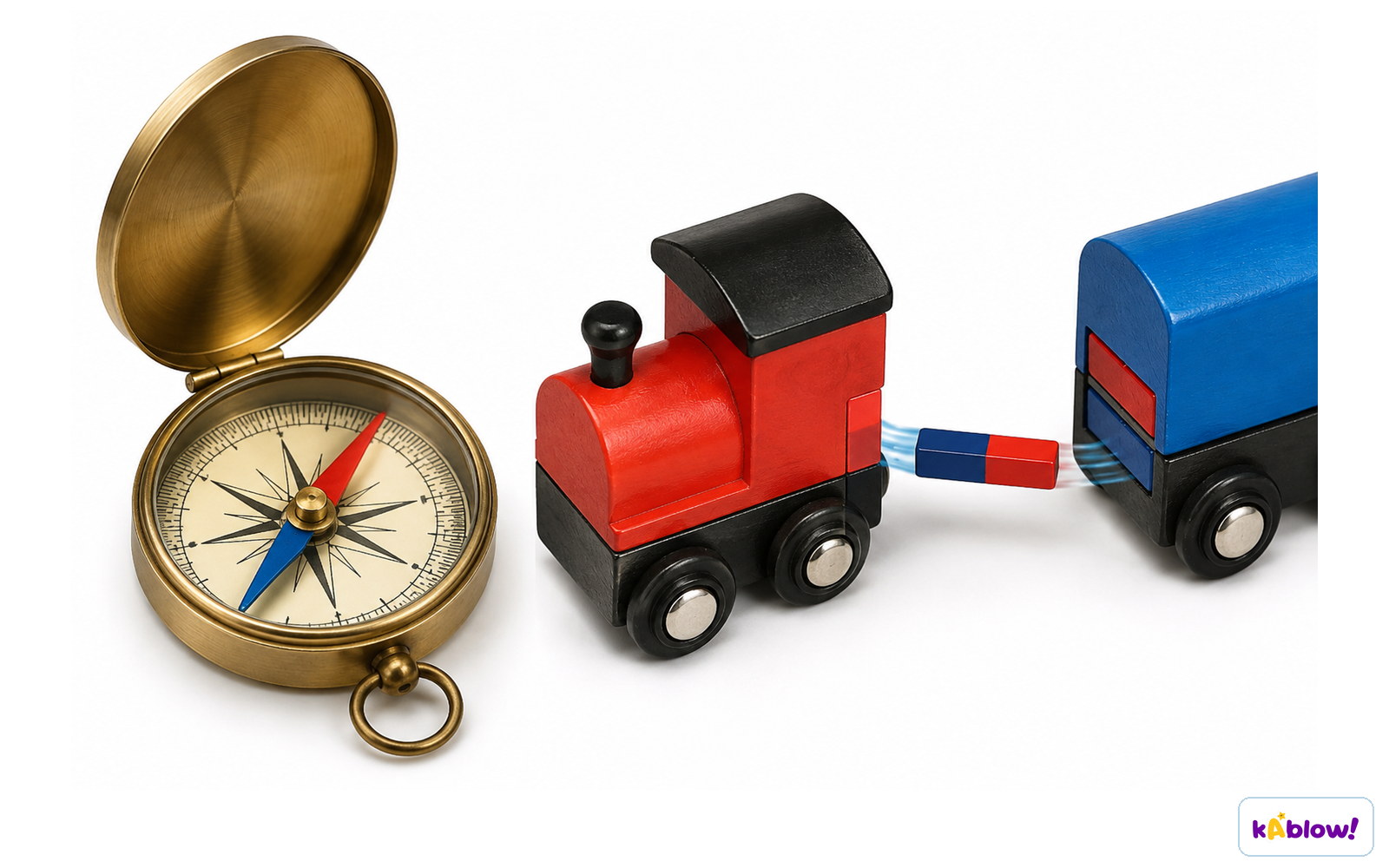
Compasses and toy trains are two examples of the use of permanent magnets.
Slide
Sign up free to view the lesson slides
Step through every slide for this topic — plus flashcards and revision notes — with a free account.
Câu hỏi luyện tập
Xem trước miễn phí — 8 trên 57 câu hỏi. Đăng ký để xem tất cả.
1.Which of the following is a non-contact force?
Easy- AMagnetism
- BFriction
- CAir resistance
- DTension
2.Magnetic field lines point away from the north pole and towards which pole?
Easy- ASouth pole
- BNorth pole
- CEast pole
- DWest pole
3.Which of the following metals is magnetic?
Easy- AIron
- BCopper
- CAluminium
- DGold
4.Two like poles of magnets will:
Easy- ARepel each other
- BAttract each other
- CHave no effect
- DCancel each other
5.Which of the following statements about magnetic field lines is true?
Medium- AThey are closer together where the field is stronger.
- BThey are closer together where the field is weaker.
- CThey point from south to north outside the magnet.
- DThey never form closed loops.
6.A bar magnet is placed under a sheet of paper and iron filings are sprinkled on top. Where will the iron filings concentrate most?
Easy- AAt the poles
- BAt the centre
- CEvenly spread
- DAway from the magnet
7.Which of the following can demagnetise a permanent magnet?
Medium- AHeating it
- BCooling it
- CPlacing it in a weak magnetic field
- DPainting it
8.Which of the following is true about magnetic metals?
Easy- AThey are always attracted to a magnet.
- BThey are always repelled by a magnet.
- CThey can be either attracted or repelled.
- DThey are never affected by magnets.
Unlock all 57 questions, flashcards & more
Tạo tài khoản miễn phí để xem mọi câu hỏi, slide, thẻ ghi nhớ và ghi chú ôn tập cho chủ đề này.