Growth and development of organisms
Học bằng cách chơi
Trả lời những câu hỏi này để kiếm năng lượng, rồi câu cá và khám phá. Không cần tài khoản.
Ghi chú bài học
Reproduction Overview
- All living organisms must reproduce to ensure their species does not become extinct.
- There are two basic types: asexual reproduction (one parent, offspring identical) and sexual reproduction (two parents, offspring similar but not identical).
- Asexual reproduction occurs in Archaea, Bacteria, Fungi, Protists, many plants/algae, and some animals (e.g., some insects, reptiles, sharks).
- Sexual reproduction involves the fusion of male and female genetic information (DNA).
- In angiosperms, flowers are the sexual organs, containing the structures needed for sexual reproduction.
Flower Structures
- Flowers are typically set on a stalk called the peduncle.
- The receptacle is the top part of the flower stalk, where the other flower parts attach.
- Sepals are small, often green, leaf-like parts that protect the flower bud before it opens.
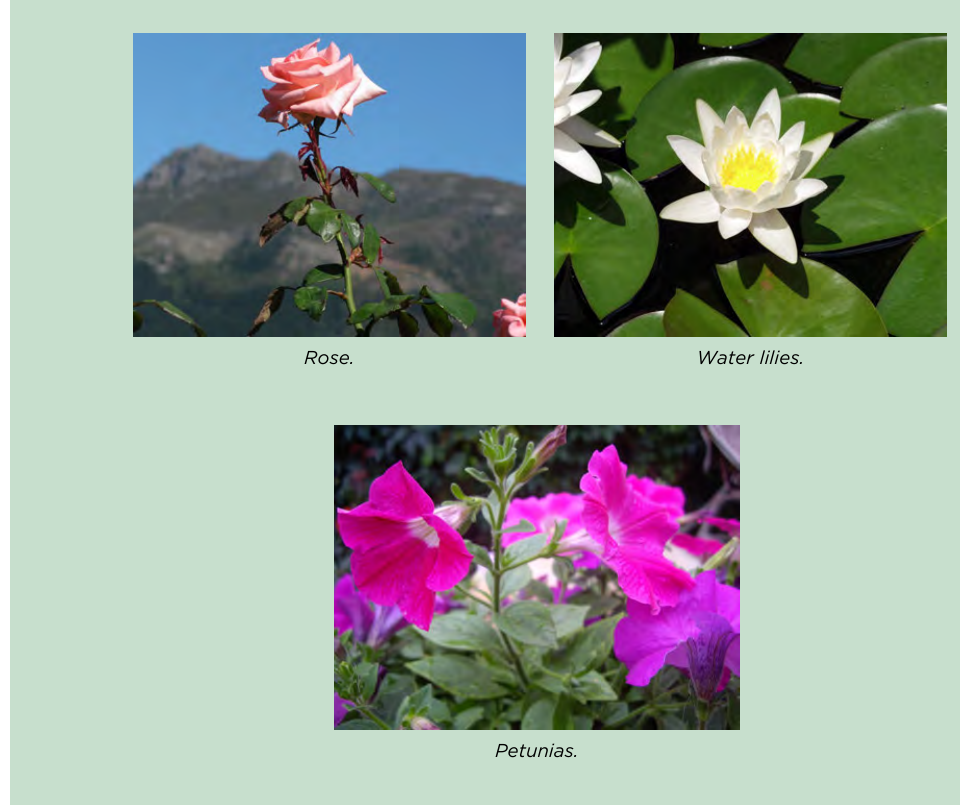
- Petals are often brightly coloured to attract pollinators such as insects, birds, and bats; wind-pollinated flowers often have small or no petals because they do not need to attract animals.
- Some flowers have both male and female parts; others have only male or only female parts, sometimes on separate plants.
Three flowers used to identify outer flower structures: a rose, water lilies, and petunias.
Male and Female Reproductive Structures
- The stamen is the male part of the flower. It has two parts: the anther, which produces pollen containing the male sex cells, and the filament, a stalk that supports the anther.
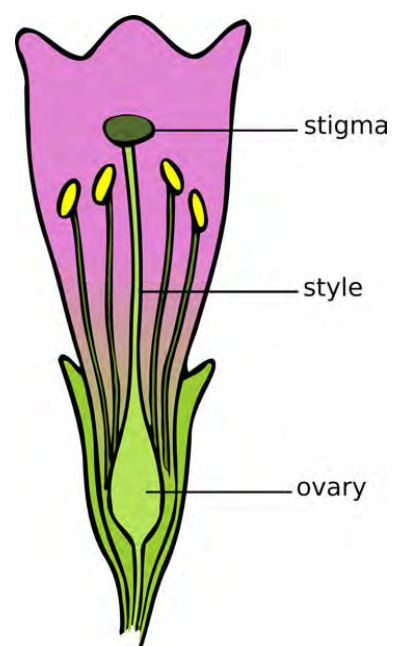
- The pistil (or carpel) is the female part of the flower, usually at its centre. It has three parts: the stigma, style, and ovary.
- The stigma is the sticky tip that receives pollen during pollination.
- The style is a long tube that connects the stigma to the ovary and supports the stigma in a good position to catch pollen.
- The ovary is the enlarged base of the pistil. It contains ovules, and inside each ovule is an embryo sac where the seed will develop after fertilisation.
The female flower parts making up the pistil: stigma, style and ovary.
Pollination
- Pollination is the transfer of pollen from the stamen to the stigma of a flower (same or different plant).
- Pollination is essential for fertilisation and seed production; without it, no seeds or fruit form.
- Pollination can occur via animals (pollinators like bees, birds, bats), wind, or water.
- Animal-pollinated flowers often have bright petals, sweet scents, and nectar to attract pollinators; pollen is often sticky to cling to animals.
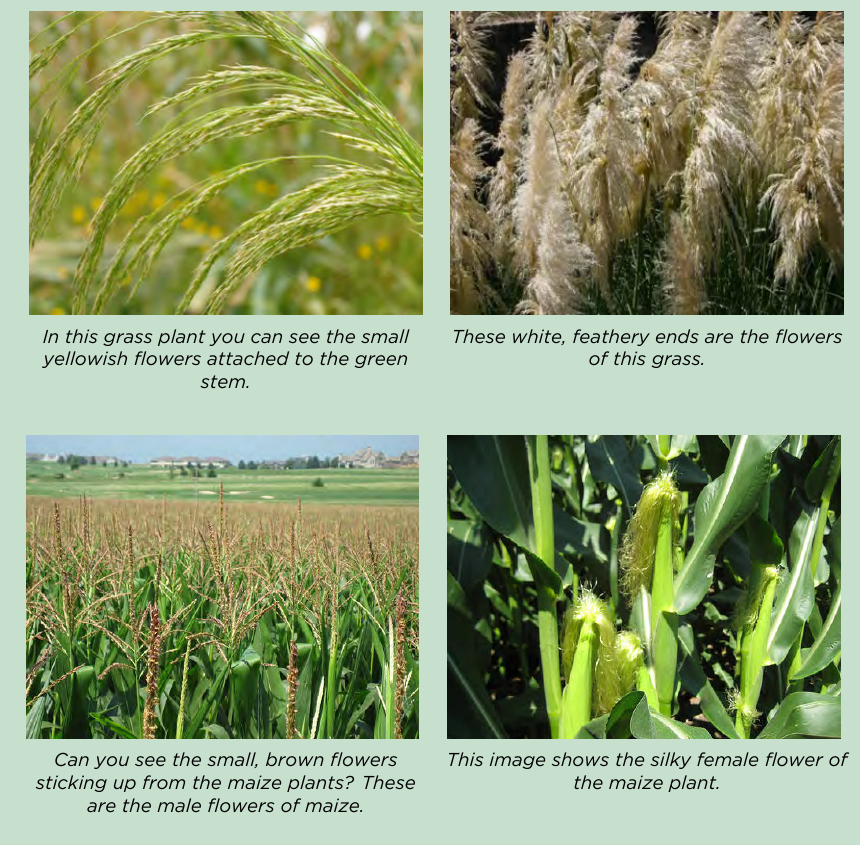
- Wind-pollinated flowers are usually small, not colorful, produce large amounts of light, smooth pollen, and have feathery stigmas and hanging anthers to catch wind-borne pollen.
- Water-pollinated plants release pollen that floats on water surface; stigmas are near the water surface.
Photos of grass, pampas grass, and maize flowers pollinated by wind.
Fertilisation in Plants
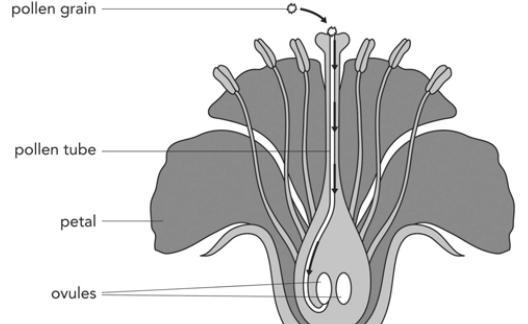
- After pollination, a pollen tube grows from the pollen grain down the style to the ovule.
- The pollen tube delivers male sex cells to the ovule; one fuses with the female sex cell in the embryo sac – this is fertilisation.
- The fertilised egg develops into a seed; the other male cell fuses to form endosperm (starchy food for the germinating seed).
- The ovary swells and becomes a fruit; ovules become seeds.
- Fruits and seeds are adapted for dispersal to spread to new areas.
Diagram of a pollen tube growing from the stigma down the style to the ovules in the ovary.
Seed Dispersal
- Seed dispersal spreads seeds away from the parent plant to reduce competition and colonise new areas.
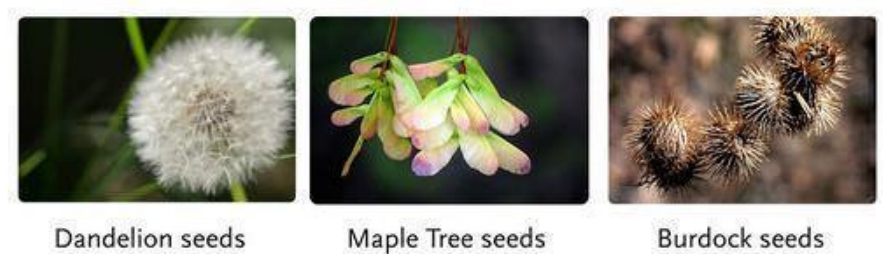
- Methods include: gravity (fruit falls and rolls), animals (eating fruit and excreting seeds, or seeds sticking to fur), explosive force (pods burst and shoot seeds), wind (light seeds with wings), and water (floating seeds).
- Seeds have adaptations like tough outer coverings to survive animal digestion, hooks to cling to fur, or wings for wind dispersal.
- Fruits attract animals to eat them, aiding in seed dispersal.
Dandelion, maple tree, and burdock seeds, each adapted for a different method of dispersal.
Adaptations for Reproduction
- Plants attract pollinators and seed-dispersing animals with adaptations such as bright flowers, nectar, scents, and nutritious fruit; some plants also produce hard-shelled nuts that squirrels bury and sometimes forget, giving the seed a chance to grow.
- Animals have courtship behaviours that help them attract a mate, such as a peacock raising its tail feathers, a blue-footed booby's dance, or the mating songs of whales and frogs.
- Parental care increases the chances offspring survive: many birds and mammals build nests, feed their young, and protect them from predators.
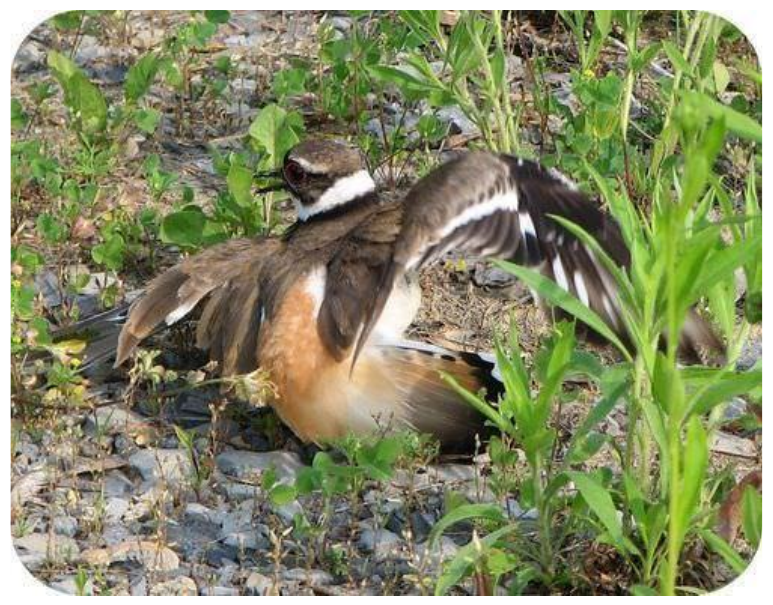
- Some parents use distraction behaviours to protect their young — a mother killdeer will feign a broken wing to lure a predator away from her nest, then fly off once the predator is far enough away.
- Teaching young important skills also improves survival, such as meerkat parents teaching their pups how to safely eat scorpions.
A mother killdeer feigning a broken wing to lure a predator away from her nest.
Environmental and Genetic Factors in Growth
- How an organism grows and develops depends on both genetic factors (the traits it inherits from its parents) and environmental factors (conditions such as light, water, temperature, and available nutrients).
- A genetic factor is present regardless of surroundings — for example, some tree species can photosynthesise through their bark even in winter with no leaves, a trait every member of that species has.
- Environmental factors can speed up or slow down growth without changing an organism's genes — for example, more available food or water generally allows faster growth, while crowding or a lack of resources can slow it.
- Scientists can work out whether a difference in growth between two organisms is genetic or environmental by checking whether the individuals differ in their genes, their surroundings, or both.
Slide
Sign up free to view the lesson slides
Step through every slide for this topic — plus flashcards and revision notes — with a free account.
Câu hỏi luyện tập
Xem trước miễn phí — 8 trên 42 câu hỏi. Đăng ký để xem tất cả.
1.What is the term for the male reproductive part of a flower?
Easy- AStamen
- BPistil
- COvary
- DSepal
2.What is the name of the structure that receives pollen during pollination?
Easy- AStigma
- BStyle
- COvary
- DAnther
3.Sepals are often green and can photosynthesize.
EasyTrue or false?
4.Which of the following is NOT a method of seed dispersal mentioned in the source?
Easy- AGravity
- BExplosive force
- CPhotosynthesis
- DWind
5.Why do wind-pollinated flowers often have small or absent petals?
Easy- ATo reduce water loss
- BBecause they do not need to attract animal pollinators
- CTo make them lighter for wind dispersal
- DTo prevent self-pollination
6.Which of the following are adaptations of wind-pollinated flowers? (Select all that apply)
Medium- ALong filaments that hang down
- BFeathery stigmas
- CBrightly colored petals
- DSmooth, light pollen
- EProduction of nectar
7.A seed has a tough outer covering and spiky structures that stick to animal fur. How is this seed most likely dispersed?
Medium- ABy wind
- BBy water
- CBy animals
- DBy explosive force
8.In sexual reproduction, offspring are identical to the parent.
MediumTrue or false?
Unlock all 42 questions, flashcards & more
Tạo tài khoản miễn phí để xem mọi câu hỏi, slide, thẻ ghi nhớ và ghi chú ôn tập cho chủ đề này.