Atoms and molecules
Học bằng cách chơi
Trả lời những câu hỏi này để kiếm năng lượng, rồi câu cá và khám phá. Không cần tài khoản.
Ghi chú bài học
Atoms and Sub-atomic Particles
- Atoms are the basic building blocks of all matter.
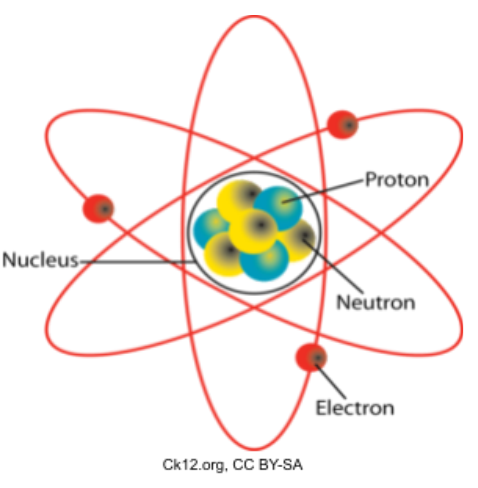
- Atoms are made of three sub-atomic particles: protons, neutrons, and electrons.
- Protons are positively charged and are found in the nucleus.
- Neutrons have no charge (neutral) and are also in the nucleus.
- Electrons are negatively charged, much smaller, and move around the nucleus in an electron cloud.
- The number of protons determines the element; in a neutral atom, protons equal electrons.
A model of an atom, showing the nucleus (protons and neutrons) at the centre and electrons orbiting around it.
Elements and the Periodic Table
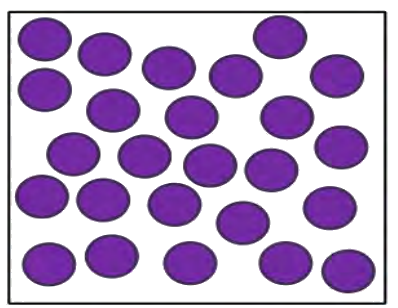
- An element is a pure substance made of only one kind of atom.
- There are more than 100 known elements, each with a unique name, symbol, and atomic number.
- Elements are arranged in the Periodic Table in order of increasing atomic number.
- Atoms of different elements have different numbers of protons and different masses.
- Metals are found on the left and non-metals on the right of the Periodic Table; semi-metals are in between.
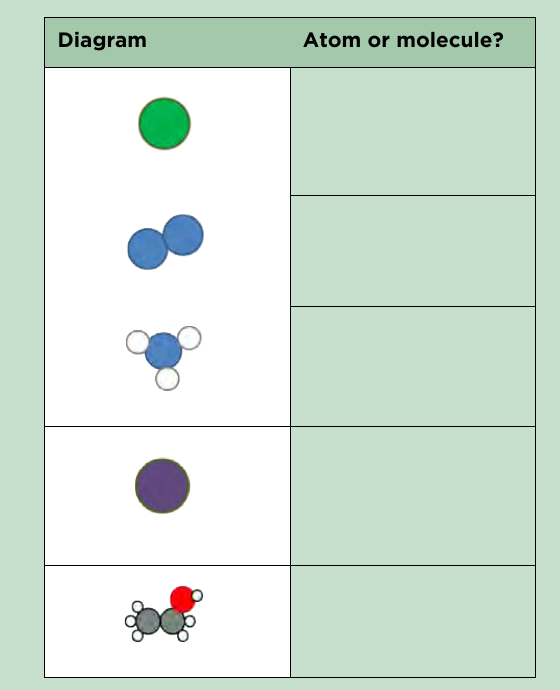
A collection of identical atoms representing an element
Molecules
- A molecule forms when two or more atoms link together.
- Molecules can be made of the same type of atoms (e.g., O2) or different types (e.g., H2O).
- A molecule always has the same types and proportions of atoms; for example, water is always H2O.
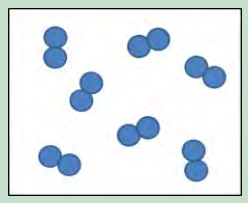
- Some elements exist as diatomic molecules (two atoms), such as H2, N2, O2, F2, Cl2, Br2, and I2.
- Molecules of compounds contain at least two different kinds of atoms.
Some elements exist as diatomic molecules.
Compounds and Chemical Formulas
- A compound is a pure substance made of two or more different elements chemically combined.
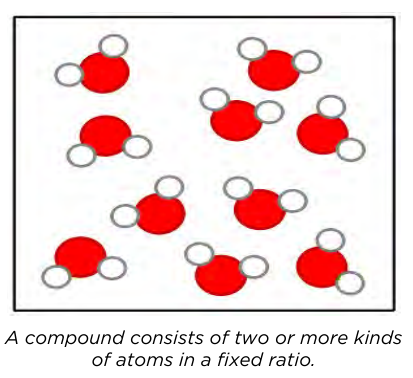
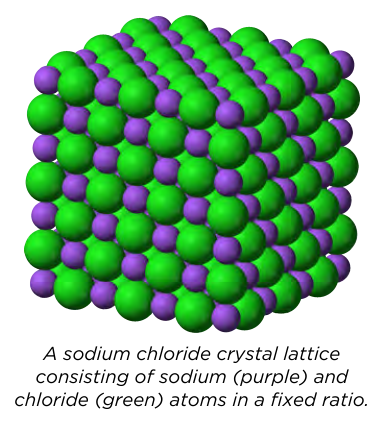
- Compounds have a fixed ratio of atoms; for example, water has 2 hydrogen atoms to 1 oxygen atom.
- Each compound has a unique chemical formula that shows the types and numbers of atoms (e.g., CO2).
- Subscripts in a formula indicate the number of atoms of each element; '1' is not written.
- Compounds form during chemical reactions when atoms rearrange and new bonds form.
A compound consists of two or more kinds of atoms combined in a fixed ratio.
Naming Compounds
- The IUPAC system provides unique names for compounds.
- For compounds of a metal and non-metal, the metal comes first, and the non-metal ends in -ide (e.g., sodium chloride).
- For compounds of only non-metals, the element further left on the Periodic Table comes first, and the second ends in -ide.
- Prefixes like mono-, di-, tri-, tetra- indicate the number of atoms when needed (e.g., carbon dioxide).
- The prefix mono- is usually omitted from the first element (e.g., CO is carbon monoxide, not monocarbon monoxide).
Mixtures vs. Compounds
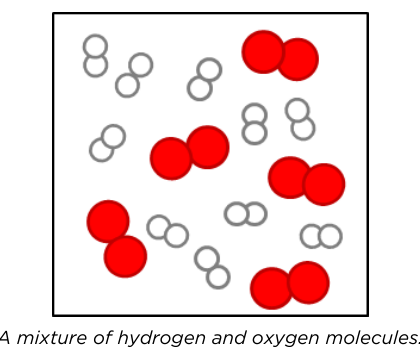
- A mixture contains two or more substances that are not chemically combined.
- Mixtures can be separated by physical means, such as filtering or evaporation.
- Compounds are chemically combined and can only be separated by chemical reactions.
- In a mixture, the substances retain their individual properties; in a compound, the properties are different from the constituent elements.
A mixture of hydrogen and oxygen molecules — the two elements are not chemically combined.
Models of the Atom
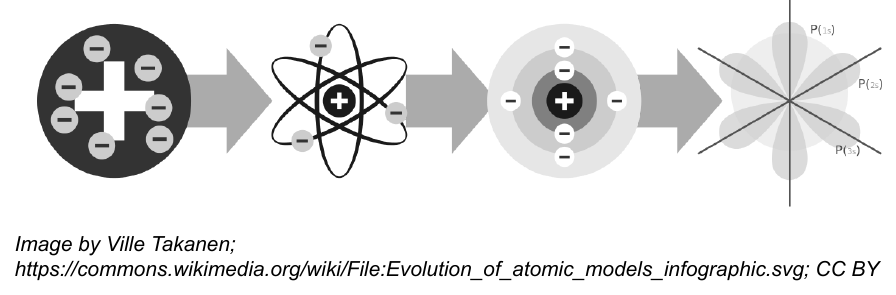
- Scientific models help us understand atoms, which are too small to see.
- The model shows protons and neutrons in the nucleus and electrons in a cloud around it.
- The nucleus is very dense and makes up almost all of the atom's mass.
- Atoms are mostly empty space; the nucleus is about 1 trillionth of the atom's size.
- The model is not to scale but effectively shows the parts and their locations.
The scientific model of the atom has changed over time, from a solid sphere to the modern electron-cloud model.
Properties of Molecules
- The properties of a molecule are different from the properties of the atoms that form it.
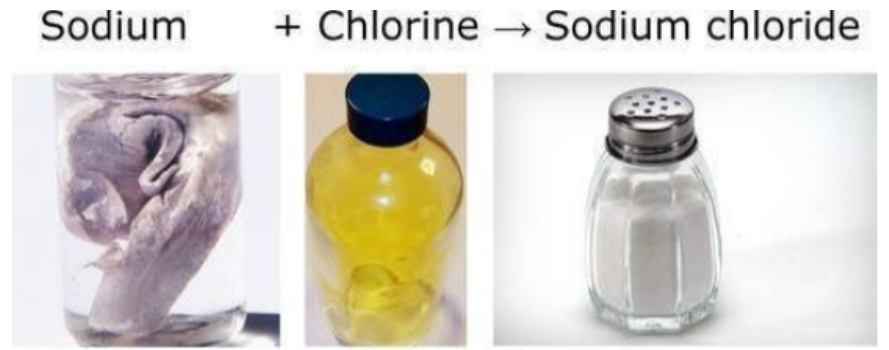
- For example, sodium (explosive) and chlorine (poisonous) combine to form harmless table salt (NaCl).
- A pure substance has the same composition throughout; all water molecules are identical.
- Different combinations of atoms give molecules unique properties (e.g., water vs. hydrogen peroxide).
Sodium and chlorine combine to form sodium chloride — safe, unreactive table salt.
Slide
Sign up free to view the lesson slides
Step through every slide for this topic — plus flashcards and revision notes — with a free account.
Câu hỏi luyện tập
Xem trước miễn phí — 8 trên 47 câu hỏi. Đăng ký để xem tất cả.
1.What are the three sub-atomic particles that make up an atom?
Easy- Aprotons, neutrons, electrons
- Bprotons, electrons, molecules
- Cneutrons, electrons, atoms
- Dprotons, neutrons, nuclei
2.All elements consist of molecules.
EasyTrue or false?
3.Which of the following is a diatomic molecule?
Easy- AO2
- BHe
- CH2O
- DCO2
4.What does the formula H2O tell us about a water molecule?
Easy- AIt has two hydrogen atoms and one oxygen atom.
- BIt has one hydrogen atom and two oxygen atoms.
- CIt has two hydrogen atoms and two oxygen atoms.
- DIt has one hydrogen atom and one oxygen atom.
5.Which of the following is a compound?
Medium- AWater (H2O)
- BOxygen (O2)
- CHydrogen (H2)
- DGold (Au)
6.The properties of a molecule are the same as the properties of the atoms that form it.
MediumTrue or false?
7.Match each sub-atomic particle with its charge.
Easy- Proton
- Neutron
- Electron
- Positive
- Neutral
- Negative
8.Which of the following are elements that exist as diatomic molecules? (Select all that apply)
Easy- AHydrogen (H2)
- BOxygen (O2)
- CHelium (He)
- DNitrogen (N2)
- ECarbon (C)

Unlock all 47 questions, flashcards & more
Tạo tài khoản miễn phí để xem mọi câu hỏi, slide, thẻ ghi nhớ và ghi chú ôn tập cho chủ đề này.