Chemical reactions and conservation of mass
Học bằng cách chơi
Trả lời những câu hỏi này để kiếm năng lượng, rồi câu cá và khám phá. Không cần tài khoản.
Ghi chú bài học
Chemical Reactions: Basics
- A chemical reaction occurs when matter changes chemically into an entirely different substance with different properties.
- During a chemical reaction, reactants (starting substances) are used to make products (new substances).
- Chemical reactions involve a rearrangement of atoms: bonds in reactants break, and new bonds form to create products.
- The only way to be positive a chemical reaction occurred is to detect a new substance formed.
- Chemical reactions cannot be undone by simple physical means (e.g., you can't unbake a cake).
Signs of a Chemical Reaction
- New substance forming – the most reliable sign; e.g., plants turn carbon dioxide into oxygen.
- Change in energy – heat, light, sound, or coldness (e.g., fireworks, vinegar+baking soda gets cold).
- Bubbles of a new gas released (e.g., baking soda and vinegar produce carbon dioxide bubbles).
- Color change not due to mixing colors (e.g., leaves changing color, cooked egg white turning white).
- New odor produced (e.g., burning logs produce a smoky smell).
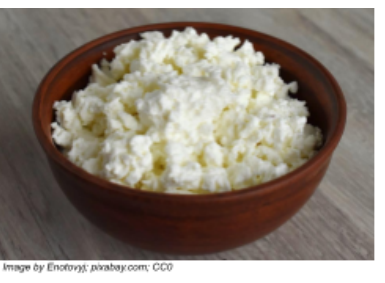
- Formation of a precipitate – a solid comes out of a solution (e.g., acid added to milk makes cottage cheese).
- Extreme or unusual property changes – e.g., density, flammability, or tarnishing of metals.
A solid comes out of solution when acid is added to milk, forming cottage cheese.
Reactants and Products
- Reactants are the substances present before a chemical reaction; they are used up to make products.
- Products are the new substances formed during the reaction.
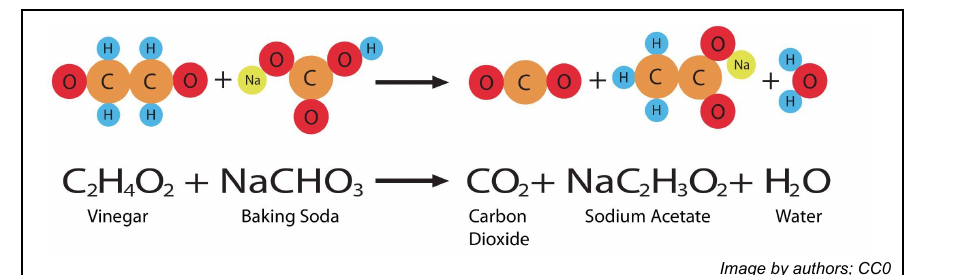
- In the eggshell experiment, reactants are calcium carbonate (eggshell) and acetic acid (vinegar); products are calcium acetate, carbon dioxide, and water.
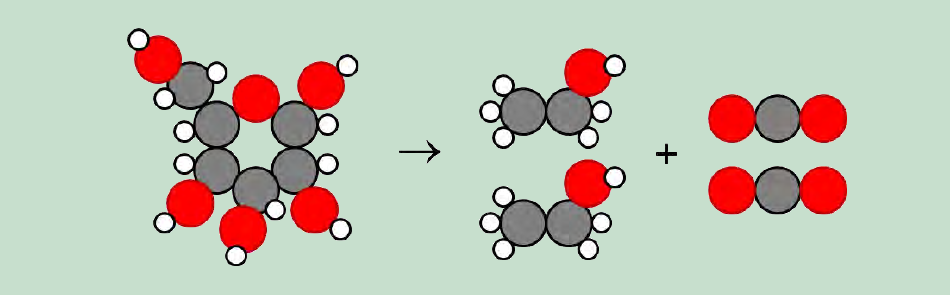
- In fermentation, glucose is the reactant; alcohol and carbon dioxide are products.
- In respiration, reactants are glucose and oxygen; products are carbon dioxide, water, and energy.
- In photosynthesis, reactants are carbon dioxide and water; products are glucose and oxygen.
Representing Chemical Reactions
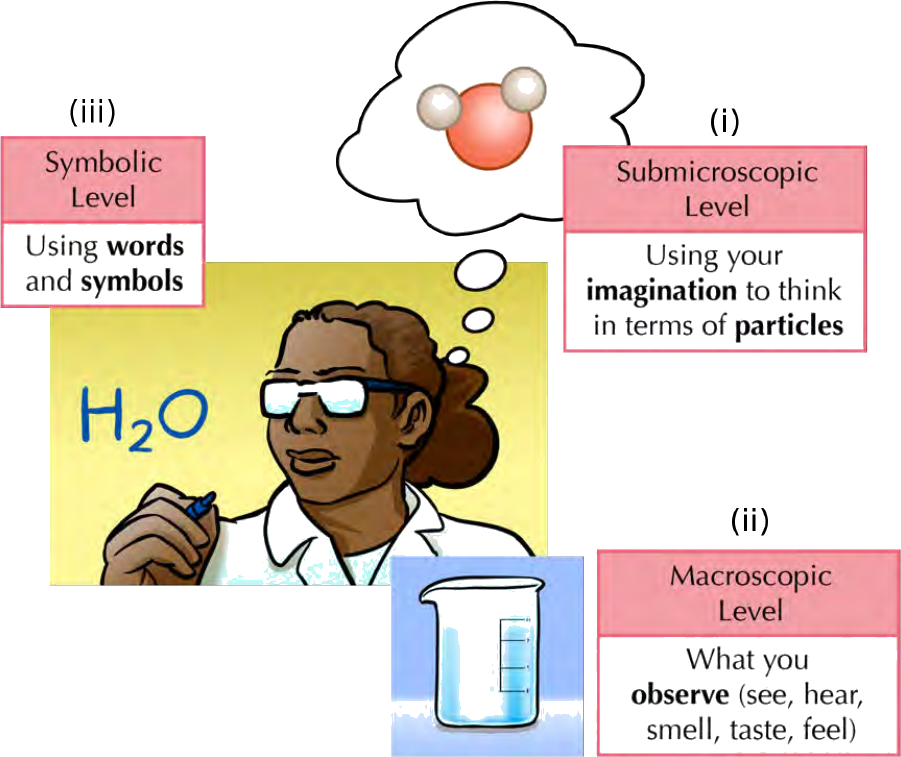
- Chemical reactions can be represented in three ways: macroscopic (observable), submicroscopic (particle diagrams), and symbolic (chemical equations).
- A word equation uses names: e.g., magnesium + oxygen → magnesium oxide.
- A chemical equation uses symbols and formulae: e.g., 2 Mg + O₂ → 2 MgO.
- A picture equation uses colored circles to represent atoms and shows the rearrangement.
- The arrow (→) separates reactants (left) from products (right).
The three levels of representing chemical reactions: symbolic, submicroscopic, and macroscopic.
Balanced Chemical Equations
- A balanced equation has equal numbers of each type of atom on both sides.
- Coefficients (numbers in front of formulae) indicate the number of molecules or atoms involved.
- Subscripts (numbers inside formulae) indicate the number of atoms of an element in one molecule.
- When balancing, you may only add coefficients; you may not change subscripts or add/remove reactants/products.
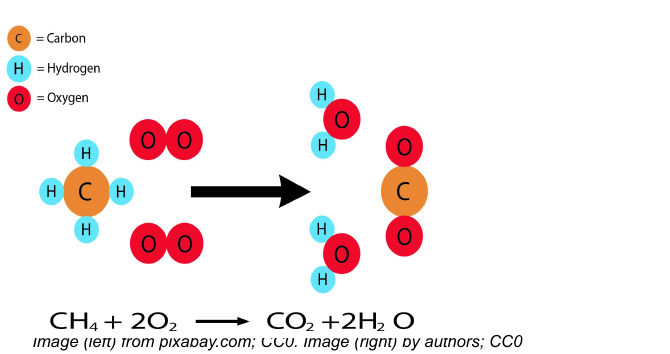
- Example: 2 H₂ + O₂ → 2 H₂O is balanced because there are 4 H and 2 O atoms on each side.
Methane and oxygen react to form carbon dioxide and water: CH4 + 2O2 -> CO2 + 2H2O.
Conservation of Matter
- The law of conservation of matter states that matter cannot be created or destroyed.
- In a chemical reaction, atoms are rearranged, but the total number of atoms remains the same.
- The total mass of products equals the total mass of reactants.
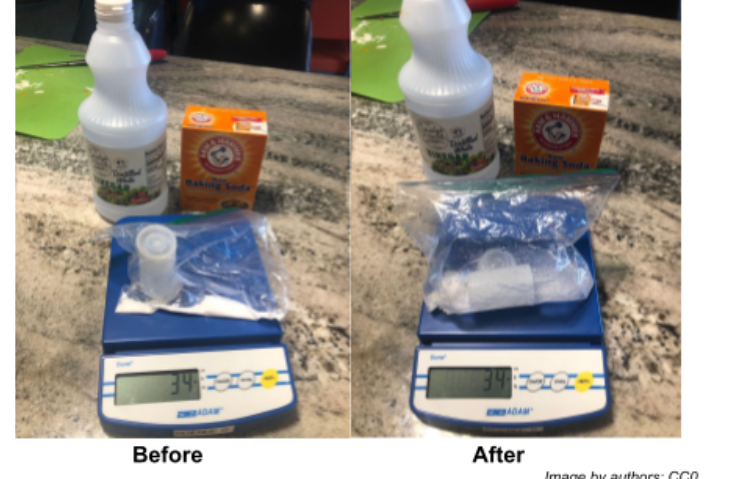
- Example: Vinegar and baking soda in a sealed bag had mass 34 g before and after the reaction, even though new substances formed.
- Counting atoms in reactants and products shows the same number of each element, proving conservation.
A sealed bag of vinegar and baking soda has a mass of 34g before and after the reaction.
Examples of Chemical Reactions
- Burning coal: carbon + oxygen → carbon dioxide.
- Rusting: iron + oxygen → iron oxide (rust).
- Tarnishing: copper + oxygen → copper oxide.
- Fermentation: glucose → alcohol + carbon dioxide (used in brewing and making ginger beer).
- Ammonium dichromate volcano: ammonium dichromate + oxygen → nitrogen gas + water + chromium oxide.
- Limewater test: carbon dioxide + calcium hydroxide → calcium carbonate (white precipitate) + water.
A diagram showing the fermentation of glucose into alcohol and carbon dioxide.
Detecting Substances via Reactions
- Some reactions produce unique and characteristic results, allowing detection of substances.
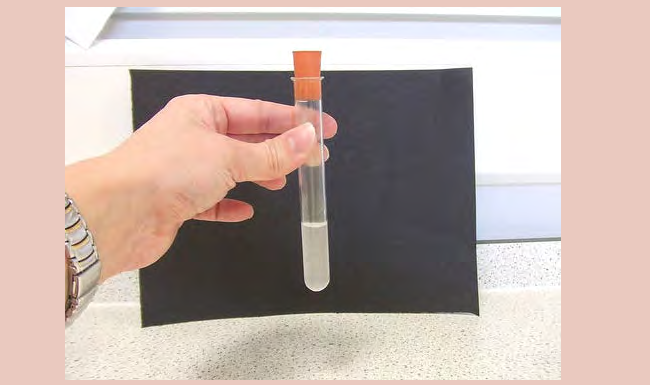
- Limewater turns milky when carbon dioxide is bubbled through it, indicating the presence of CO₂.
- Ammonium dichromate burning produces bright orange sparks and a dark-green product, used as a spectacular demonstration.
- These unique reactions help chemists identify unknown substances.
Limewater that has turned milky in a test tube.
Careers in Chemistry
- Chemistry is used in many careers: agricultural chemistry, biochemistry, biotechnology, chemical education, forensic science, food science, medicine, pharmaceuticals, and more.
- Chemists find ways to rearrange atoms to create new compounds with desired properties.
- Marie Curie was a famous chemist and physicist, first woman to win a Nobel Prize, and only person to win in two sciences.
- Studying chemistry can lead to careers in research, industry, environmental science, and space exploration.
Slide
Sign up free to view the lesson slides
Step through every slide for this topic — plus flashcards and revision notes — with a free account.
Câu hỏi luyện tập
Xem trước miễn phí — 8 trên 40 câu hỏi. Đăng ký để xem tất cả.
1.What are the substances that are present before a chemical reaction takes place called?
Easy- AReactants
- BProducts
- CCoefficients
- DSubscripts
2.What are the substances that are produced during a chemical reaction called?
Easy- AReactants
- BProducts
- CCatalysts
- DEnzymes
3.During a chemical reaction, atoms are rearranged to form new substances.
EasyTrue or false?
4.In a balanced chemical equation, the total number of atoms of each element is the same on both sides of the equation.
EasyTrue or false?
5.Which of the following is a sign that a chemical reaction has taken place?
Easy- AFormation of a new substance
- BChange in state (e.g., melting)
- CDissolving sugar in water
- DCutting a piece of paper
6.Propane gas burns in oxygen to produce carbon dioxide and water. Which statement explains why this reaction shows conservation of mass?
Medium- AEnergy is produced during the reaction
- BWater is produced during the reaction
- CThe mass of the water and carbon dioxide equals the mass of the propane and oxygen
- DThe volume of the water and carbon dioxide equals the volume of the propane and oxygen
7.In the eggshell experiment, what are the reactants?
Easy- ACalcium carbonate and acetic acid
- BCalcium acetate, carbon dioxide, and water
- CEggshell and vinegar
- DCalcium carbonate and vinegar
8.What is the product in the reaction between hydrogen and oxygen to form water?
Easy- AHydrogen
- BOxygen
- CWater
- DHydrogen peroxide
Unlock all 40 questions, flashcards & more
Tạo tài khoản miễn phí để xem mọi câu hỏi, slide, thẻ ghi nhớ và ghi chú ôn tập cho chủ đề này.