Comparing design solutions
Học bằng cách chơi
Trả lời những câu hỏi này để kiếm năng lượng, rồi câu cá và khám phá. Không cần tài khoản.
Ghi chú bài học
The Engineering Design Process
- Engineers do not just pick a good idea. They first define the problem and research its criteria (the outcomes a successful solution must achieve) and constraints (the limits on cost, materials, time, or safety).
- Next, the team brainstorms many possible solutions, then selects the one that best fits the criteria and constraints.
- The chosen solution is designed, built, tested, and revised — called optimizing the solution. These steps can repeat and are not always carried out in the same order.
Defining the Problem: Criteria and Constraints
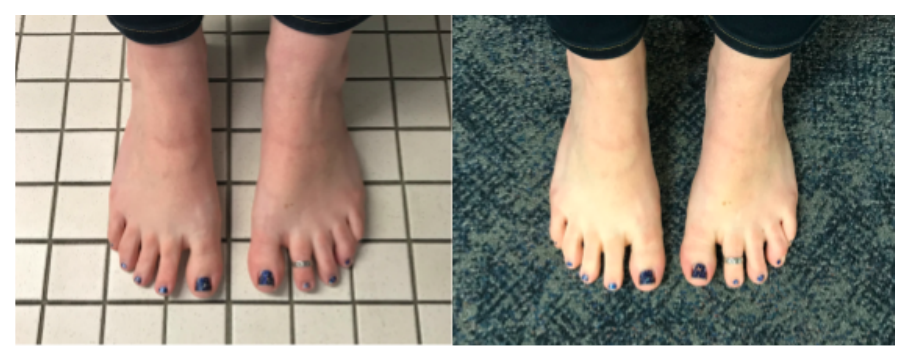
- Real design problems often start with an everyday situation. Example: a student's feet feel cold on tile floors compared with carpet, so a team is asked to design slippers that reduce heat loss from the feet to the floor.
- Possible criteria for the slippers: keep feet warm, be comfortable, be durable enough for everyday wear.
- Possible constraints: a fixed set of materials to choose from, a cost per sheet of material, and the sole needing to hold up to normal walking.
Feet on a tile floor and on carpet
Comparing Material Options
- Before choosing a material, engineers list its benefits and its considerations (drawbacks) side by side, using the same categories for every option, so the comparison is fair.
- Felt and fleece are warm but not very durable; foam is lightweight and flexible but has limited insulation and can flatten over time; cardboard is easy to shape but not durable; cotton socks are breathable and comfortable but not sturdy enough for a sole.
- No single material wins on every point — comparing them side by side against the same criteria is what makes the choice systematic instead of a guess.
Slipper material options: benefits and considerations
Choosing a Systematic Testing Method
- A systematic comparison also needs a fair way to test each candidate design. Engineers choose a testing method before comparing results, so every design is measured the same way.
- Three ways to test how well a slipper resists heat loss: place a thermometer under it on a cold surface and compare readings after a set time (Temperature Measurement Test); use a heating pad or warm water bottle inside it and time how long the temperature takes to drop (Heat Source Test); or use a heat-sensitive camera to track surface temperature and heat loss over time (Heat Transfer Rate Test).
- The best method depends on what equipment is available and how precisely the team needs to measure heat loss.
Choosing a testing method for the slipper
Using a Decision Matrix to Rate Materials
- A decision matrix turns the criteria into numbers: each material is rated on a scale (here, 1 = poor to 5 = excellent) for every criterion, plus its cost.
- Ratings let materials be compared directly: foam rates highest for insulation (5) but lowest for comfort (2); fleece rates highest for comfort (5) but low for durability (2).
- Because each column captures a different criterion, no material has to be "best overall" — the matrix shows exactly where each one is strong and where it is weak.
Decision matrix: rating each slipper material
Making Trade-offs
- Because constraints limit resources, engineers almost never get a material that scores highest on every criterion — they must make trade-offs.
- Combining materials is one way to balance trade-offs: pairing a comfortable material like fleece with a more insulating material like foam can meet more criteria together than either material meets alone.
- Which trade-off is worth making depends on which criteria matter most for that particular design — durability might matter more for a sole, comfort more for the inner lining.
Optimizing: Testing and Revising the Design
- Choosing a design from a decision matrix is not the end of the process — a prototype still has to be built and tested using the systematic method chosen earlier.
- If test results show the design does not meet a criterion well enough, engineers analyze the data and revise the design, then test it again.
- This cycle of designing, testing, and revising is called optimizing: no solution is perfect, but repeated testing and refinement produce a workable one.
Slide
Sign up free to view the lesson slides
Step through every slide for this topic — plus flashcards and revision notes — with a free account.
Câu hỏi luyện tập
Xem trước miễn phí — 8 trên 39 câu hỏi. Đăng ký để xem tất cả.
1.What is the main purpose of a decision matrix in engineering design?
Easy- ATo randomly select a design solution
- BTo systematically compare design solutions against criteria and constraints
- CTo list all possible design ideas without evaluation
- DTo calculate the cost of each design solution
2.In a decision matrix, what do the rows and columns typically represent?
Easy- ARows represent criteria and columns represent alternatives
- BRows represent alternatives and columns represent criteria
- CRows represent weights and columns represent scores
- DRows represent constraints and columns represent criteria
3.A team is comparing two bridge designs: Design A and Design B. They use a decision matrix with criteria: Cost (weight 3), Safety (weight 5), and Aesthetics (weight 2). Design A scores: Cost 4, Safety 3, Aesthetics 5. Design B scores: Cost 5, Safety 4, Aesthetics 3. What is the total weighted score for Design A?
Medium- A12
- B37
- C47
- D41
4.In a decision matrix, what does a high weight for a criterion indicate?
Medium- AThe criterion is less important
- BThe criterion is more important
- CThe criterion is difficult to measure
- DThe criterion is a constraint
5.Which of the following best describes a belief decision matrix?
Hard- AEach element is a single numerical score
- BEach element is a belief distribution representing uncertainty in the assessment
- CEach element is a grade from a set of predefined grades
- DEach element is a binary value (0 or 1)
6.When using a decision matrix, what does a higher total weighted score indicate?
Medium- AThe design is more expensive
- BThe design better meets the criteria
- CThe design has more constraints
- DThe design is less safe
7.What is a constraint in engineering design?
Easy- AA desired feature of the design
- BA limitation or restriction that the design must satisfy
- CA method to test the design
- DA score in a decision matrix
8.A decision matrix has criteria: Durability, Cost, and Environmental Impact. Each is scored on a scale of 1 to 5. If a design scores 4, 3, and 2 respectively, and all criteria have equal weight, what is the total score?
Medium- A9
- B24
- C12
- D27
Unlock all 39 questions, flashcards & more
Tạo tài khoản miễn phí để xem mọi câu hỏi, slide, thẻ ghi nhớ và ghi chú ôn tập cho chủ đề này.