Plant disease
边玩边学
回答这些题目来赚取能量,然后钓鱼探索。无需账号。
给教育者: 面向 Plant disease(Science,Biology)的即用型课程幻灯片, 复习笔记——用在你的课堂上,或将该知识点作为学习者可实时游玩的互动课堂活动来运行。
课程笔记
Plant Pathogens and Pests
- Plants can be infected by viral, bacterial and fungal pathogens, and can also be infested by insects.
- Tobacco mosaic virus (TMV) is a viral pathogen that causes a mosaic pattern of discolouration on leaves.
- Rose black spot is a fungal disease that causes black spots on leaves.
- Aphids are insects that feed on plant sap; they have long sharp mouthpieces that pierce the stem and reach the phloem.
- Aphids can remove large quantities of phloem sap, which weakens the plant and reduces growth.
- Aphids can also act as vectors, transferring diseases from plant to plant.
Detecting Plant Diseases
- Detecting and treating plant infections quickly is important to reduce damage.
- Common symptoms of plant disease include stunted growth, spots on leaves, areas of decay (rot), growths, malformed stems or leaves, discolouration, and the presence of pests.
- Symptoms can be caused by more than one disease, making identification difficult.
- In gardens, diseases can be identified by comparing symptoms with those described in gardening manuals or online.
- For crops or forest trees, experts may take samples to a laboratory for DNA analysis to identify the specific pathogen.
- Testing kits containing monoclonal antibodies can be used to identify pathogens quickly and easily.
Mineral Deficiencies in Plants
- Plants need the correct amount of nutrients to function properly.
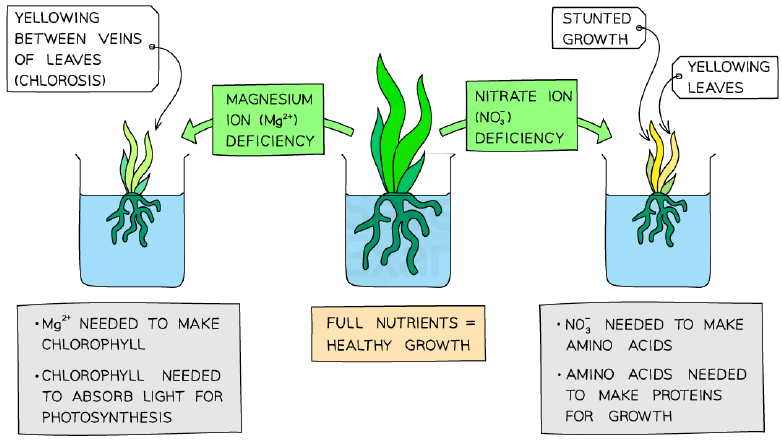
- Nitrate deficiency causes stunted growth because nitrate ions are needed for protein synthesis and therefore growth.
- Magnesium deficiency causes chlorosis (yellowing of leaves) because magnesium ions are needed to make chlorophyll.
- Mineral deficiencies can be treated by adding fertilisers to the soil.
- Fertilisers are often shown as NPK ratios (nitrogen, phosphorus, potassium) depending on the needs of the plant.
- When choosing a fertiliser, match the symptoms to the mineral deficiency: e.g. stunted roots indicate potassium deficiency, lack of flowers/fruits indicates phosphate deficiency.
Mineral deficiencies in plants
Physical Plant Defences
- Plants have physical defences that prevent pathogens from entering.
- The cellulose cell wall provides support and protection from microorganisms.
- The waxy cuticle on leaves is a barrier to microbes; the only entry point is through the stomata.
- Bark is a tough layer of dead cells around the stem that prevents pathogens from entering.
- Deciduous trees lose their leaves in winter, which can remove infections along with the leaves.
Chemical Plant Defences
- Many plants produce chemicals with antimicrobial properties that kill or inhibit pathogens.
- Some plants produce poisons to deter herbivores from eating them.
- Examples of plants with antimicrobial chemicals include tea tree oil, mint and witch hazel.
- Plants are being studied as potential sources of new antibiotics as more bacteria become resistant to current ones.
Mechanical Adaptations Against Herbivores
- Mechanical adaptations help plants avoid being eaten by herbivores.
- Thorns and hairs deter animals from feeding.
- Some leaves droop or curl when touched, which can dislodge insects or make the plant less appealing.
- Mimicry can trick animals; for example, some plants have spots that mimic butterfly eggs, so butterflies do not lay their eggs on the leaves.
- Defences against herbivores also help defend against pathogens because they prevent damage that would allow pathogens to enter.
Effects of Plant Diseases
- Plant diseases can reduce yield for farmers, leading to financial loss.
- TMV causes a mosaic pattern of discolouration on leaves and can reduce chlorophyll production.
- Reduced chlorophyll means less photosynthesis, so the plant has less energy for growth, resulting in stunted growth.
- Aphid infestations can weaken plants by removing sap and can transmit diseases.
- Mineral deficiencies can also reduce yield; for example, nitrate deficiency causes stunted growth.
Controlling Pests and Diseases
- Chemical pesticides are poisons sprayed onto plants; they kill all insects, including beneficial ones.
- Biological control involves releasing natural predators, such as ladybirds, to eat aphids.
- Biological control is specific to the pest and does not harm other insects, but it may take longer to work.
- Chemical pesticides can harm non-target species and may need repeated application.
- To prevent the spread of disease, tools should be disinfected after use on infected plants.
- For TMV, disinfecting tools kills the virus and prevents it from being transferred to healthy plants.
幻灯片
练习题
免费预览——58 题中的 8 题。注册即可查看全部。
1.Which mineral ion deficiency causes chlorosis in plants?
Easy- AMagnesium
- BNitrate
- CPhosphate
- DPotassium
2.Which mineral ion deficiency causes stunted growth in plants?
Easy- ANitrate
- BMagnesium
- CCalcium
- DIron
3.What is chlorosis?
Easy- AYellowing of leaves due to lack of chlorophyll
- BDeath of leaf tissue causing black spots
- CStunted growth due to lack of proteins
- DCurling of leaves due to viral infection
4.Aphids are a type of insect pest that can act as vectors for plant diseases.
EasyTrue or false?
5.Which of the following is a physical defence of a plant against pathogens?
Easy- ACellulose cell wall
- BProduction of antibacterial chemicals
- CThorns
- DDrooping leaves when touched
6.Which of the following is a chemical defence of a plant against pathogens?
Easy- AAntibacterial chemicals
- BWaxy cuticle
- CBark
- DCellulose cell wall
7.Which of the following is a mechanical adaptation against herbivores?
Easy- AThorns
- BWaxy cuticle
- CCellulose cell wall
- DProduction of caffeine
8.Which of the following are symptoms of plant disease? (select all that apply)
Easy- AStunted growth
- BSpots on leaves
- CAreas of decay (rot)
- DIncreased flowering
- EMalformed stems or leaves
历年真题
该知识点的历年真题练习即将推出。
即将推出