Cell Structure
边玩边学
回答这些题目来赚取能量,然后钓鱼探索。无需账号。
给教育者: 面向 Cell Structure(Biology,HL)的即用型课程幻灯片, 复习笔记——用在你的课堂上,或将该知识点作为学习者可实时游玩的互动课堂活动来运行。
课程笔记
Cell Theory
- Cell theory states that all living organisms are made up of one or more cells, cells are the basic functional unit of life, and new cells are produced from pre-existing cells.
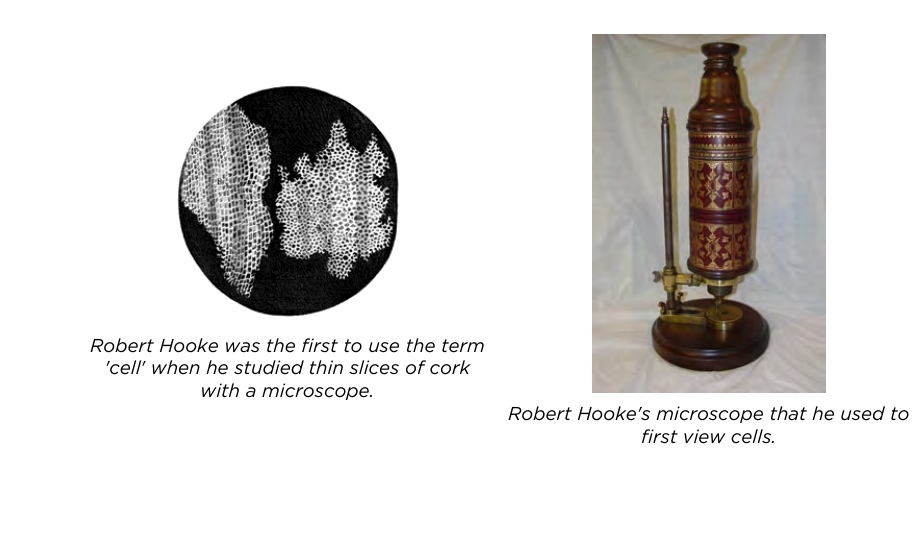
- The term 'cell' was coined by Robert Hooke in the 1660s after examining cork.
- Matthias Schleiden and Theodor Schwann proposed in 1837 that all living organisms are made of cells.
- All cells share common features: they are surrounded by a membrane, contain genetic material, and have enzyme-catalysed reactions occurring within them.
- Deductive reasoning can be used to predict that a newly discovered organism will consist of one or more cells, based on cell theory.
Hooke's microscope and cork cells
Microscopy Skills
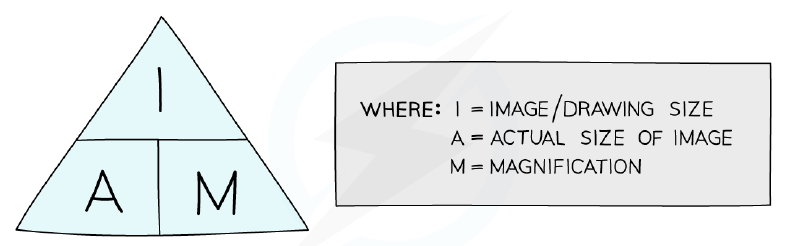
- Magnification is how many times bigger the image is compared to the actual size; it is calculated as: magnification = image size ÷ actual size.
- Resolution is the ability to distinguish between two objects that are close together.
- When preparing a temporary mount, gently press the coverslip to remove air bubbles.
- Start with the low power objective lens to locate the specimen, then switch to higher power lenses, using only the fine focus at high power.
- A graticule is a small disc with an engraved scale placed in the eyepiece; it must be calibrated using a stage micrometer.
- Measurements using microscopes are quantitative observations (numerical data), while observations of colour or presence of structures are qualitative.
- When using a scale bar, measure its length in mm, convert to the same units as the scale bar, then use the magnification formula.
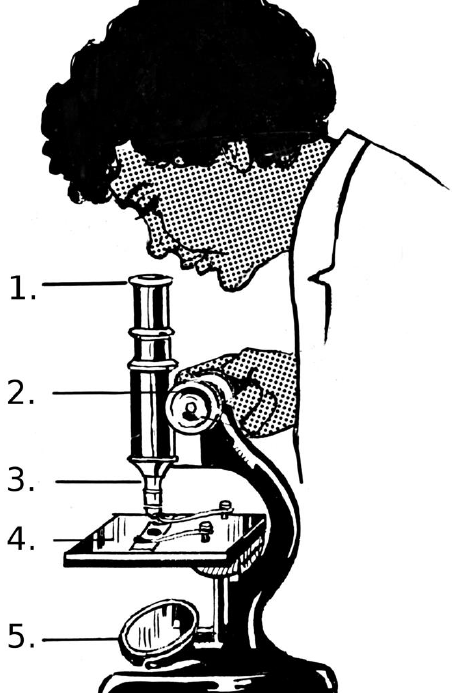
Parts of a light microscope
Microscopes: Light vs Electron
- Light microscopes use light to form an image; they have a maximum resolution of about 0.2 μm (200 nm) and maximum useful magnification of about ×1500.
- Electron microscopes use electrons; they have a much higher resolution of about 0.0002 μm (0.2 nm) and maximum useful magnification of about ×1,500,000.
- Transmission electron microscopes (TEMs) pass electrons through a thin specimen, producing high-resolution 2D images of internal structures.
- Scanning electron microscopes (SEMs) scan electrons across the surface, producing 3D images of external structures.
- Electron microscopes require specimens to be dead and do not produce colour images; light microscopes can observe living specimens and produce colour images.
- Cryogenic electron microscopy involves flash-freezing proteins and using electron beams to produce 3D reconstructions of molecules.
- Freeze fracture involves rapid freezing with liquid nitrogen and fracturing to view internal membrane organisation.
Magnification equation triangle
General Cell Structure
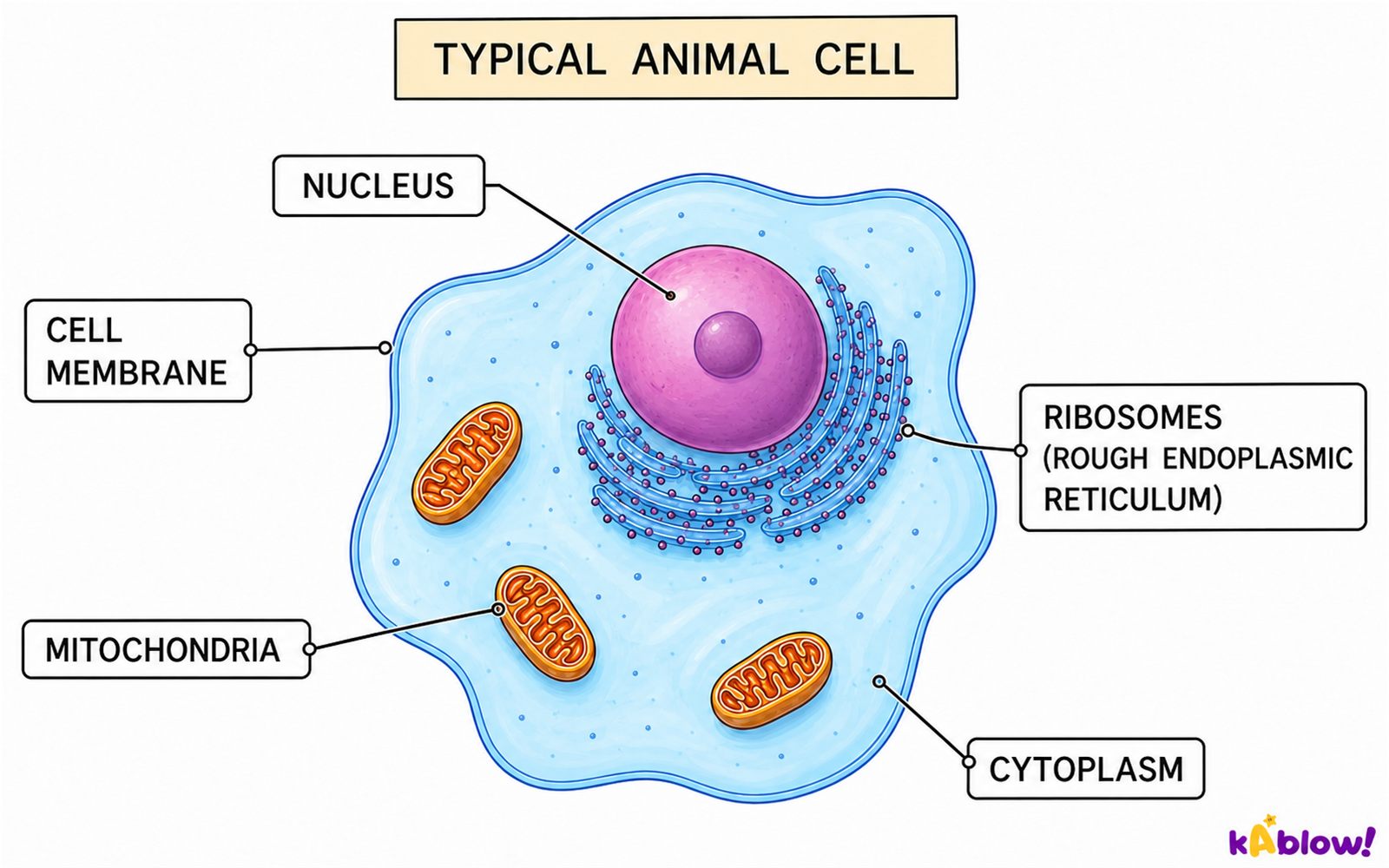
- All cells contain DNA as genetic material, cytoplasm, and a plasma membrane.
- DNA stores genetic information and controls the production of enzymes and other proteins.
- Cytoplasm is a water-based fluid (cytosol) containing dissolved substances where many cellular reactions occur.
- The plasma membrane is a bilayer of lipids that controls the exchange of materials between the cell and its environment.
- Membrane proteins have functions including cell recognition, cell communication, and transport into and out of the cell.
A typical animal cell
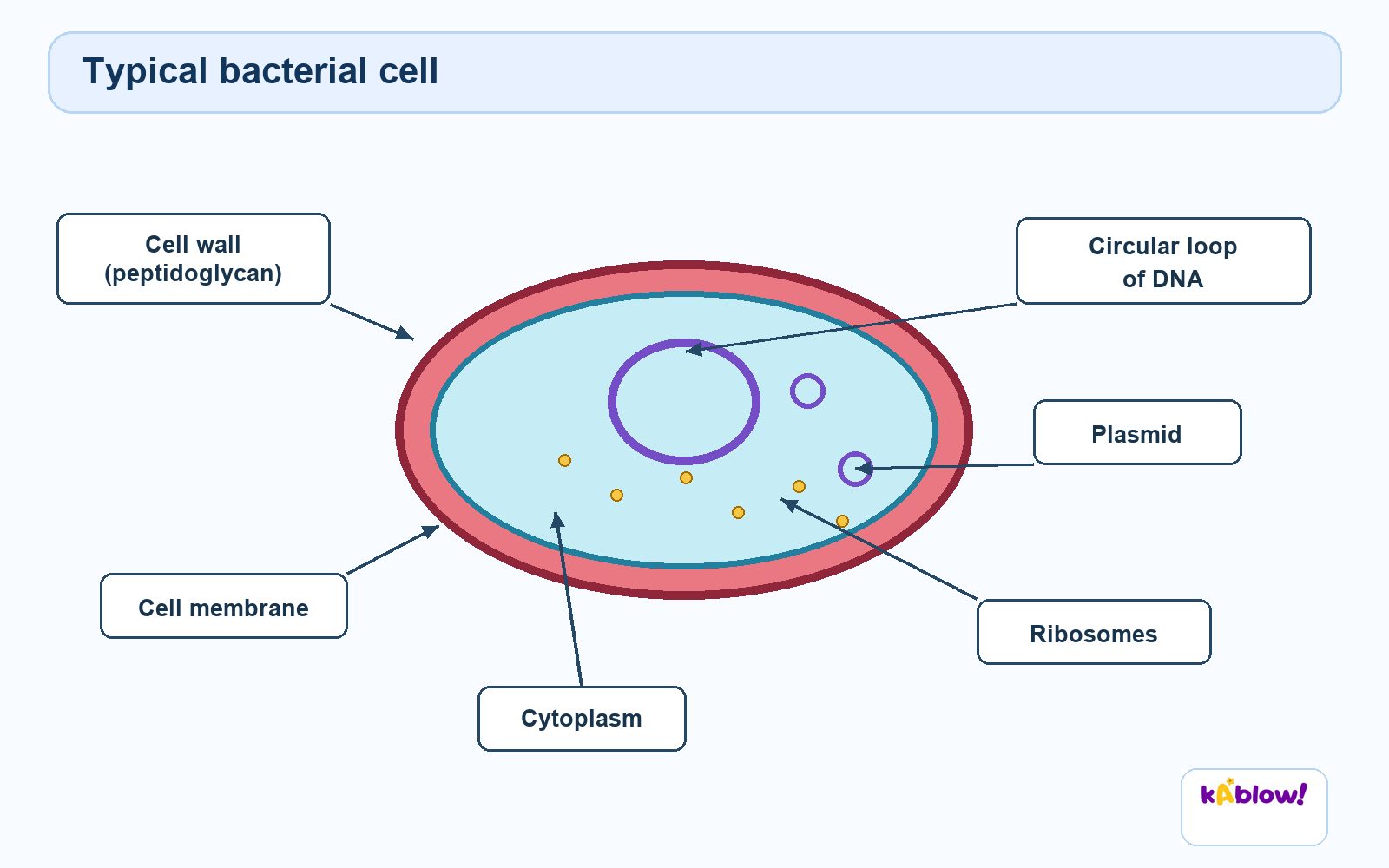
Prokaryotic Cell Structure
- Prokaryotes are divided into two domains: Bacteria and Archaea; they are small cells ranging from 0.1 μm to 5.0 μm.
- Prokaryotic cells lack a nucleus and membrane-bound organelles; their cytoplasm is not compartmentalised.
- They have 70S ribosomes, a single circular DNA molecule (not associated with histone proteins) located in the nucleoid, and often plasmids (small loops of DNA).
- The cell wall of most prokaryotes contains murein (peptidoglycan); it provides protection, maintains shape, and prevents bursting.
- Some prokaryotes have a capsule (slime capsule) for protection against drying out and immune attack, flagella for movement, and pili for attachment and conjugation.
- Gram-positive bacteria retain crystal violet dye and appear blue/violet; Gram-negative bacteria do not retain the dye.
- Prokaryotic cells are believed to have been the first living organisms on Earth.
A typical bacterial cell
Eukaryotic Cell Structure
- Eukaryotic cells have a more complex ultrastructure than prokaryotes, with membrane-bound organelles that compartmentalise the cytoplasm.
- Compartmentalisation allows enzymes and substrates to be at higher concentrations, separates damaging substances, and maintains optimal conditions.
- The nucleus is surrounded by a double membrane (nuclear envelope) with pores; it contains chromatin (DNA wound around histones) and a nucleolus where ribosomes are made.
- Rough endoplasmic reticulum (RER) is covered with 80S ribosomes and processes proteins; smooth ER lacks ribosomes and synthesises lipids.
- Ribosomes are complexes of rRNA and protein, found free in the cytoplasm or on the RER; they are the site of translation.
- Mitochondria have a double membrane with inner folds called cristae; they are the site of aerobic respiration and contain their own circular DNA and ribosomes.
- The Golgi apparatus consists of flattened sacs (cisternae) that modify and package proteins and lipids into vesicles for transport.
- Lysosomes are specialised vesicles containing hydrolytic enzymes that break down waste materials and worn-out organelles.
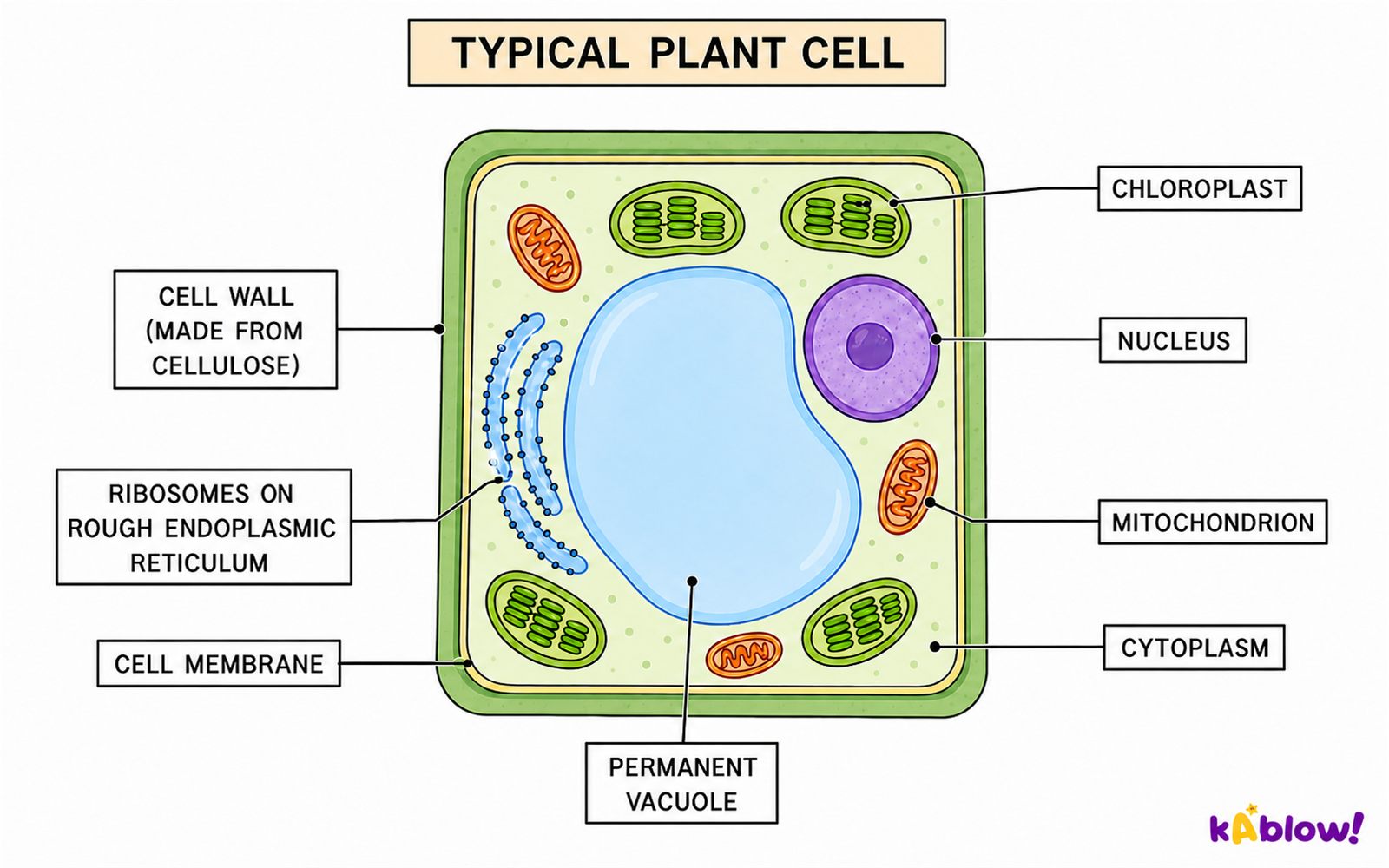
Plant Cell Structures
- Chloroplasts are surrounded by a double membrane and contain thylakoids stacked into grana joined by lamellae; they are the site of photosynthesis.
- The light-dependent stage of photosynthesis occurs in the thylakoids, and the light-independent stage (Calvin cycle) occurs in the stroma.
- Chloroplasts contain small circular DNA and ribosomes for protein synthesis.
- Plant cells have a large permanent vacuole surrounded by the tonoplast, a selectively permeable membrane.
- The cell wall is made of cellulose in plants and peptidoglycan in bacteria; it provides structural support and is freely permeable.
- Plasmodesmata are narrow threads of cytoplasm connecting neighbouring plant cells.
A typical plant cell
Functions of Life
- All living organisms carry out: metabolism, reproduction, homeostasis, growth, response, excretion, and nutrition.
- Metabolism includes all enzyme-catalysed reactions in a cell, including cell respiration.
- Homeostasis is the maintenance of internal conditions within tolerable limits.
- Excretion is the disposal of metabolic waste products, such as carbon dioxide.
- Unicellular organisms carry out these functions using organelles: mitochondria for energy, ribosomes for protein synthesis, vacuoles for digestion and storage, and cilia/flagella for movement.
Eukaryotic Comparisons & Atypical Examples
- Animal cells lack a cell wall and chloroplasts, have small temporary vacuoles, and contain centrioles for microtubule organisation during cell division.
- Plant cells have a cellulose cell wall, large permanent vacuoles, chloroplasts, and lack centrioles.
- Fungal cells have cell walls made of chitin and glucans, small non-permanent vacuoles, and lack chloroplasts and centrioles.
- Animal and fungal cells store carbohydrates as glycogen; plant cells store starch.
- Atypical examples that challenge cell theory include striated muscle fibres (long, multinucleated), aseptate fungal hyphae (multinucleated with continuous cytoplasm), red blood cells (lack nucleus), and phloem sieve tubes.
幻灯片
练习题
免费预览——62 题中的 8 题。注册即可查看全部。
1.Which of the following ideas are part of cell theory?
Easy- AI only
- BII only
- CI and III only
- DII and III only
2.Which of the following can not be viewed using a light microscope?
Easy- ANucleus
- BCell wall
- CChloroplasts
- DRibosomes
3.Which row correctly compares the magnification and resolution of an electron microscope with a light microscope?
Medium- AMagnification: Lower in LM; Resolution: Higher in LM
- BMagnification: Higher in LM; Resolution: Lower in EM
- CMagnification: Higher in EM; Resolution: Higher in EM
- DMagnification: Lower in EM; Resolution: Lower in LM
4.The diagram shows a bacterium. Which three structures are found in both an animal cell and this bacterial cell?
Medium- ACell membrane, cell wall and DNA
- BCell membrane, DNA and ribosome
- CCapsule, DNA and ribosome
- DCapsule, cell membrane and cell wall
5.Which row correctly describes the features of prokaryotic chromosomal DNA?
Medium- AAssociated with histone proteins; Circular
- BNot associated with histone proteins; Linear
- CNot associated with histone proteins; Circular
- DContains a few hundred genes; Circular
6.Which of the following are functions of life that all organisms must carry out? (select all that apply)
Medium- AMetabolism
- BReproduction
- CHomeostasis
- DPhotosynthesis
- EExcretion
7.The cell theory states that all living organisms are made up of one or more cells.
EasyTrue or false?
8.Prokaryotic cells contain membrane-bound organelles.
EasyTrue or false?
历年真题
该知识点的历年真题练习即将推出。
即将推出