Energy & Feeding Relationships
边玩边学
回答这些题目来赚取能量,然后钓鱼探索。无需账号。
给教育者: 面向 Energy & Feeding Relationships(Biology,CIE)的即用型课程幻灯片, 复习笔记, 图示——用在你的课堂上,或将该知识点作为学习者可实时游玩的互动课堂活动来运行。
课程笔记
Transfer of Energy
- The Sun is the principal source of energy input to biological systems.
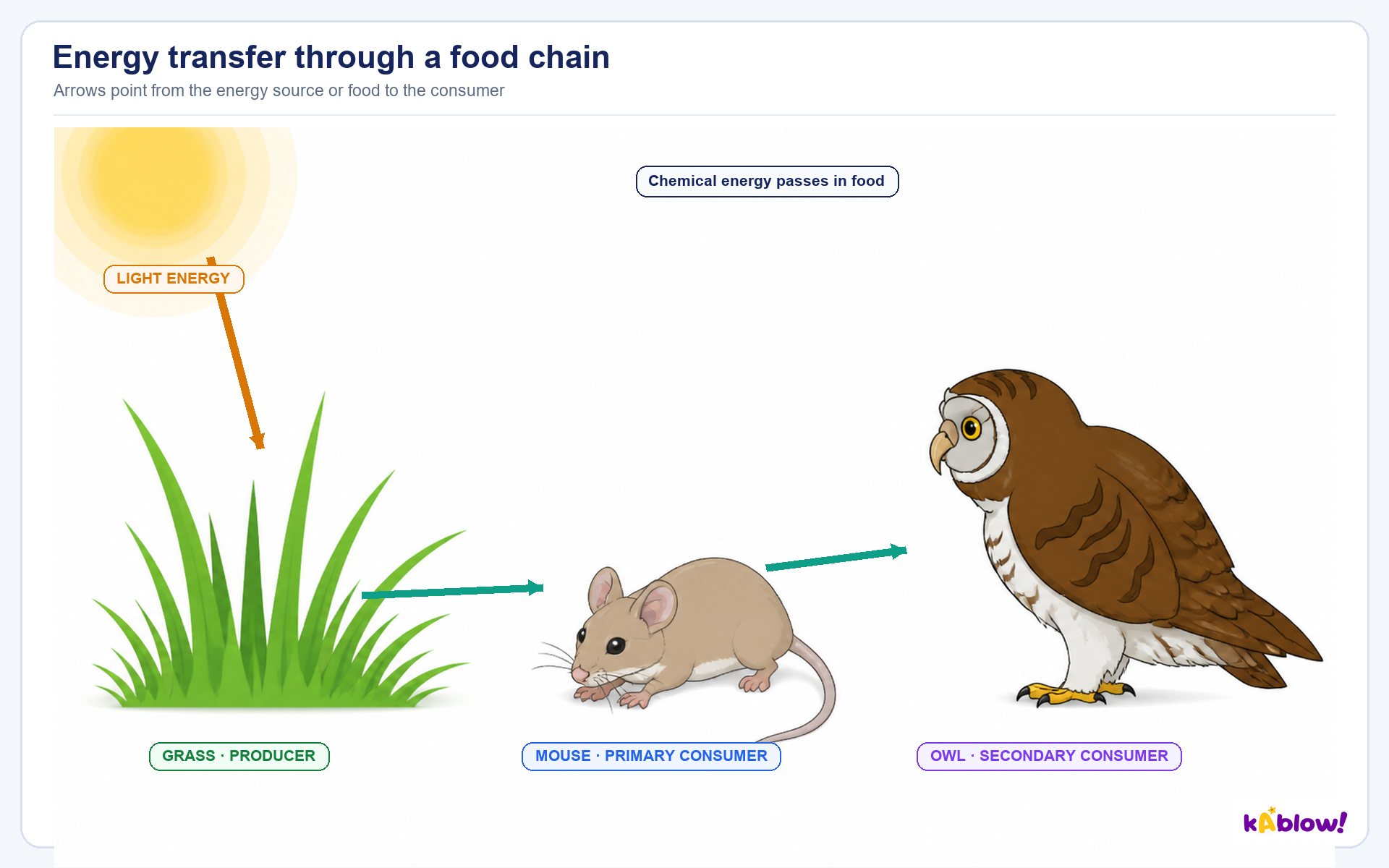
- Energy flows through living organisms as light energy from the Sun and chemical energy in organisms.
- Energy is eventually transferred to the environment, e.g. as heat.
Food Chains & Food Webs
- A food chain shows the transfer of energy from one organism to the next, starting with a producer.
- Arrows in a food chain represent the transfer of energy from one trophic level to the next.
- Energy is transferred between organisms by ingestion (eating).
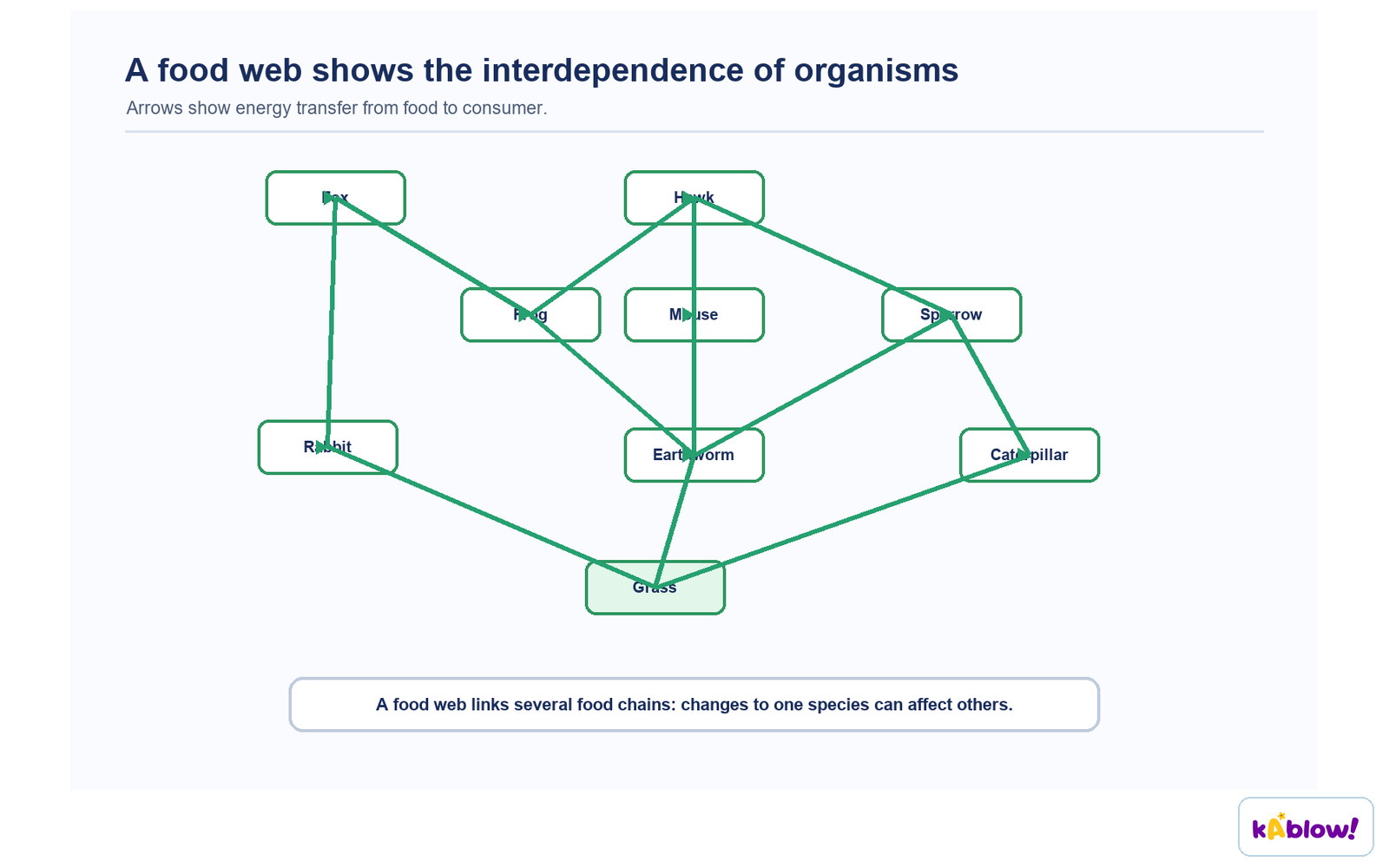
- A food web is a network of interconnected food chains, showing interdependence of organisms.
- Changes in one population can affect others; e.g. if earthworms decrease, grass increases, frogs and mice decrease, sparrows decrease slightly.
A food web shows the interdependence of organisms
Pyramids of Number
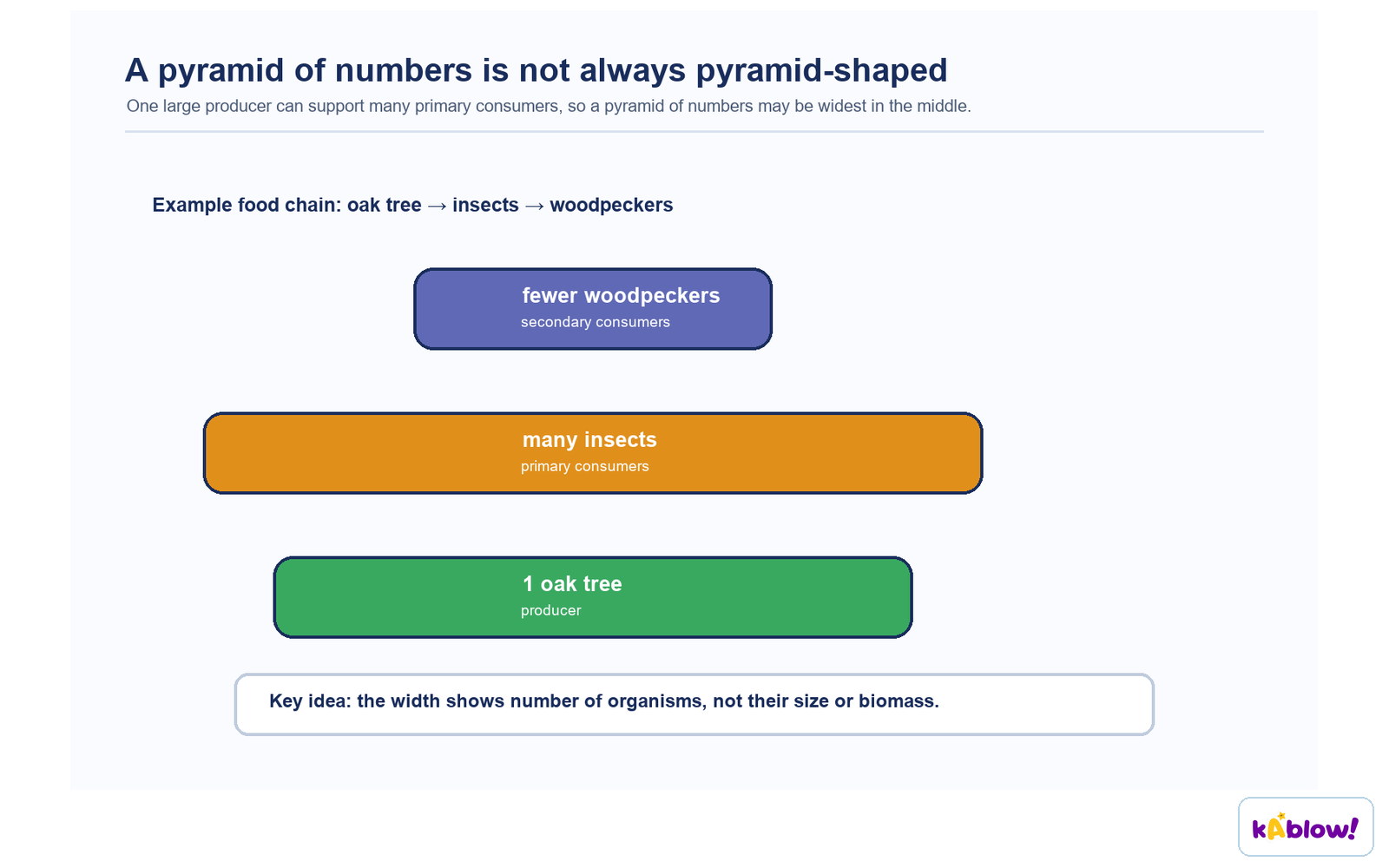
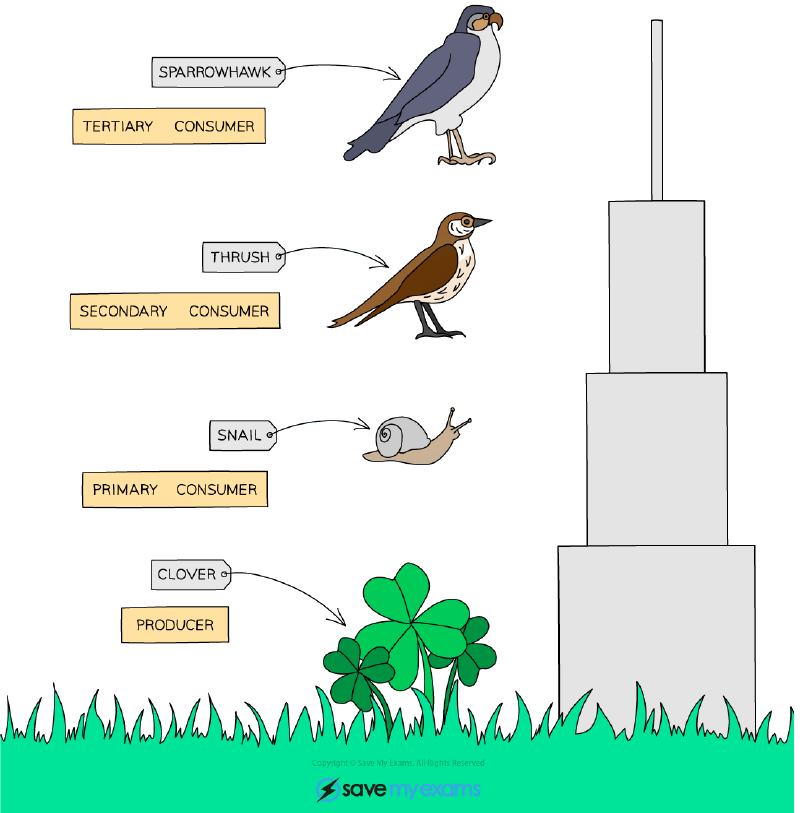
- A pyramid of numbers shows the number of organisms at each trophic level.
- The width of each bar indicates the number of organisms.
- Pyramids of numbers are not always pyramid-shaped because one large producer (e.g. oak tree) can support many consumers.
- Rules: producers at bottom, then primary, secondary, tertiary consumers; label each bar; draw to scale if graph paper provided.
A pyramid of numbers is not always pyramid-shaped
Pyramids of Biomass
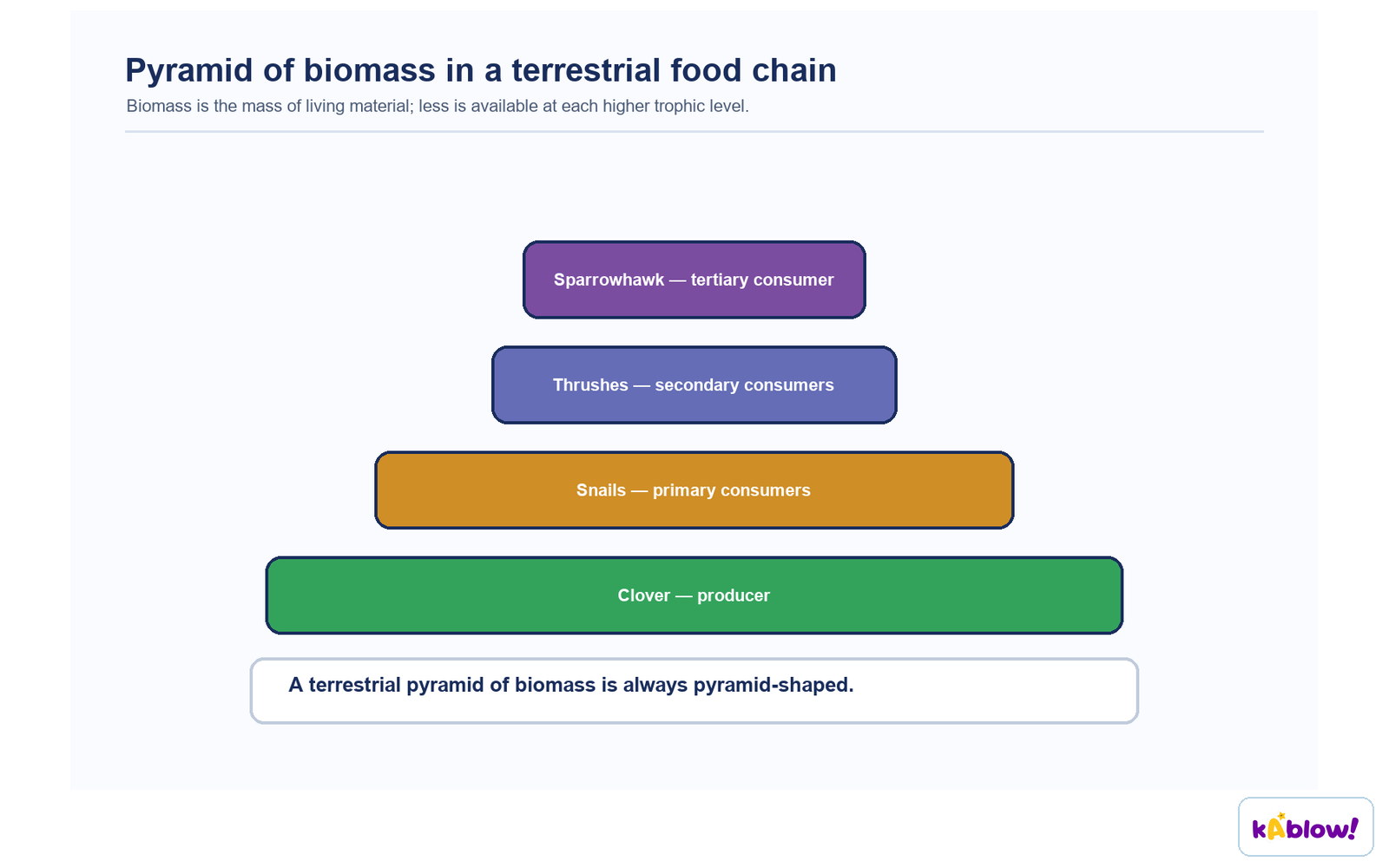
- A pyramid of biomass shows the mass of living matter (dry mass) at each trophic level.
- Pyramids of biomass are always pyramid-shaped because mass decreases up the food chain.
- Biomass gives a more accurate representation of living matter and stored energy than numbers.
A pyramid of biomass is always pyramid-shaped
Pyramids of Energy (Extended)
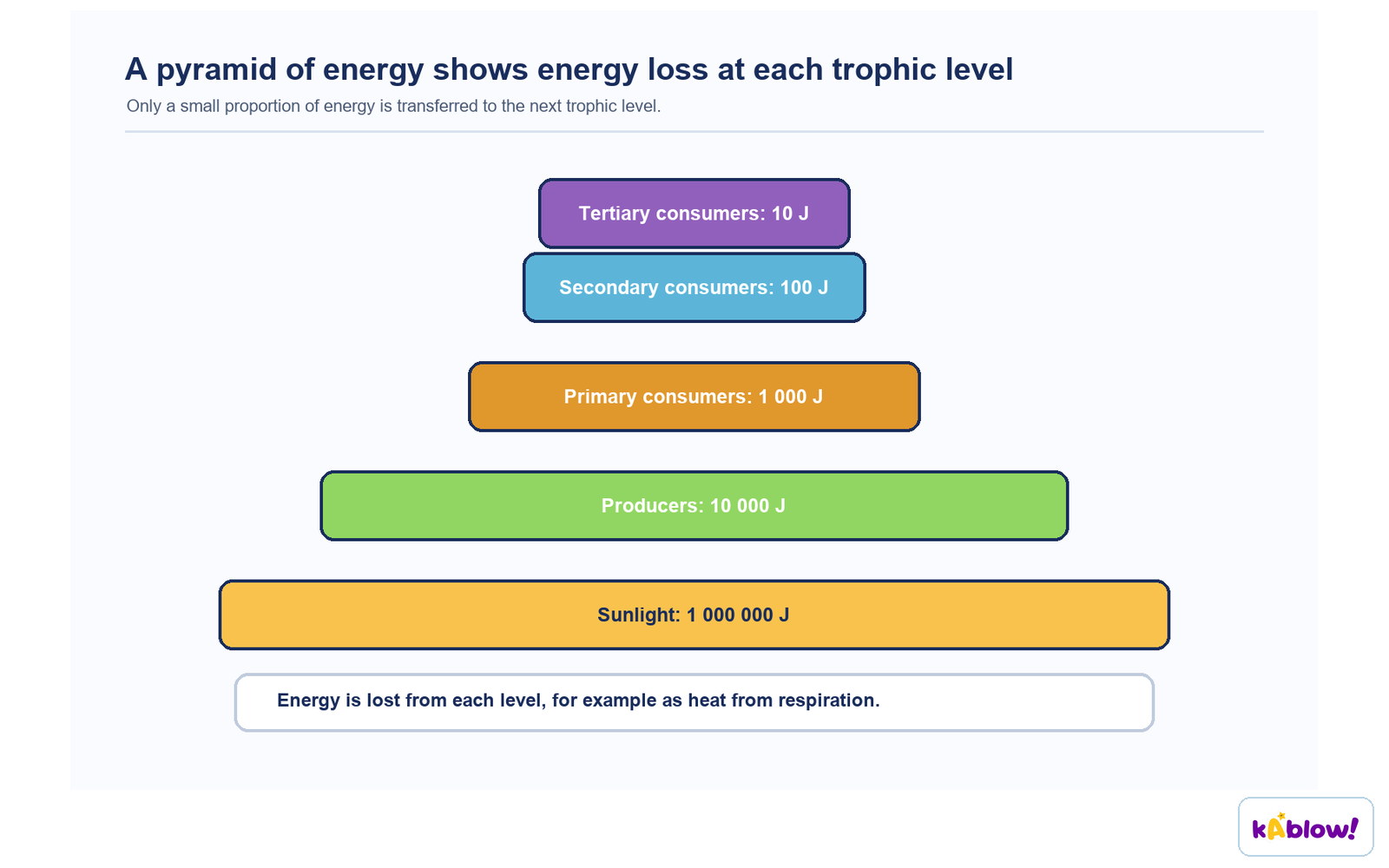
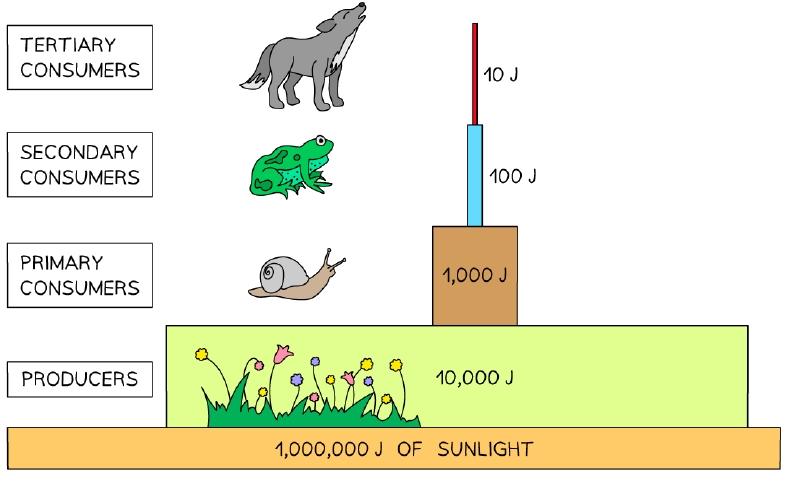
- Energy is lost between trophic levels due to excretion, movement, heat, uneaten parts, and undigested waste (faeces).
- Only about 10% of energy stored at each trophic level is available to the next.
- This explains why food chains are rarely more than 5 organisms long.
- A pyramid of energy visually represents energy stored at each level and highlights energy loss.
A pyramid of energy shows energy loss at each trophic level
The Carbon Cycle
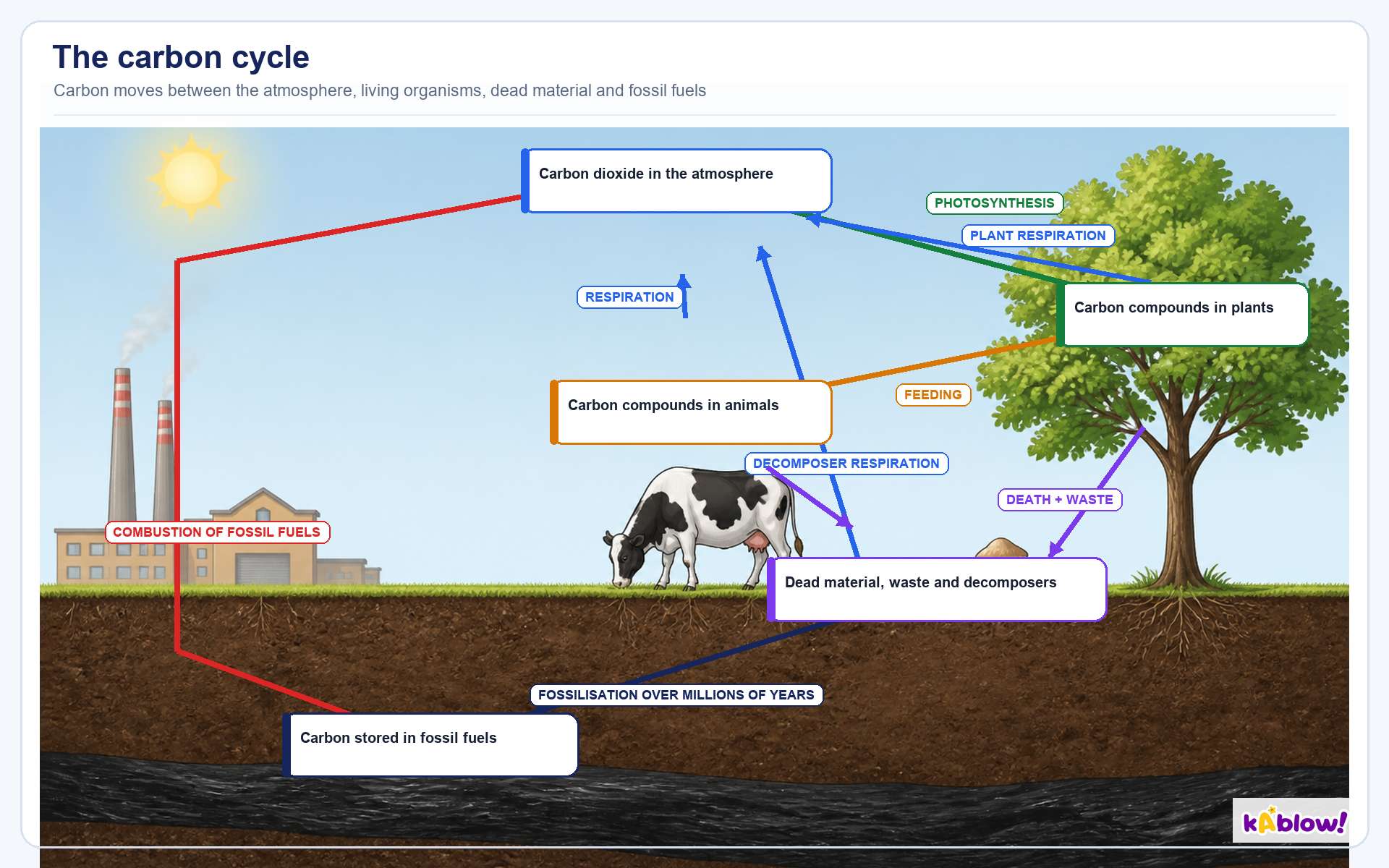
- Carbon is taken from the atmosphere as CO₂ by plants during photosynthesis.
- Carbon is passed to animals and decomposers by feeding.
- Carbon is returned to the atmosphere as CO₂ by respiration (plants, animals, microorganisms).
- Fossil fuels form from dead organisms; combustion of fossil fuels releases CO₂.
- Deforestation reduces CO₂ uptake and burning trees releases more CO₂.
The carbon cycle
The Nitrogen Cycle (Extended)
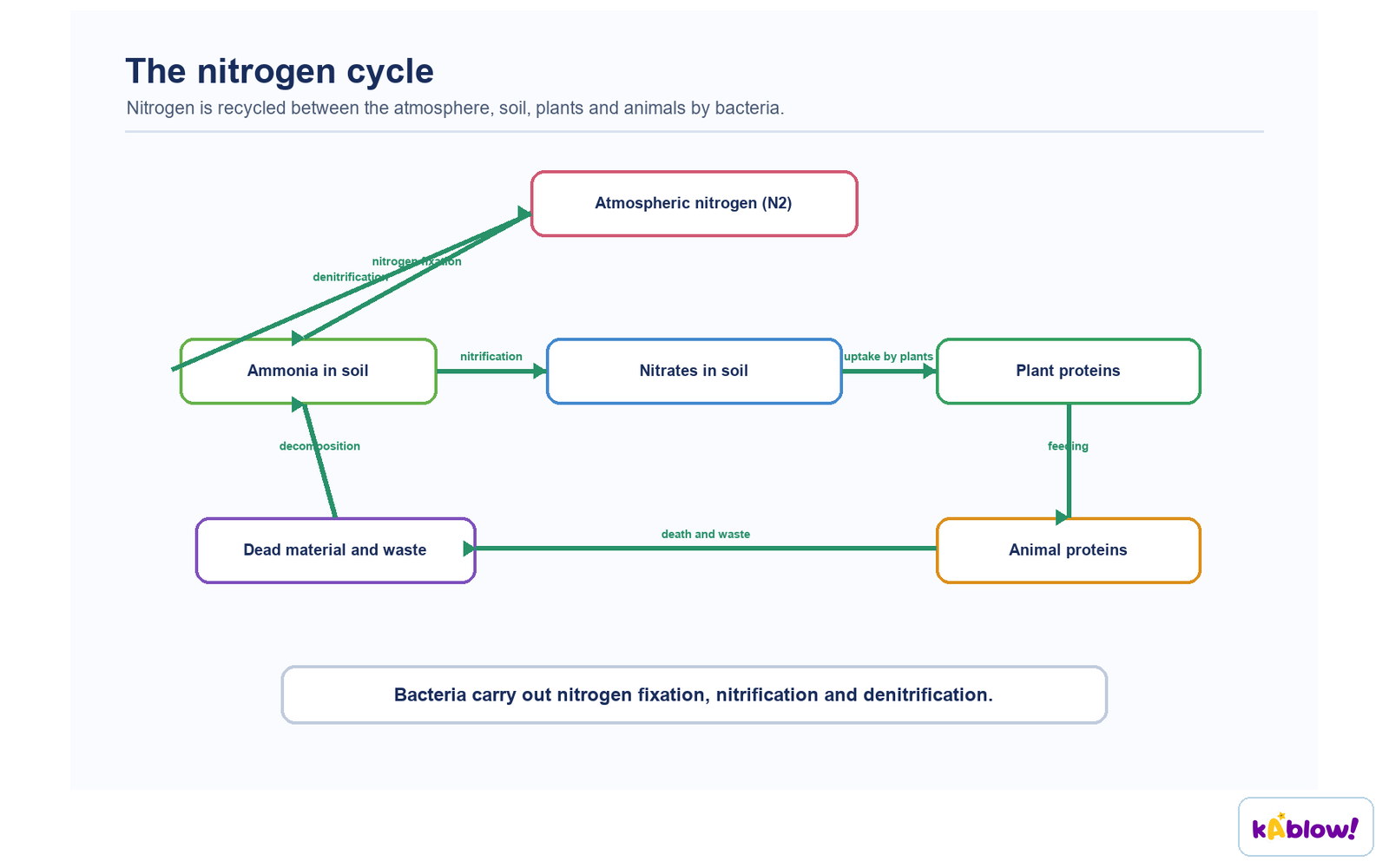
- Nitrogen-fixing bacteria convert N₂ gas into ammonium compounds, which become nitrates.
- Nitrifying bacteria convert ammonium compounds to nitrites then nitrates.
- Plants absorb nitrates to build proteins; animals obtain nitrogen by eating plants.
- Decomposers break down dead organisms and waste into ammonium compounds.
- Denitrifying bacteria convert nitrates back to N₂ gas, reducing soil fertility.
The nitrogen cycle
Populations
- A population is a group of organisms of one species living in the same area at the same time.
- A community includes all populations of different species in an ecosystem.
- An ecosystem includes the community and its environment interacting together.
- Population growth is controlled by food supply, predation, and disease.
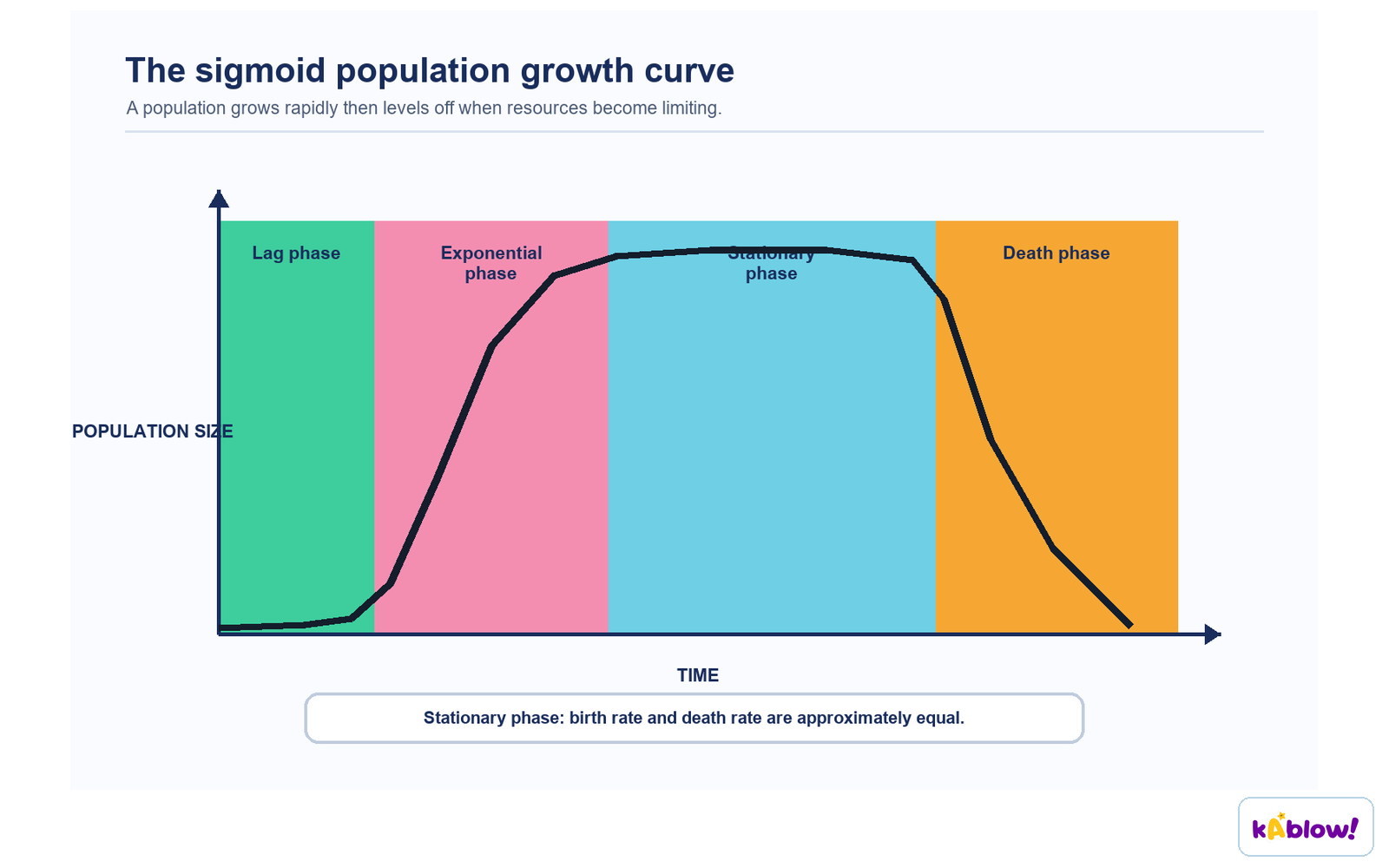
- The sigmoid growth curve has four phases: lag, log (exponential), stationary, and death.
- In natural environments, factors like temperature, light, predators, disease, immigration, and emigration affect growth.
The sigmoid population growth curve
幻灯片
练习题
免费预览——55 题中的 8 题。注册即可查看全部。
1.Which of the following is a correct example of a population?
Easy- AAll the goldfish in a pond.
- BAll the animals in a forest.
- CAll the species of animals in Europe.
- DAll the people born in Scotland over a 150-year period.
2.Which process uses the principal source of energy input to biological systems?
Easy- APhotosynthesis
- BIngestion
- CDecomposition
- DRespiration
3.What is an example of a community?
Easy- AAll the populations of all species in a forest.
- BAll the goldfish in a pond.
- CAll the wheat and corn in a field.
- DAll the plants in a forest.
4.Which organism is a producer?
Easy- AGrass
- BRabbit
- CHawk
- DFungus
5.In the carbon cycle, which process describes carbon being passed from a producer to the animal that eats it?
Easy- APhotosynthesis
- BFeeding
- CRespiration
- DCombustion
6.Which of the following diagrams show a pyramid of biomass for a forest?
Medium- AA pyramid that is upright (wide base, narrow top)
- BA pyramid that is inverted (narrow base, wide top)
- CA pyramid that is rectangular (all bars same width)
- DA pyramid that is diamond-shaped (narrow base and top, wide middle)
7.A food chain is: tree → small insects → small birds → birds of prey. Which pyramid of numbers would be correct for this food chain?
Medium- AA pyramid with a narrow base (tree) and widening upwards
- BA pyramid with a wide base (tree) and narrowing upwards
- CA pyramid with a wide base (tree), then narrower, then wider, then narrower
- DA pyramid with equal width at all levels
8.Which statement gives the best explanation for why most food chains have no more than five trophic levels?
Medium- AThere is a large amount of energy loss at each level so insufficient energy can be passed up to the sixth trophic level.
- BBecause 20% of the energy is transferred at each level and after 5 levels, all the energy is used up (5 × 20% = 100%).
- CThe numbers of organisms are insufficient because the top predator has to have a count of 1 in a pyramid of numbers.
- DThe biomass transferred from a consumer to the next-level consumer is too little.
历年真题
该知识点的历年真题练习即将推出。
即将推出