Cell Structure And Size Of Specimens
边玩边学
回答这些题目来赚取能量,然后钓鱼探索。无需账号。
给教育者: 面向 Cell Structure And Size Of Specimens(Co-ordinated Sciences (Double Award) [CIE],Biology)的即用型课程幻灯片, 复习笔记, 图示——用在你的课堂上,或将该知识点作为学习者可实时游玩的互动课堂活动来运行。
课程笔记
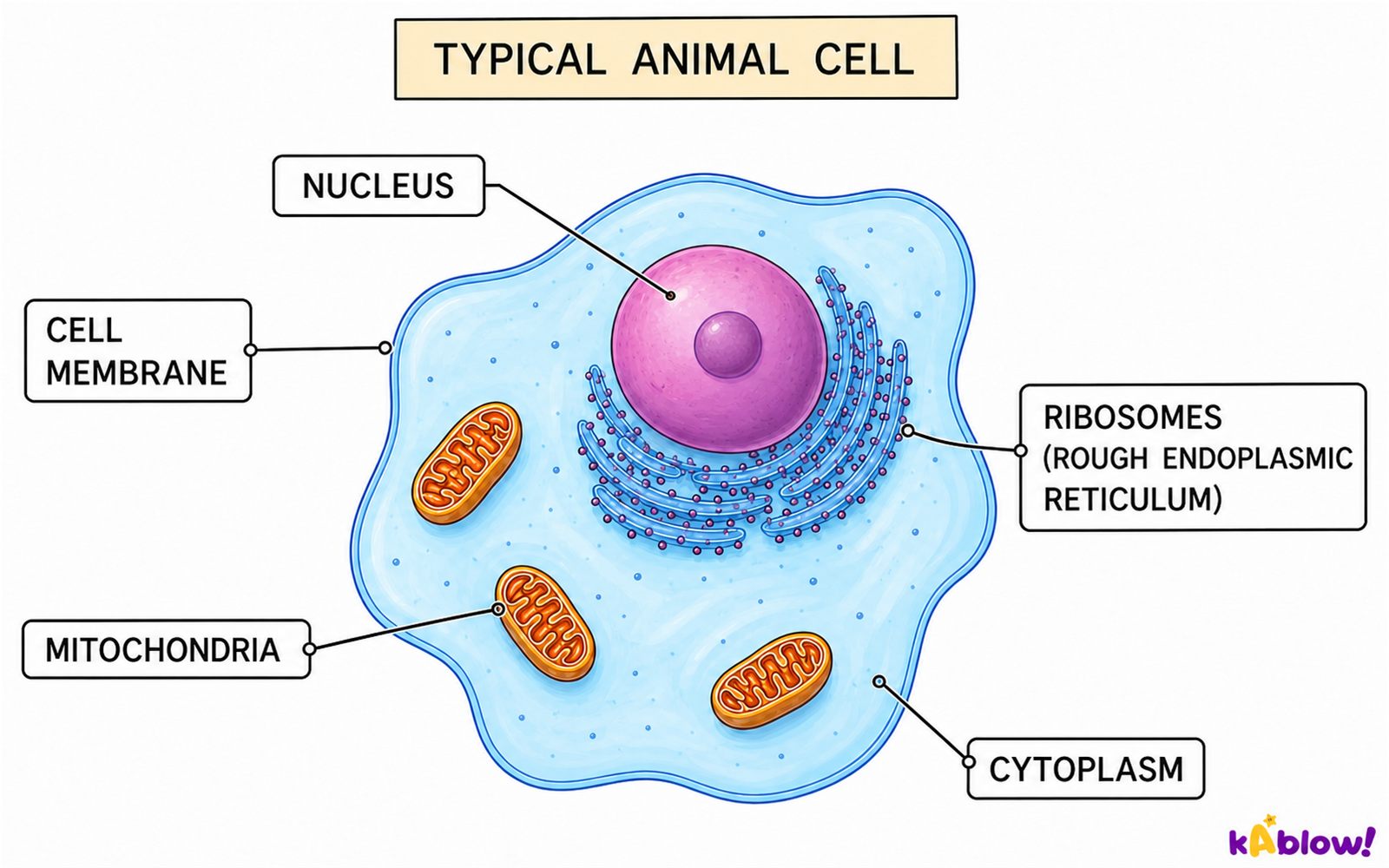
Cell Structure: Animal Cells
- Animal cells have a cell membrane that separates them from surroundings.
- They contain cytoplasm, a gel-like liquid where chemical reactions occur.
- The nucleus contains the genetic material (DNA).
- Mitochondria are the site of aerobic respiration, releasing energy.
- Ribosomes are the site of protein synthesis.
A typical animal cell
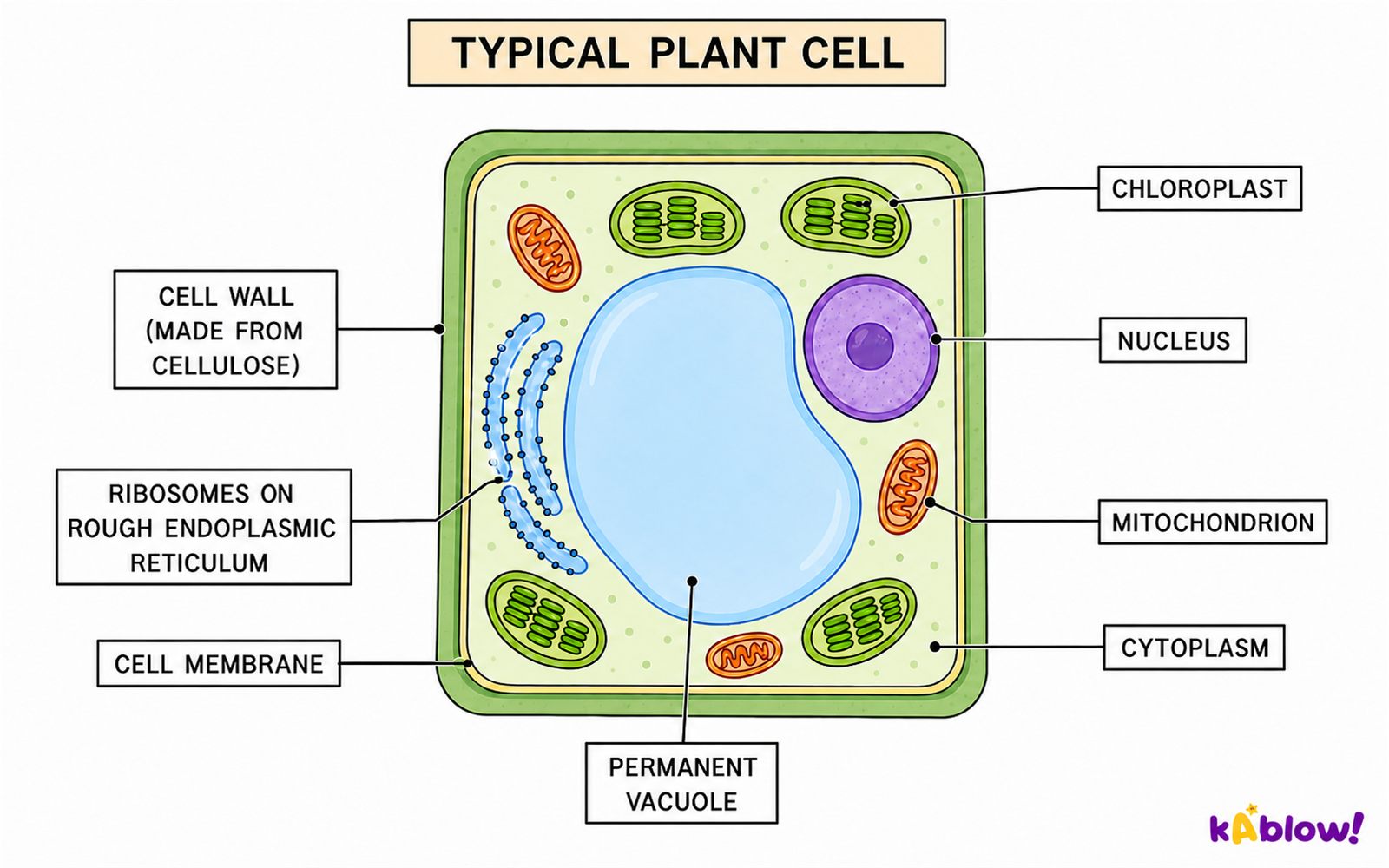
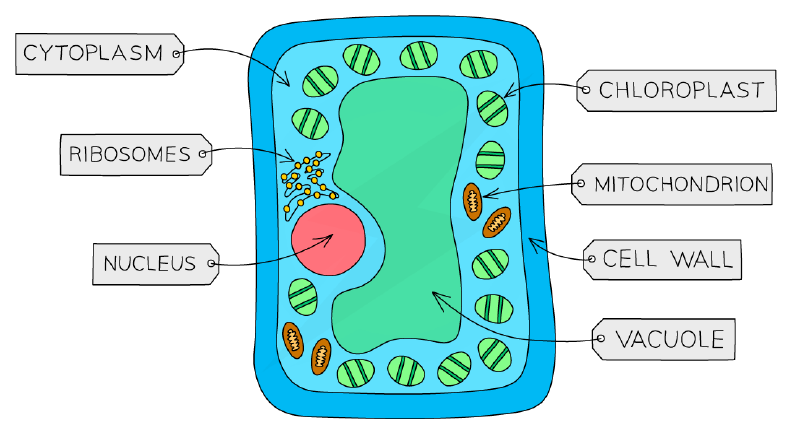
Cell Structure: Plant Cells
- Plant cells have all animal cell structures: cell membrane, cytoplasm, nucleus, mitochondria, ribosomes.
- Additionally, they have a cellulose cell wall for structural support.
- Chloroplasts contain chlorophyll and absorb light energy for photosynthesis.
- A permanent vacuole stores cell sap and provides support.
A typical plant cell
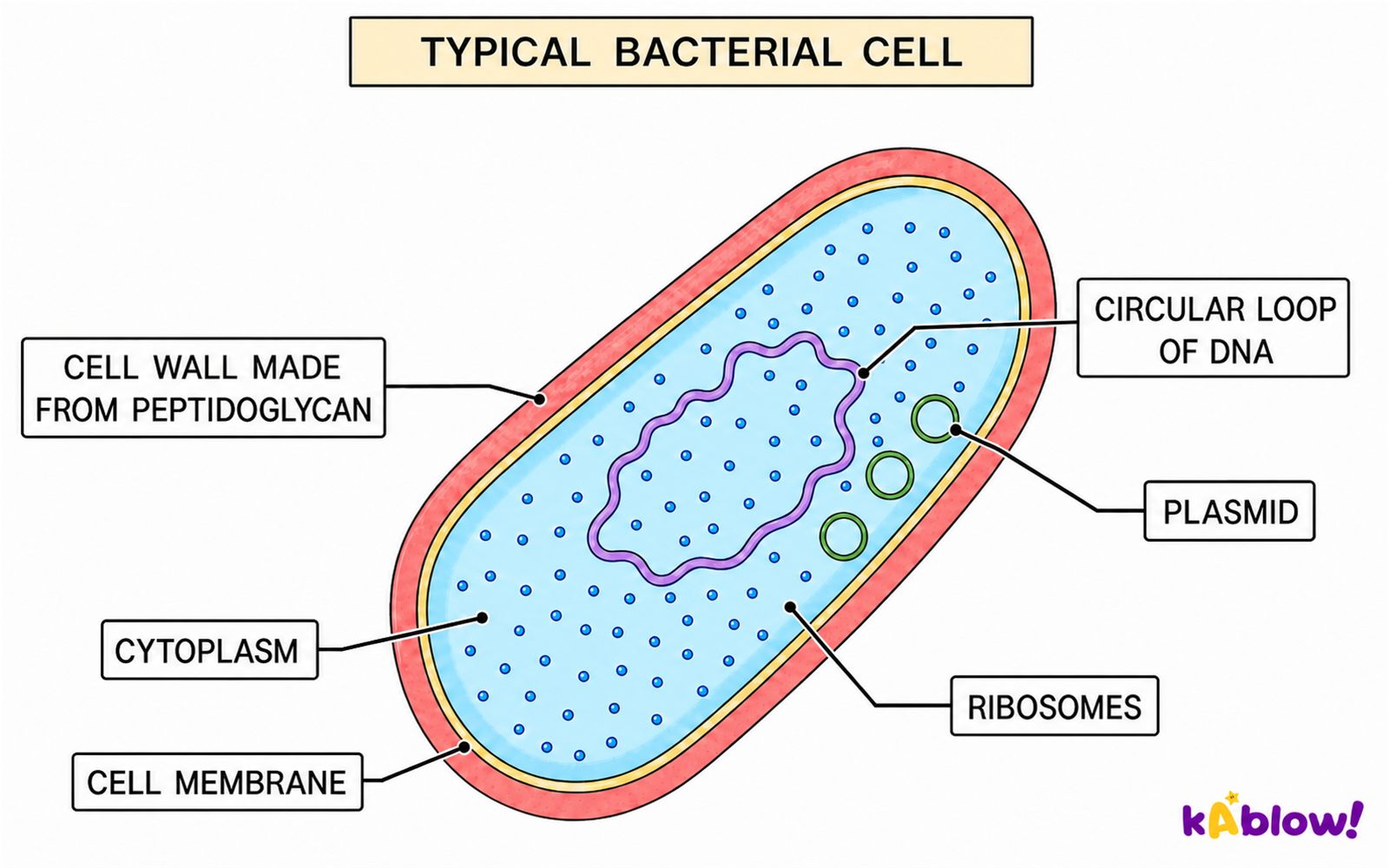
Bacterial Cells (Prokaryotes)
- Bacteria have a cell wall made of peptidoglycan (not cellulose).
- They have a cell membrane, cytoplasm, and ribosomes.
- DNA is circular and not enclosed in a nucleus; some have plasmids.
- Bacteria lack internal membranes: no nucleus, mitochondria, or chloroplasts.
A typical bacterial cell
Functions of Cellular Structures
- Cell membrane: controls passage of substances into/out of the cell.
- Nucleus: contains DNA, controls cell activities (animal/plant only).
- Mitochondria: site of aerobic respiration (animal/plant).
- Ribosomes: protein synthesis (all cell types).
- Chloroplasts: photosynthesis (plant only).
- Cell wall: provides support and shape (cellulose in plants, peptidoglycan in bacteria).
- Permanent vacuole: storage and support (plant only).
- Plasmids: small DNA loops carrying extra genes (bacteria).
Specialised Cells
- Cells differentiate (become specialised) to carry out specific functions in the body.
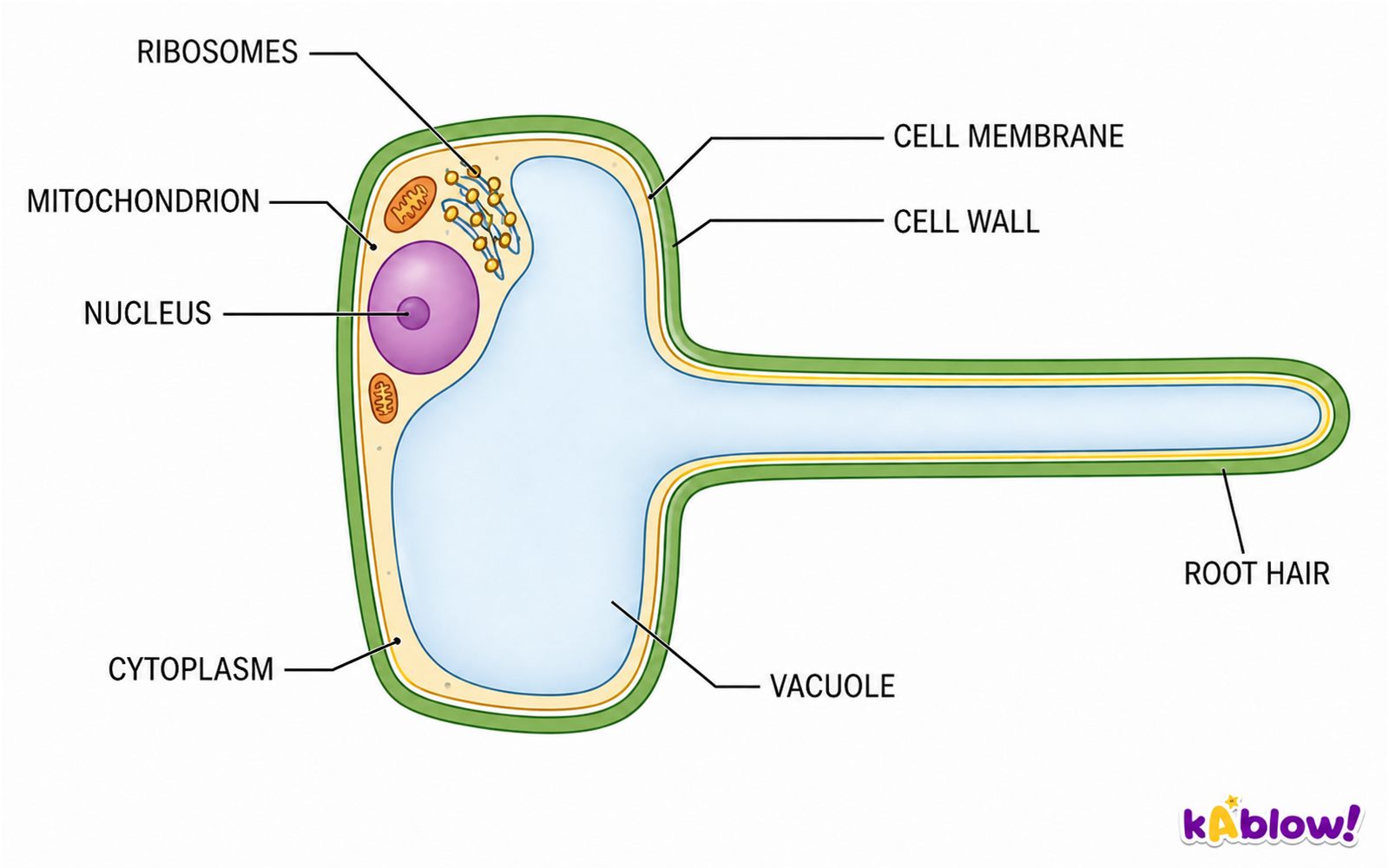
- Root hair cell: has a long extension (root hair) that increases surface area for absorption of water and mineral ions; thin walls let water move through quickly; no chloroplasts (underground, no light).
- Xylem vessel: dead cells with no top/bottom walls, forming a continuous tube for water transport; walls thickened with lignin for support.
- Palisade mesophyll cell: column-shaped to pack many cells under the leaf's upper surface and contains many chloroplasts for maximum photosynthesis.
Root hair cell
Organisation of Cells
- Cells divide to produce new cells for growth and repair.
- Cells can become specialised to carry out specific functions.
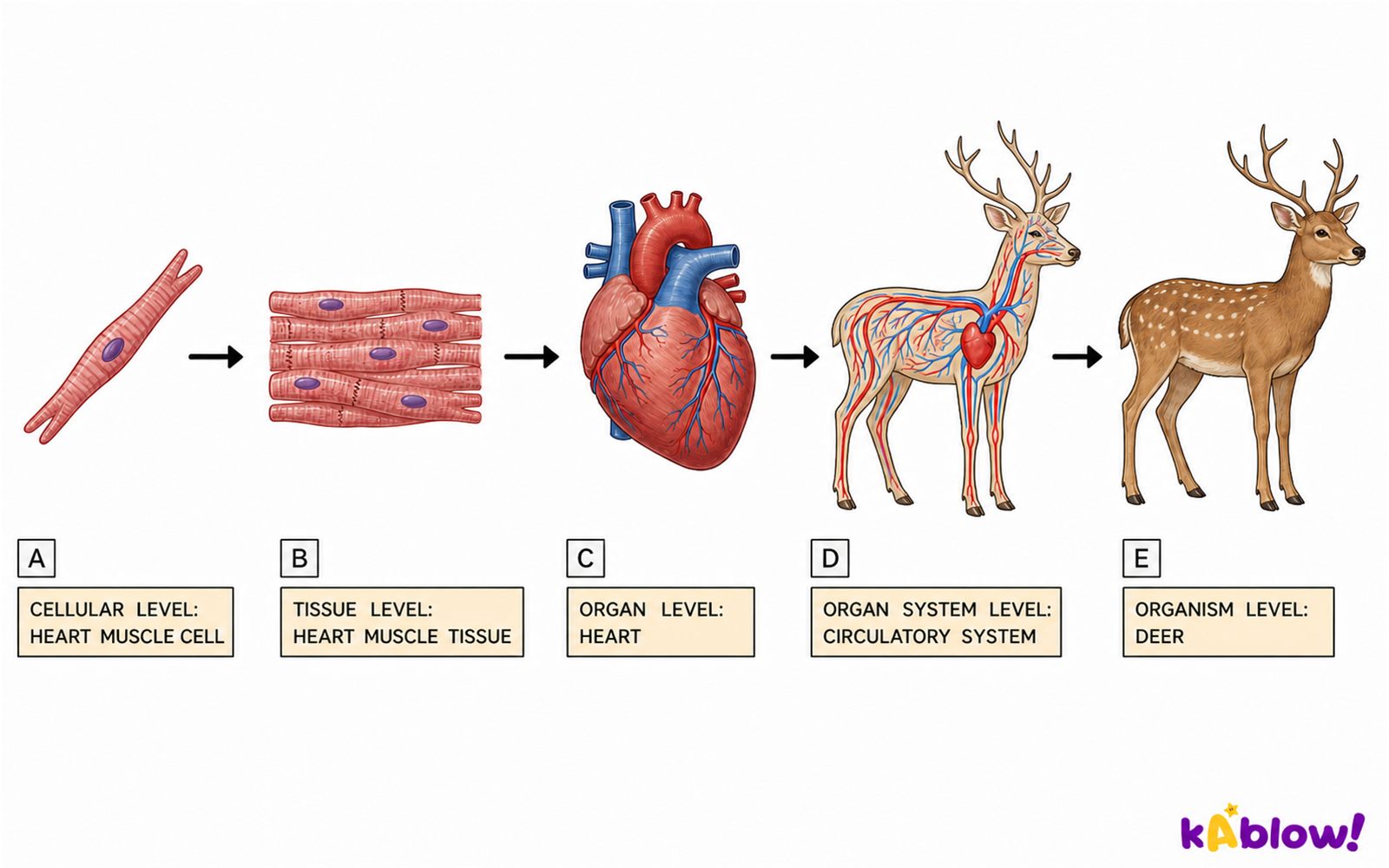
- Levels of organisation: cells → tissues → organs → organ systems → organism.
- Examples: palisade mesophyll cells form leaf tissue; leaf is an organ.
Levels of organisation
Magnification Formula
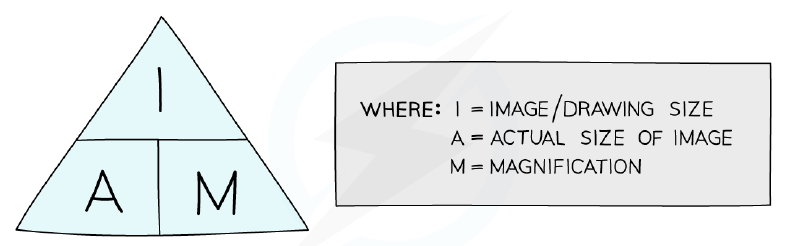
- Formula: magnification = image size ÷ actual size.
- Equation triangle: M = I / A; I = M × A; A = I / M.
- Units must be the same (e.g., both in mm or both in μm).
- Magnification has no units (e.g., ×10, ×3000).
Magnification equation triangle
Converting Between Units
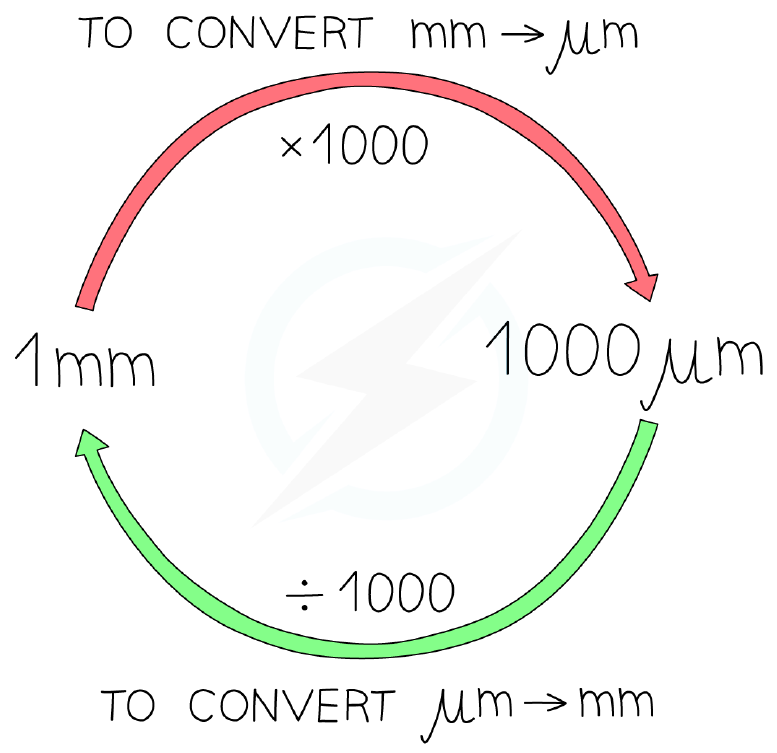
- 1 mm = 1000 μm (micrometres).
- To convert μm to mm, divide by 1000; to convert mm to μm, multiply by 1000.
- Common error: forgetting to convert units before using magnification formula.
Converting mm to μm
幻灯片
练习题
免费预览——52 题中的 8 题。注册即可查看全部。
1.Which of the following structures is found in both animal and plant cells?
Easy- ACell wall
- BChloroplast
- CNucleus
- DPermanent vacuole
2.Bacterial cells contain a nucleus.
EasyTrue or false?
3.State one function of the cell membrane.
Easy4.Match each cell structure to its function.
Medium- Nucleus
- Chloroplast
- Ribosome
- Contains genetic material
- Site of photosynthesis
- Site of protein synthesis
5.Arrange the following levels of biological organisation from smallest to largest:
Easy- Tissue
- Organ
- Cell
- Organ system
6.Which of the following is present in a bacterial cell but not in an animal cell?
Medium- AMitochondrion
- BCell wall made of peptidoglycan
- CNucleus
- DRibosome
7.A student measures the length of a bacterium as 2 μm. She draws it with a length of 50 mm. What is the magnification of her drawing?
Medium- A27500
- B25000
- C30000
- D22500
8.Name the structure that contains chlorophyll in a plant cell.
Easy
历年真题
该知识点的历年真题练习即将推出。
即将推出