Circulatory Systems Heart And Blood Vessels
边玩边学
回答这些题目来赚取能量,然后钓鱼探索。无需账号。
给教育者: 面向 Circulatory Systems Heart And Blood Vessels(Co-ordinated Sciences (Double Award) [CIE],Biology)的即用型课程幻灯片, 复习笔记, 图示——用在你的课堂上,或将该知识点作为学习者可实时游玩的互动课堂活动来运行。
课程笔记
Circulatory System Overview
- The circulatory system consists of blood vessels, a pump (heart), and valves to ensure one-way blood flow.
- Fish have a two-chambered heart and a single circulation (blood passes through the heart once per circuit).
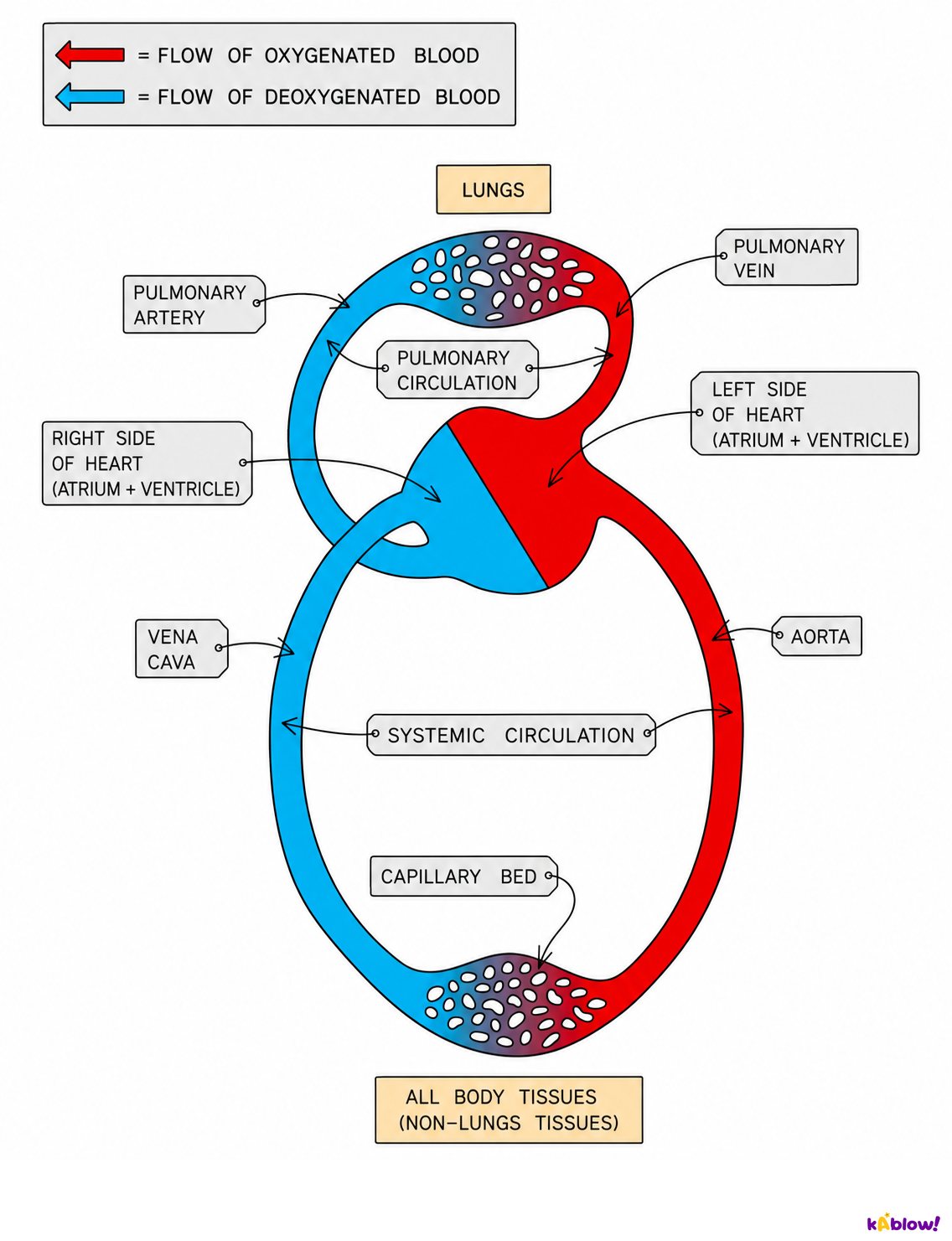
- Mammals have a four-chambered heart and a double circulation (blood passes through the heart twice per circuit).
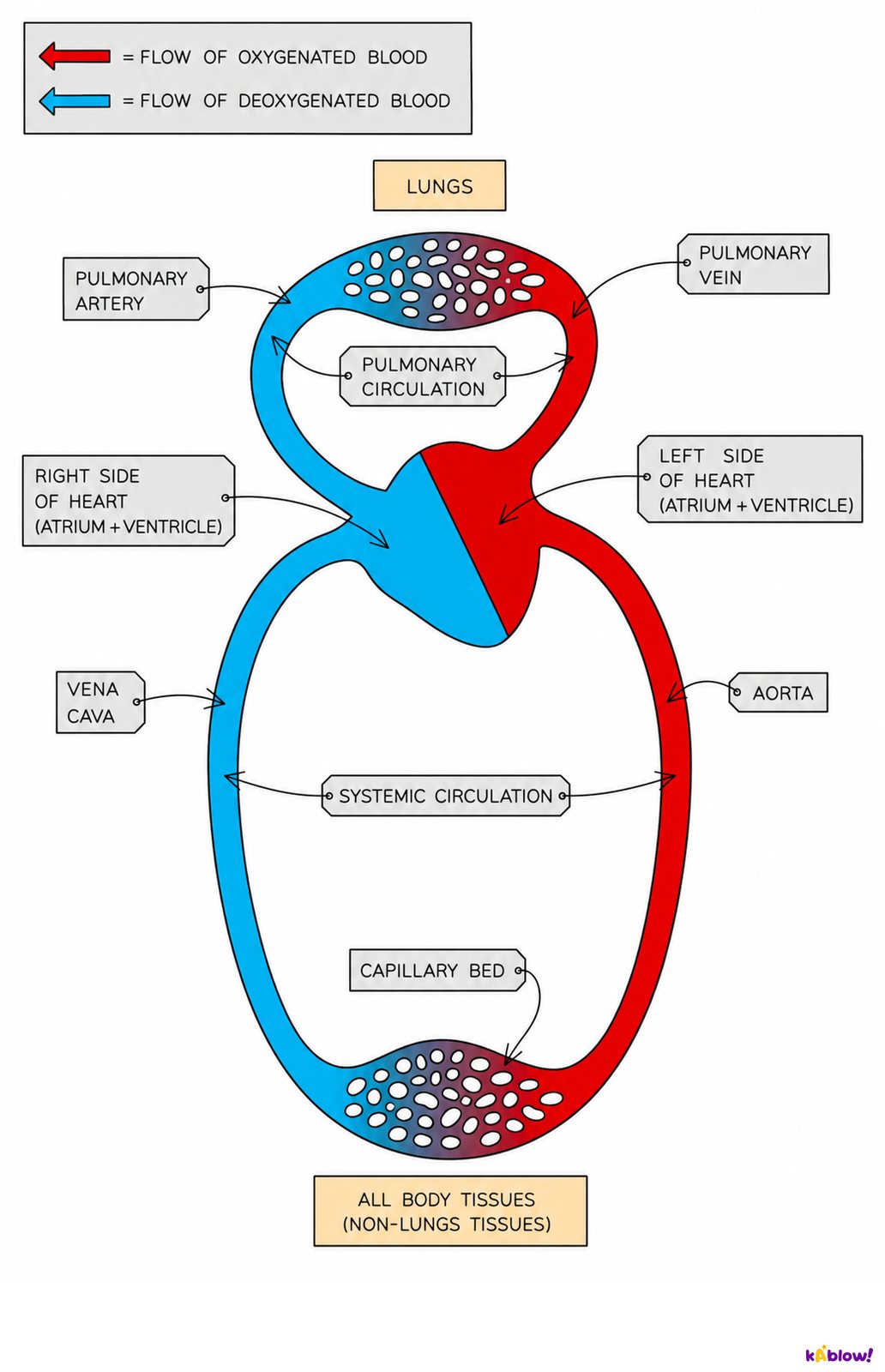
- The right side of the heart pumps deoxygenated blood to the lungs (pulmonary circulation).
- The left side pumps oxygenated blood to the body (systemic circulation).
- Double circulation allows blood pressure to be raised after the lungs, supplying cells with oxygen and glucose faster.
The double circulatory system
The Mammalian Heart
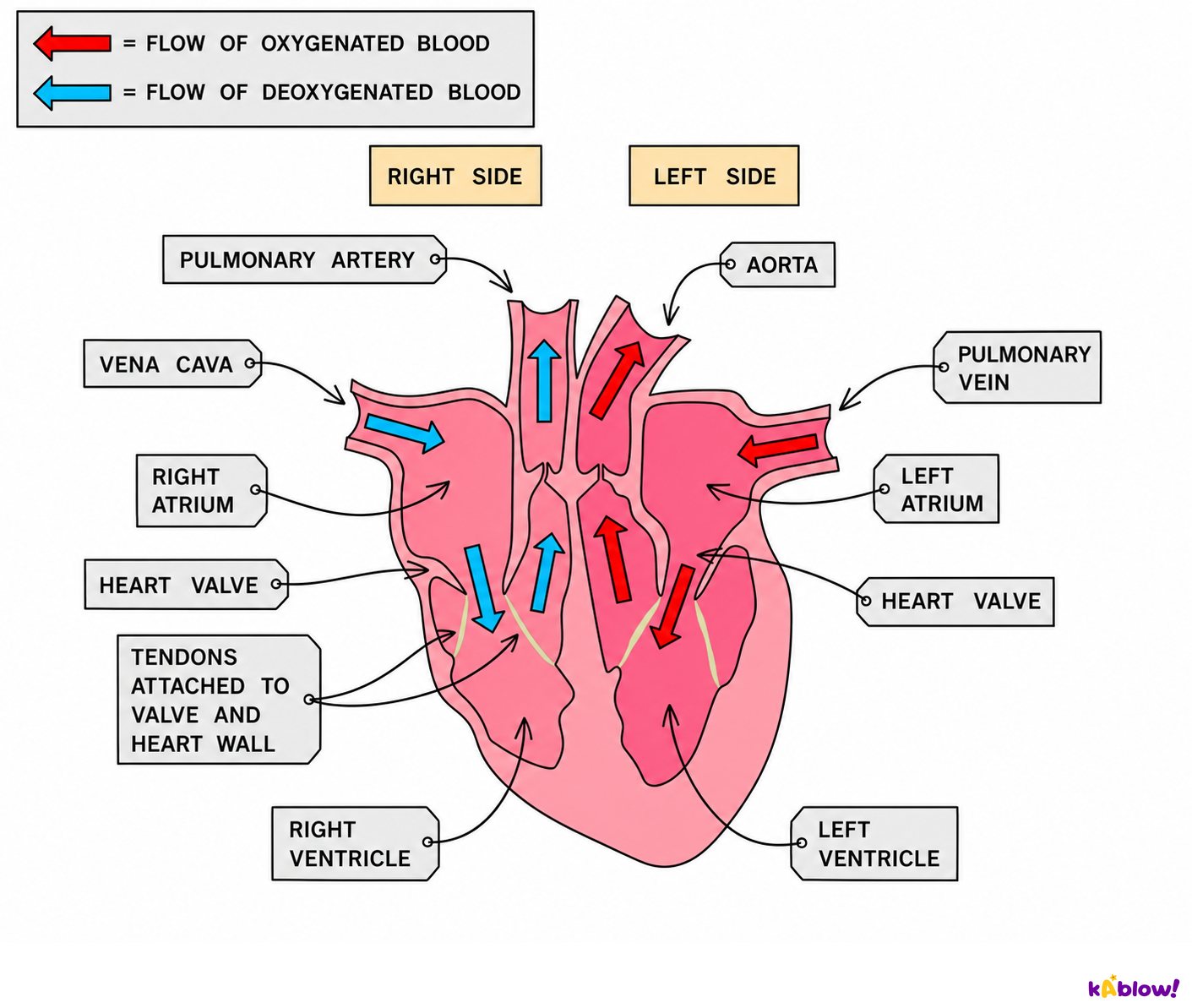
- The heart is located in the chest; diagram left corresponds to the body's right side.
- The septum separates the right and left sides of the heart.
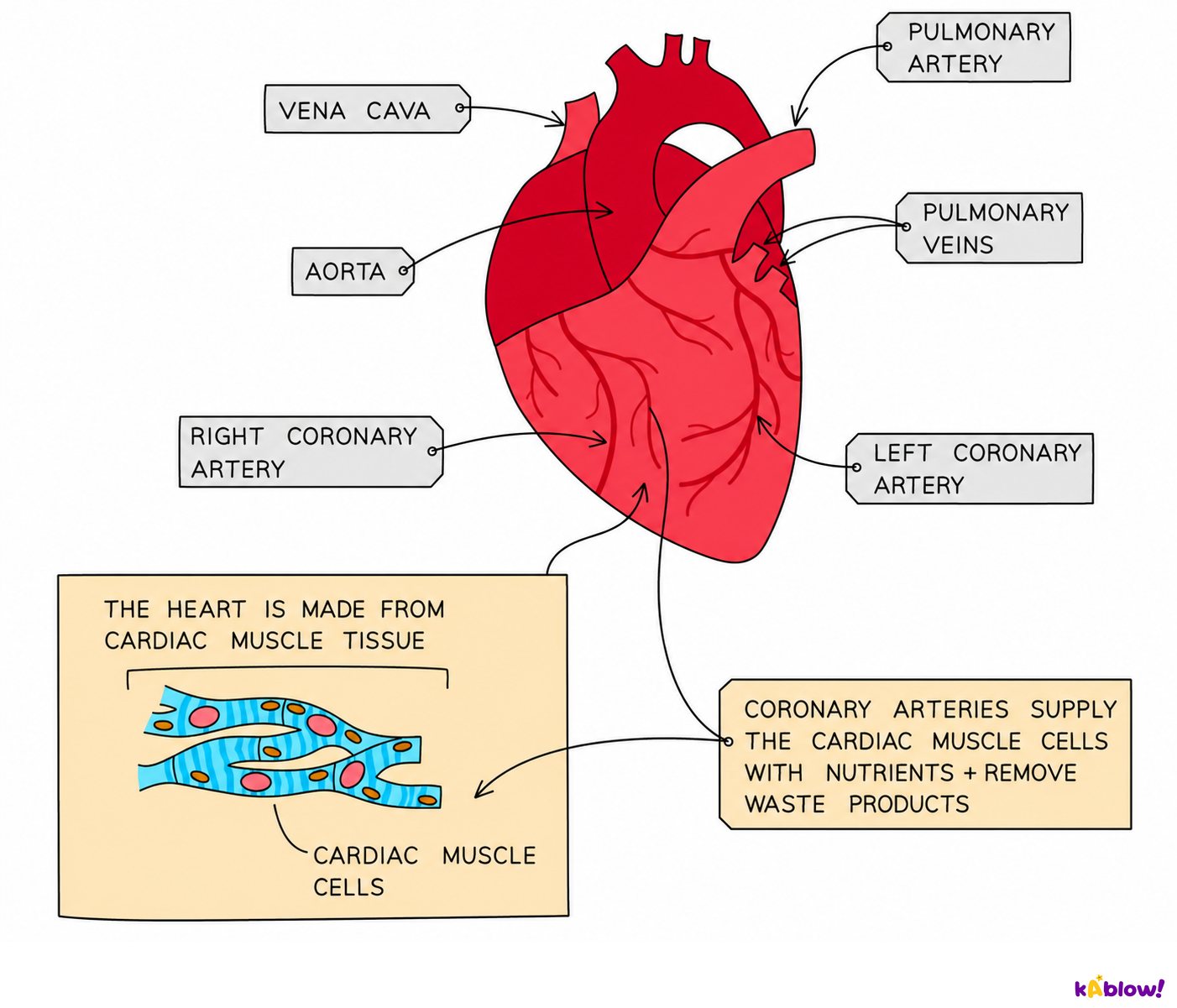
- The heart is made of cardiac muscle supplied with blood by the coronary arteries.
- Atria receive blood; ventricles pump blood out.
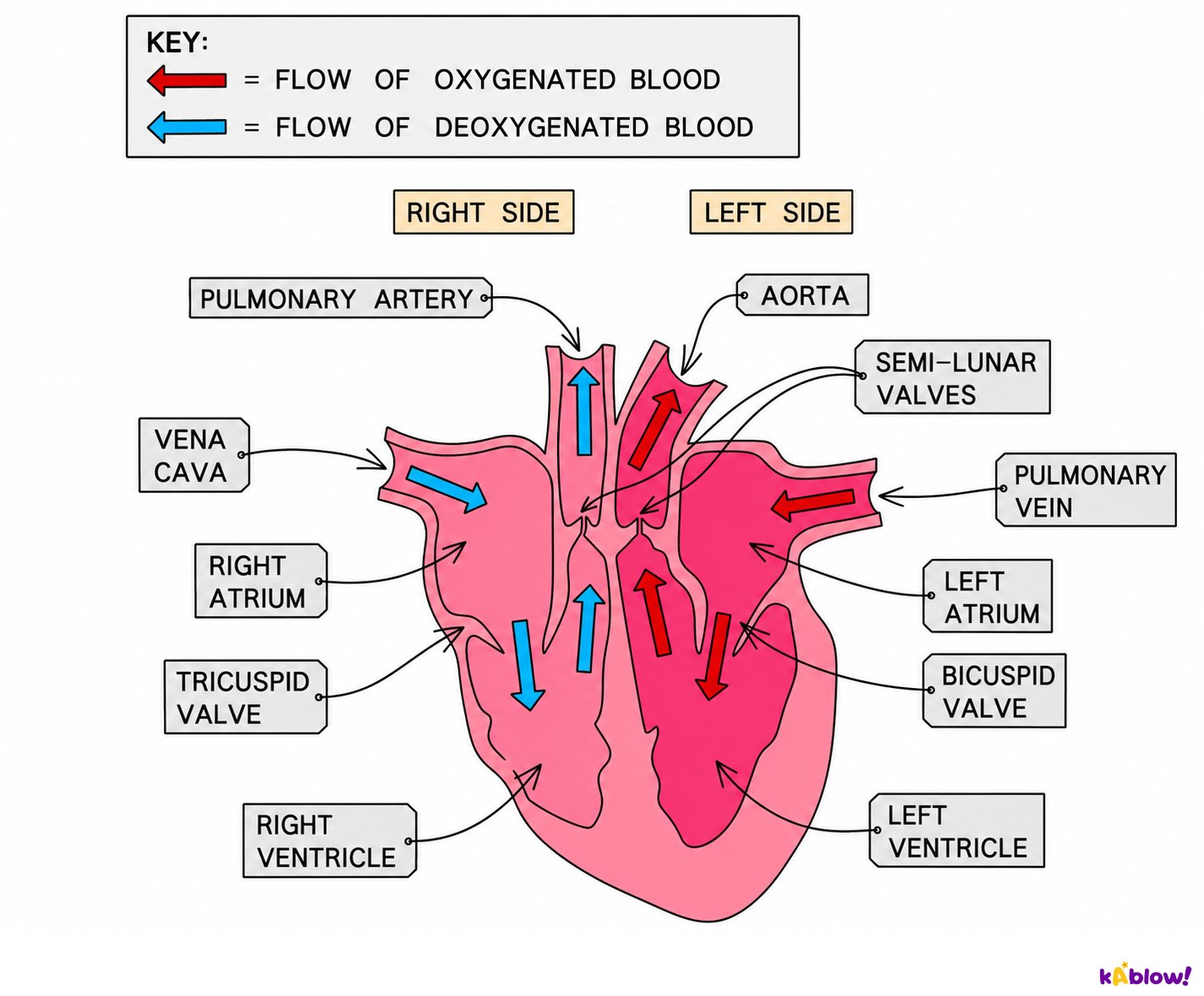
- Valves (tricuspid, bicuspid, semilunar) prevent backflow of blood.
- Arteries carry blood away from the heart; veins carry blood towards the heart.
Structure of the mammalian heart
Heart Function (Extended)
- Deoxygenated blood enters the right atrium via the vena cava.
- Blood flows through the tricuspid valve into the right ventricle.
- The right ventricle pumps blood through the semilunar valve into the pulmonary artery (to lungs).
- Oxygenated blood returns to the left atrium via the pulmonary vein.
- Blood passes through the bicuspid valve into the left ventricle.
- The left ventricle (thicker wall) pumps blood through the aorta to the body.
The heart's valves and chambers
Monitoring Heart Activity
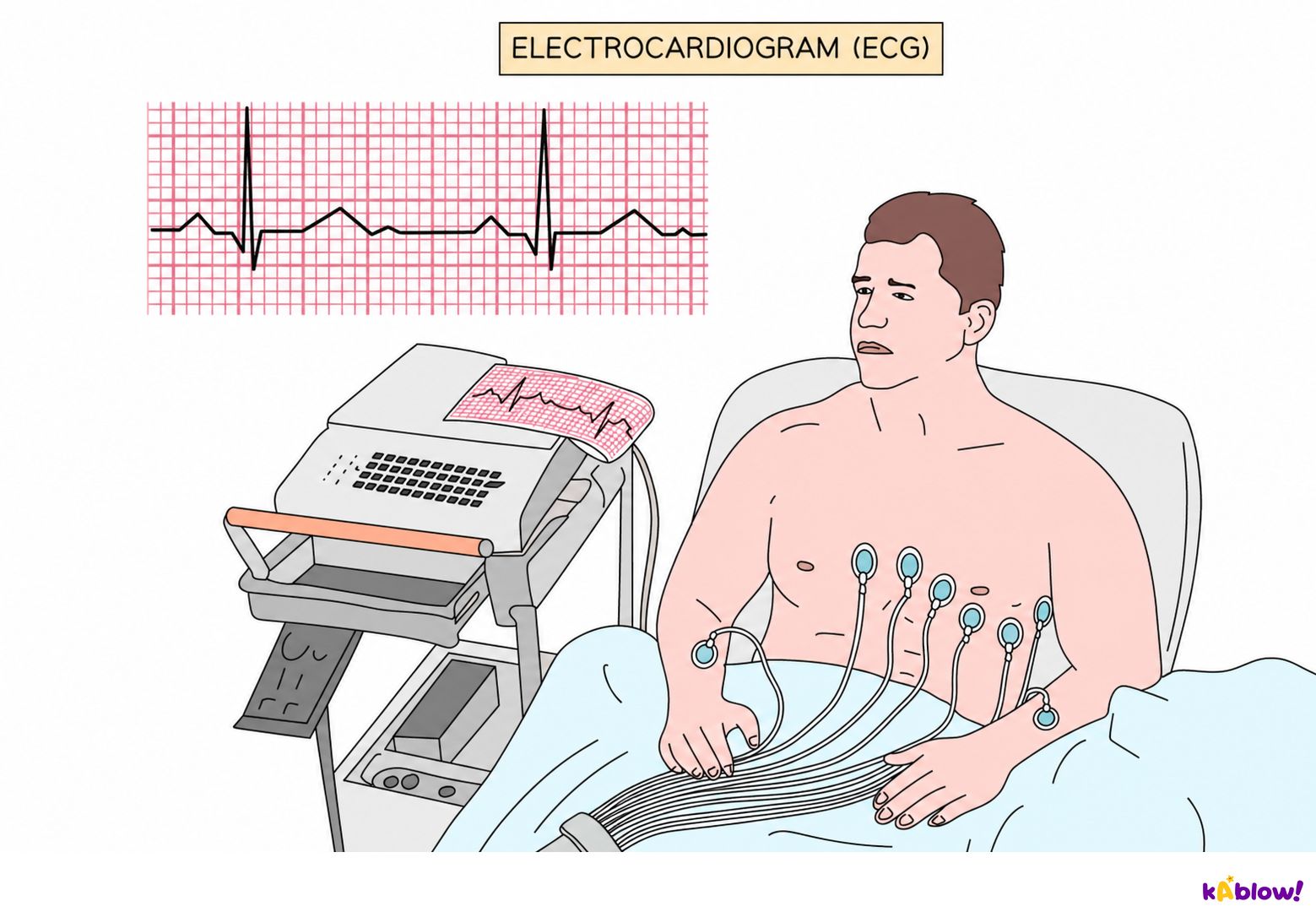
- Heart activity can be monitored using an ECG, measuring pulse rate, or listening with a stethoscope.
- Heart rate is measured in beats per minute (bpm).
- During exercise, heart rate increases to deliver more oxygen and remove waste.
- After exercise, heart rate remains elevated to repay oxygen debt and break down lactic acid.
Monitoring heart rate with an ECG
Coronary Heart Disease
- Coronary arteries supply the heart muscle with blood.
- Fatty deposits (plaques) can partially or completely block coronary arteries.
- Partial blockage causes angina (chest pain); complete blockage leads to a heart attack.
- Risk factors include smoking, high cholesterol, high blood pressure, obesity, and lack of exercise.
- Reducing risks: quit smoking, eat less animal fat, exercise regularly.
The coronary arteries
Blood Vessels: Arteries, Veins, Capillaries
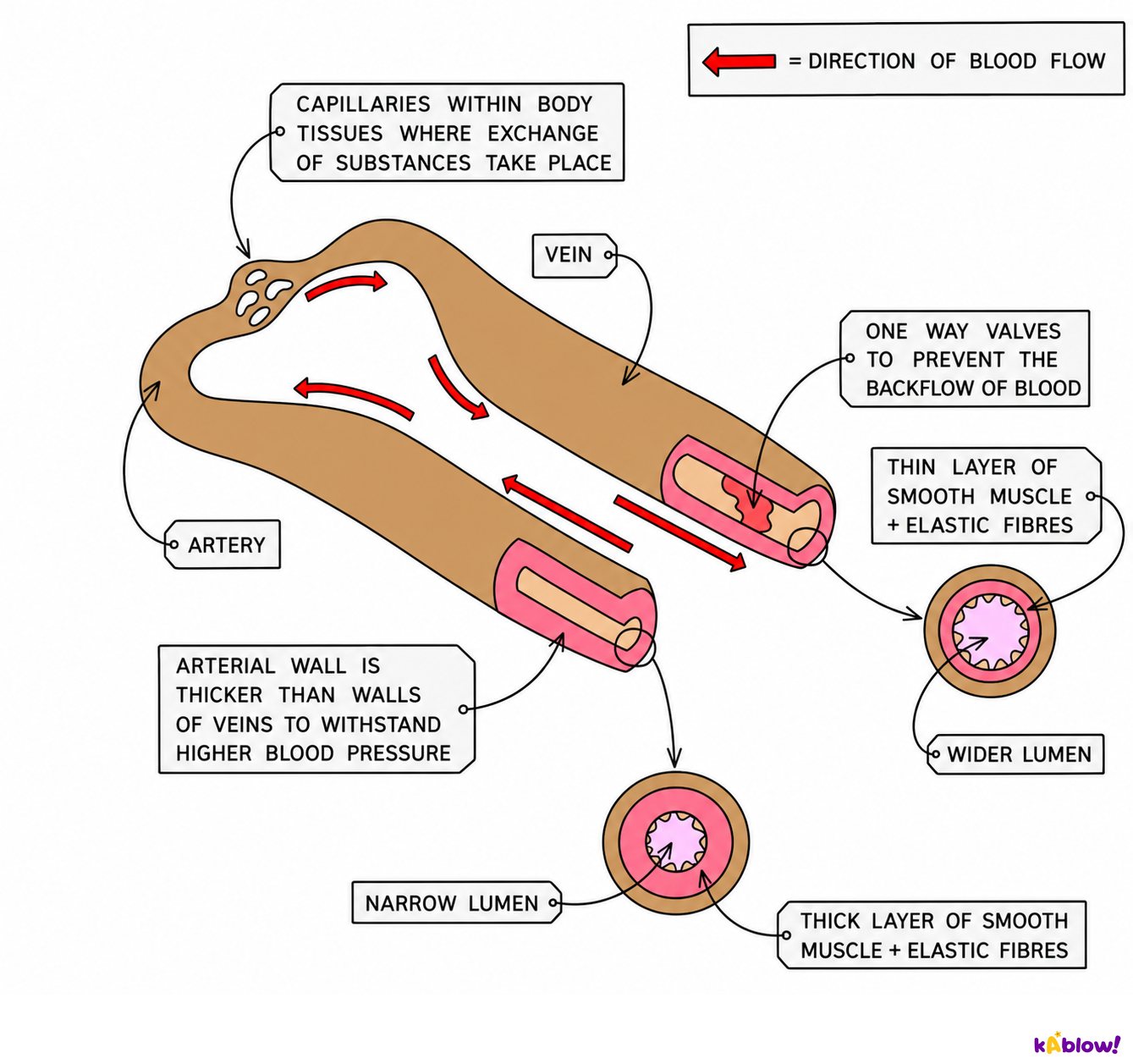
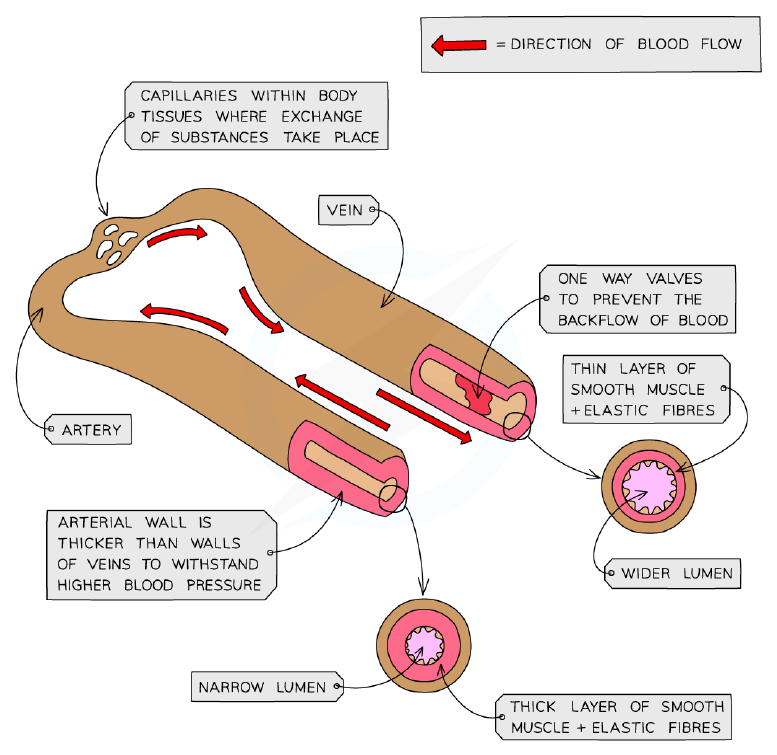
- Arteries carry blood away from the heart at high pressure; have thick muscular walls, elastic fibres, and a narrow lumen.
- Veins carry blood towards the heart at low pressure; have thin walls, a large lumen, and valves to prevent backflow.
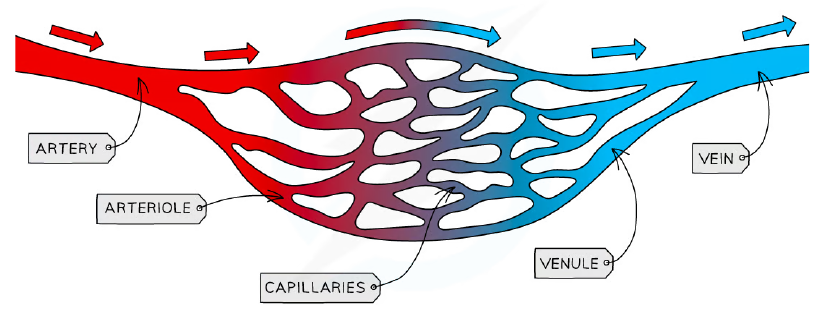
- Capillaries have walls one cell thick and are 'leaky' to allow diffusion of substances.
- Arteries divide into arterioles; veins receive blood from venules.
Comparing arteries and veins
Main Blood Vessels (Extended)
- Pulmonary artery carries deoxygenated blood from heart to lungs.
- Aorta carries oxygenated blood from heart to body.
- Pulmonary vein carries oxygenated blood from lungs to heart.
- Vena cava carries deoxygenated blood from body to heart.
The main blood vessels of the body
Components of Blood
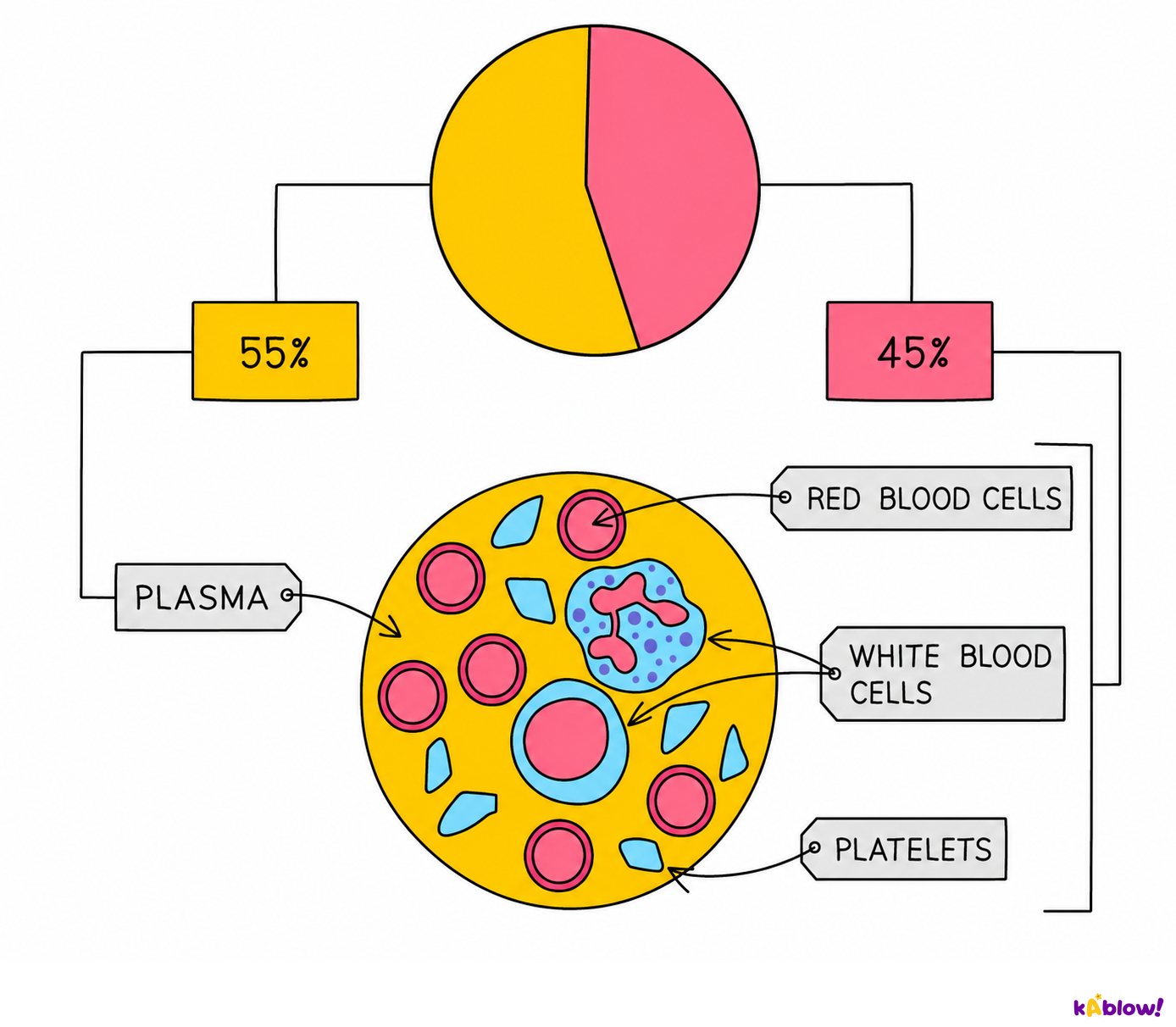
- Plasma transports carbon dioxide, nutrients, urea, hormones, and heat.
- Red blood cells (no nucleus) contain haemoglobin to transport oxygen as oxyhaemoglobin.
- White blood cells defend against infection: phagocytes engulf pathogens; lymphocytes produce antibodies.
- Platelets are cell fragments involved in blood clotting and scab formation.
Composition of human blood
幻灯片
练习题
免费预览——53 题中的 8 题。注册即可查看全部。
1.Which blood vessel carries blood away from the heart?
Easy- AArtery
- BVein
- CCapillary
- DVenule
2.The pulmonary artery carries oxygenated blood.
EasyTrue or false?
3.Name the structure that separates the right and left sides of the heart.
Easy4.Which of the following is a risk factor for coronary heart disease?
Easy- ARegular exercise
- BLow-fat diet
- CSmoking
- DLow blood pressure
5.Complete the sentence about blood flow through the heart.
EasyDeoxygenated blood enters the right atrium via the ____.
6.Arrange the following structures in the order that blood flows through them after leaving the left ventricle: aorta, left atrium, left ventricle, pulmonary vein.
Medium- left ventricle
- aorta
- pulmonary vein
- left atrium
7.Why does the left ventricle have a thicker muscular wall than the right ventricle?
Medium- AIt pumps blood to the lungs.
- BIt pumps blood to the whole body.
- CIt receives blood from the body.
- DIt has to overcome gravity.
8.Match each blood vessel with its correct description.
Medium- Artery
- Vein
- Capillary
- Thick muscular walls
- Contains valves
- One cell thick walls
历年真题
该知识点的历年真题练习即将推出。
即将推出