Exothermic And Endothermic Reactions
边玩边学
回答这些题目来赚取能量,然后钓鱼探索。无需账号。
给教育者: 面向 Exothermic And Endothermic Reactions(Co-ordinated Sciences (Double Award) [CIE],Chemistry)的即用型课程幻灯片, 复习笔记——用在你的课堂上,或将该知识点作为学习者可实时游玩的互动课堂活动来运行。
课程笔记
Endothermic & Exothermic Reactions
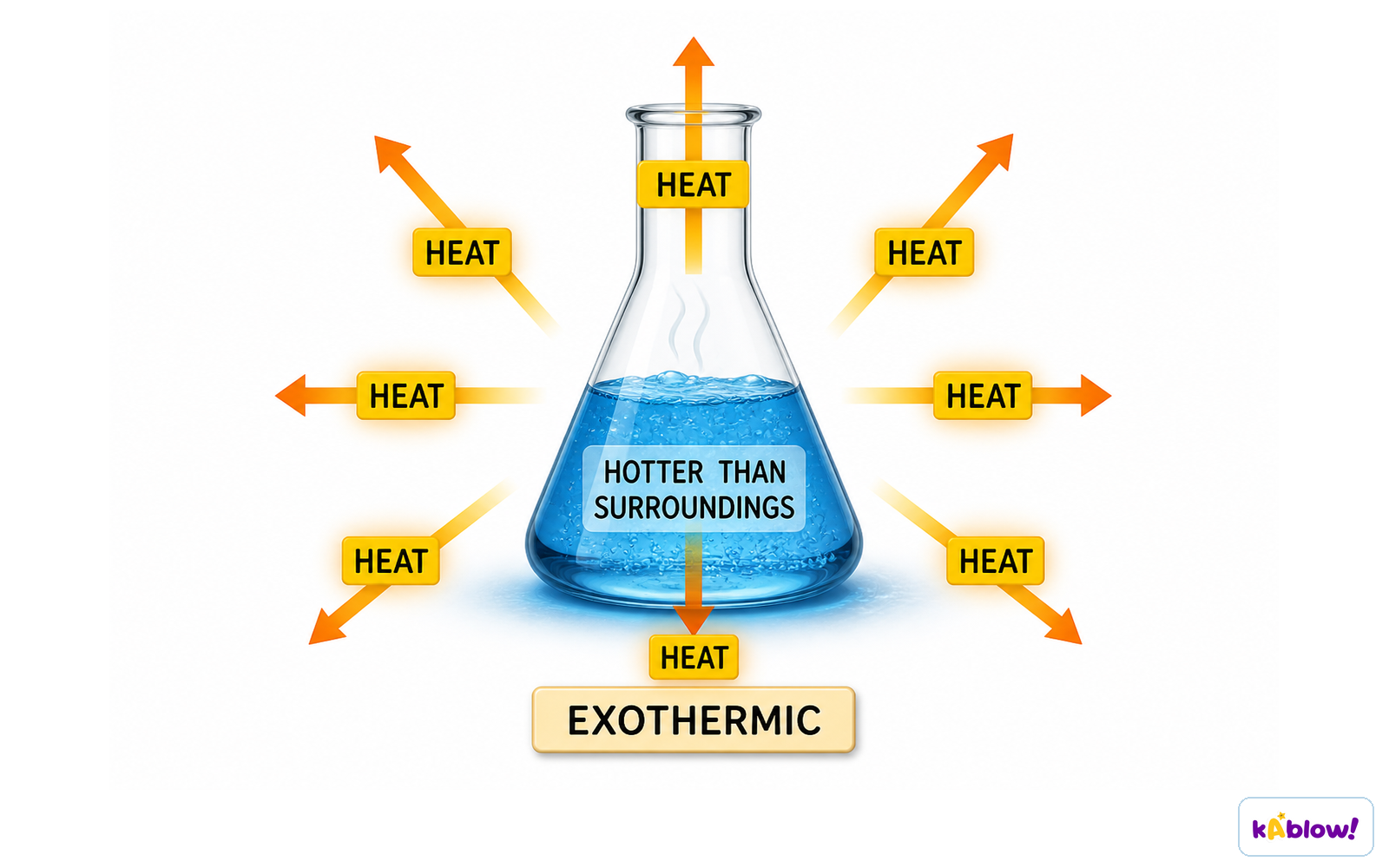
- In exothermic reactions, thermal energy is transferred from the system (reacting chemicals) to the surroundings; the temperature of surroundings increases.
- Exothermic reactions have a negative enthalpy change (ΔH < 0) because the system loses energy.
- Common examples: combustion, oxidation, neutralisation; also hand warmers and self-heating cans.
- In endothermic reactions, thermal energy is transferred from the surroundings to the system; the temperature of surroundings decreases.
- Endothermic reactions have a positive enthalpy change (ΔH > 0) because the system gains energy.
- Common examples: electrolysis, thermal decomposition, first stages of photosynthesis; also cold packs for sports injuries.
- Mnemonic: In Exothermic heat Exits; in Endothermic heat Enters.
Heat transfer outwards in an exothermic reaction
Enthalpy Change & Activation Energy
- Enthalpy change (ΔH) is the transfer of thermal energy during a reaction: negative for exothermic, positive for endothermic.
- Activation energy (Eₐ) is the minimum energy required for a successful collision between reactant particles.
- Reactions with higher activation energy need more energy to start.
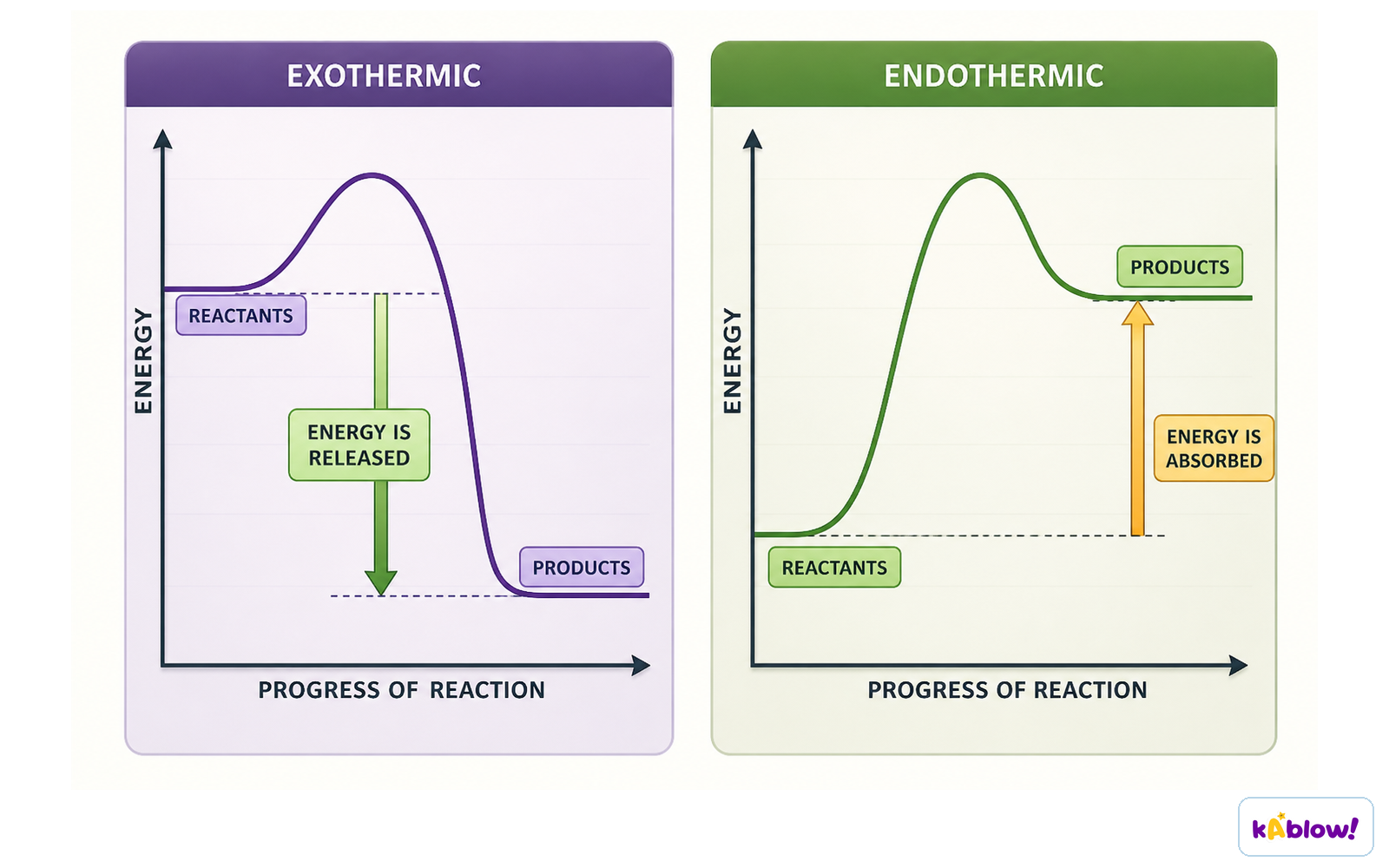
- Reaction pathway diagrams plot energy (y-axis) against progress of reaction (x-axis).
- For exothermic reactions: products have lower energy than reactants; ΔH is shown as a downward arrow.
- For endothermic reactions: products have higher energy than reactants; ΔH is shown as an upward arrow.
- Activation energy is the energy difference between reactants and the highest point on the curve.
Reaction pathway diagrams for exothermic and endothermic reactions
Bond Breaking & Bond Forming
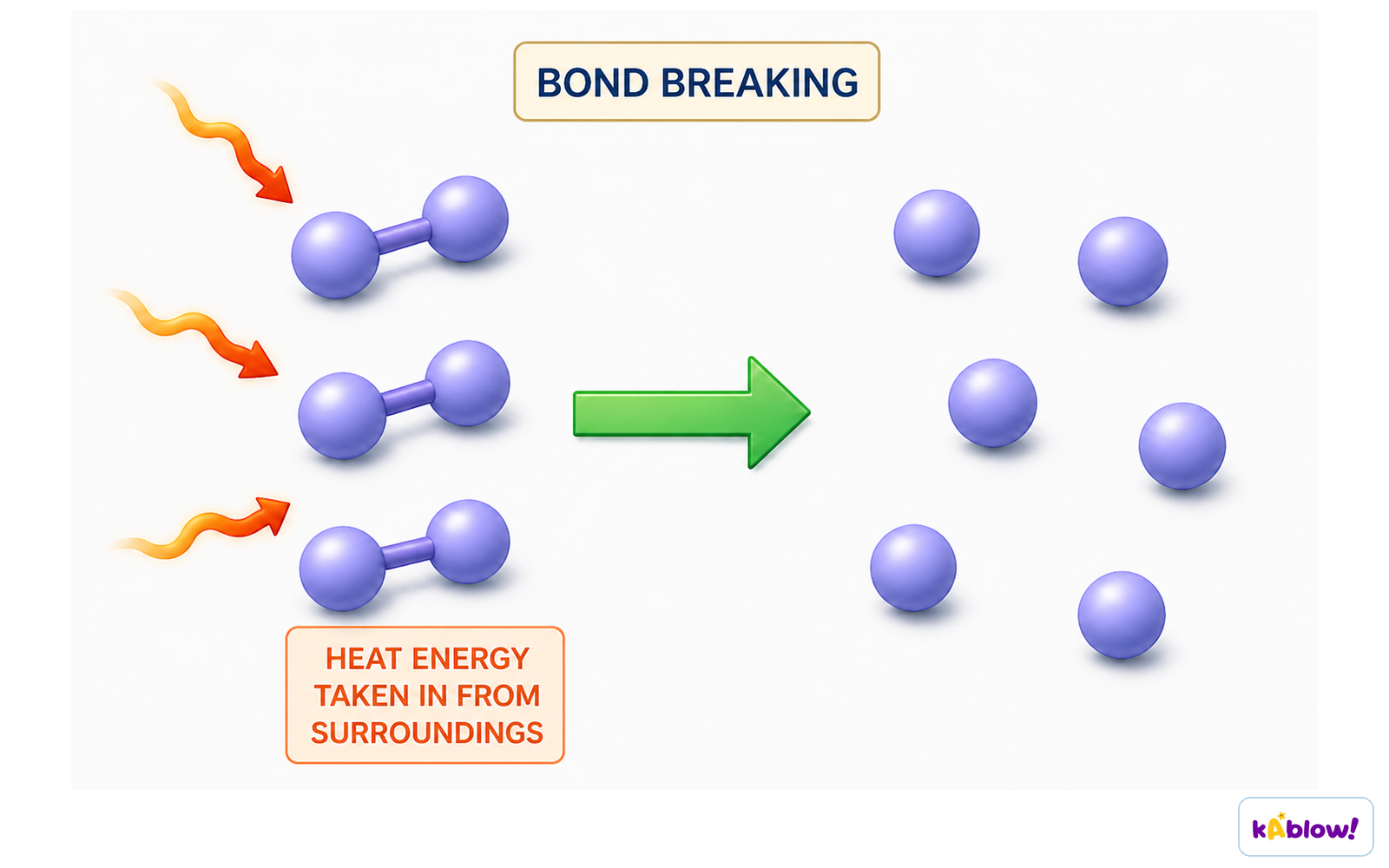
- Bond breaking is always endothermic (energy absorbed from surroundings).
- Bond making is always exothermic (energy released to surroundings).
- If more energy is released in bond making than absorbed in bond breaking, the overall reaction is exothermic (ΔH negative).
- If more energy is absorbed in bond breaking than released in bond making, the overall reaction is endothermic (ΔH positive).
- The overall enthalpy change is the difference between the energy needed to break bonds and the energy released when new bonds form.
Bond breaking is endothermic
幻灯片
练习题
免费预览——52 题中的 8 题。注册即可查看全部。
1.In an exothermic reaction, thermal energy is transferred from the surroundings to the system.
EasyTrue or false?
2.Bond breaking is an endothermic process.
EasyTrue or false?
3.Which of the following is an example of an endothermic reaction?
Easy- ACombustion
- BNeutralisation
- CThermal decomposition
- DOxidation
4.State the meaning of the symbol ΔH.
Easy5.Complete the sentence using the words 'system' and 'surroundings'.
EasyIn an endothermic reaction, thermal energy is transferred from the ____ to the ____.
6.Explain why a reaction with a positive ΔH value is endothermic.
Medium7.Which statement about activation energy is correct?
Medium- AIt is the energy difference between reactants and products.
- BIt is the minimum energy required for a successful collision.
- CIt is always negative for exothermic reactions.
- DIt is the same as the enthalpy change.
8.In an exothermic reaction, the energy of the products is higher than the energy of the reactants.
EasyTrue or false?
历年真题
该知识点的历年真题练习即将推出。
即将推出