Polymers
边玩边学
回答这些题目来赚取能量,然后钓鱼探索。无需账号。
给教育者: 面向 Polymers(Co-ordinated Sciences (Double Award) [CIE],Chemistry)的即用型课程幻灯片, 复习笔记, 图示——用在你的课堂上,或将该知识点作为学习者可实时游玩的互动课堂活动来运行。
课程笔记
Polymers: The Basics
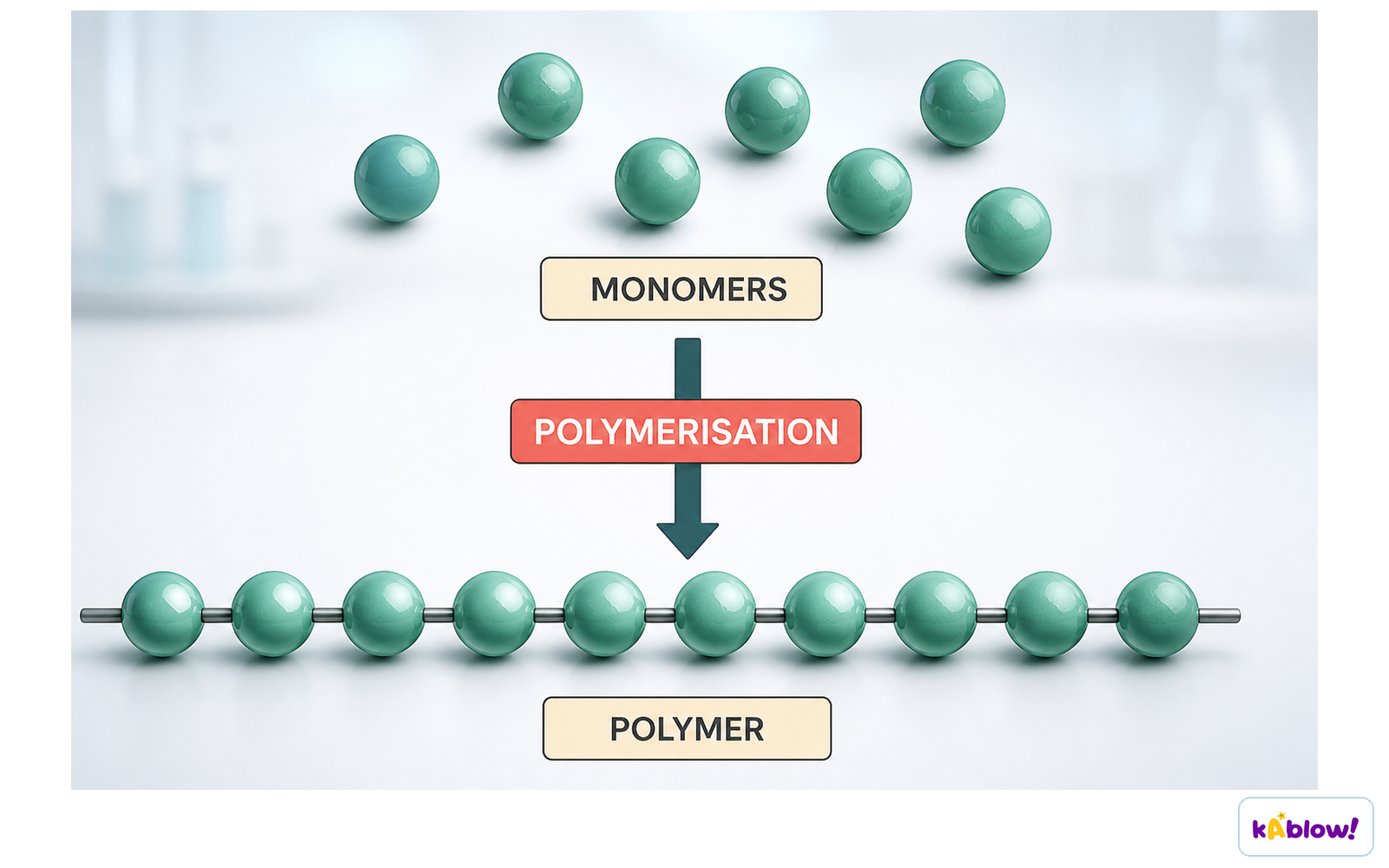
- Polymers are large molecules built from many smaller monomers.
- Each monomer is joined to the next by covalent bonds.
- Examples include poly(ethene), PVC, and nylon.
Monomers joining to form a polymer
Addition Polymerisation
- Addition polymerisation occurs in monomers containing a C=C double bond (alkenes).
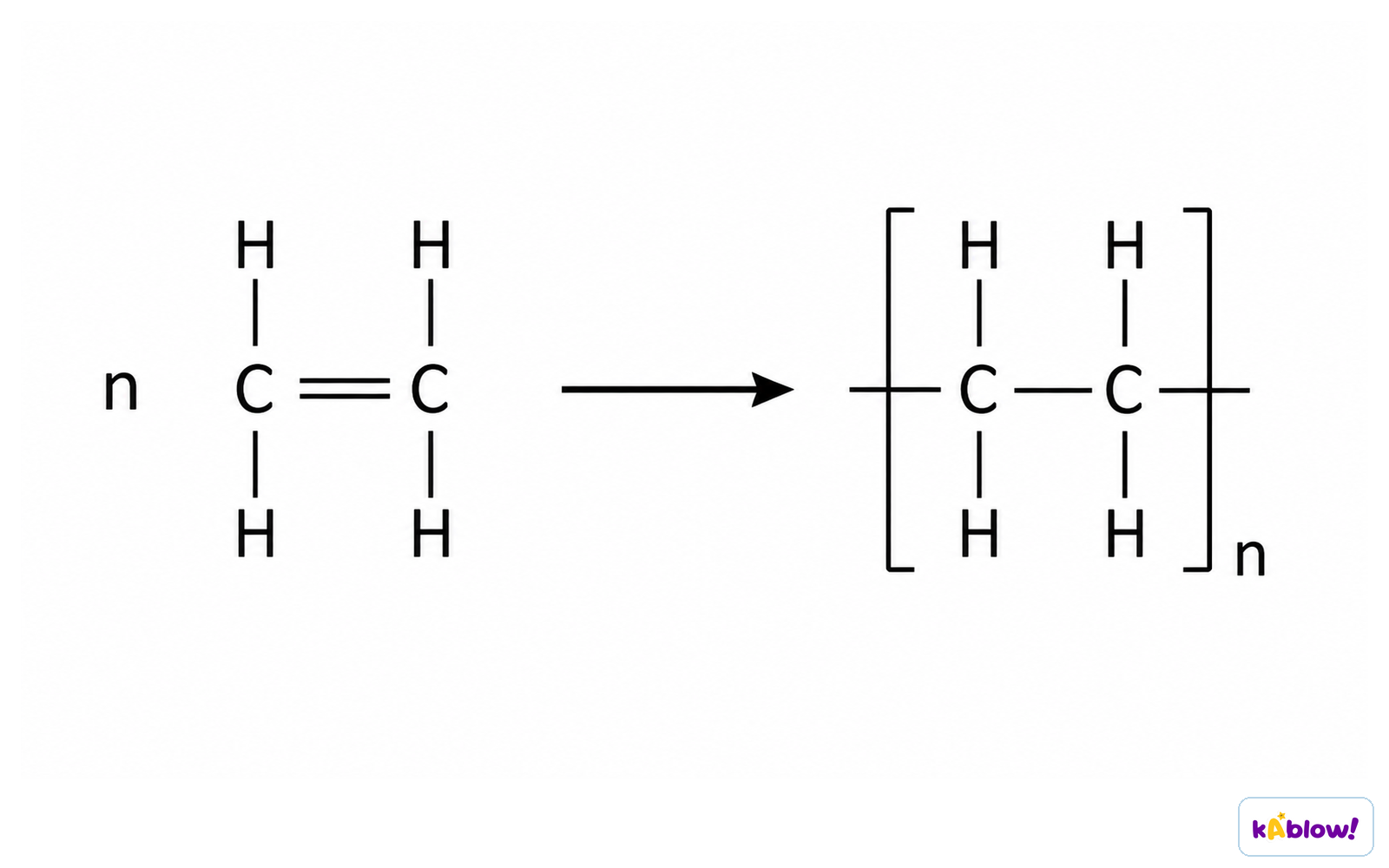
- The C=C bond breaks, allowing monomers to join into a long chain.
- Only one product (the polymer) is formed.
- Example: ethene monomers → poly(ethene).
- The polymer contains only single bonds.
Poly(ethene) formed by addition polymerisation
Naming Addition Polymers
- Name = poly- + monomer name in brackets, e.g., propene → poly(propene).
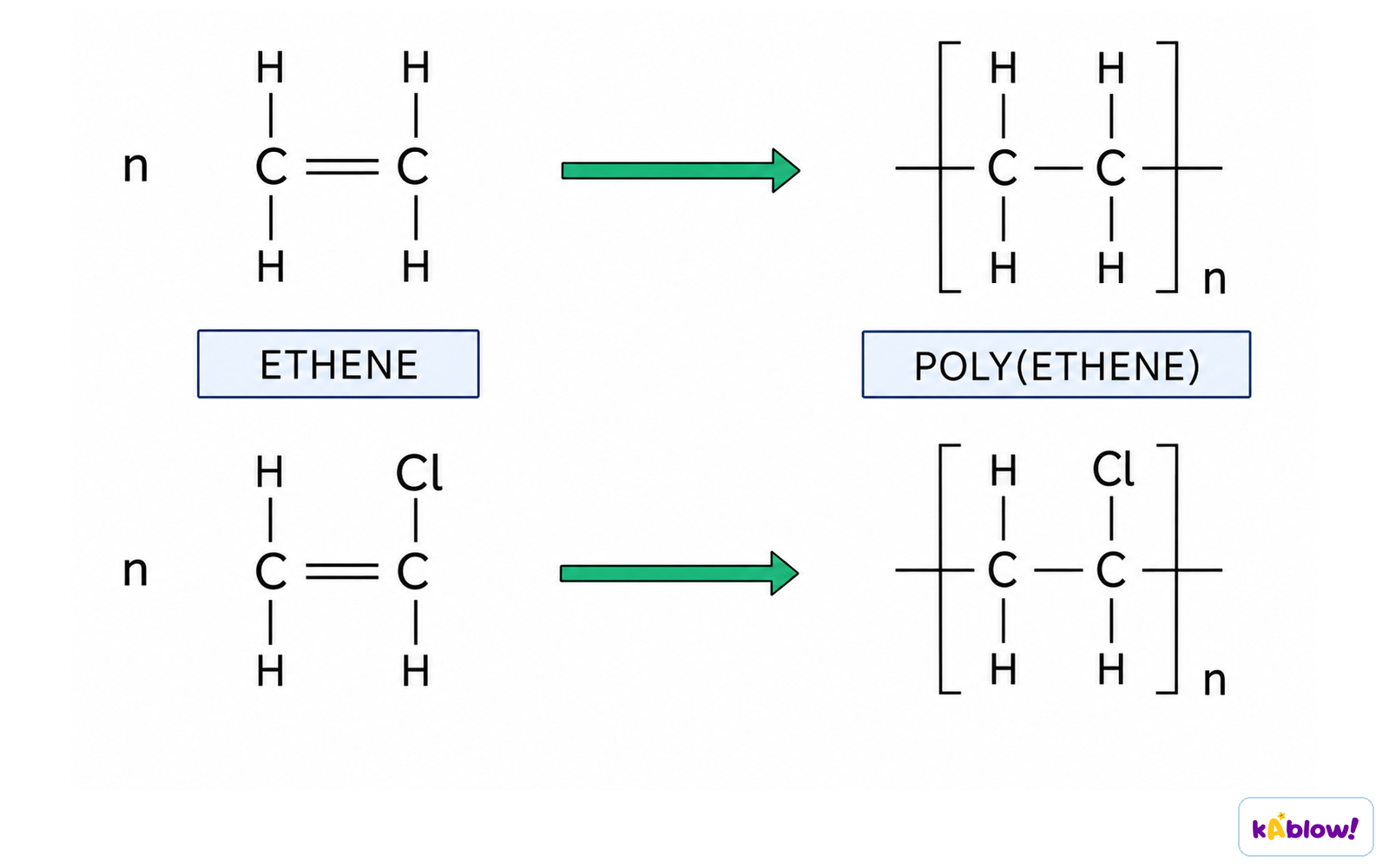
- The repeat unit shows the polymer structure.
- To draw a repeat unit: change the C=C to a single bond, add continuation bonds at ends, and write a subscript n.
Repeat units of poly(ethene) and poly(chloroethene)
Deducing Monomer from Polymer
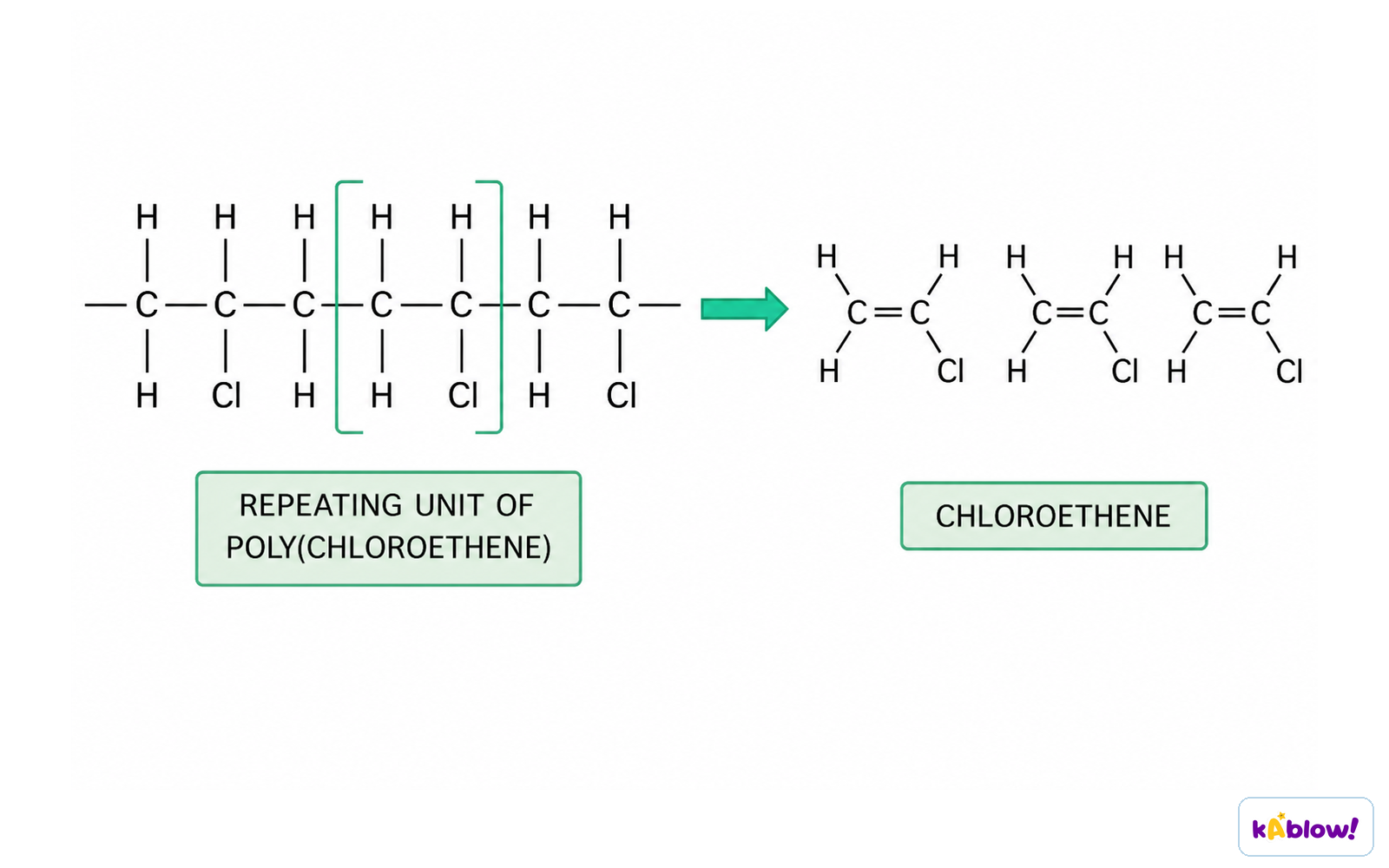
- Identify the repeating unit in the polymer chain.
- Change the single bond in the repeat unit to a double bond.
- Remove the continuation bonds at each end to obtain the monomer.
Deducing the monomer from a poly(chloroethene) repeat unit
Condensation Polymers (Extended Tier)
- Formed when two different monomers link together with the removal of a small molecule, usually water.
- Each monomer has two functional groups (one at each end).
- The polymer and one water molecule per linkage are produced.
Nylon (Polyamide)
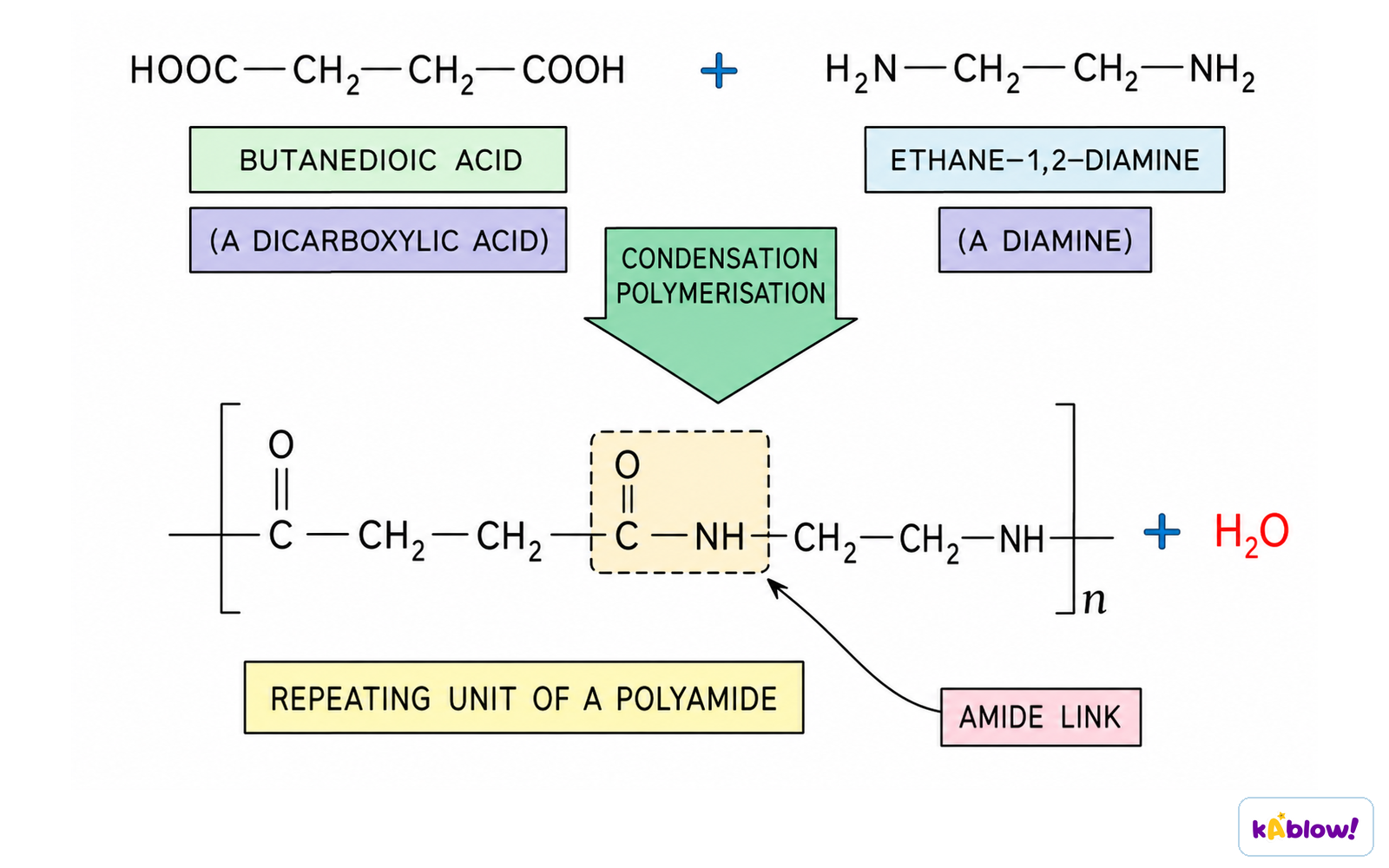
- Made from a dicarboxylic acid (two -COOH groups) and a diamine (two -NH₂ groups).
- An amide linkage forms with loss of water.
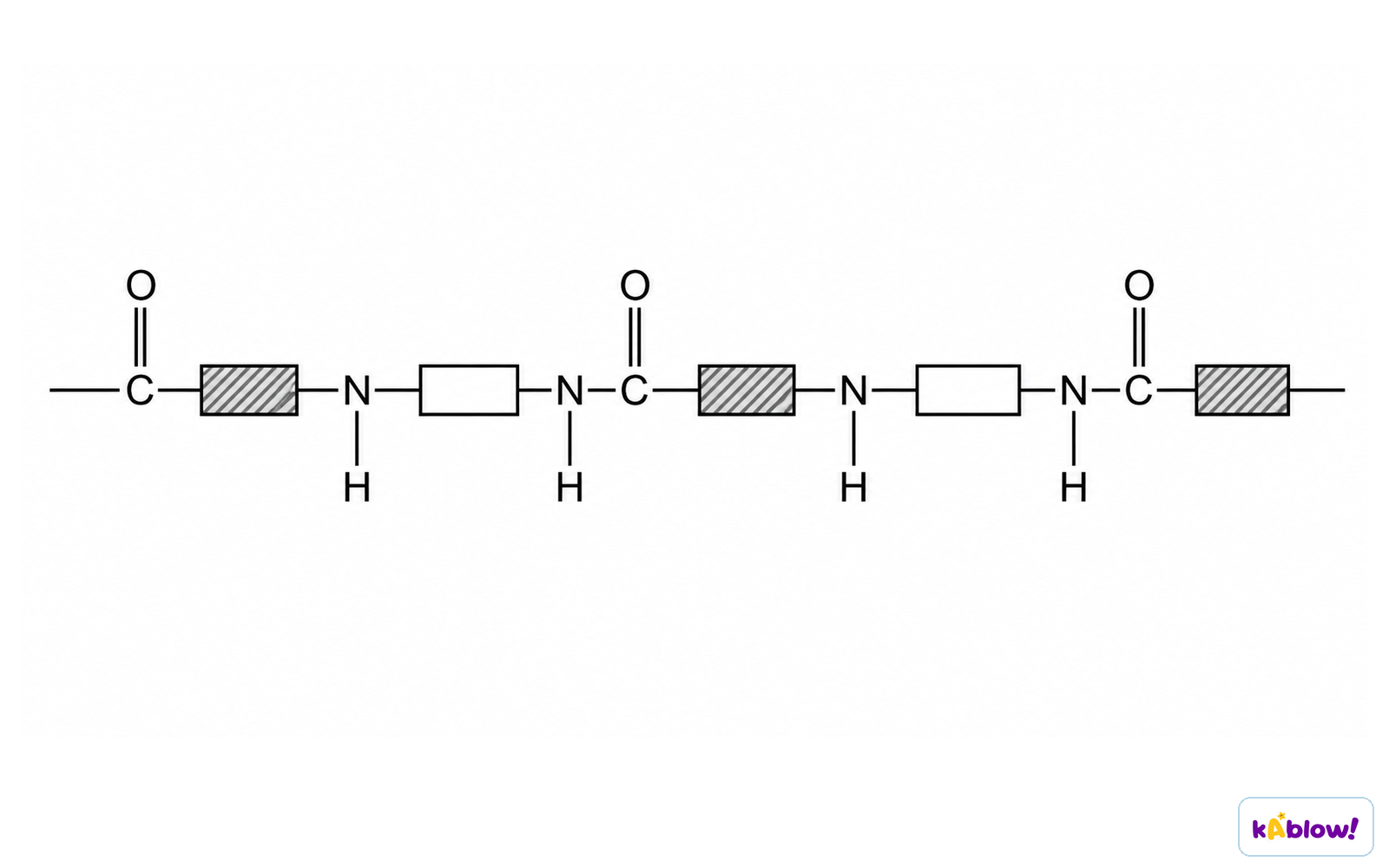
- Structure can be shown using boxes for carbon chains.
Formation of a polyamide (nylon)
PET (Polyester)
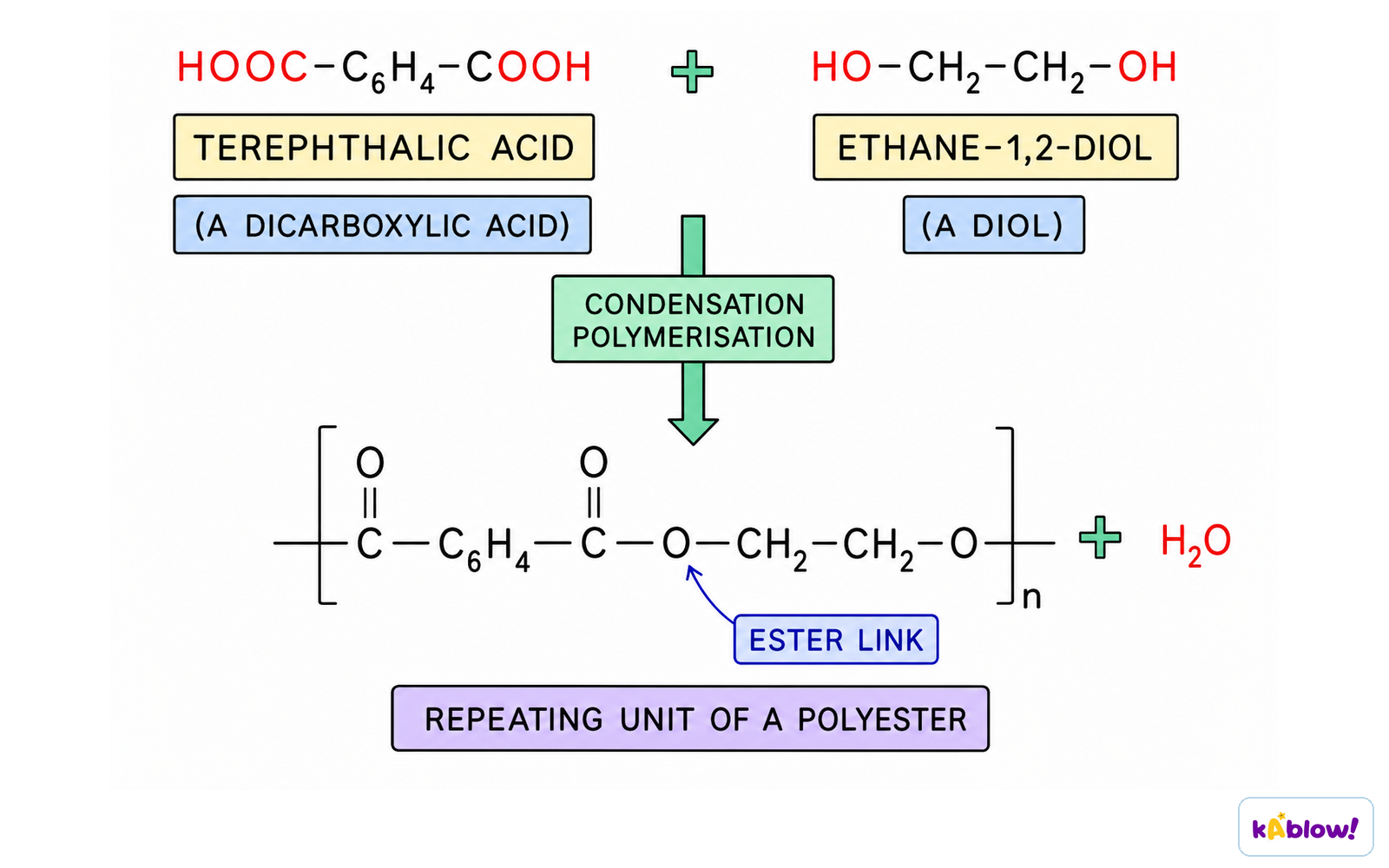
- Made from a dicarboxylic acid and a diol (two -OH groups).
- An ester linkage forms with loss of water.
- PET is also known as terylene and used in synthetic fibres.
Formation of PET (a polyester)
幻灯片
练习题
免费预览——56 题中的 8 题。注册即可查看全部。
1.Which of the following is a polymer?
Easy- AEthene
- BPoly(ethene)
- CEthanol
- DEthanoic acid
2.What is the name of the small molecule that links together to form a polymer?
Easy3.Fill in the blanks.
EasyDuring addition polymerisation, the ____ bond in the monomer breaks and only ____ product is formed.
4.Condensation polymerisation produces only the polymer molecule as the product.
EasyTrue or false?
5.Match each polymer type with its monomer functional groups.
Medium- Nylon
- PET
- Poly(ethene)
- Dicarboxylic acid and diamine
- Dicarboxylic acid and diol
- Alkene
6.What small molecule is removed during condensation polymerisation?
Easy7.Which of the following is a polyamide?
Easy- APoly(ethene)
- BNylon
- CPET
- DPVC
8.How many water molecules are released when 10 monomers of a dicarboxylic acid and 10 monomers of a diamine polymerise to form nylon? (Assume all monomers react completely.)
Hard- A12
- B11
- C9
- D10
历年真题
该知识点的历年真题练习即将推出。
即将推出