The Solar System
边玩边学
回答这些题目来赚取能量,然后钓鱼探索。无需账号。
课程笔记
The Solar System
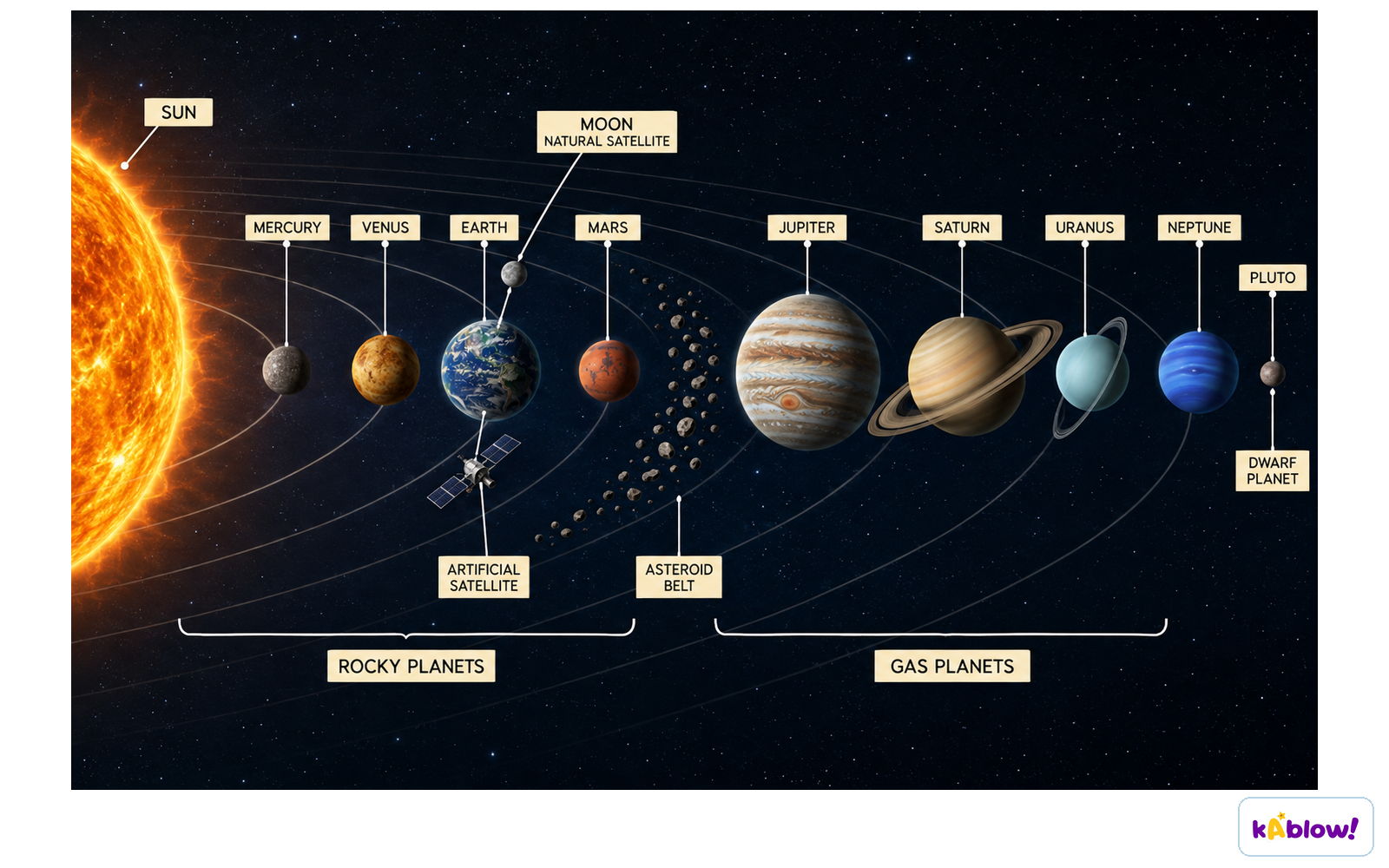
- The Solar System consists of the Sun, eight planets, natural and artificial satellites, and minor planets (including dwarf planets).
- The Sun is a star at the centre; it contains >99% of the Solar System's mass.
- The eight planets in order from the Sun: Mercury, Venus, Earth, Mars, Jupiter, Saturn, Uranus, Neptune.
- Planets are divided into inner rocky planets (Mercury, Venus, Earth, Mars) and outer gas giants (Jupiter, Saturn, Uranus, Neptune).
- A dwarf planet is similar to a planet but smaller; its gravity is not strong enough to clear its orbit of other objects.
- Natural satellites (moons) orbit planets; artificial satellites (e.g., ISS) are man-made and orbit Earth.
- Smaller bodies orbit larger ones: planets orbit the Sun, moons orbit planets.
The Solar System: the Sun, eight planets, natural and artificial satellites, and the asteroid belt
Light Speed Calculations
- Light travels at a constant speed of 3.0 × 10⁸ m/s in a vacuum.
- Objects in the Solar System are visible because they reflect sunlight; light takes time to travel these large distances.
- Light from the Sun takes about 8 minutes to reach Earth, and about 5 hours to reach the outer Solar System.
- The time for light to travel a distance is calculated using: time = distance / speed of light.
- Example: Light from Sun to Mercury (radius 5.8 × 10¹⁰ m) takes 193 s (about 3 minutes).
Gravitational Field Strength
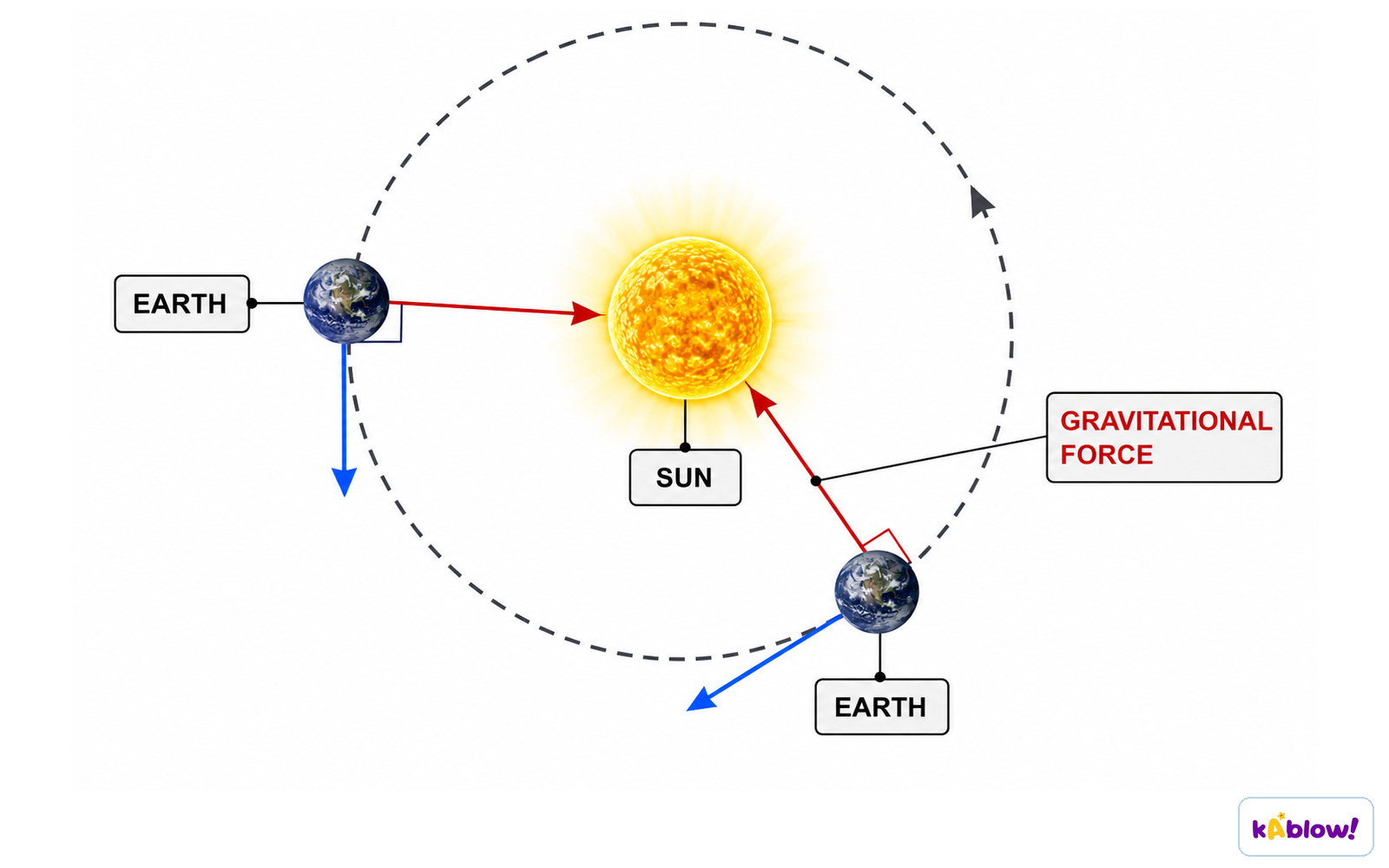
- Orbital motion is caused by the gravitational force of attraction between two bodies.
- Gravitational force acts towards the centre of the larger body and keeps the orbiting body in a circular path.
- The Sun's gravitational attraction keeps planets in orbit; the force is directed from the planet to the Sun's centre.
- As distance from the Sun increases, the Sun's gravitational field strength decreases.
- For a circular orbit, the centripetal force is provided by the Sun's gravitational attraction.
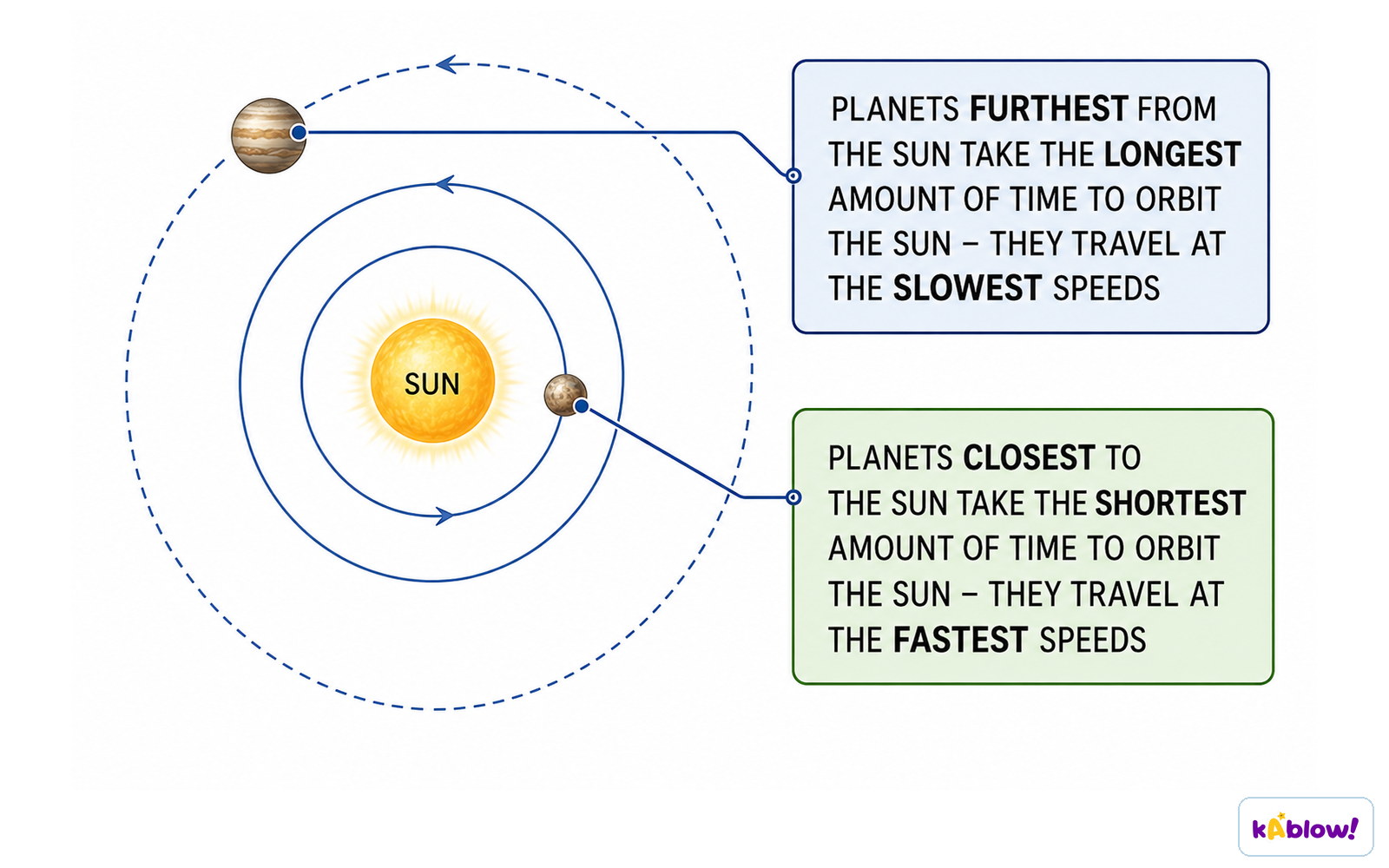
- The further a planet is from the Sun: the smaller its orbital speed and the longer its orbital period.
The Sun's gravitational force of attraction keeps the Earth in orbit around the Sun
Orbital Speed Equation
- For a circular orbit, the distance travelled in one orbit is the circumference: 2πr.
- The average orbital speed is given by: v = 2πr / T, where r is orbital radius and T is orbital period.
- Orbital period is the time taken to complete one orbit.
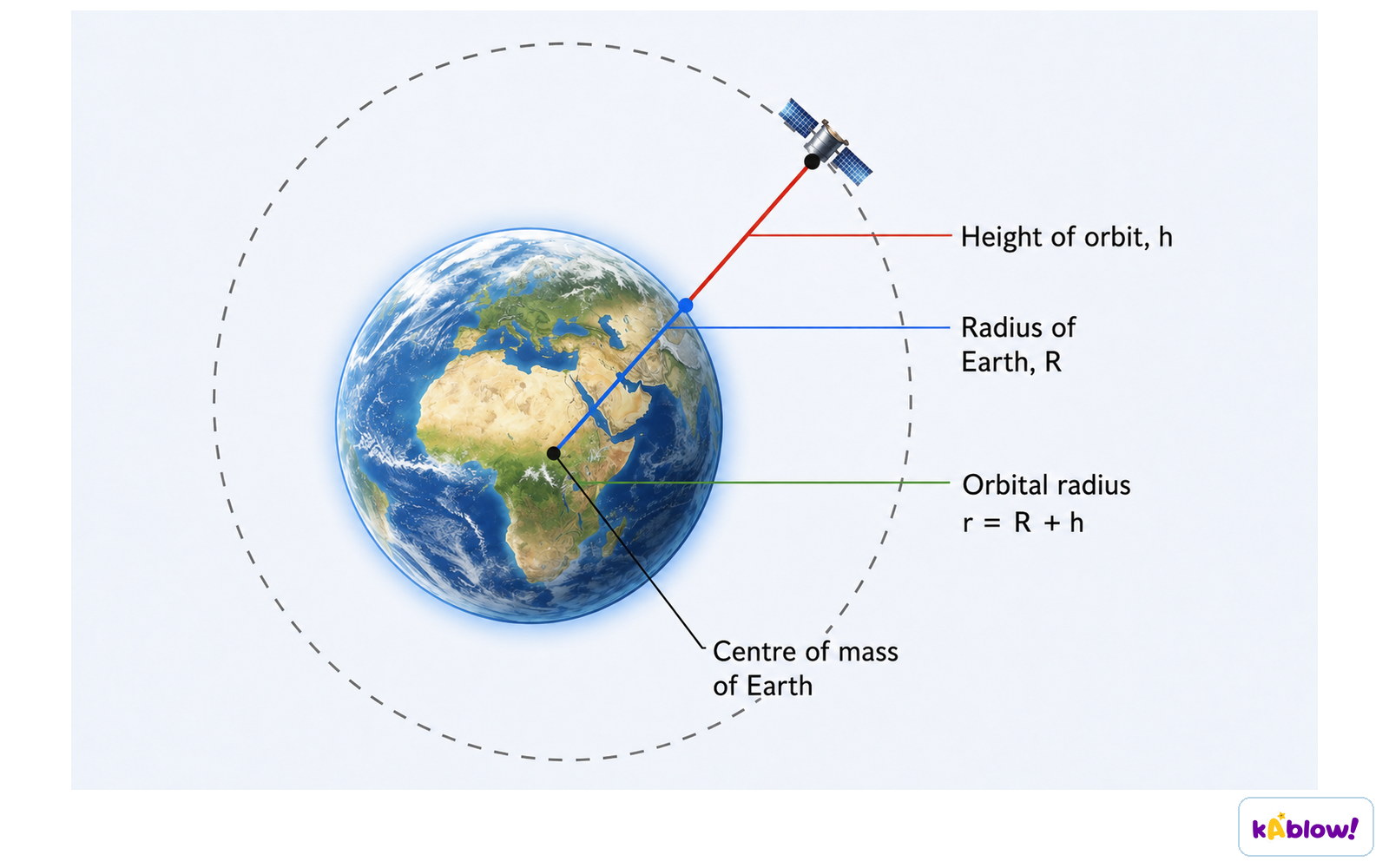
- The orbital radius r is measured from the centre of the body being orbited (e.g., from the Sun's centre for a planet).
- If given height above a planet's surface, add the planet's radius to get the orbital radius.
- Example: Hubble telescope at 560 km above Earth (Earth radius 6400 km) orbits in 96 min; its orbital speed is 7590 m/s.
Orbital radius is measured from the centre of mass of the body being orbited: r = R + h
Orbital Data and Trends
- Mercury: orbital radius 57.9 million km, orbital speed 47.9 km/s, period 88 days.
- Earth: orbital radius 149.6 million km, orbital speed 29.8 km/s, period 365 days.
- Neptune: orbital radius 4495.1 million km, orbital speed 5.4 km/s, period 165 years.
- The closest planets to the Sun have the fastest orbital speeds and shortest periods; the furthest have the slowest speeds and longest periods.
The closest planets to the Sun have the fastest orbital speeds, and the furthest have the slowest
幻灯片
练习题
免费预览——47 题中的 8 题。注册即可查看全部。
1.What is the name of the star at the centre of the Solar System?
Easy- AThe Sun
- BEarth
- CMercury
- DThe Moon
2.How many planets are there in the Solar System?
Easy- A7
- B8
- C9
- D10
3.Arrange the following planets in order of increasing distance from the Sun.
Easy- Earth
- Jupiter
- Mercury
- Neptune
- Saturn
- Uranus
4.The Moon is a natural satellite of the Earth.
EasyTrue or false?
5.Artificial satellites are natural objects that orbit planets.
EasyTrue or false?
6.Complete the sentence:
EasyThe gravitational field around a ____ is strong enough to pull in nearby objects, but that around a dwarf planet is not.
7.State one difference between a planet and a dwarf planet.
Medium8.The radius of Mercury's orbit around the Sun is 5.8 × 10¹⁰ m. The speed of light is 3.0 × 10⁸ m/s. Calculate the time taken for light from the Sun to reach Mercury. Give your answer in seconds.
Medium- A231
- B174
- C193
- D212