Electrical Quantities
边玩边学
回答这些题目来赚取能量,然后钓鱼探索。无需账号。
课程笔记
Electric Charge
- There are two types of electric charge: positive and negative.
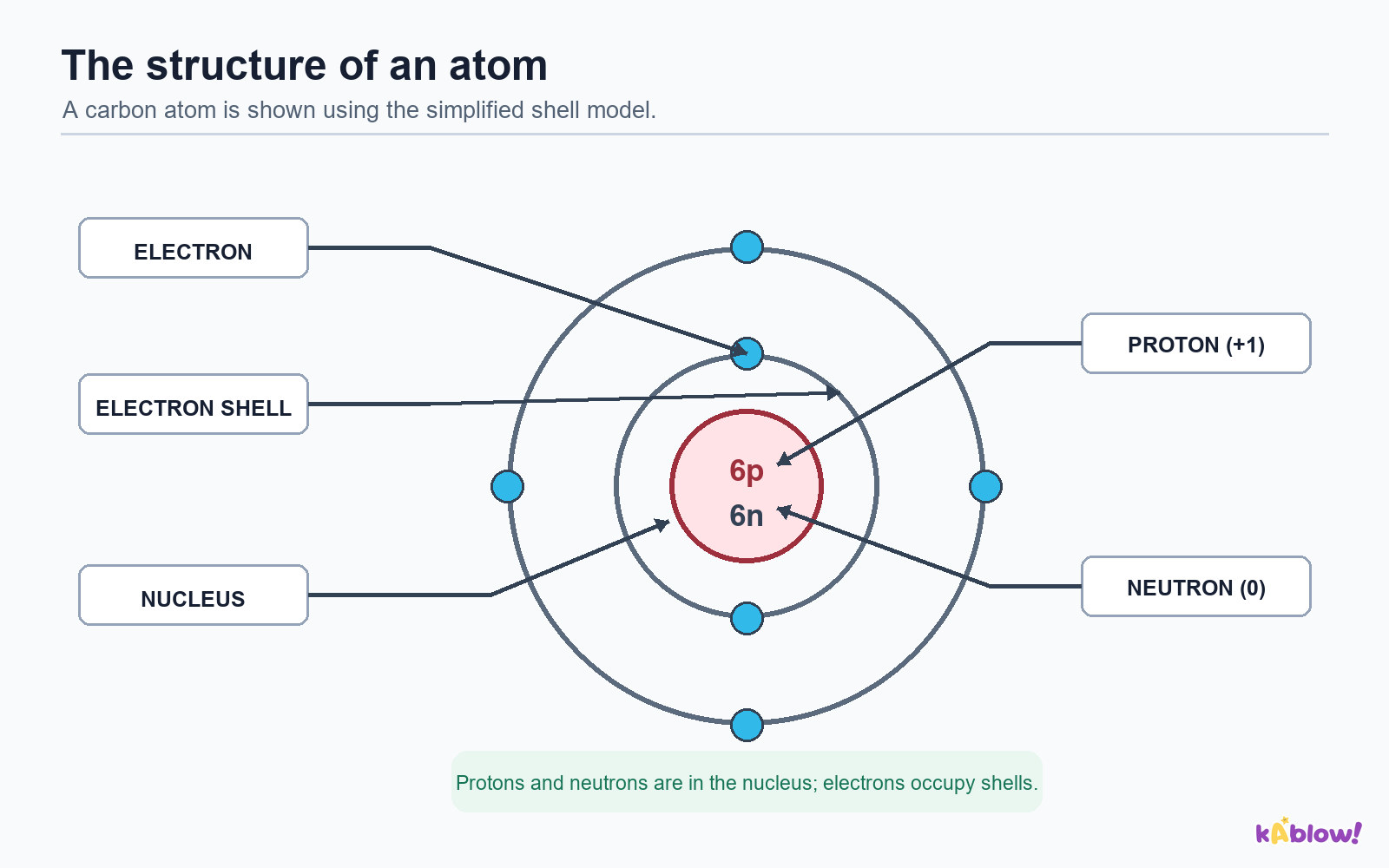
- Inside an atom, electrons are negatively charged, protons are positively charged, and neutrons are neutral.
- Atoms have equal numbers of protons and electrons, so overall they are neutral.
- Like charges repel, opposite charges attract.
- Electric charge is measured in coulombs (C) (Extended tier).
Structure of an atom showing protons, neutrons and electron shells.
Charging by Friction
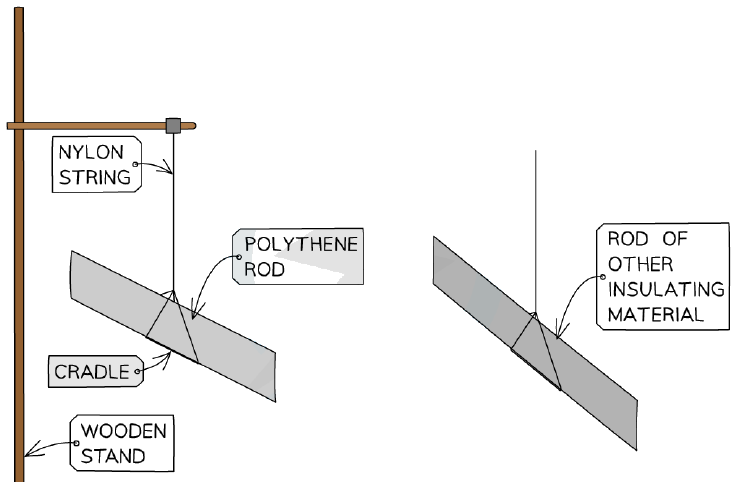
- Rubbing two insulating materials together transfers electrons from one to the other.
- The material that gains electrons becomes negatively charged; the material that loses electrons becomes positively charged.
- Example: rubbing a polythene rod with a cloth transfers electrons from the cloth to the rod → rod becomes negative, cloth becomes positive.
- Example: rubbing an acetate rod with a cloth transfers electrons from the rod to the cloth → rod becomes positive, cloth becomes negative.
- Only electrons move during charging by friction; protons do not move.
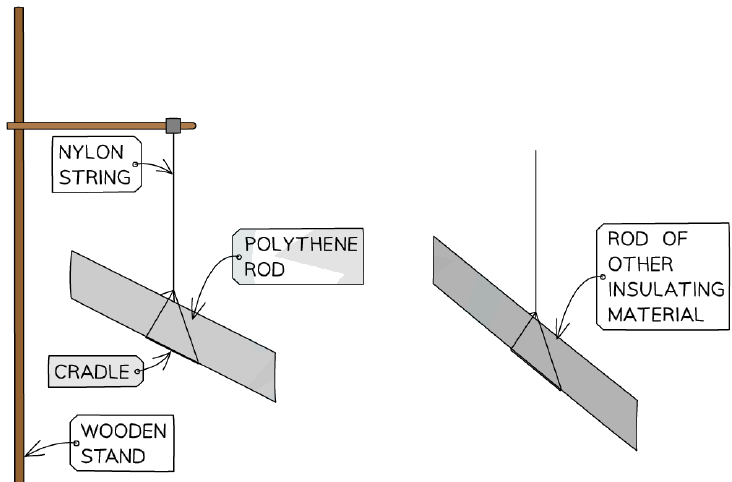
Apparatus for demonstrating charging by friction using a polythene rod and another insulating material.
Electric Fields (Extended Tier)
- An electric field is a region where a charge experiences a force.
- Field lines are directed from positive to negative charge.
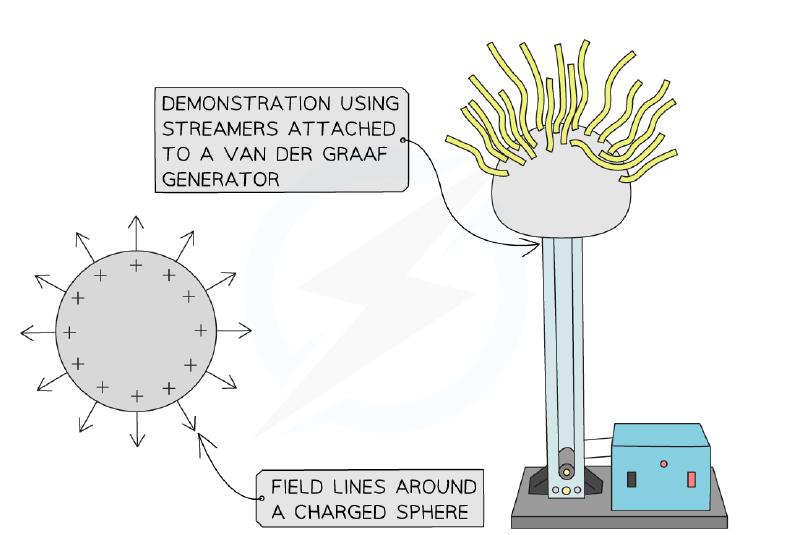
- Around a point charge, field lines are radial: outward for positive, inward for negative.
- Between two parallel plates, the field is uniform with parallel, equally spaced lines.
- Field lines are always perpendicular to the surface of a conductor.
Demonstration of a Van de Graaff generator with streamers and field lines around a charged sphere.
Conductors and Insulators
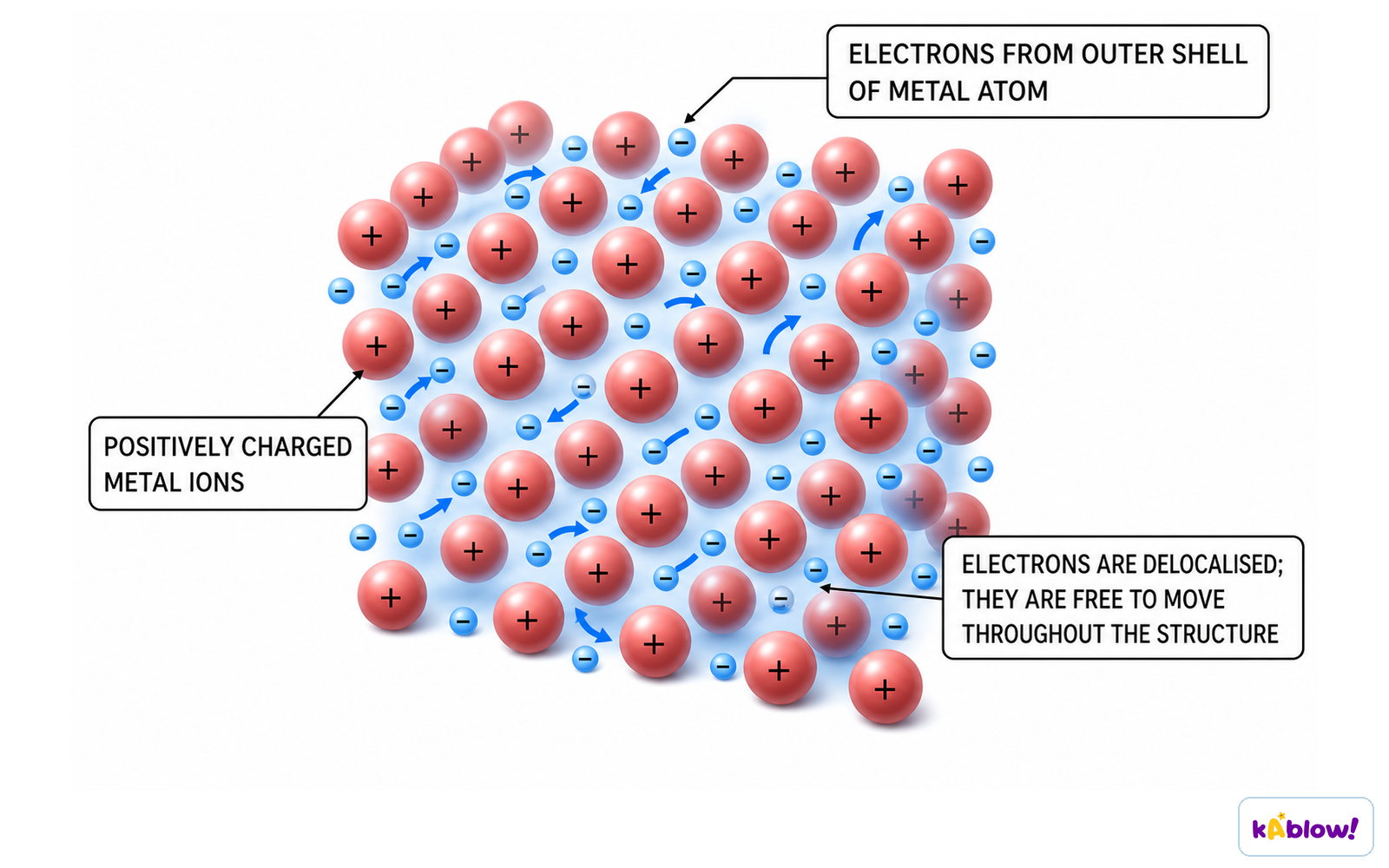
- Conductors (e.g., metals) allow charge to flow easily because they have delocalised electrons.
- Insulators (e.g., plastic, rubber, glass) have no free charges and do not allow charge to flow easily.
- A gold-leaf electroscope can test conductivity: a good conductor makes the leaf fall quickly; an insulator makes it fall slowly or not at all.
A diagram showing delocalised electrons in a metal conductor.
Current
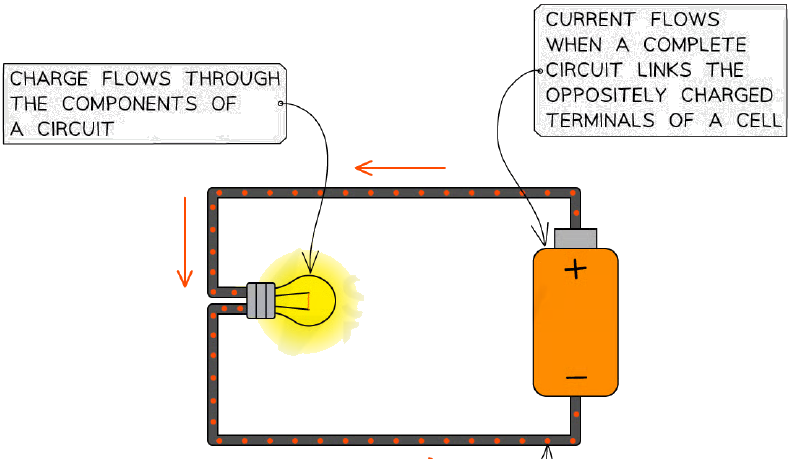
- Electric current is the rate of flow of charge.
- Current is measured in amperes (A) using an ammeter connected in series.
- Conventional current flows from positive to negative terminal (opposite to electron flow).
- Equation: I = \frac{Q}{t} , where Q is charge in coulombs, t is time in seconds (Extended tier).
- In metals, current is a flow of negatively charged electrons.
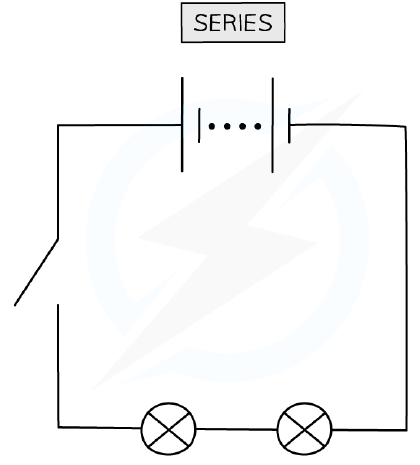
A simple circuit showing current flow from a cell through a light bulb.
Direct and Alternating Current
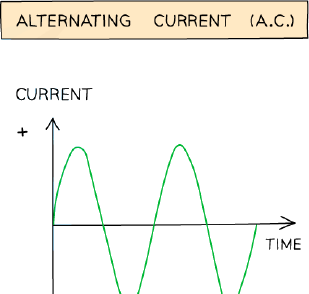
- Direct current (d.c.) flows in one direction only; produced by cells and batteries.
- Alternating current (a.c.) changes direction periodically; produced by mains electricity (UK: 230 V, 50 Hz).
- Graph of d.c. is a horizontal line; graph of a.c. is a sine wave.
Graph of alternating current
Electromotive Force and Potential Difference
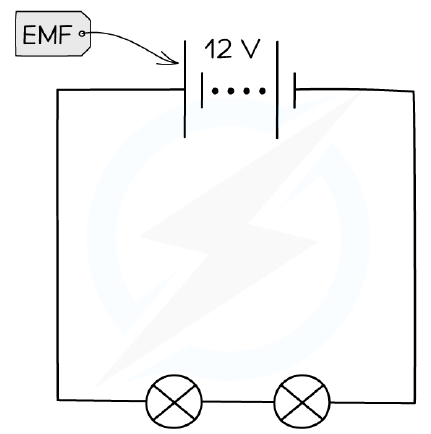
- Electromotive force (e.m.f.) is the energy supplied per unit charge by a source: E = \frac{W}{Q} (Extended tier).
- Potential difference (p.d.) is the energy transferred per unit charge across a component: V = \frac{W}{Q} .
- Both are measured in volts (V).
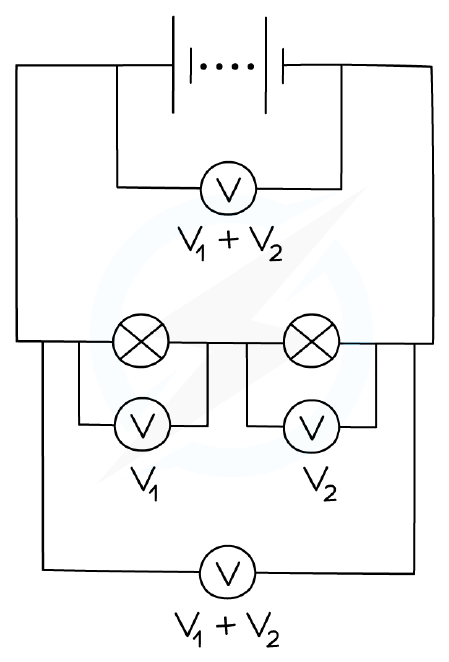
- Voltmeter is connected in parallel to measure p.d.
A simple circuit labelled with the e.m.f. of the power supply.
Resistance and Ohm's Law
- Resistance is the opposition to current; measured in ohms (Ω).
- Ohm's law: R = \frac{V}{I} .
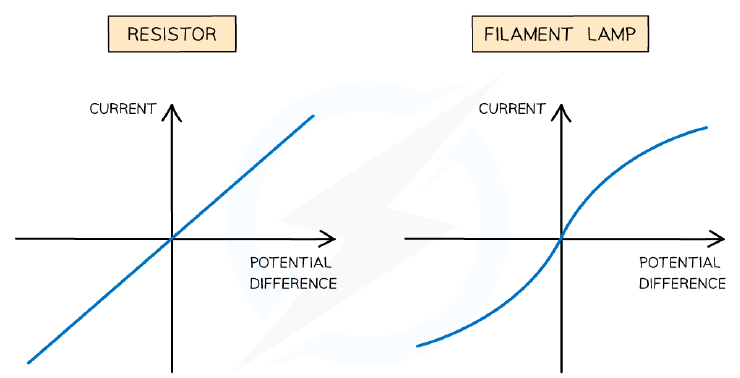
- For a fixed resistor at constant temperature, current is directly proportional to voltage (ohmic conductor).
- For a filament lamp, resistance increases with temperature (non-ohmic).
- A diode allows current in one direction only (forward bias).
Current-voltage graphs for a resistor and a filament lamp.
Resistance of a Wire
- Resistance is directly proportional to length: longer wire → higher resistance.
- Resistance is inversely proportional to cross-sectional area: thicker wire → lower resistance.
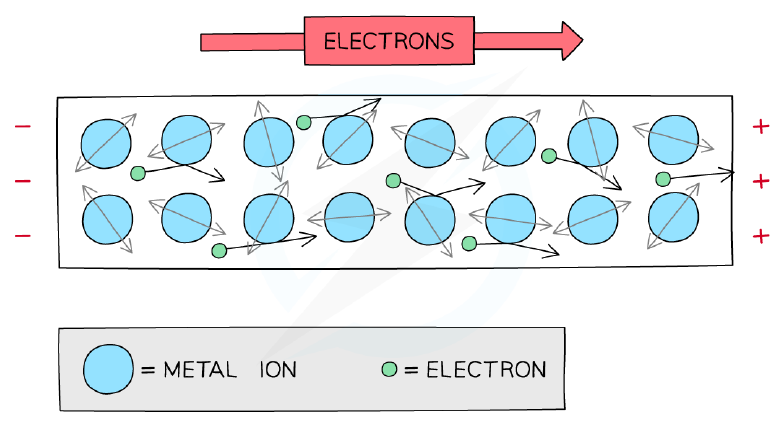
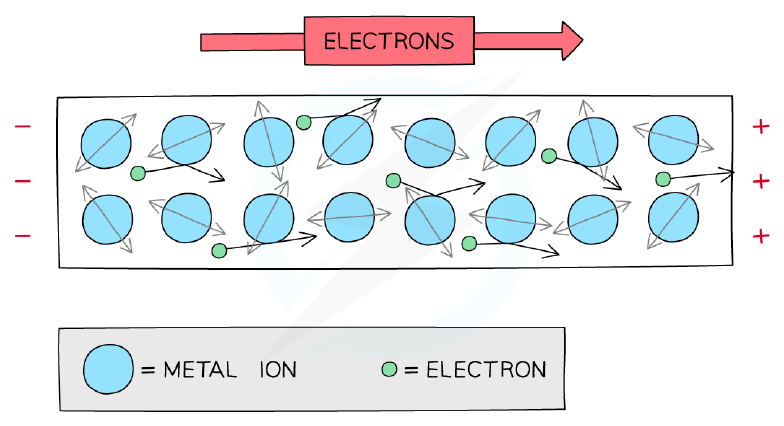
- Increasing temperature increases resistance due to more frequent collisions with vibrating metal ions.
Electrons moving through a material, colliding with atoms and increasing resistance.
Electrical Energy and Power
- Electrical power P = VI , measured in watts (W).
- Electrical energy E = VIt , measured in joules (J).
- Alternative: P = I2R and P = \frac{V2}{R} .
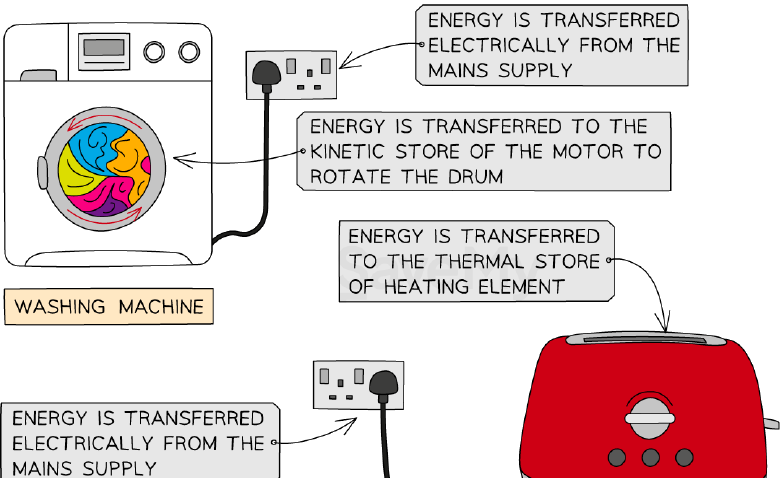
Energy transfer in a washing machine and a toaster
幻灯片
练习题
免费预览——46 题中的 8 题。注册即可查看全部。
1.A polythene rod is rubbed with a cloth and becomes negatively charged. This happens because
Easy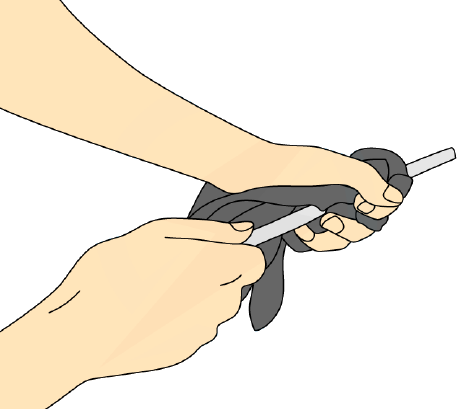
- Aelectrons move from the cloth to the rod
- Belectrons move from the rod to the cloth
- Cprotons move from the cloth to the rod
- Dprotons move from the rod to the cloth
2.Which of the following is a good conductor of electricity?
Easy- ARubber
- BPlastic
- CCopper
- DGlass
3.A lamp is rated at 12 V, 50 W. What is the current through the lamp when operating normally?
Medium- A0.24 A
- B4.17 A
- C600 A
- D38 A
4.The resistance of a wire is 10 Ω. What is the potential difference across the wire when a current of 0.5 A flows through it?
Easy- A0.05 V
- B5 V
- C20 V
- D10.5 V
5.A student connects a voltmeter to measure the potential difference across a lamp. How should the voltmeter be connected?
Easy- AIn series with the lamp
- BIn parallel with the lamp
- CIn series with the power supply
- DIn parallel with the power supply
6.Which graph shows the current-voltage characteristic of a filament lamp?
Medium- AA straight line through the origin
- BA curve that becomes less steep as voltage increases
- CA curve that becomes steeper as voltage increases
- DA horizontal line
7.A charge of 270 kC passes through a 12 V battery. How much electrical energy is transferred?
Medium- A22.5 J
- B3.24 × 106 J
- C3.24 × 103 J
- D2.25 × 104 J
8.Two identical resistors are connected in parallel. The total resistance is 2 Ω. What is the resistance of each resistor?
Medium- A1 Ω
- B2 Ω
- C4 Ω
- D0.5 Ω