Digestive system
边玩边学
回答这些题目来赚取能量,然后钓鱼探索。无需账号。
给教育者: 面向 Digestive system(KS3 Science,Biology)的即用型课程幻灯片, 复习笔记, 图示——用在你的课堂上,或将该知识点作为学习者可实时游玩的互动课堂活动来运行。
课程笔记
Overview of the Digestive System
- The digestive system breaks down food into small molecules that can be absorbed into the blood.
- It consists of many organs, each with a specific role in digestion.
- Enzymes are biological catalysts that speed up chemical reactions in digestion.
- Some bacteria live in the large intestine; they protect against harmful bacteria and help digest food.
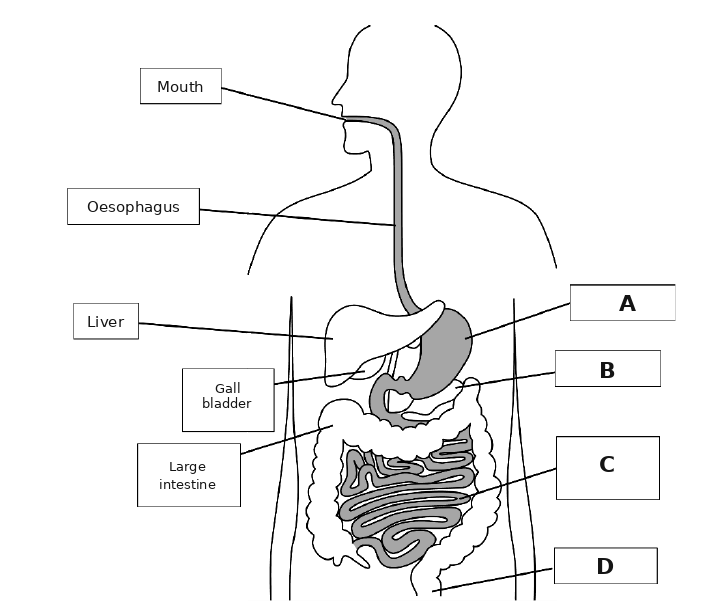
The human digestive system
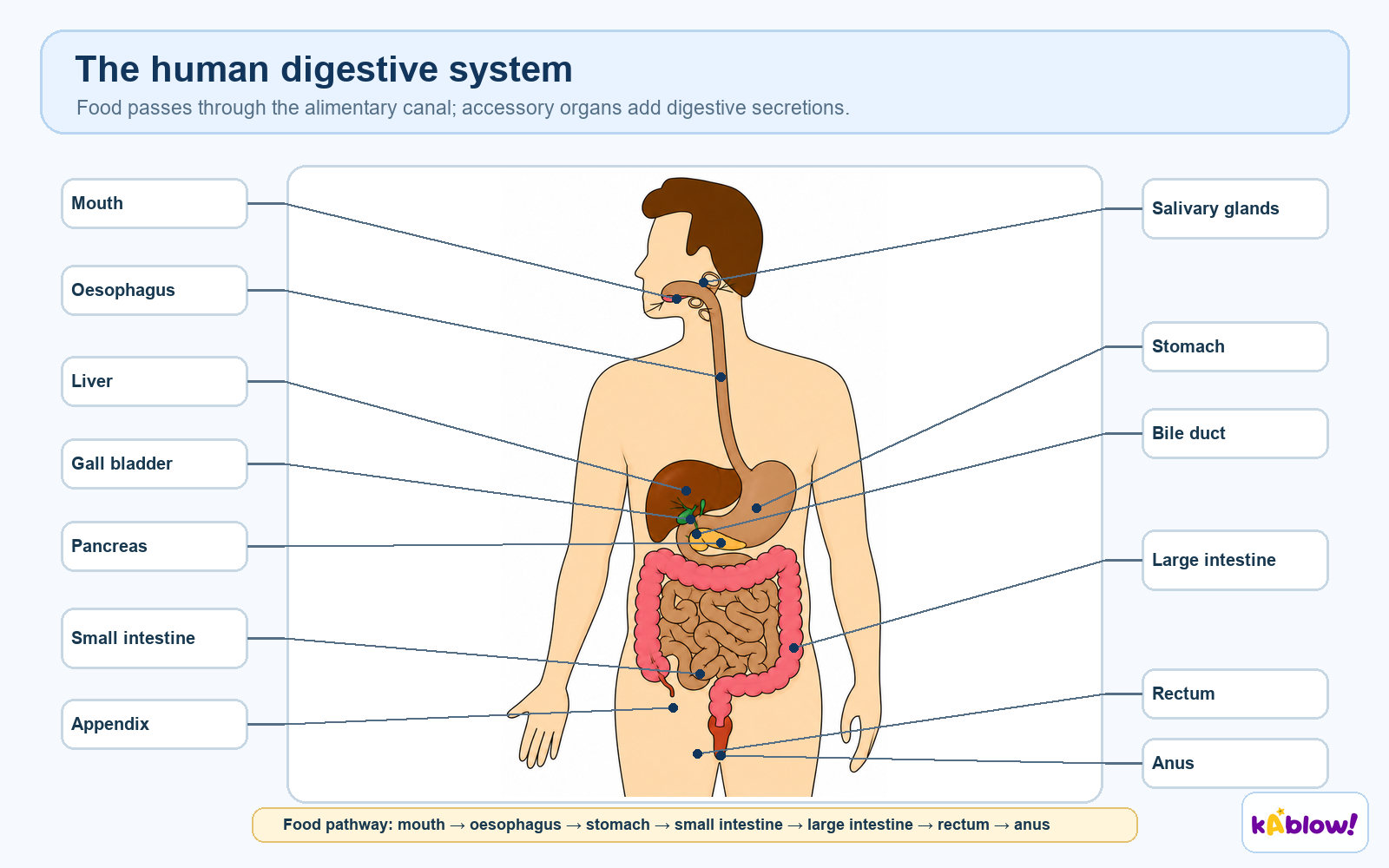
Organs Food Travels Through
- Mouth: teeth mechanically break food; saliva contains amylase which breaks down starch.
- Oesophagus: walls squeeze to move food to the stomach.
- Stomach: muscular walls mechanically break food; contains hydrochloric acid to kill bacteria; protease breaks down proteins.
- Small intestine: contains villi with a large surface area for absorbing digested food into the blood.
- Large intestine: absorbs water from undigested food.
- Rectum: stores faeces (waste material) before it leaves through the anus.
Food passes through the mouth, oesophagus, stomach, small intestine, large intestine and rectum. The liver, gall bladder and pancreas help digestion but food does not pass through them.
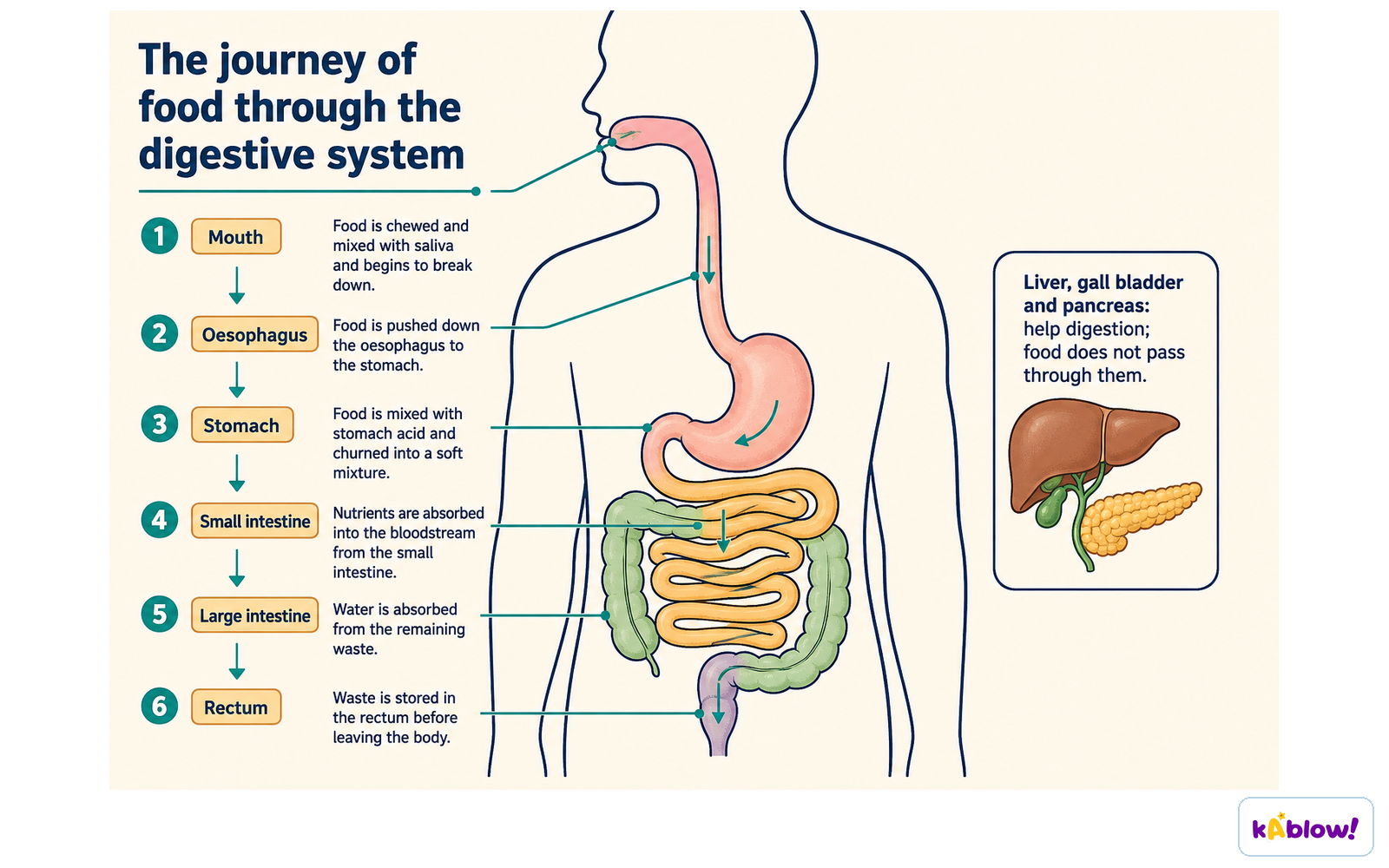
Accessory Organs (Food Does Not Pass Through)
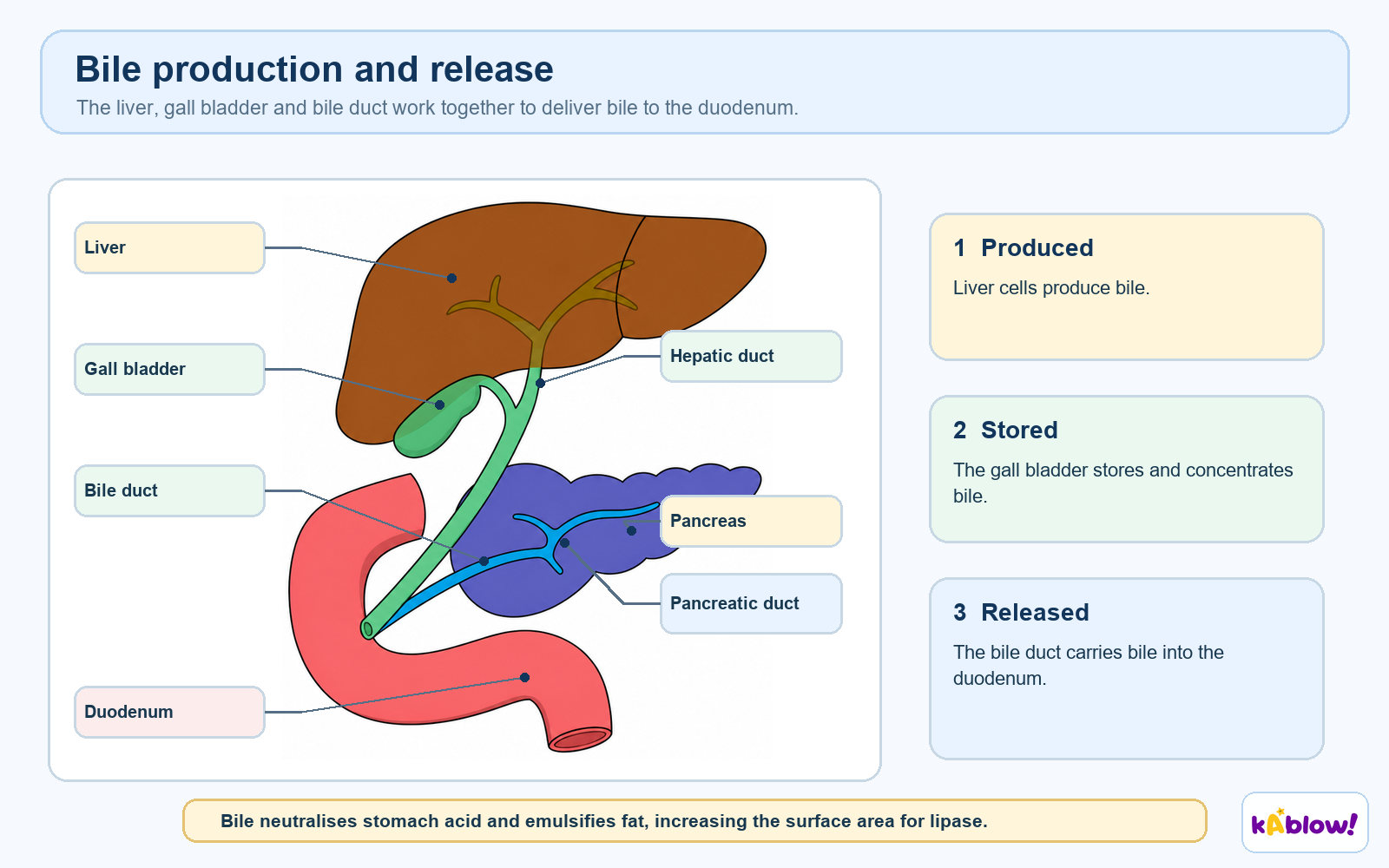
- Liver: produces bile to neutralise stomach acid.
- Gall bladder: stores bile and releases it into the small intestine.
- Pancreas: produces enzymes protease, amylase, and lipase (which breaks down lipids) and releases them into the small intestine.
Bile is produced in the liver, stored in the gall bladder, and released into the duodenum
Enzymes in Digestion
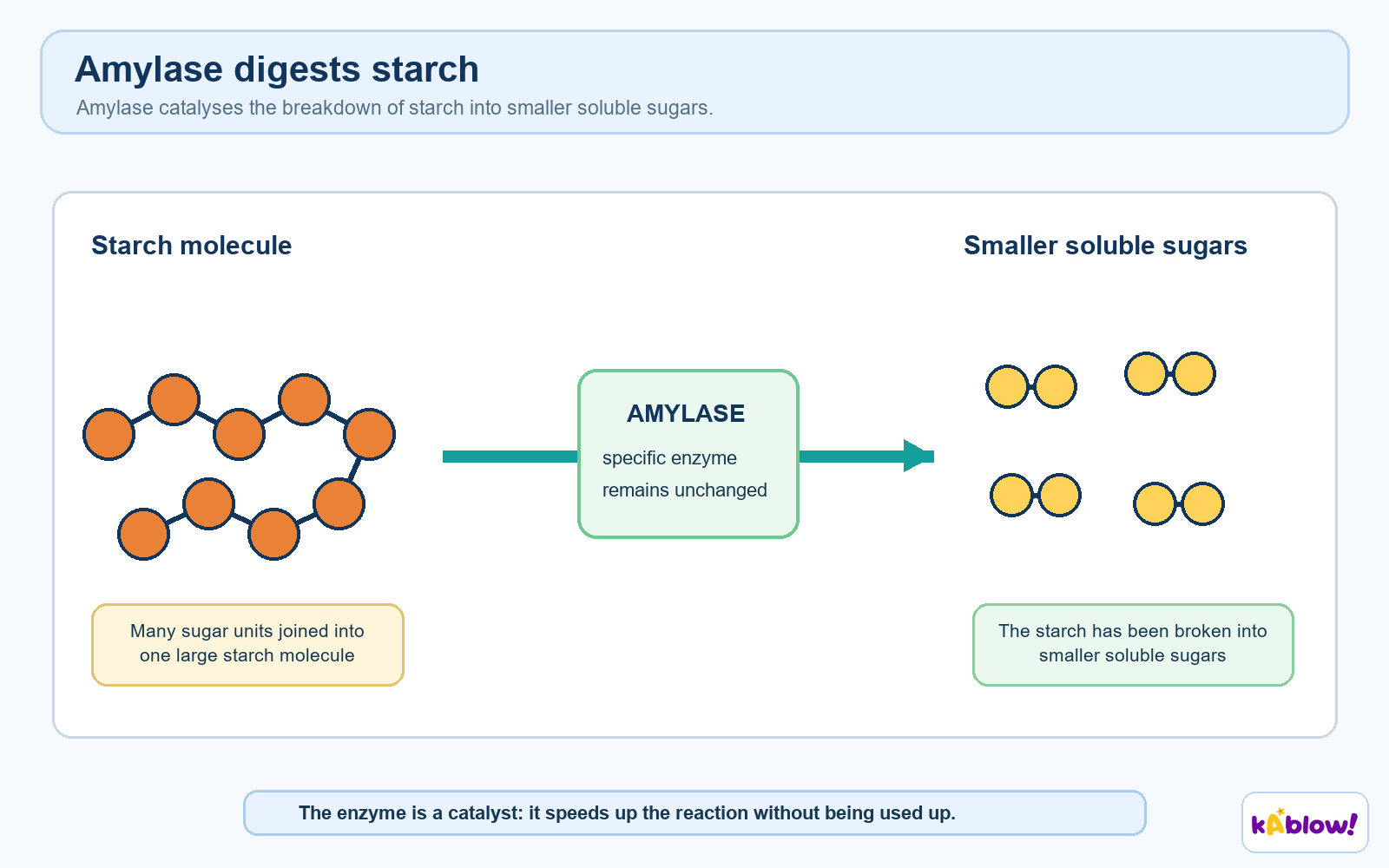
- Amylase (in saliva and from pancreas) breaks down starch (carbohydrates).
- Protease (in stomach and from pancreas) breaks down proteins.
- Lipase (from pancreas) breaks down lipids (fats).
- Enzymes work best at specific pH conditions; protease works best in acidic conditions in the stomach.
Amylase breaks down starch into smaller soluble sugars.
Absorption and Waste
- Digested food is absorbed in the small intestine via villi, which increase surface area for faster absorption.
- Water is absorbed in the large intestine.
- Undigested material forms faeces, stored in the rectum until eliminated.
幻灯片
练习题
免费预览——53 题中的 8 题。注册即可查看全部。
1.Which organ contains hydrochloric acid that kills bacteria?
Easy- AStomach
- BSmall intestine
- CLarge intestine
- DLiver
2.Where are villi found and what is their main function?
Easy- ASmall intestine; to absorb digested food
- BLarge intestine; to absorb water
- CStomach; to kill bacteria
- DOesophagus; to move food
3.In which organ is water absorbed?
Easy- ALarge intestine
- BSmall intestine
- CStomach
- DRectum
4.Which organ stores faeces before it leaves the body?
Easy- ARectum
- BAnus
- CLarge intestine
- DColon
5.Which enzyme breaks down starch, and where is it produced?
Easy- AAmylase; mouth
- BProtease; stomach
- CLipase; pancreas
- DAmylase; pancreas
6.What is the role of bile in digestion?
Easy- ANeutralise stomach acid
- BBreak down proteins
- CBreak down carbohydrates
- DAbsorb water
7.Enzymes are biological catalysts. What does this mean?
Easy- AThey speed up chemical reactions without being used up
- BThey are used up in reactions
- CThey slow down reactions
- DThey are only found in the stomach
8.Which organ produces enzymes that are passed into the small intestine, including protease, amylase, and lipase?
Easy- APancreas
- BLiver
- CGall bladder
- DStomach
历年真题
该知识点的历年真题练习即将推出。
即将推出