The skeleton
边玩边学
回答这些题目来赚取能量,然后钓鱼探索。无需账号。
给教育者: 面向 The skeleton(KS3 Science,Biology)的即用型课程幻灯片, 复习笔记——用在你的课堂上,或将该知识点作为学习者可实时游玩的互动课堂活动来运行。
课程笔记
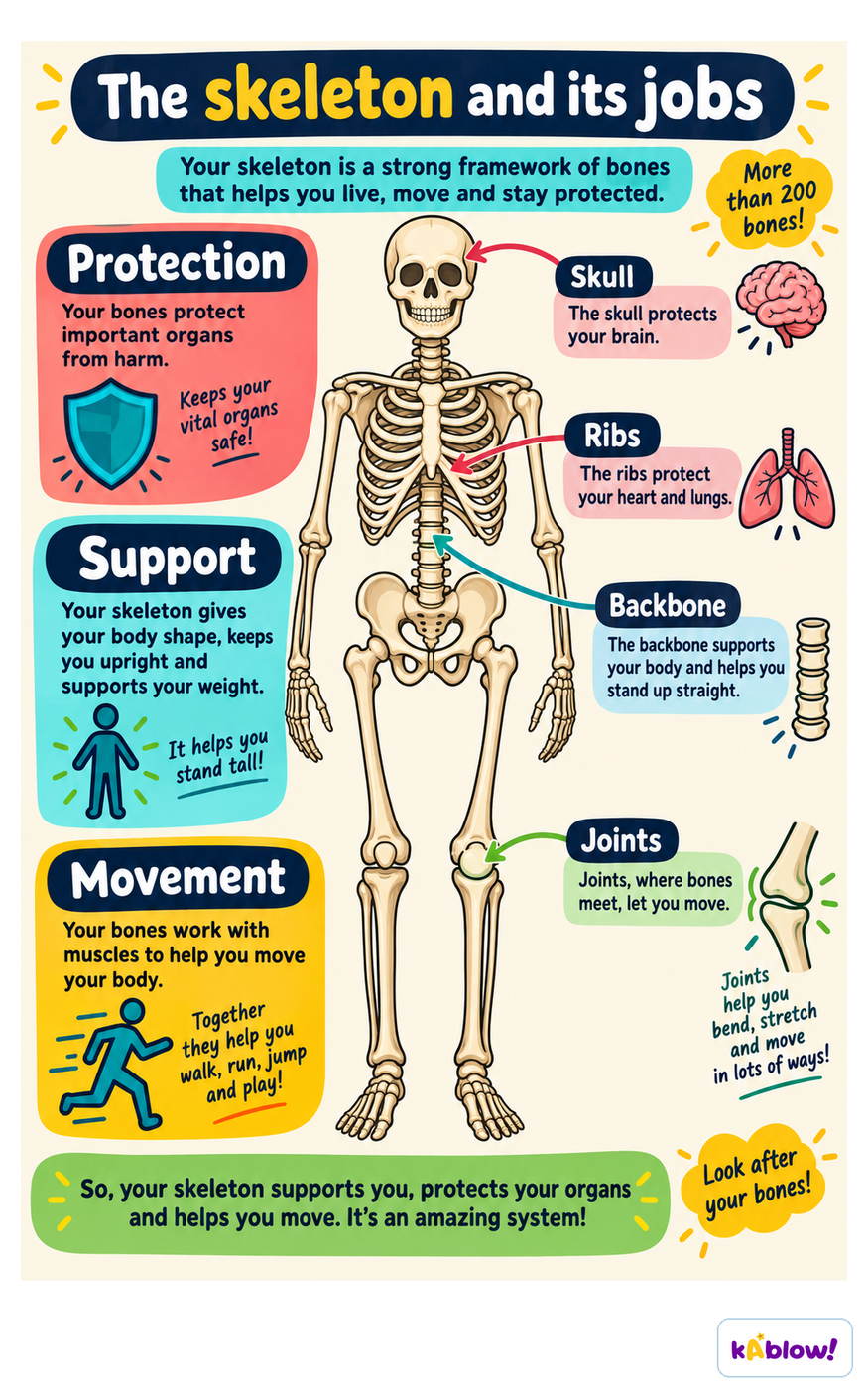
Functions of the Skeleton
- Support: provides a solid framework that maintains body shape.
- Protection: shields vital organs, e.g., the ribcage protects the heart and lungs.
- Movement: bones work with muscles; muscles attach to bones via tendons and pull on them to create movement at joints.
- Blood cell production: bone marrow inside some bones produces red and white blood cells.
- Storage: stores minerals like calcium and phosphorus for bone strength and release when needed.
The skeleton supports the body, protects organs and works with muscles to allow movement at joints.
Major Parts of the Skeleton
- Skull: made of many fused bones; protects the brain and forms the face.
- Spine (Vertebral Column): 33 stacked vertebrae; supports body weight and protects the spinal cord.
- Ribcage: 12 pairs of ribs; protects heart and lungs, supports upper body, aids breathing.
- Pelvis: bowl-shaped; supports upper body weight and protects lower abdomen organs (bladder, intestines).
- Limbs: arms (humerus, radius, ulna) and legs (femur, tibia, fibula); hands and feet have many small bones for range of movement.
Bones of the Arm
- Humerus: upper arm bone.
- Radius: outer forearm bone (thumb side).
- Ulna: inner forearm bone (little finger side).
Bones of the Leg
- Femur: thigh bone (longest bone in the body).
- Tibia: shin bone (larger, weight-bearing).
- Fibula: thinner lower leg bone (beside tibia).
Joints and Movement
- Joints are where two bones meet, allowing movement.
- Muscles contract and pull on bones via tendons to create movement.
- Skeletal muscles work in antagonistic pairs (one contracts, the other relaxes).
幻灯片
练习题
免费预览——56 题中的 8 题。注册即可查看全部。
1.How many bones does the human skeleton contain?
Easy- A206
- B106
- C306
- D256
2.Which of the following is a function of the skeleton?
Easy- AProtection of vital organs
- BDigestion of food
- CPumping blood
- DProducing hormones
3.What attaches muscles to bones?
Easy- ATendons
- BLigaments
- CCartilage
- DJoints
4.Which of the following bones is found in the leg?
Easy- AFemur
- BHumerus
- CRadius
- DUlna
5.What is produced in bone marrow?
Easy- ARed and white blood cells
- BOnly red blood cells
- COnly white blood cells
- DPlatelets
6.How many pairs of ribs make up the ribcage?
Easy- A12
- B10
- C14
- D24
7.What is the main function of the pelvis?
Easy- ASupports the weight of the upper body and protects lower abdominal organs
- BProtects the brain
- CAllows movement of the legs
- DProduces blood cells
8.Which of the following is NOT a function of the skeleton?
Easy- ADigestion of food
- BSupport
- CMovement
- DStorage of minerals
历年真题
该知识点的历年真题练习即将推出。
即将推出