Rates of reaction
边玩边学
回答这些题目来赚取能量,然后钓鱼探索。无需账号。
给教育者: 面向 Rates of reaction(KS3 Science,Chemistry)的即用型课程幻灯片, 复习笔记, 图示——用在你的课堂上,或将该知识点作为学习者可实时游玩的互动课堂活动来运行。
课程笔记
What is Rate of Reaction?
- Rate of reaction is how quickly a chemical reaction takes place.
- It depends on the frequency of successful collisions between reacting particles.
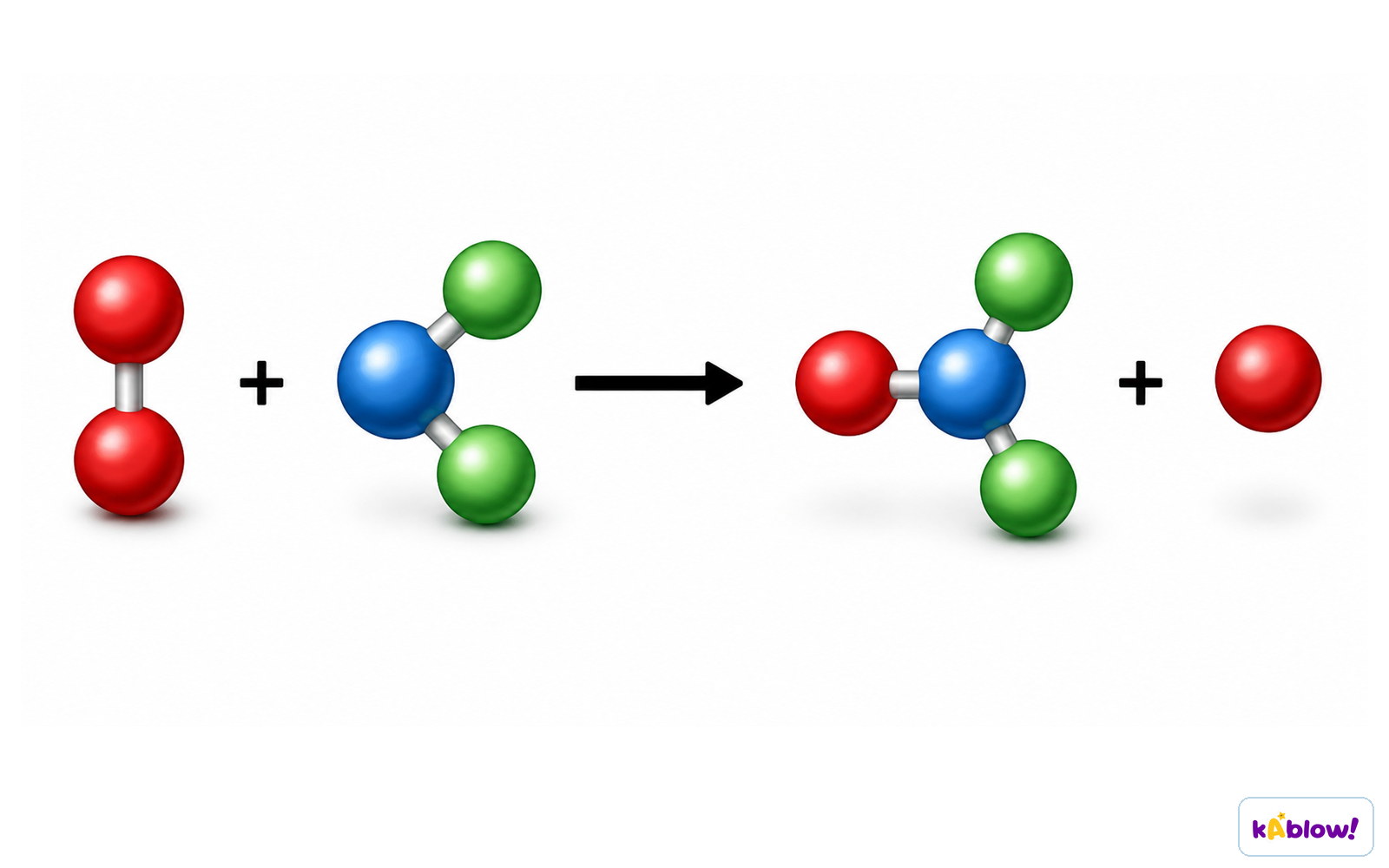
- A successful collision has enough energy and correct orientation to react.
A successful collision has enough energy to break bonds, so the reactant particles rearrange to form the products.
Factors Affecting Rate of Reaction
- Temperature: Higher temperature → particles move faster → more frequent and energetic collisions → faster rate.
- Concentration/Pressure: Higher concentration or pressure → more particles in same volume → more collisions → faster rate.
- Surface Area: Breaking solid into smaller pieces increases surface area to volume ratio → more collisions on surface → faster rate.
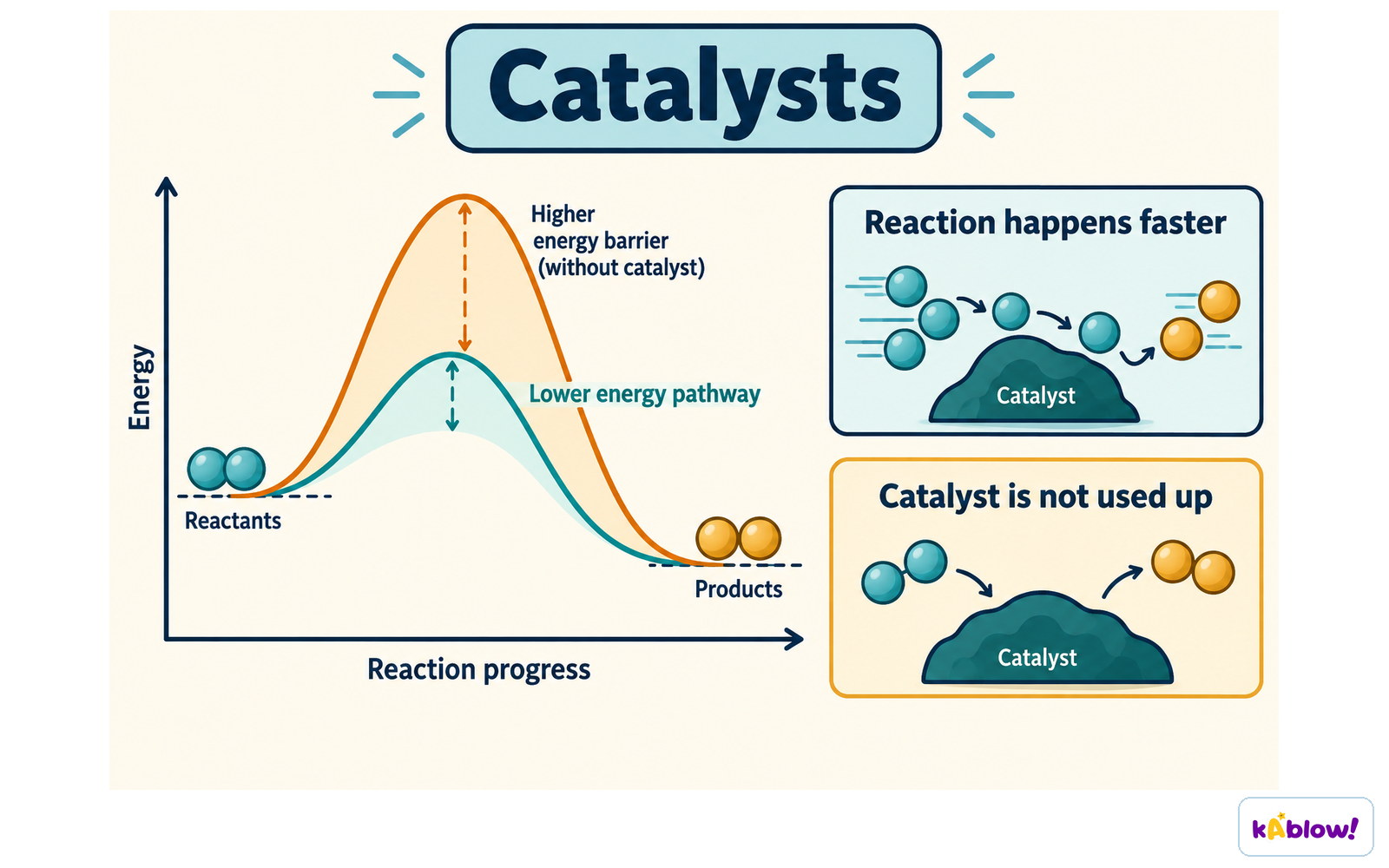
- Catalyst: A substance that increases rate without being used up; provides an alternative pathway with lower activation energy.
A catalyst provides a pathway with lower activation energy. It speeds up the reaction without being used up.
Measuring Rate of Reaction
- Change in mass: For reactions producing a gas, measure mass loss over time (e.g., magnesium + hydrochloric acid → hydrogen gas escapes).
- Volume of gas: Collect gas in a gas syringe and measure volume produced over time.
- Precipitation: Time how long for a precipitate to form (e.g., sodium thiosulfate + HCl → yellow sulfur; use a black cross to observe cloudiness).
- Colour change: Time how long for a colour change to occur.
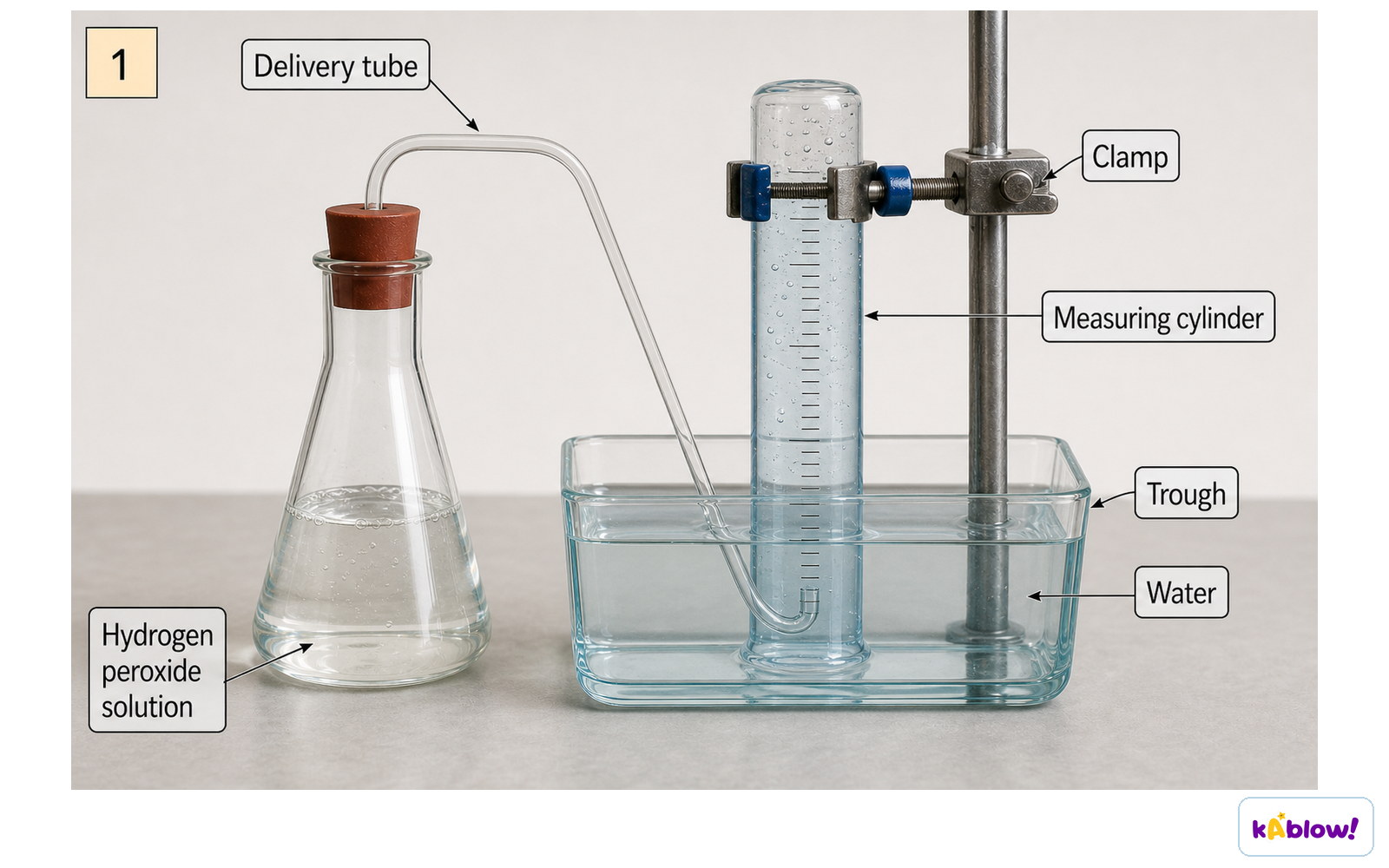
Hydrogen peroxide solution is connected by a delivery tube to an inverted, water-filled measuring cylinder so the volume of oxygen gas produced can be measured over a fixed time.
Example: Magnesium and Hydrochloric Acid
- Reaction: Mg + 2HCl → MgCl₂ + H₂ (hydrogen gas produced).
- Rate can be measured by mass loss (escaping hydrogen) or gas volume in a syringe.
- Using magnesium powder (higher surface area) gives a faster rate than large pieces.
Example: Sodium Thiosulfate and Hydrochloric Acid
- Reaction: Na₂S₂O₃ + 2HCl → 2NaCl + SO₂ + S + H₂O (yellow sulfur precipitate).
- Place flask over a black cross; time until cross is no longer visible due to cloudiness.
- Increasing concentration or temperature of HCl increases rate (faster precipitation).
Particle arrangement in solids, liquids, and gases. In solids, particles are closely packed in a regular pattern; in liquids, they are close but irregular; in gases, they are far apart and move randomly. Higher temperature increases particle speed and collision frequency.
幻灯片
练习题
免费预览——54 题中的 8 题。注册即可查看全部。
1.What is meant by the term 'rate of reaction'?
Easy- AHow quickly a chemical reaction takes place
- BThe amount of product formed in a reaction
- CThe temperature at which a reaction occurs
- DThe energy released during a reaction
2.Which of the following statements is true?
Medium- AParticles at a higher temperature move more quickly.
- BA catalyst is used up during a chemical reaction.
- CBreaking a solid into smaller pieces decreases its surface area to volume ratio.
- DThe rate of reaction does not depend on the frequency of successful collisions.
3.What is a catalyst?
Easy- AA substance that increases the rate of reaction without being used up
- BA substance that slows down a reaction
- CA substance that is consumed in a reaction
- DA substance that increases the activation energy
4.Which of the following methods can be used to measure the rate of a reaction that produces a gas?
Medium- AMeasuring the change in mass
- BObserving a colour change
- CUsing a light sensor to detect precipitate formation
- DTiming the appearance of a precipitate
5.In the reaction between sodium thiosulfate and hydrochloric acid, what is observed as the reaction proceeds?
Easy- AA yellow sulfur precipitate forms, making the solution cloudy
- BA colourless gas is produced
- CThe solution turns blue
- DThe mass of the reaction mixture increases
6.Increasing the concentration of a reactant increases the rate of reaction because:
Medium- AThere are more particles in the same volume, leading to more frequent collisions
- BThe particles move faster
- CThe activation energy is lowered
- DThe particles have more energy
7.Which of the following would increase the rate of reaction between magnesium and hydrochloric acid?
Medium- AUsing magnesium powder instead of large pieces
- BDecreasing the temperature
- CUsing a more dilute hydrochloric acid
- DUsing a larger volume of the same concentration of acid
8.In an experiment to measure the rate of reaction between magnesium and hydrochloric acid, which method would be most appropriate?
Medium- AMeasuring the volume of hydrogen gas produced over time using a gas syringe
- BObserving the colour change of the solution
- CUsing a light sensor to detect precipitate formation
- DMeasuring the increase in mass of the reaction mixture
历年真题
该知识点的历年真题练习即将推出。
即将推出