Synthetic materials from natural resources
边玩边学
回答这些题目来赚取能量,然后钓鱼探索。无需账号。
给老师: 面向 Synthetic materials from natural resources(NGSS Middle School Science,Chemistry)的即用型课程幻灯片, 复习笔记——用在你的课堂上,或将该知识点作为学生可实时游玩的互动课堂活动来运行。
课程笔记
Natural vs. Synthetic Materials
- Natural materials come from nature or are made from something that occurs in nature.
- Synthetic materials are made by mankind, often in a science lab.
- A synthetic material with the same chemical structure as a natural one has the same properties.
- Example: lab-created diamonds and mined diamonds are both made of carbon and have identical properties.
- Synthetic insulin is chemically identical to natural insulin and functions the same in the body.
- The only difference between natural and synthetic materials is the process used to make them.
Labels for cotton and merino wool, a sheep, yarn, and a wool sweater

Synthetic Materials from Natural Resources
- Synthetic materials are derived from natural resources.
- Example: plastic is mainly made from petroleum (oil), a natural resource.
- Nylon and polyester are synthetic fabrics made from petroleum products.
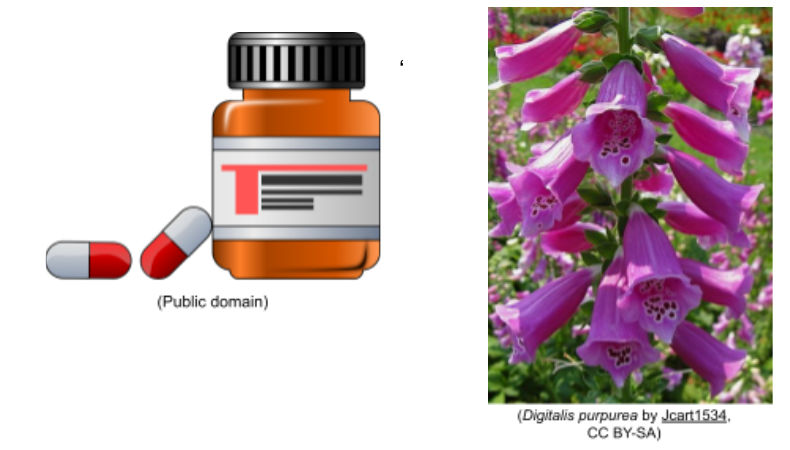
- Medicine from the Foxglove flower is a synthetic material made from a natural resource.
- Synthetic materials can have new properties that change their function and uses.
A bottle of medicine capsules and the foxglove flower (Digitalis purpurea)
Properties and Uses of Synthetic Materials
- Materials have properties like strength, flexibility, melting/boiling points, and conductivity.
- Heat conductivity is how well a material conducts heat; electrical conductivity is how well it conducts electricity.
- Synthetic fabrics are often lighter, water-resistant, and more durable than natural ones.
- Nylon is strong and lightweight, used in ropes, fishing nets, tents, utensils, and parachutes.
- Properties determine the function and use of a material.
Environmental Impact of Material Production
- Every process to produce materials has an impact on the environment; some are small, others large.
- Mining for metals and coal has devastating effects, including large holes and slag piles (crushed rock waste).
- Coal mining and use in power stations have negative environmental impacts.
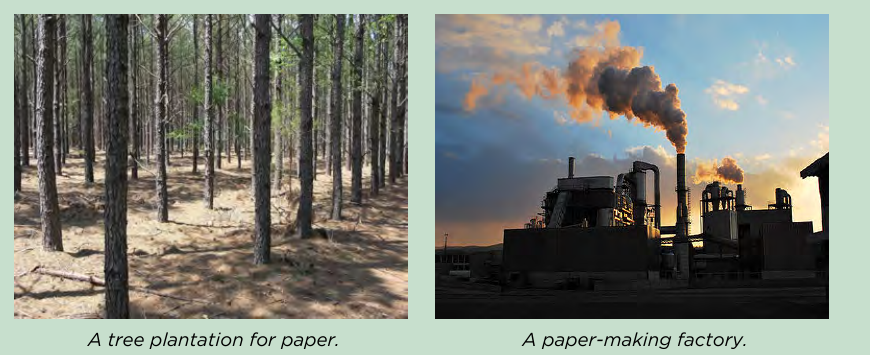
- Paper making requires huge areas of land for tree plantations and factories cause pollution.
- Plastics take a long time to decompose and can become hazards to organisms.
- Fracking (injecting water at high pressure to release gas/oil) is a major environmental concern.
A tree plantation for paper and a paper-making factory
幻灯片
练习题
免费预览——36 题中的 8 题。注册即可查看全部。
1.A synthetic material is always made from natural resources.
EasyTrue or false?
2.Natural resources are materials that have been made by humans in a laboratory.
EasyTrue or false?
3.Synthetic insulin has the same chemical structure as natural insulin.
EasyTrue or false?
4.Plastic is made from a natural resource called petroleum.
EasyTrue or false?
5.Synthetic materials always have different properties than the natural resources they come from.
EasyTrue or false?
6.All synthetic materials are made from petroleum.
EasyTrue or false?
7.Nylon is a natural fiber produced by silkworms.
EasyTrue or false?
8.The medicine made from the foxglove flower is an example of a synthetic material made from a natural resource.
EasyTrue or false?
历年真题
该知识点的历年真题练习即将推出。
即将推出