Digital signals and information
边玩边学
回答这些题目来赚取能量,然后钓鱼探索。无需账号。
给教育者: 面向 Digital signals and information(NGSS Middle School Science,Physics)的即用型课程幻灯片, 复习笔记, 图示——用在你的课堂上,或将该知识点作为学习者可实时游玩的互动课堂活动来运行。
课程笔记
Signals and Codes
- Signals are used to transmit information, and codes have been used throughout history to keep messages secret.
- Example: George Washington used codes to send secret messages during the American Revolutionary War.
- Fireflies communicate using patterns of light signals—each blinking pattern is a unique signal.
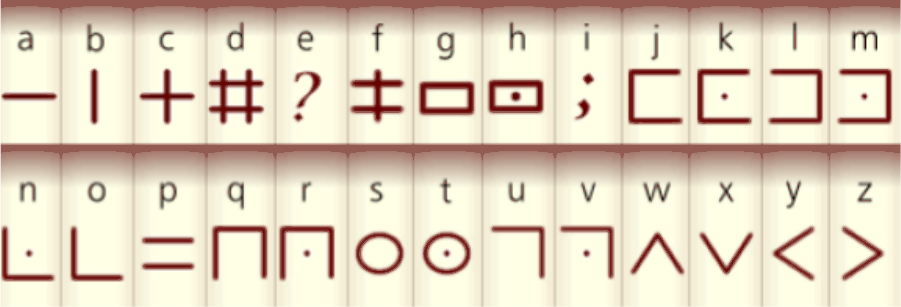
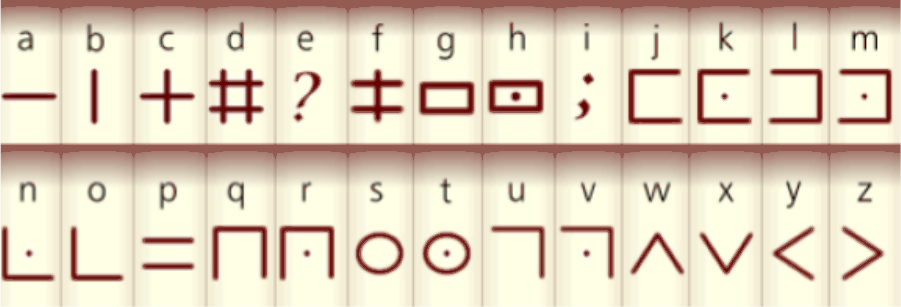
A coded alphabet where each letter is represented by a unique symbol.
Analog Signals
- Analog signals are representations of actual images, sounds, or words, often using waves to transfer information.
- Analog signals do not use mathematical codes.
- Examples: conversations (sound waves), film cameras (light waves), vinyl records (grooves in plastic).
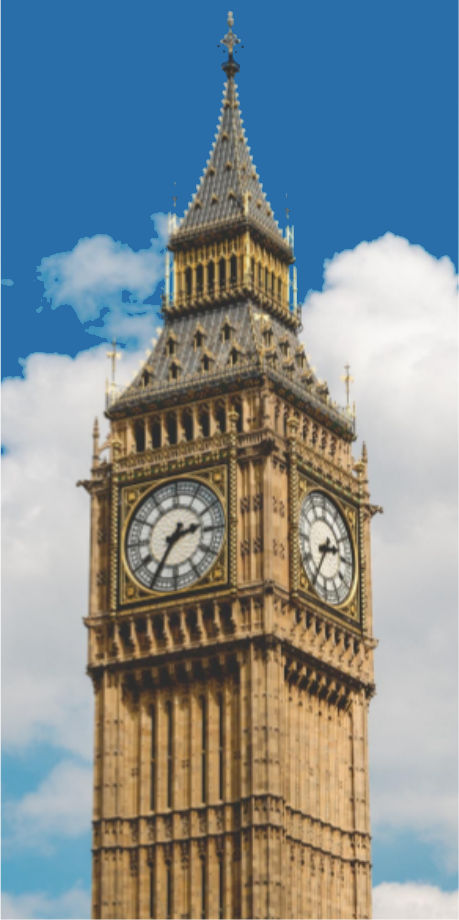
- Analog instruments like alcohol thermometers and grandfather clocks measure continuously.
A clock tower (Big Ben), an example of an analog instrument.
Digital Signals
- Digital signals are sent as mathematically coded waves and can travel long distances.
- They are decoded back into understandable information at the receiving end.
- Examples: computers, smartphones, digital cameras, digital thermometers, video game systems.
Analog vs. Digital Recording
- Analog recording captures every part of the sound wave, including background noise, making it complex and prone to errors.
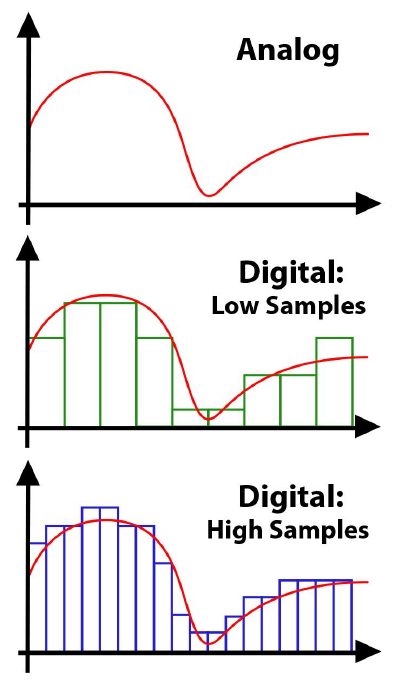
- Digital recording takes samples of the wave at set intervals, not the whole wave.
- The diagram below shows the difference: the analog wave is smooth and continuous, while the digital wave is stepped because it only records samples.
- Digital waves are simpler and easier to copy or transmit without mistakes because they are not affected by outside sources.
A diagram comparing an analog wave to digital waves sampled at low and high rates.
Sampling and Storage
- Low sampling records less often; high sampling records more often; analog records constantly.
- Digital stores only a smaller number of values compared to analog's infinite values, making it easier to remember/copy accurately.
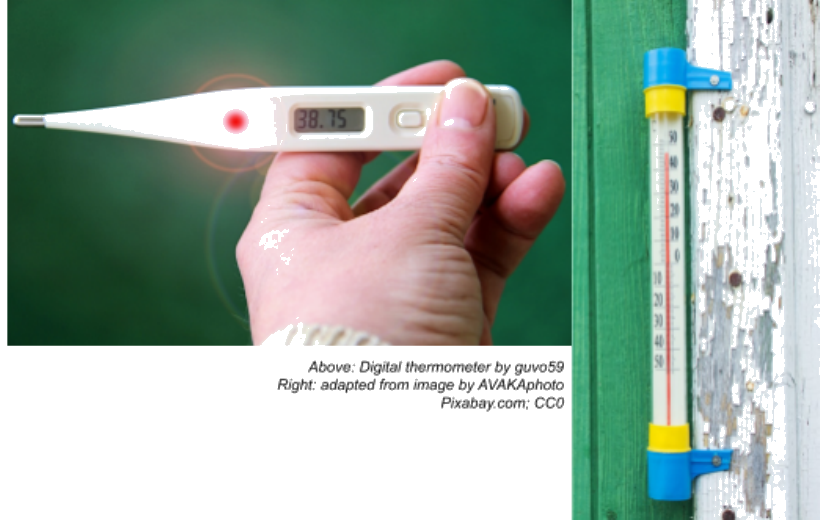
- Example: Digital thermometers show set values (98.6 to 98.7) while alcohol thermometers show every tiny change.
- Analog requires more storage space and is more likely to store flaws; digital takes less space and filters out interference.
A digital thermometer and an analog thermometer
Reliability and Examples
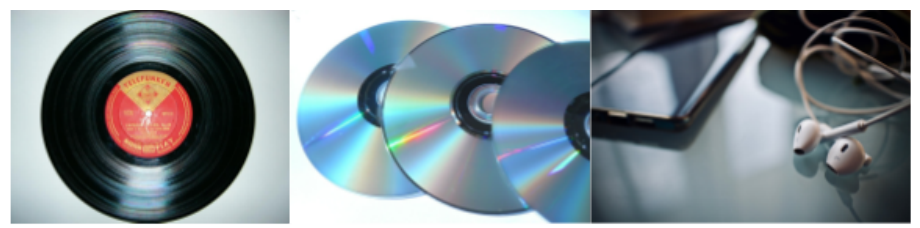
- Vinyl records (analog) hold about 44 minutes of music; CDs (digital) hold 75-80 minutes.
- Digital files on devices can hold 100-150 songs on a CD, or about 14,000 songs on 64 GB storage.
- Digital signals are more reliable for storing and transmitting information because they are less affected by damage or interference.
- However, digital signals must be converted back to analog for humans to hear or see.
A vinyl record, CDs, and a smartphone with earbuds.
Conclusion
- The structure of digital signals (sampled, coded) makes them more reliable than analog signals for storage and transmission.
- Digital technology reduces issues like static and physical damage, as seen in electronic music devices vs. vinyl records.
幻灯片
练习题
免费预览——37 题中的 8 题。注册即可查看全部。
1.Analog signals use mathematical codes to transfer information.
EasyTrue or false?
2.Which of the following is an example of an analog signal?
Easy- AVinyl record
- BDigital song file
- CSmartphone text message
- DMP3 player
3.Which of the following are advantages of digital signals compared to analog signals? (Select all that apply)
Medium- AThey are easier to copy without mistakes.
- BThey are unaffected by outside sources.
- CThey store every tiny piece of information.
- DThey take up less storage space.
- EThey are more reliable for storing information.
4.Digital signals record every part of the sound wave.
EasyTrue or false?
5.Why is a digital signal more reliable for storing information than an analog signal?
Medium- AIt records every part of the wave.
- BIt is simpler, so it is easier to copy without mistakes.
- CIt uses more storage space.
- DIt is affected by background noise.
6.Which of the following are examples of digital signals? (Select all that apply)
Medium- AA digital camera storing a photo
- BA vinyl record playing music
- CA smartphone receiving a text
- DA film camera imprinting an image on film
- EA video game system sending data to a controller
7.An alcohol thermometer is an example of a digital signal.
Easy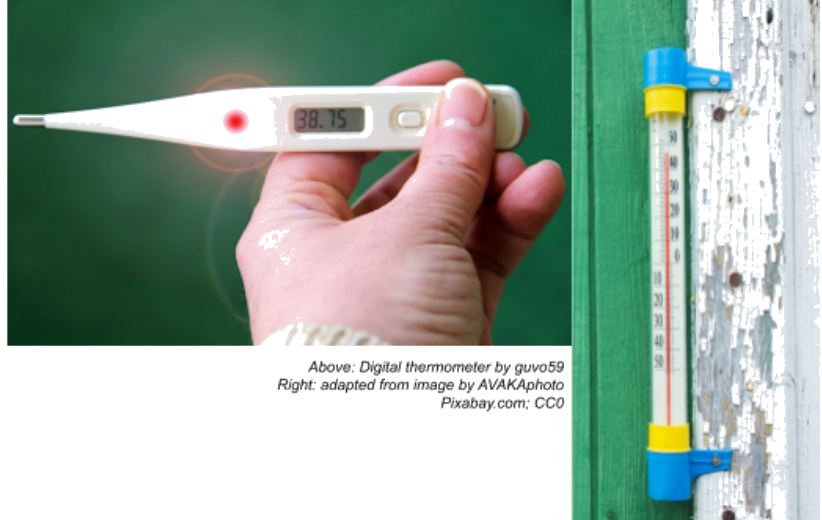
True or false?
8.A digital thermometer shows temperatures in whole degrees. Which of the following readings would NOT be possible on this thermometer?
Medium- A24 °C
- B24.5 °C
- C25 °C
- D26 °C
历年真题
该知识点的历年真题练习即将推出。
即将推出