Food production
邊玩邊學
回答這些題目賺取能量,接著就能釣魚、探索。不需要帳號。
課程筆記
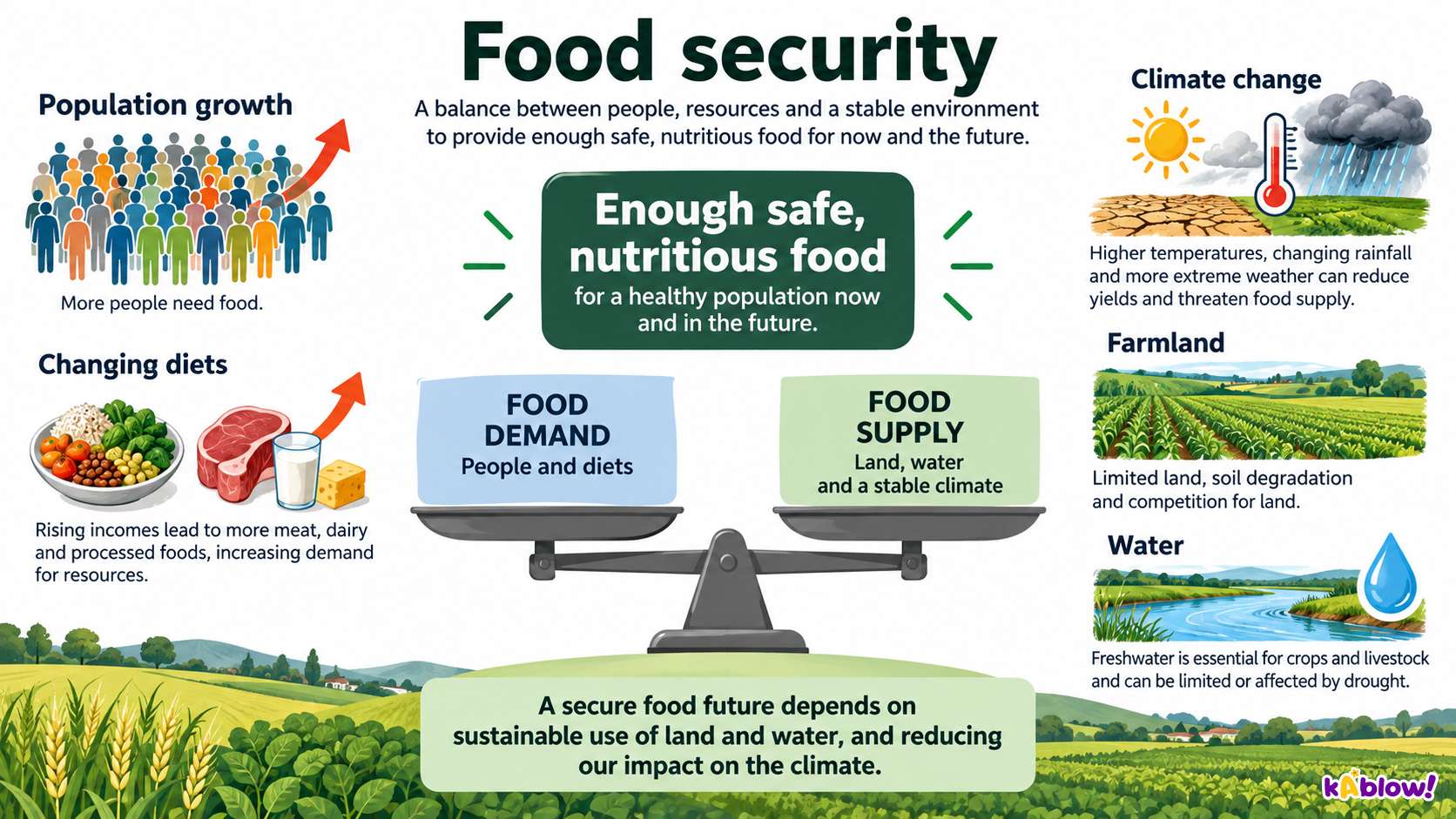
Food Security
- Food security means having enough food to feed a population.
- A population can be a family, a town, a region or a whole country.
- Food security indicates how much food is available to people.
- Biological factors that threaten food security include increasing birth rates, changing diets in developed countries, new pests and pathogens, environmental changes (e.g. failed rains), the cost of agricultural inputs, and conflicts affecting water or food availability.
- Sustainable food production means making enough food for the current population without using resources like water and soil faster than they can be renewed, so future populations also have enough.
Food security balances supply and demand
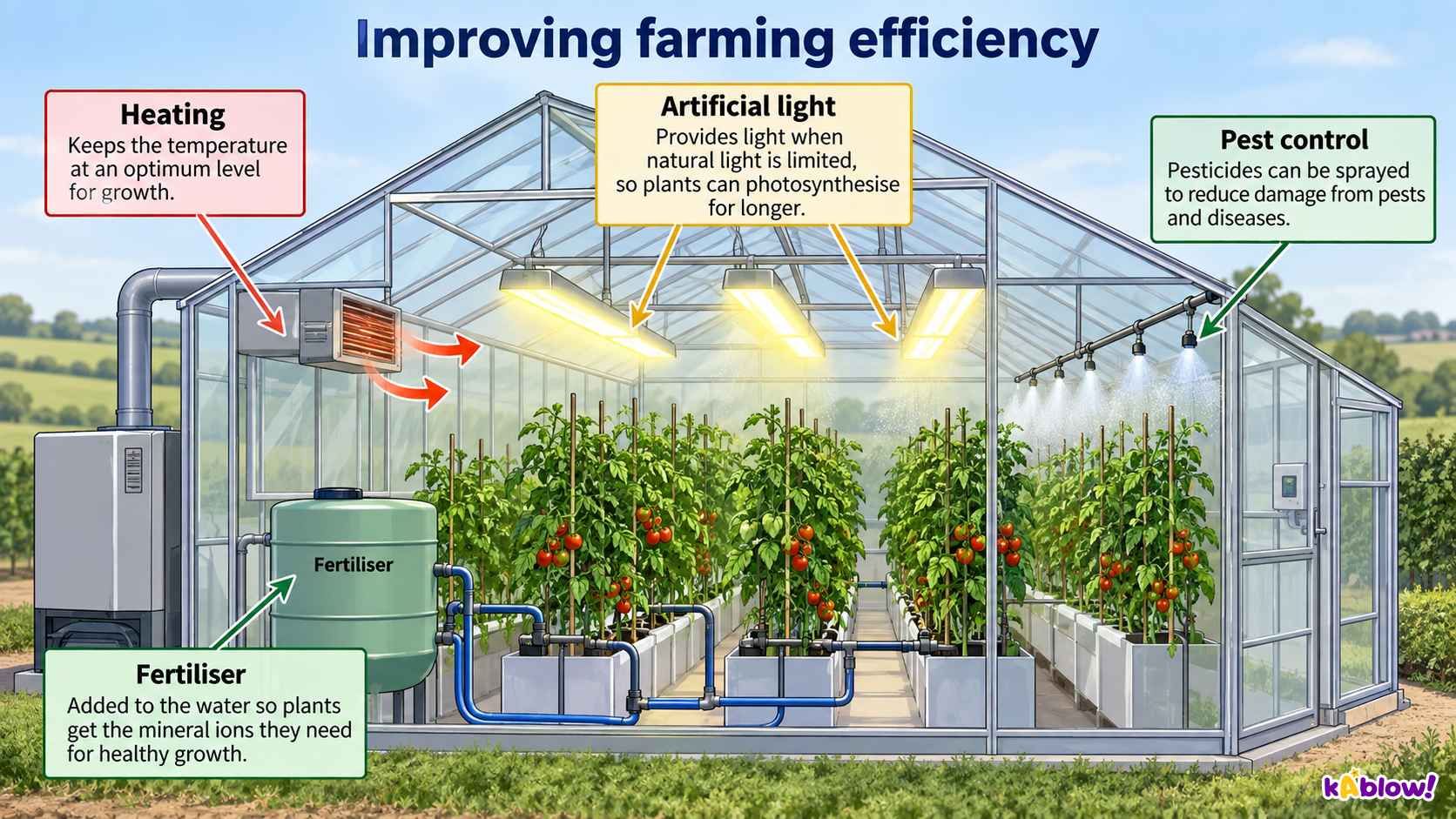
Farming Techniques to Improve Efficiency
- Efficiency of food production can be improved by restricting energy transfer from food animals to the environment.
- Limiting movement – livestock kept in small pens or cages use less energy moving around.
- Controlling temperature – livestock kept at optimum temperature use less energy regulating their body temperature.
- Movement and staying warm are two main processes that require energy from respiration; if livestock don't do these, more energy is available for growth.
- Some animals are fed high protein foods to increase growth.
Improving farming efficiency
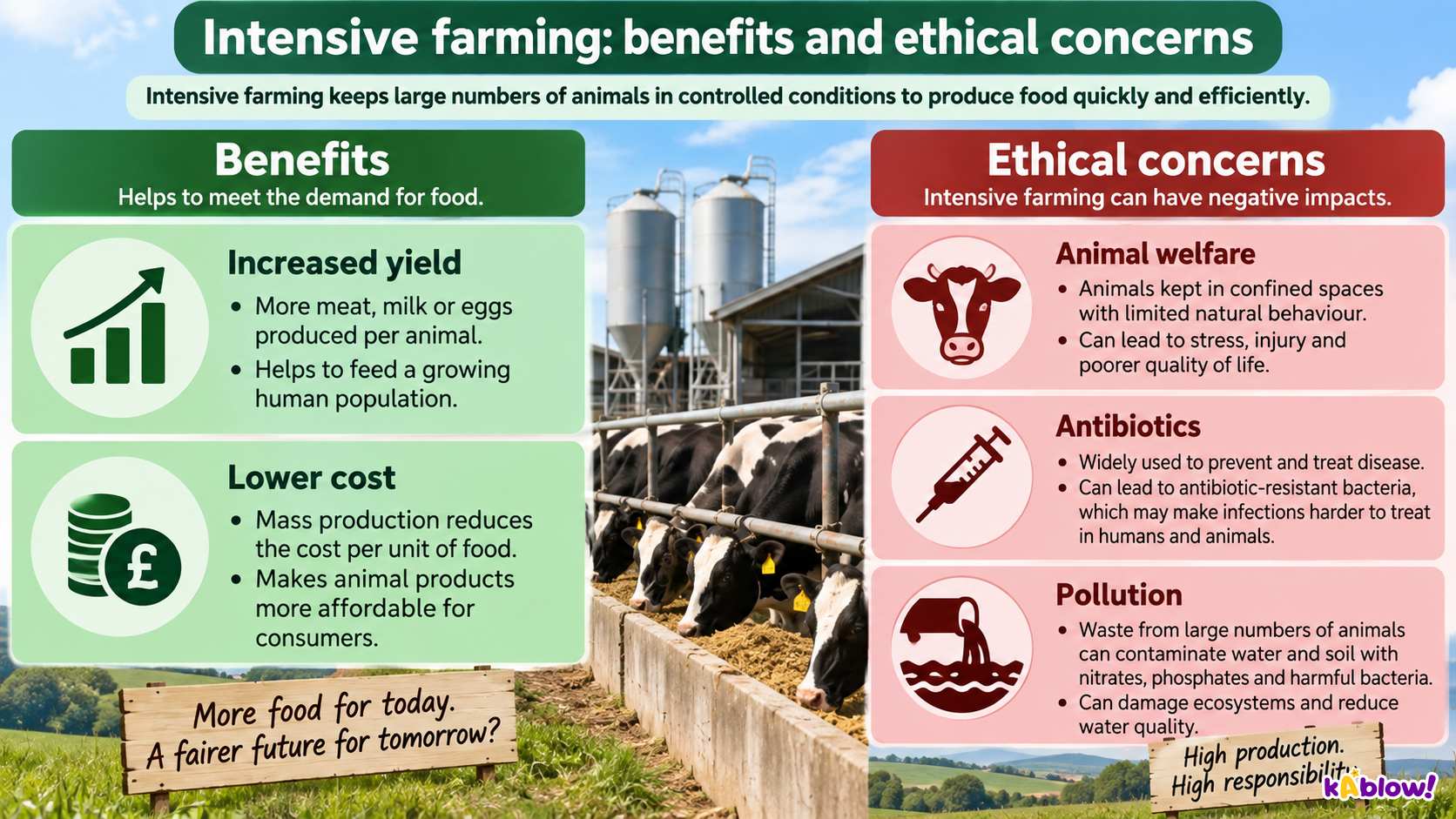
Ethical Objections to Intensive Farming
- Some people have ethical objections to modern intensive farming methods.
- Keeping livestock in very confined spaces (factory farming) is controversial because disease can spread easily.
- Many people think it is unethical to make animals live in unnatural and uncomfortable conditions.
Balancing output and animal welfare
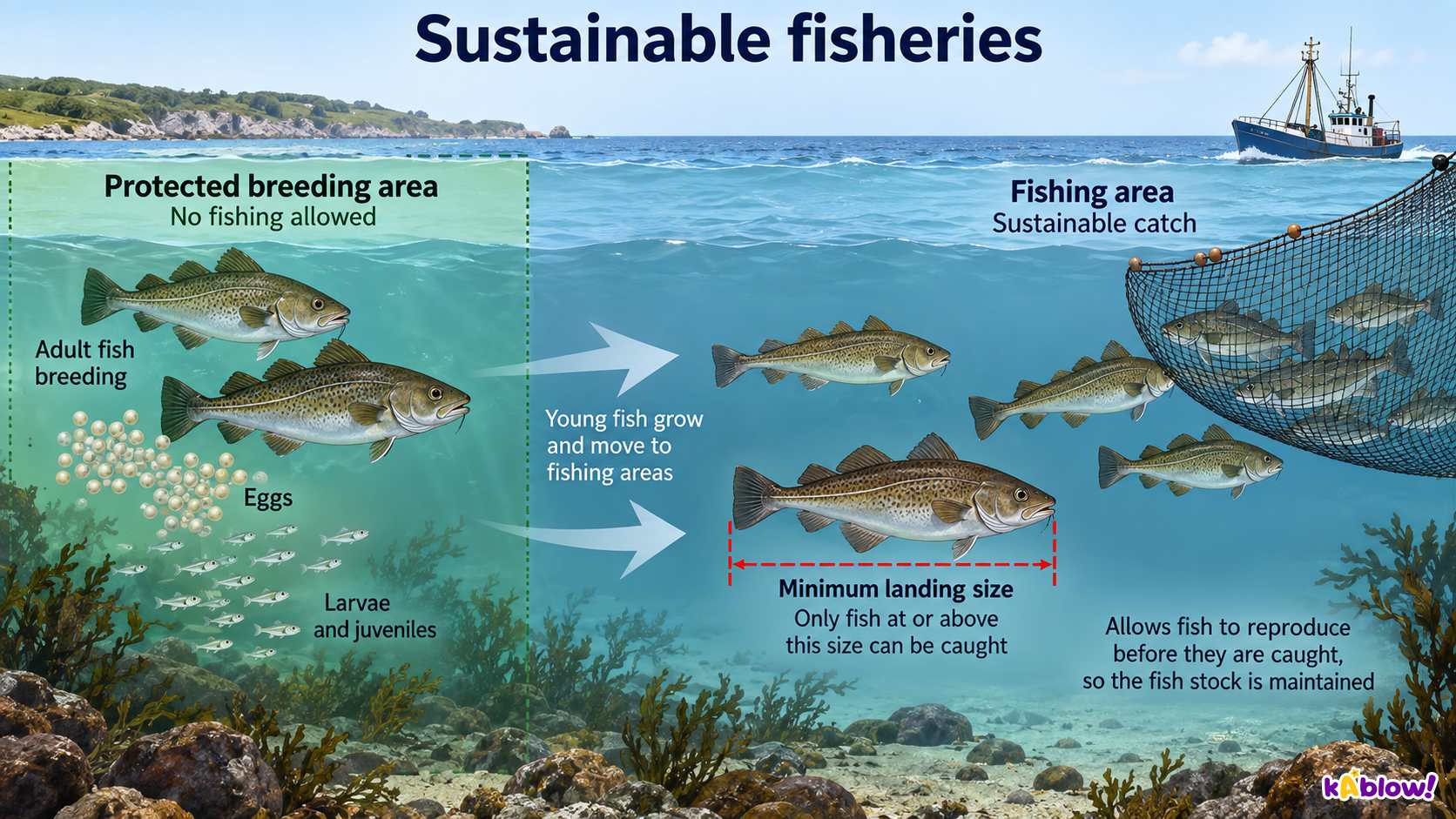
Sustainable Fisheries
- Fish stocks (populations of fish caught for food) in the oceans are declining, mainly due to overfishing.
- Overfishing can lead to some species disappearing in certain areas or going extinct (e.g. cod in the north-west Atlantic).
- It can disrupt ocean food chains, affecting many other aquatic species.
- It can lead to fewer fish for human consumption, especially for populations that rely on fish as a main food source.
- Sustainable fisheries are those where the overall population size of fish species does not decrease because the number of fish caught does not exceed the number of new fish born.
A sustainable fishery
Control of Nets and Quotas
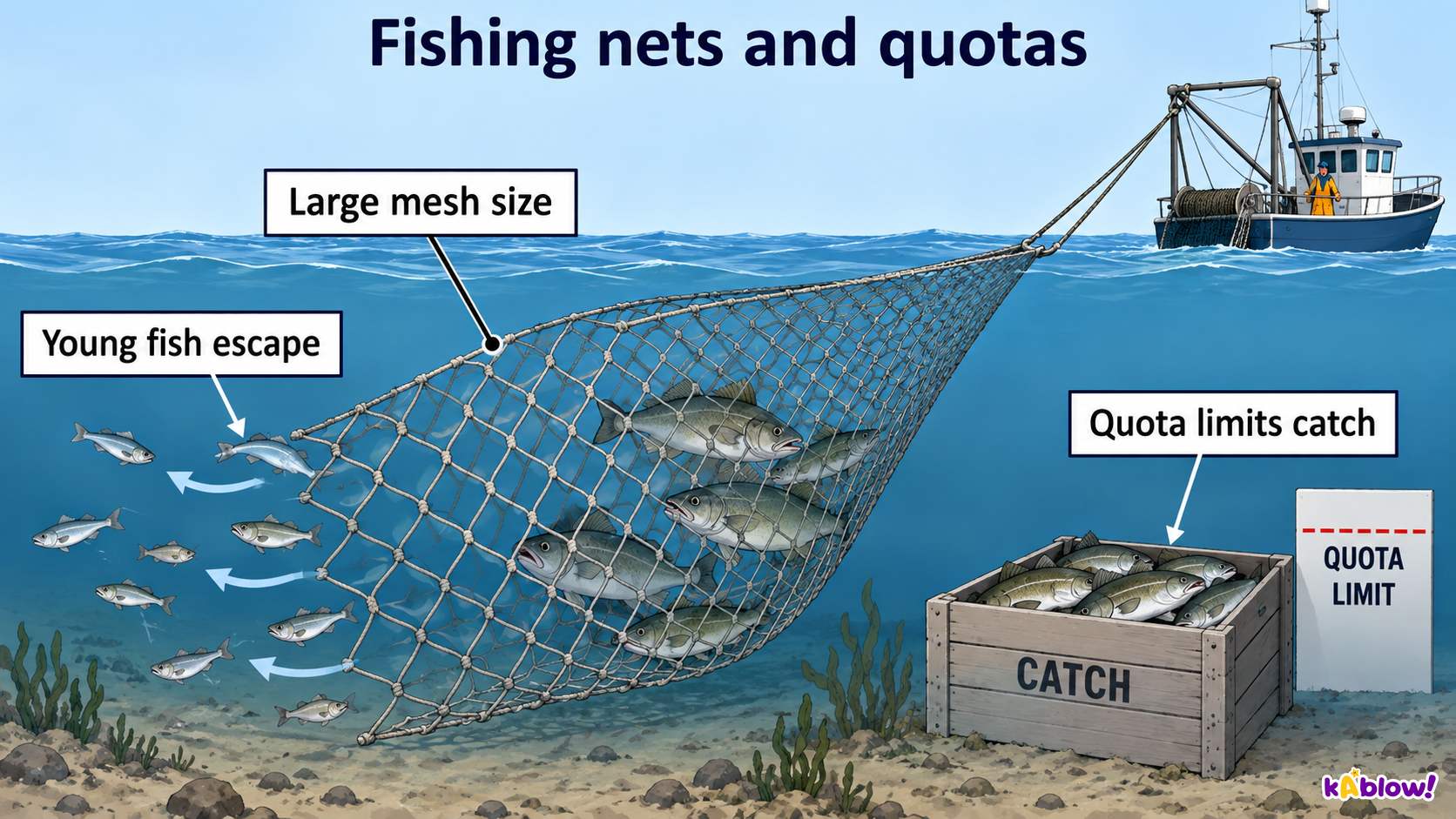
- Increasing the size of gaps in fishing nets allows unwanted species to escape, reducing accidental capture and killing.
- Larger net gaps also allow juvenile fish of the target species to escape, so they can reach breeding age and replenish the population.
- Fishing quotas limit the number and size of particular fish species that can be caught in a given area.
- Many countries have introduced quotas to stop species becoming overfished.
Nets and quotas conserve fish stocks
Role of Biotechnology: Mycoprotein
- Biotechnology involves the alteration and use of living organisms to produce products for human use.
- Some forms have been used for thousands of years, e.g. agriculture and selective breeding.
- Modern biotechnology includes genetic modification and culturing large quantities of microorganisms for food.
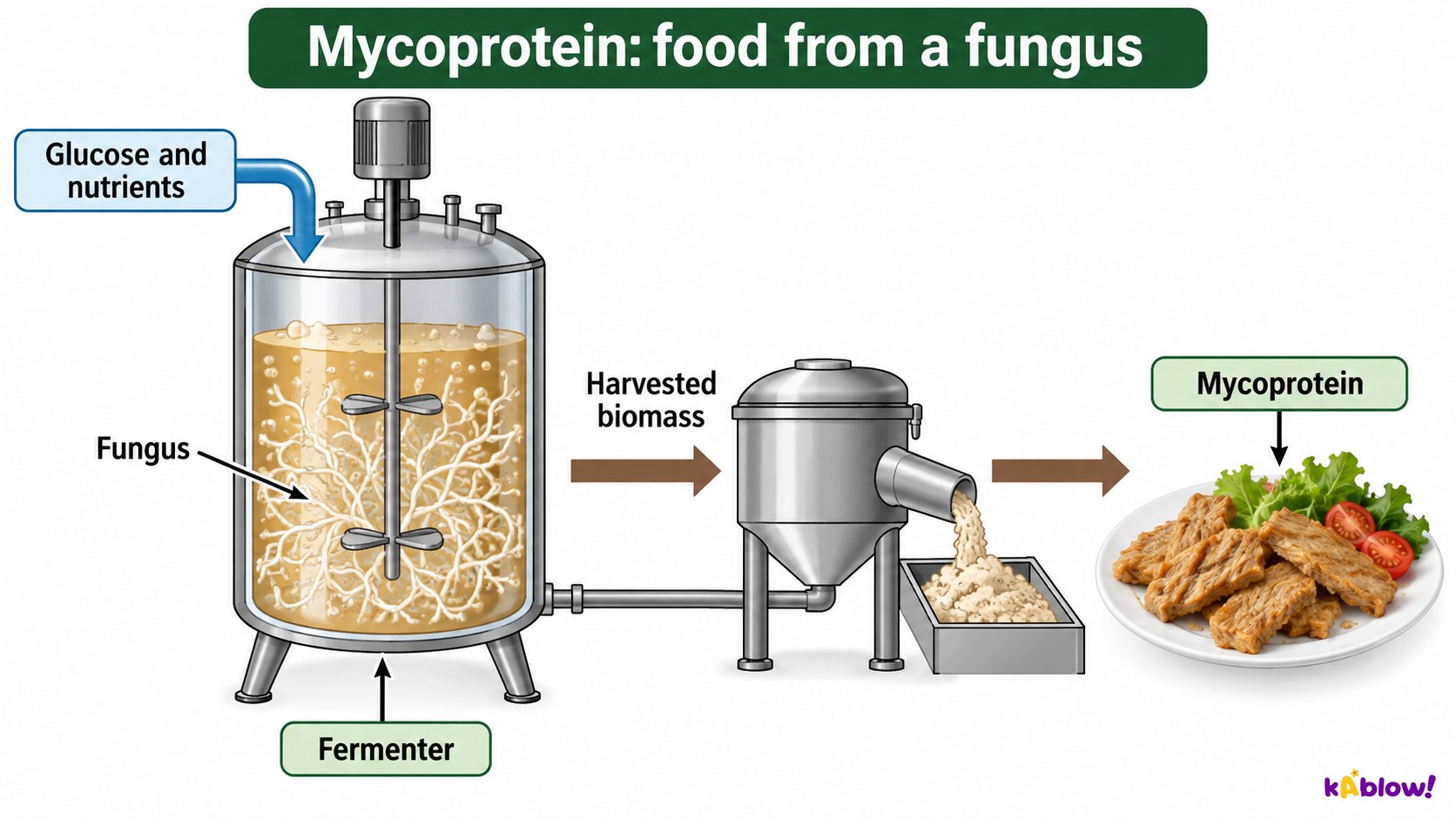
- The fungus Fusarium is cultured on an industrial scale in fermenters to produce mycoprotein.
- Fermenters are large vats kept at optimum pH and temperature; a water jacket maintains constant temperature.
- The fungus is grown in aerobic conditions with glucose syrup as a food source; a paddle keeps the mixture aerated and mixed.
- The fungal biomass is harvested and purified to produce mycoprotein, a protein-rich food suitable for vegetarians (e.g. Quorn).
Making mycoprotein in a fermenter
Role of Biotechnology: Genetic Modification
- Genetic engineering changes the genetic material of an organism by removing or altering genes, or inserting genes from another organism.
- The organism receiving the genetic material is genetically modified or transgenic; its DNA containing foreign DNA is recombinant DNA.
- The gene for human insulin has been inserted into bacteria, which then produce human insulin for treating diabetes.
- Restriction enzymes cut out the insulin gene and cut a bacterial plasmid, leaving matching sticky ends.
- DNA ligase joins the gene and plasmid to form a recombinant plasmid, which is inserted into a bacterial cell.
- When bacteria reproduce, the plasmid is copied and the human insulin gene is expressed, making human insulin protein.
- The genetically engineered bacteria are placed in a fermenter to reproduce quickly and make large quantities of insulin.
Genetically modified crops
GM Crops
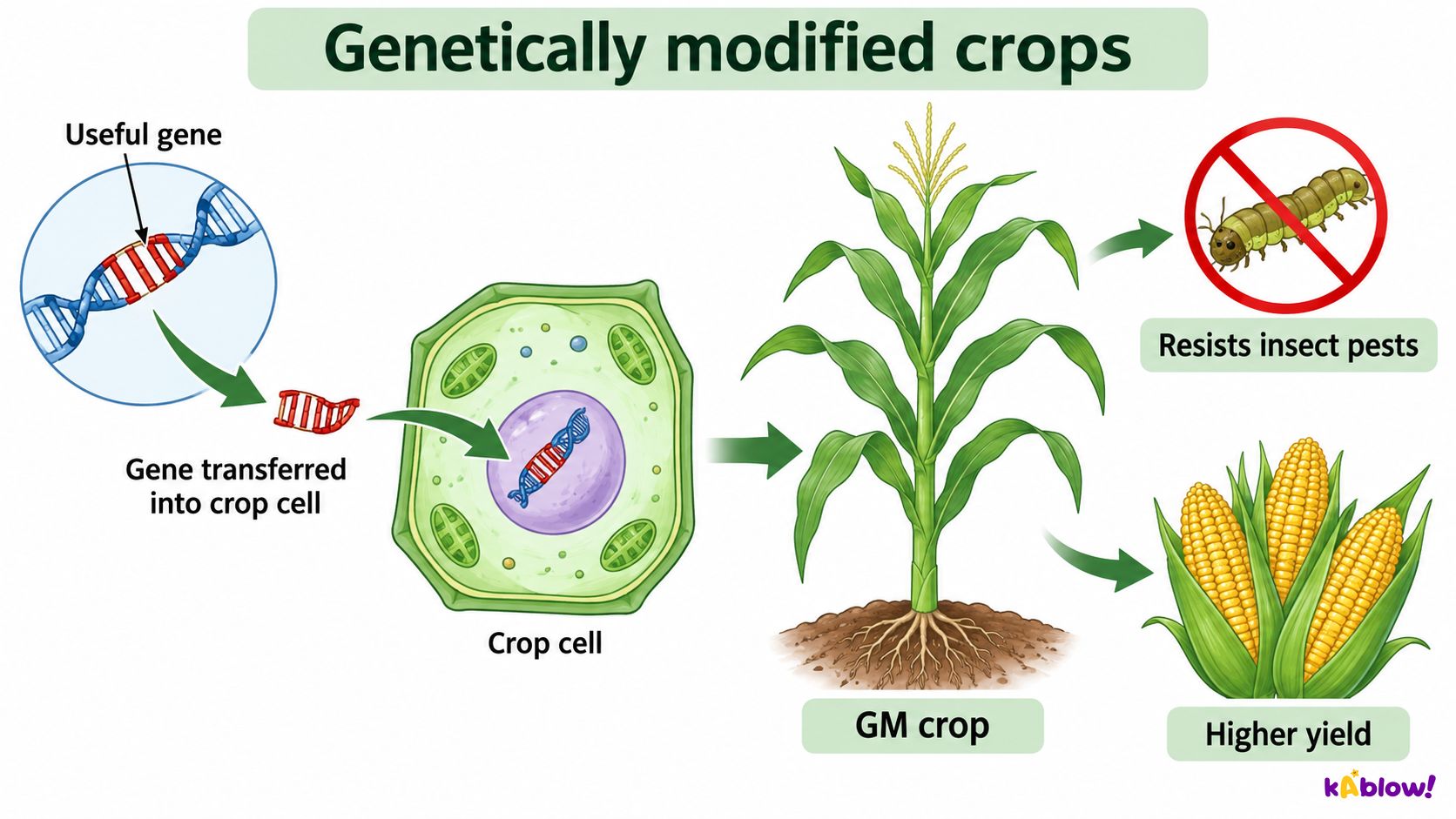
- Crops can be genetically modified (GM crops).
- Wheat and maize have been modified with a bacterial gene that produces a poison killing insect pests (e.g. caterpillars), improving crop yields.
- Crops have been modified to be resistant to certain herbicides, so spraying kills only weeds.
- Some crops have improved nutritional value, e.g. golden rice contains genes that make rice grains produce a chemical turned into vitamin A in the body, helping prevent deficiency diseases.
- Some crops are modified to be drought-resistant, improving yields in very dry conditions.
Genetically modified crops
投影片
練習題
免費預覽——57 題中的 8 題。註冊即可查看全部。
1.Which of A–D gives the best definition of food security?
Easy- ABeing able to grow more and more crop each year on the same piece of land
- BManufacturing food with the correct mix of minerals, vitamins and other food groups
- CHaving enough food to feed a population
- DAnti-theft storage of food in facilities at ports, such as grain silos
2.Which of A–D will increase food security in a country?
Easy- AA rapidly increasing population
- BIncreases in agricultural yields
- CA change in environmental conditions that favours crop pests
- DGreater space for storage of food, e.g. grain
3.Food security can refer to having enough food for a single family, a town, a region or a whole country.
EasyTrue or false?
4.Which of the following are biological factors that can threaten food security? (select all that apply)
Medium- AAn increasing birth rate
- BNew pests and pathogens that affect farming
- CEnvironmental changes such as widespread famine when rains fail
- DConflicts that affect the availability of water or food
- EA fall in the cost of agricultural inputs
5.Which of A–D would NOT be a useful measure to improve food security for the rapid population growth forecast in Nigeria?
Medium- AImprovements in Nigeria's road network
- BIncreased use of genetically-modified crops
- CA greater proportion of crops being imported into Nigeria
- DMore advanced sowing and harvesting techniques being used on Nigerian farms
6.Which of the examples listed can be classed as a biotechnological technique used in the supply of food and drink to the world's population? 1. Genetic modification, e.g. golden rice 2. Selective breeding, e.g. of cattle for beef production 3. Fermentation to make beer and wine 4. Use of polytunnels to achieve high yields of tomato plants
Easy- AI, II and III
- BI and II only
- CII, III and IV
- DAll of them
7.Which of A–D is used in the production of mycoprotein, a sustainable protein source that can replace meat?
Easy- ABacterium
- BVirus
- CFungus
- DYeast
8.Which of the following are correct about the industrial production of mycoprotein? (select all that apply)
Medium- AThe fungus Fusarium is grown in large fermenters
- BThe fungus is grown in anaerobic conditions
- CGlucose syrup is provided as a food source
- DA water jacket is used to keep the temperature constant
- EThe fungal biomass is harvested and then purified