Life cycle assessment and recycling
邊玩邊學
回答這些題目賺取能量,接著就能釣魚、探索。不需要帳號。
給教育者: 為 Life cycle assessment and recycling(Science、Chemistry)準備好可直接使用的課程投影片, 複習筆記——用於你的課程,或把這個主題當成互動班級活動,讓學習者以即時遊戲的方式進行。
課程筆記
Life Cycle Assessment (LCA)
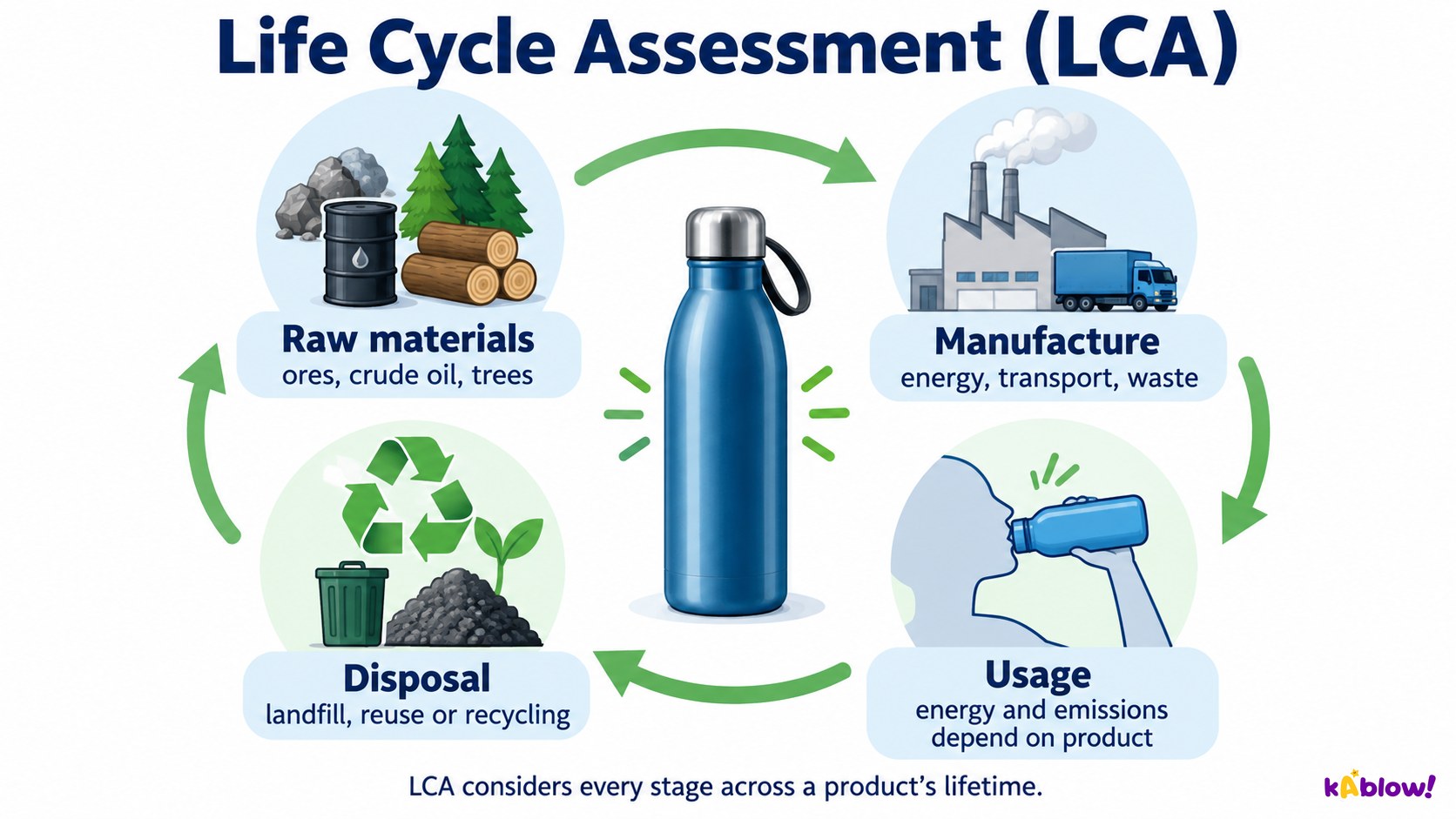
- A life cycle assessment (LCA) analyses the overall environmental impact of a product throughout its entire lifetime.
- An LCA is broken down into four main stages: raw materials, manufacture, usage, and disposal.
- The raw materials stage considers using up limited resources (such as ores and crude oil) and damaging habitats through deforestation or mining.
- The manufacture stage includes using land for factories, burning fossil fuels for production and transport, and producing waste.
- The usage stage depends on the product: a wooden desk has little impact, while a car produces significant air pollution.
- The disposal stage considers using up landfill space and whether the product or its parts can be recycled.
The four stages of a life cycle assessment
Carrying Out an LCA
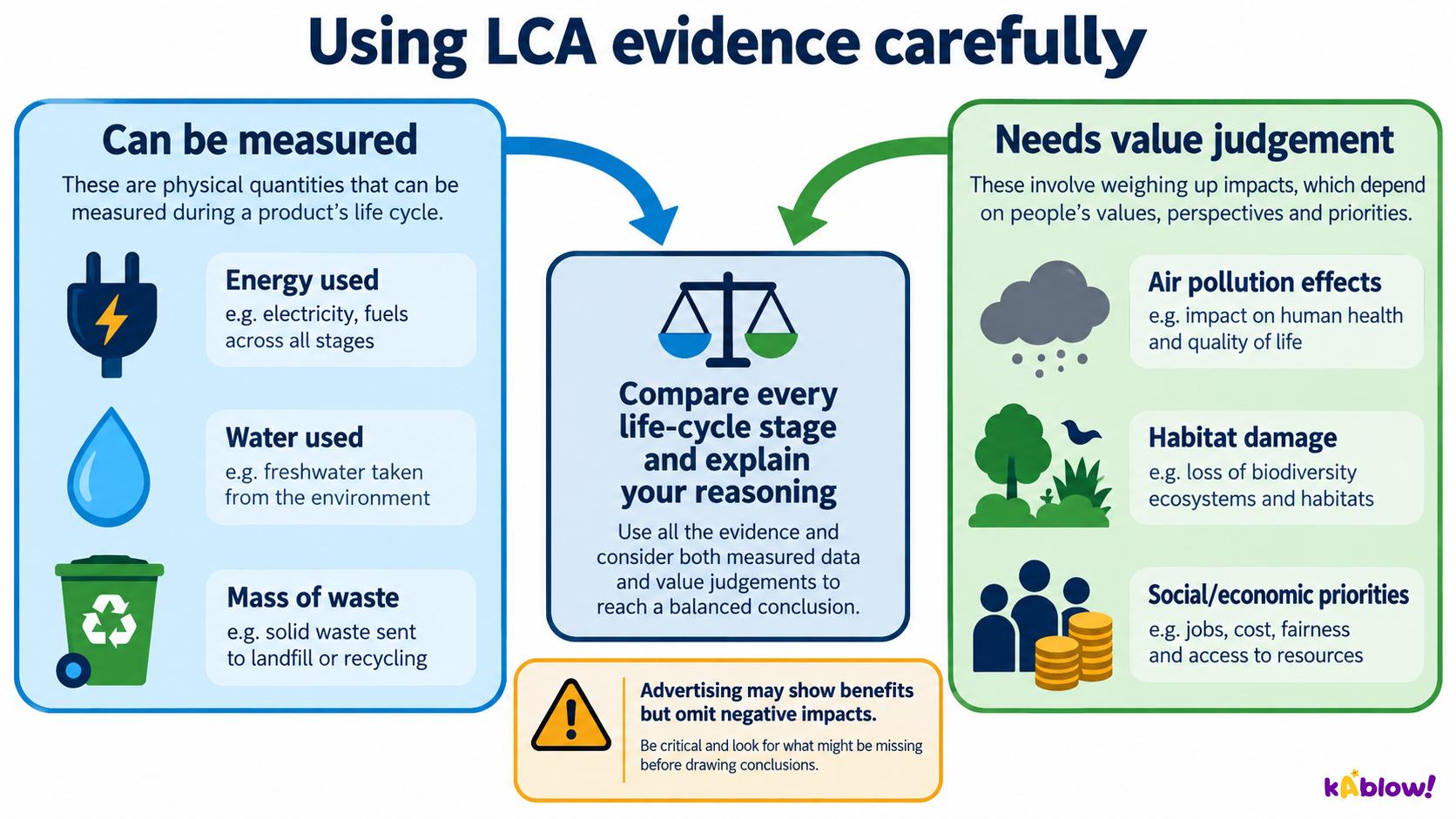
- Some parts of an LCA are easily quantified, for example the amount of water used or the quantity of waste produced.
- Other parts are difficult to give a numerical value to, such as the polluting effect of a product.
- In these cases, people make a value judgement, which is not objective and can be biased.
- There is rarely a product with zero environmental impact, so a compromise is often made between environmental impact and economic factors.
- Abbreviated LCAs may be used in advertising to highlight environmental benefits without showing negative impacts.
Using LCA evidence carefully
Comparative LCA: Plastic vs Paper Bags
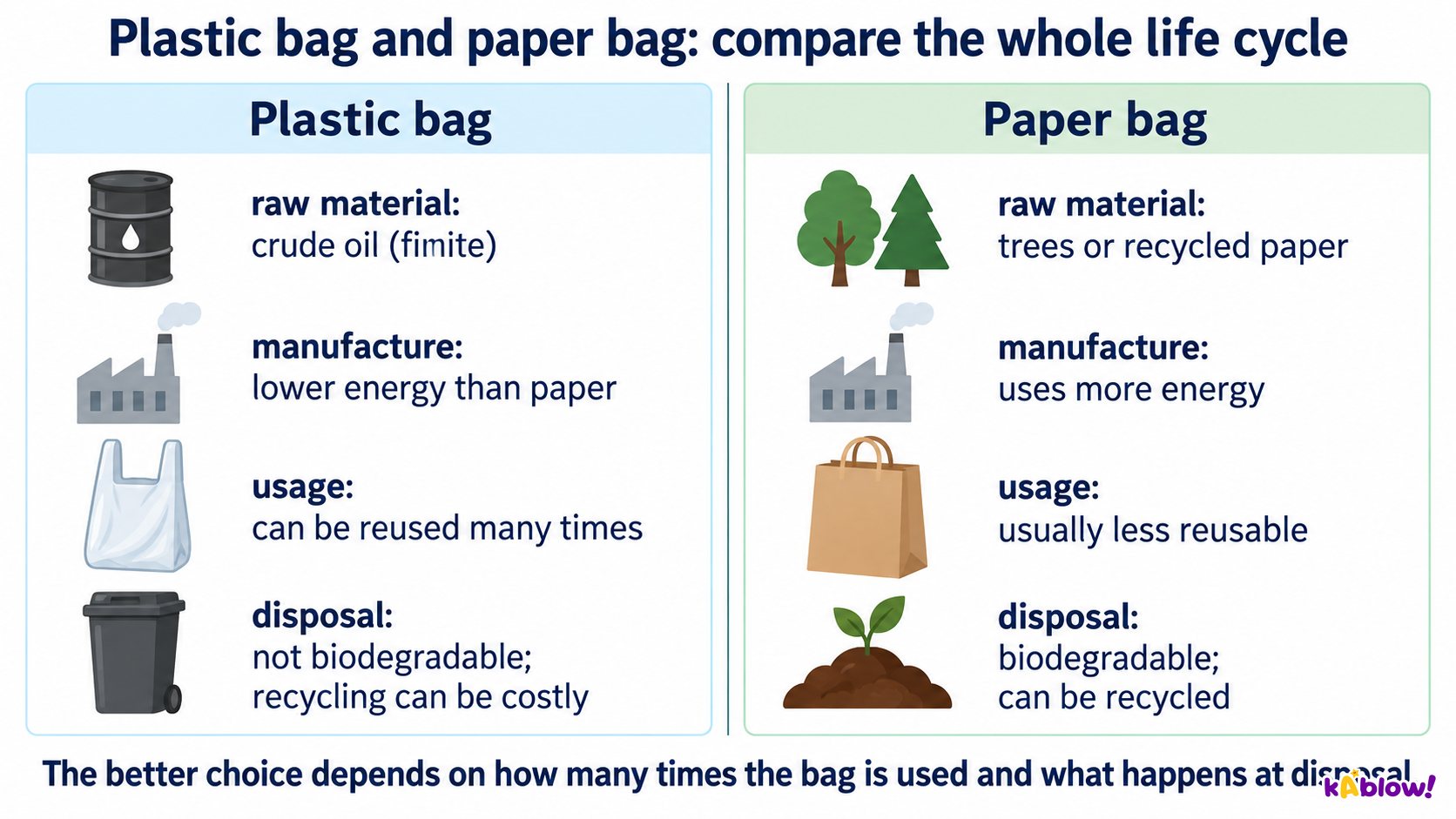
- Plastic bags are made from crude oil, a finite resource; paper bags come from trees or recycled paper.
- Making paper requires more energy than recycling paper, but much less than making plastics.
- Plastic bags are cheap to manufacture and reusable many times; paper bags are biodegradable and non-toxic but most are not reusable.
- Plastic bags can be recycled but this is costly and produces pollution; they are not biodegradable and take up landfill space.
- Overall, the plastic bag may be the better option because it has a much longer lifespan, even though it is not biodegradable.
- The conclusion depends on usage: if a paper bag is recycled it may be more favourable; if a plastic bag is used only once, the argument for plastic is weaker.
Comparing plastic and paper bags using LCA
Reducing Use of Resources
- Everyday materials such as glass, metal, plastics and ceramics are produced from natural but finite sources.
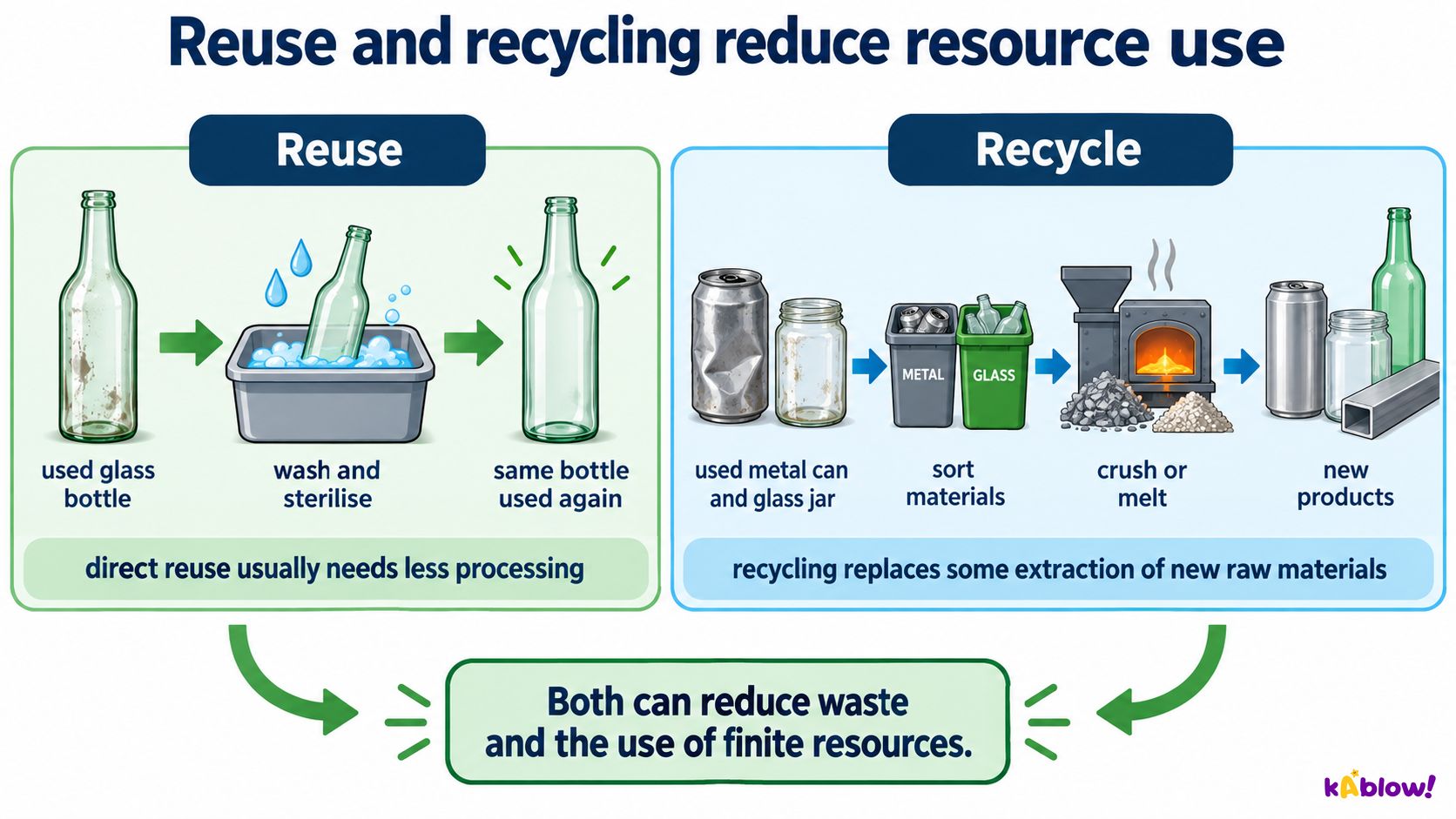
- Reuse and recycling cut down the use of limited material resources, reduce energy use and decrease waste production.
- Some products can be reused directly, which saves energy and decreases environmental impact.
- For example, glass bottles only need to be washed and sterilised before they can be reused.
- Other products cannot be reused but can be processed and recycled for a different use.
Reuse and recycling reduce resource use
Recycling Metals and Glass
- Metals can be recycled by melting and recasting or reforming into new products.
- The amount of separation required depends on the metal and the properties required of the final product.
- In steel making, scrap steel is added to iron from a blast furnace, reducing the amount of iron that needs to be extracted from iron ore.
- Glass that cannot be reused is separated by colour and composition, then crushed, melted and remoulded into new shapes.
- Glass, steel and concrete are usually produced from finite resources.
Reuse and recycling reduce resource use
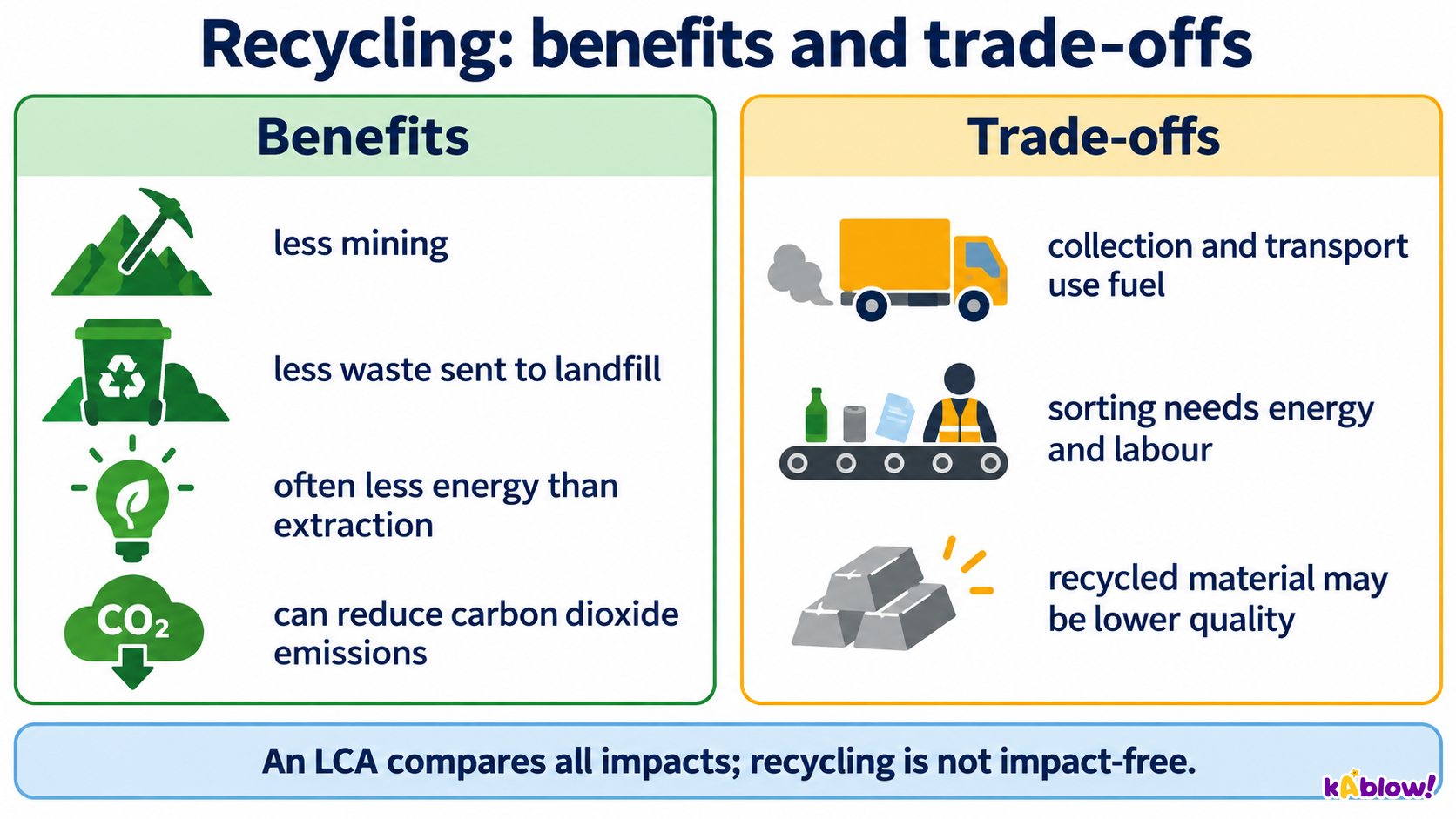
Advantages of Recycling
- Recycling metals is economically beneficial, especially for metals that are costly to extract such as aluminium.
- Recycling provides employment and is becoming a major industry.
- Recycling means less mining is required, reducing damage to the environment and ecosystems.
- It is much more energy efficient to recycle metals than to extract them, as melting and remoulding requires less energy.
- Recycling decreases waste, reducing the space needed at landfill sites.
- Less mining and less energy use means fewer CO₂ and greenhouse gas emissions, reducing the contribution to global warming.
Disadvantages of Recycling
- Collection and transport of material to be recycled requires energy and fuel.
- Workers, vehicles and work sites need to be organised and maintained.
- Materials need to be sorted before they can be recycled, which requires energy and labour.
- Products made from recycled materials may not always be of the same quality as the original.
Benefits and trade-offs of recycling
Sustainability and Raw Materials
- There is a limited supply of every material on Earth.
- As global populations increase, there is a greater need for effective recycling to attain sustainable development.
- Mining and extraction use up fossil fuels, which contributes to climate change.
- Reducing, reusing and recycling materials by end users reduces the use of limited resources, energy sources, waste and environmental impacts.
投影片
練習題
免費預覽——56 題中的 8 題。註冊即可查看全部。
1.Which of the following is NOT one of the four main stages of a life cycle assessment?
Easy- ARaw materials
- BManufacture
- CAdvertising
- DDisposal
2.Which stage of a life cycle assessment involves the use of fossil-fuelled machines for production and transport?
Medium- ARaw materials
- BManufacture
- CUsage
- DDisposal
3.Why is a life cycle assessment not considered a purely objective process?
Medium- AIt only considers the disposal stage
- BIt requires value judgements when allocating numerical values to pollutant effects
- CIt is always based on incomplete data
- DIt ignores the use of energy
4.Which of the following is an environmental advantage of recycling metals?
Medium- AIt increases the amount of mining required
- BIt uses more energy than extracting metals from ores
- CIt reduces the amount of waste sent to landfill
- DIt produces more CO₂ emissions
5.Which of the following are environmental advantages of recycling? (Select all that apply)
Medium- ALess mining is required
- BLess energy is used compared to extraction
- CMore waste is sent to landfill
- DFewer CO₂ emissions are produced
- ECollection and transport require energy
6.Reuse of a product saves more energy than recycling it.
EasyTrue or false?
7.A life cycle assessment only considers the disposal stage of a product's life.
EasyTrue or false?
8.Match each stage of a life cycle assessment to its environmental impact.
Medium- Raw materials
- Manufacture
- Usage
- Disposal
- Using up limited resources such as ores and crude oil
- Using up land for factories
- Air pollution from a car
- Using up space at landfill sites
歷屆試題
這個主題的歷屆試題練習即將推出。
即將推出