Aerobic and anaerobic respiration
邊玩邊學
回答這些題目賺取能量,接著就能釣魚、探索。不需要帳號。
給教育者: 為 Aerobic and anaerobic respiration(MYP Biology、Year 2)準備好可直接使用的課程投影片, 複習筆記——用於你的課程,或把這個主題當成互動班級活動,讓學習者以即時遊戲的方式進行。
課程筆記
Big idea: releasing the energy stored in food
- Big idea (key concept): Change. Respiration is a chemical change. Glucose, a store of chemical energy, is broken down and its energy is released for the cell to use.
- Related concept: Energy. Energy is never made from nothing and never lost. Respiration transfers energy from the chemical store in glucose to useful forms and to the surroundings as heat.
- Global context: Identities and relationships. Every living thing, from a sprinter to a yeast cell, depends on respiration. Understanding it explains why athletes train, why we feel tired and why bread rises.
- Respiration is the set of chemical reactions in living cells that release energy from food molecules such as glucose. It happens in every living cell, all the time, in animals, plants and microbes.
- Respiration is not the same as breathing. Breathing moves air in and out of the lungs. Respiration is the reaction in cells that uses the oxygen the breathing system brings in.
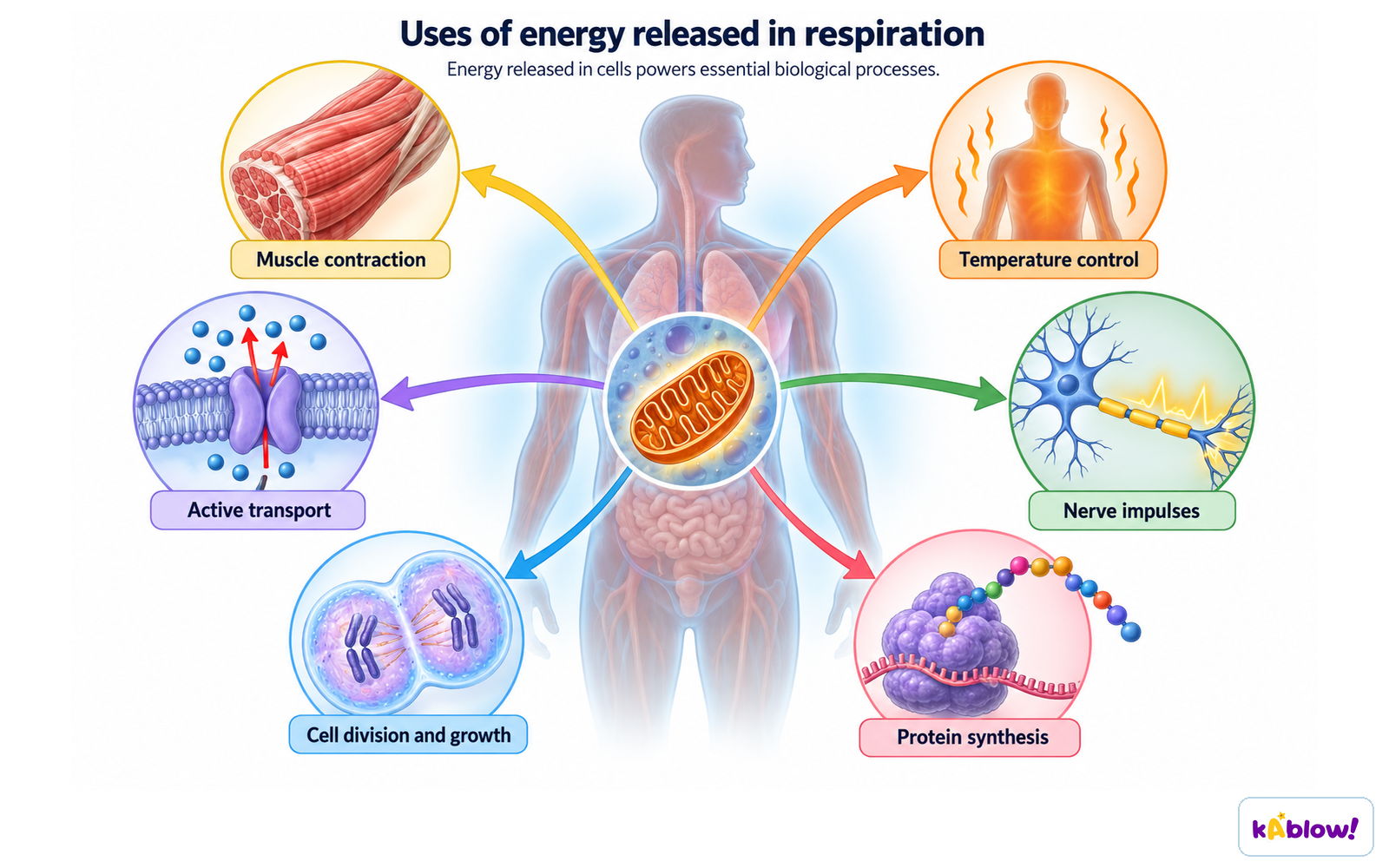
- Cells use the released energy for muscle contraction, nerve impulses, active transport, making proteins and other large molecules, cell division and growth, and, in mammals and birds, keeping the body warm.
What cells use the energy from respiration for
Aerobic respiration
- Aerobic respiration is respiration that uses oxygen. It breaks glucose down completely and releases a large amount of energy.
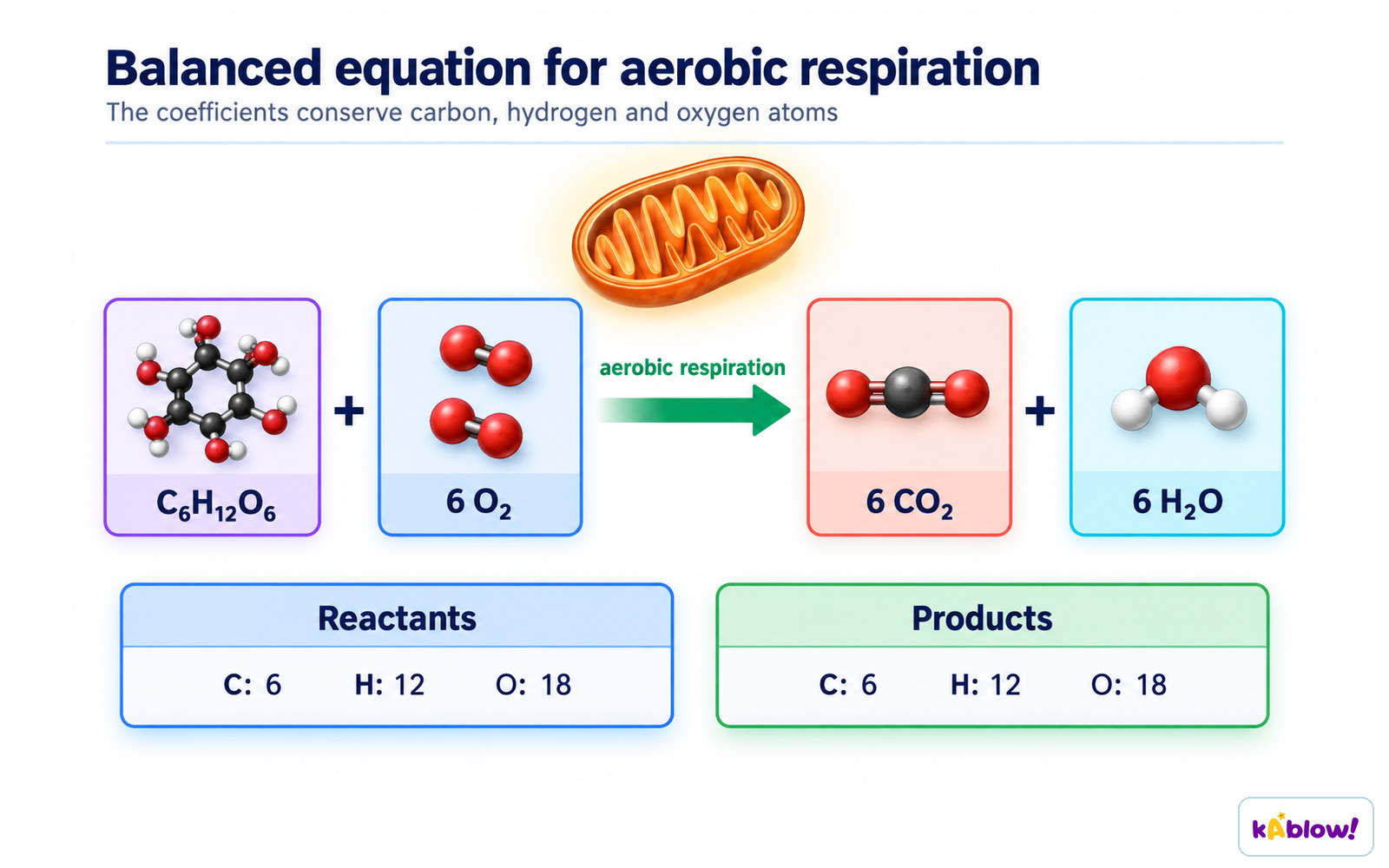
- Word equation: glucose + oxygen → carbon dioxide + water (and energy is released).
- Symbol equation: C₆H₁₂O₆ + 6O₂ → 6CO₂ + 6H₂O. There are the same numbers of carbon, hydrogen and oxygen atoms on each side, because atoms are rearranged, not made or destroyed.
- Most of the reactions of aerobic respiration take place in the mitochondria, so cells that need lots of energy, such as muscle cells, have many mitochondria.
- Aerobic respiration is the reverse pattern of photosynthesis: photosynthesis stores energy in glucose using light, and respiration releases it.
- The glucose comes from digested food and the oxygen comes from the breathing system and the blood. The carbon dioxide is carried back to the lungs and breathed out. You can show that carbon dioxide is made by blowing through a tube into limewater, which turns cloudy.
- Some of the energy is released as heat. This is why you feel warm after exercise, and why a pile of respiring compost heats up.
The balanced equation for aerobic respiration
Anaerobic respiration in muscles
- Anaerobic respiration is respiration without oxygen. It breaks glucose down only partly, so it releases much less energy than aerobic respiration.
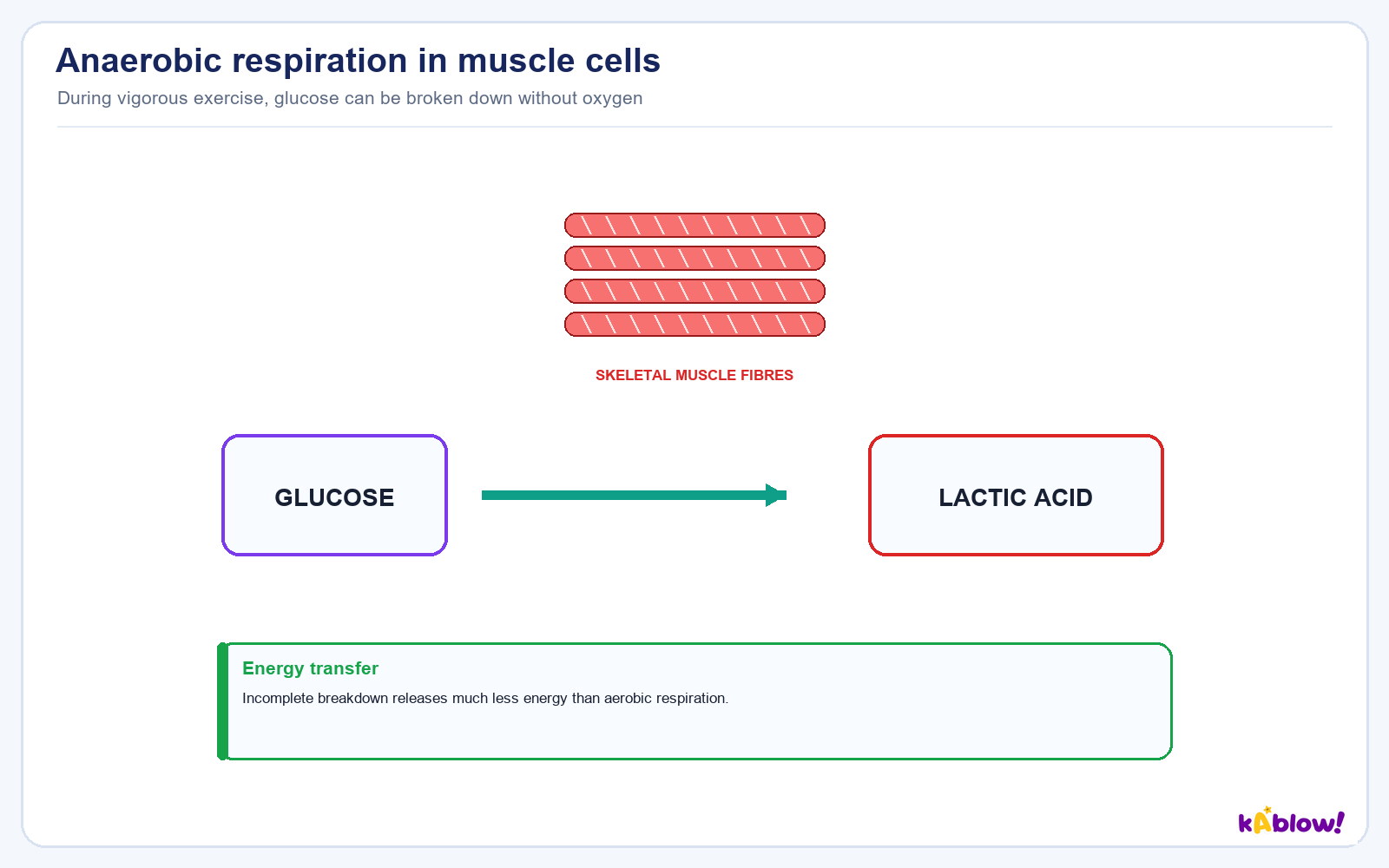
- In humans and other animals the word equation is: glucose → lactic acid (and a small amount of energy is released). No carbon dioxide is made.
- During a sprint or heavy lifting, the muscles need energy faster than the blood can deliver oxygen. The muscle cells keep releasing some energy by anaerobic respiration alongside aerobic respiration.
- Anaerobic respiration happens in the cytoplasm of the cell, not in the mitochondria.
- The cost is that lactic acid builds up in the muscles and blood, and the muscles become tired. This tiredness is called muscle fatigue, and the muscles work less well until the lactic acid is dealt with.
- Because it is so much less efficient, anaerobic respiration is only a short-term top-up. It cannot power a marathon.
Anaerobic respiration in muscle cells
Oxygen debt and recovery
- After hard exercise you keep breathing fast and your heart keeps beating fast, even though you have stopped moving. This is because your body has an oxygen debt.
- The oxygen debt is the extra oxygen needed after exercise to break down the lactic acid that built up.
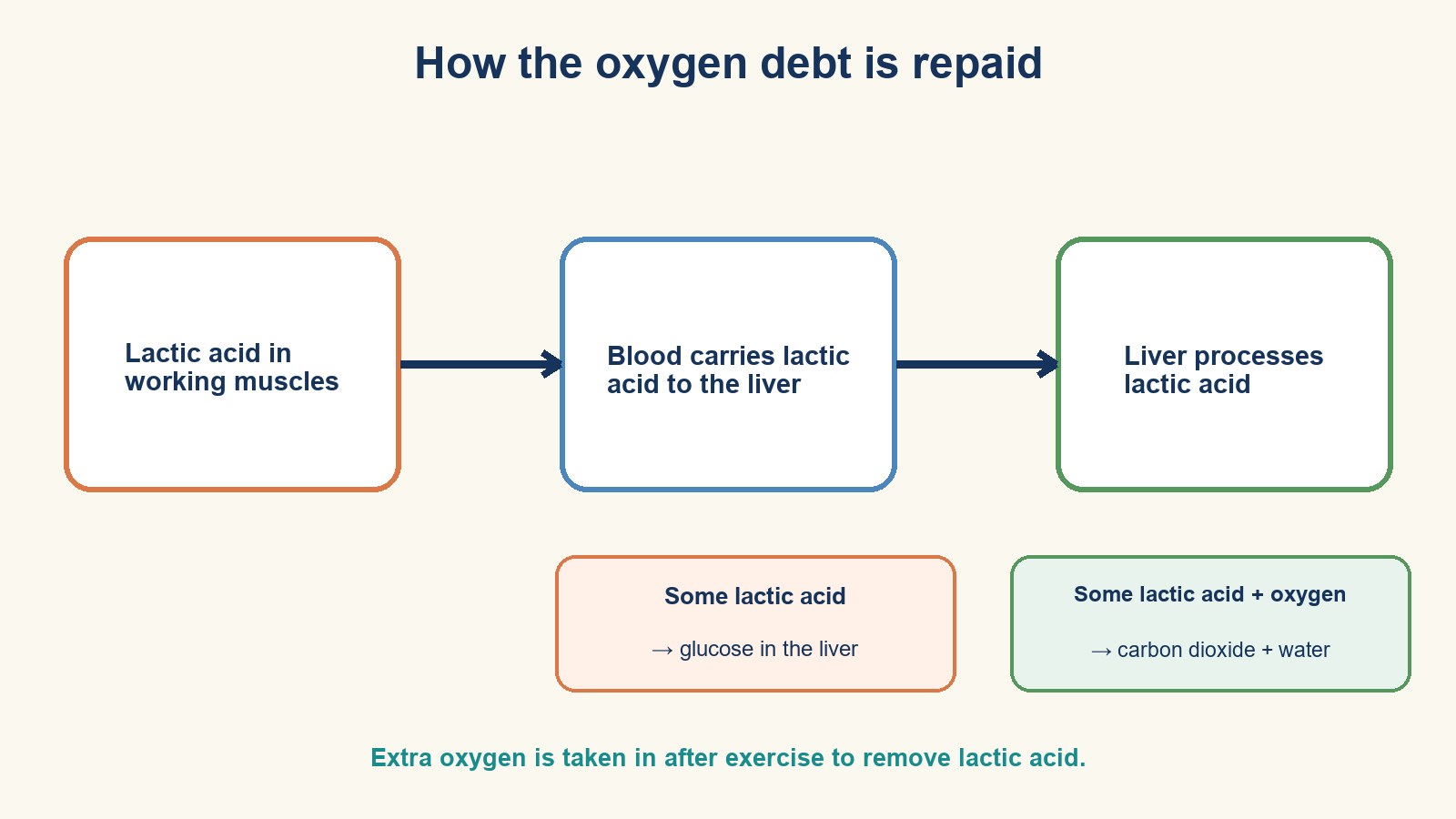
- The blood carries lactic acid from the muscles to the liver. Some of it is converted back to glucose. Some of it reacts with oxygen to form carbon dioxide and water, releasing energy.
- When all the lactic acid has been removed, the debt is repaid. Breathing rate and heart rate return to normal.
- Fitter people usually recover faster, because their heart and lungs deliver oxygen more efficiently and their muscles make less lactic acid at the same effort.
How the oxygen debt is repaid
Yeast, fermentation and plants
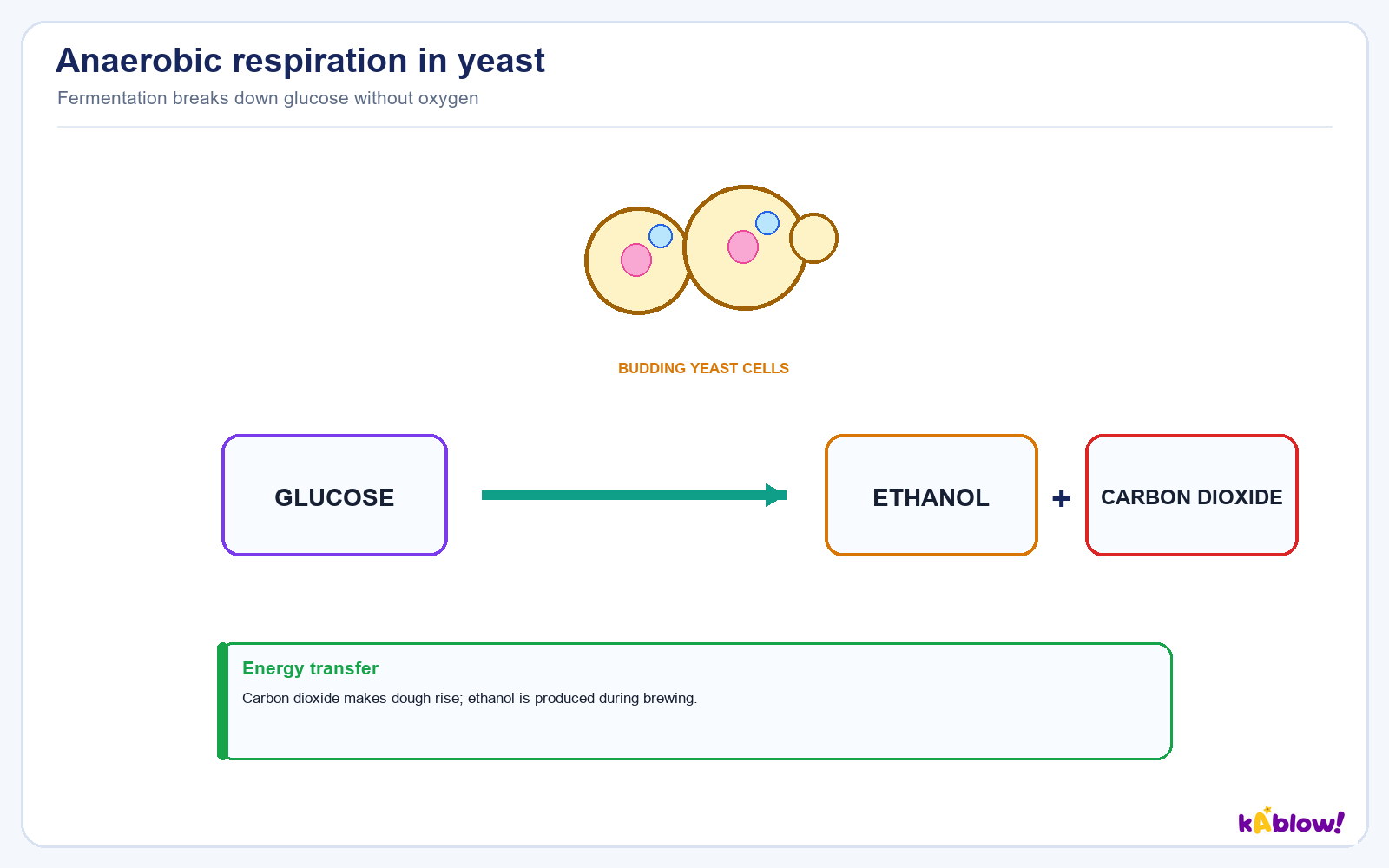
- Yeast is a single-celled fungus. When it has no oxygen it respires anaerobically. This is called fermentation.
- Word equation for yeast: glucose → ethanol + carbon dioxide (and a small amount of energy is released). Ethanol is a kind of alcohol.
- Fermentation is useful. In bread-making, the carbon dioxide forms bubbles that make the dough rise, and the ethanol evaporates when the bread is baked. In brewing, yeast turns sugar in grape juice or malted barley into ethanol.
- Plants and many microbes also respire anaerobically in some conditions, for example in waterlogged soil, and they make ethanol and carbon dioxide like yeast does.
- Plant cells respire aerobically all the time, day and night. In light they also photosynthesise, so in the day a plant may take in more carbon dioxide than it gives out.
- Compare the two anaerobic equations. Both release a small amount of energy and both happen without oxygen, but the products are different: lactic acid in animals, ethanol and carbon dioxide in yeast and plants.
Anaerobic respiration in yeast
Think like a scientist: how does temperature affect yeast?
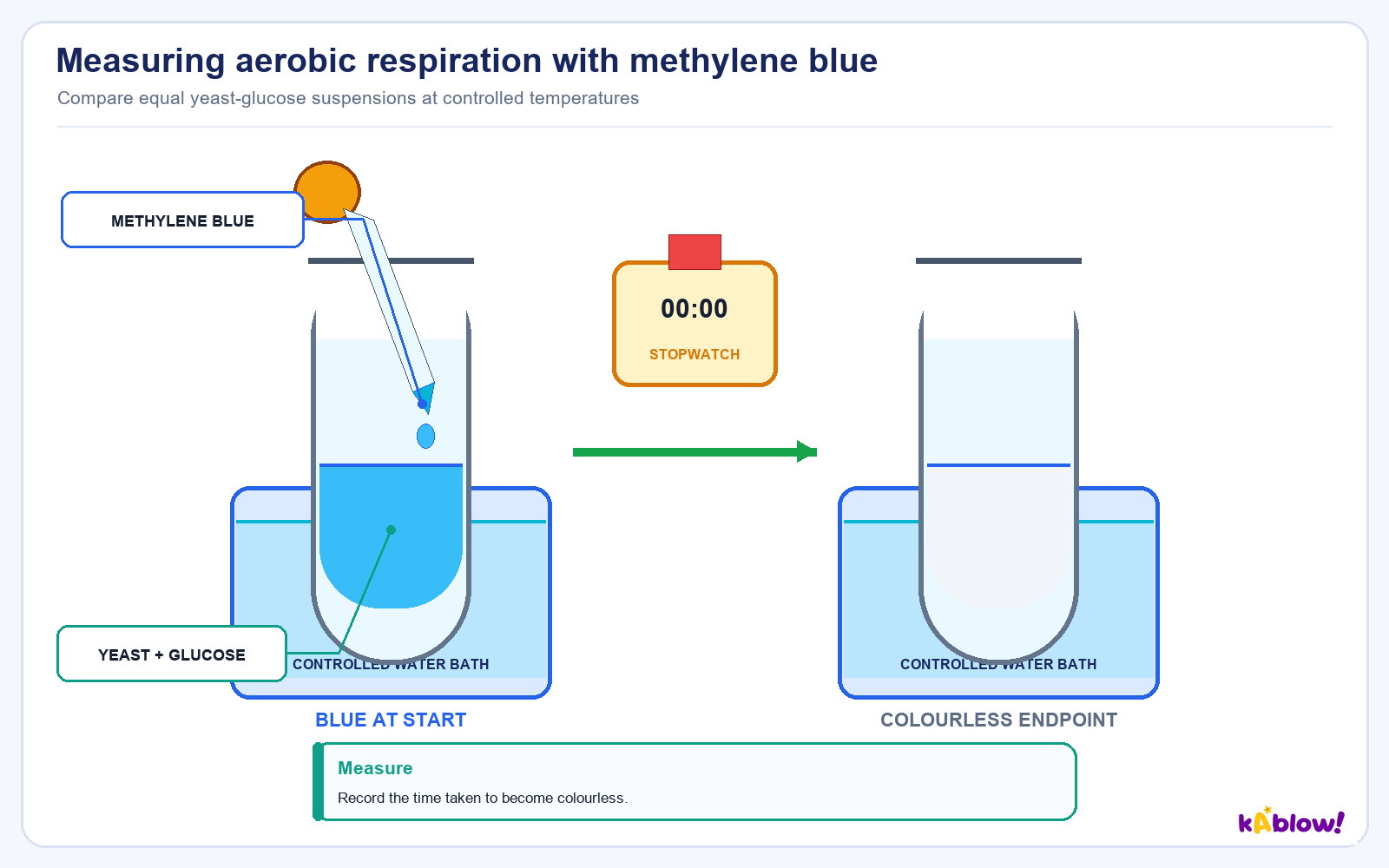
- You can measure the rate of respiration in yeast by counting the bubbles of carbon dioxide produced per minute, or by timing how long methylene blue dye takes to lose its blue colour as the yeast respires. A shorter time means a faster rate.
- The independent variable is the temperature of the water bath. The dependent variable is the number of bubbles per minute (or the time for the colour to disappear).
- For a fair test, keep the same mass of yeast, volume and concentration of glucose solution, the same size of container and the same time for counting.
- Enzymes control the reactions of respiration. Yeast respires faster as it warms up, until an optimum (about 40 °C). At higher temperatures the enzymes denature and the rate falls quickly.
- Inquiry task 1: plan an investigation to find the best temperature for yeast respiration. Choose five temperatures, name the variable you measure, list three controls and say how you will make your results reliable.
- Inquiry task 2: a student counts bubbles for 10 seconds at each temperature and tests each only once. Evaluate the method and suggest two improvements.
Measuring respiration in yeast with methylene blue
投影片
練習題
免費預覽——53 題中的 8 題。註冊即可查看全部。
1.What is respiration?
Easy- AThe movement of blood around the body by the heart
- BA process that makes glucose in cells using light
- CMoving air in and out of the lungs using muscles
- DReactions in cells that release energy from food
2.Which of these is the word equation for aerobic respiration?
Easy- AGlucose + oxygen → carbon dioxide + water
- BGlucose → lactic acid
- CGlucose → ethanol + carbon dioxide
- DCarbon dioxide + water → glucose + oxygen
3.In which part of a cell do most of the reactions of aerobic respiration take place?
Easy- AThe cell membrane
- BThe chloroplasts
- CThe nucleus
- DThe mitochondria
4.Which substance builds up in muscles during anaerobic respiration?
Easy- AEthanol
- BCarbon dioxide
- CStarch
- DLactic acid
5.Which two substances does yeast make when it respires without oxygen?
Easy- AEthanol and carbon dioxide
- BGlucose and oxygen
- CWater and carbon dioxide
- DLactic acid and water
6.Which of these uses energy released by respiration?
Easy- AFiltering light through the lens
- BContracting a muscle
- CAbsorbing sunlight in a leaf
- DMaking oxygen in photosynthesis
7.Why does bread dough rise?
Easy- AWater boils inside the dough
- BYeast makes carbon dioxide bubbles
- CYeast makes oxygen
- DEthanol turns into gas in the cold
8.Which gas turns limewater cloudy and is made by aerobic respiration?
Easy- ACarbon dioxide
- BNitrogen
- COxygen
- DHydrogen
歷屆試題
這個主題的歷屆試題練習即將推出。
即將推出