How Fast? The Rate Of Chemical Change
邊玩邊學
回答這些題目賺取能量,接著就能釣魚、探索。不需要帳號。
課程筆記
Rate of Reaction
- The rate of reaction is the change in concentration of a reactant or product per unit time.
- The units of rate are typically mol dm⁻³ s⁻¹.
- The formula is: rate = change in concentration / time.
- On a concentration–time graph, the steeper the gradient, the faster the rate.
- The rate at a particular time is found by drawing a tangent to the curve and calculating its gradient (Δy/Δx).
- For reactants, the gradient is negative, so the rate is given as a positive value.
- For products, the gradient is positive, so the rate is already positive.
Diagram showing the apparatus needed to investigate the effect of concentration on the rate of reaction
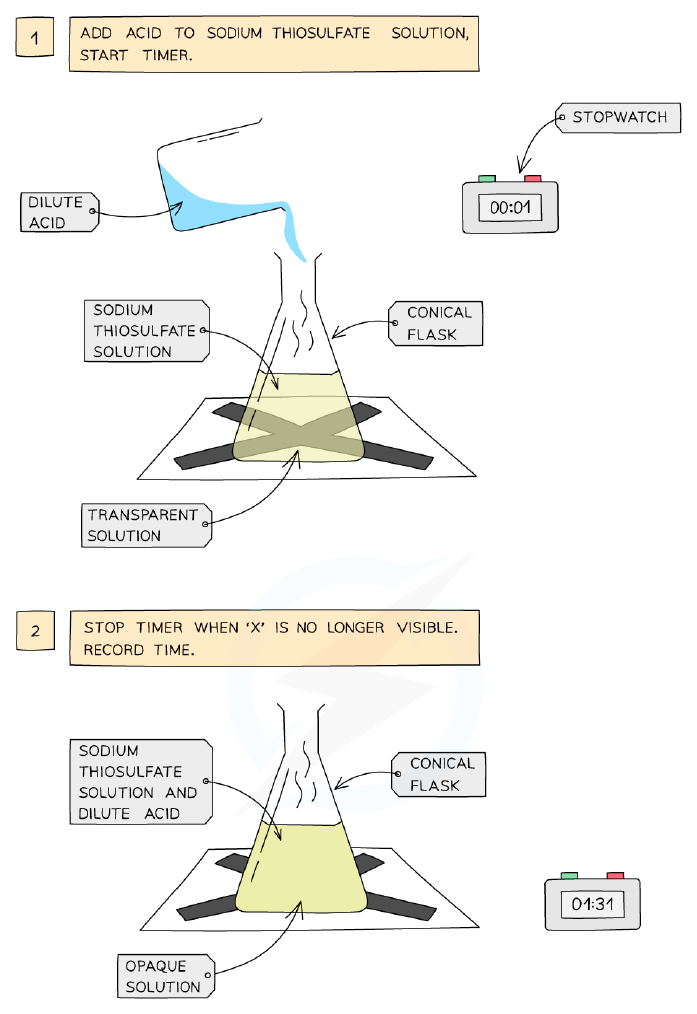
Measuring Rates of Reaction
- To measure rate, track how quickly reactants are used up or products are formed.
- Colorimetry measures light intensity passing through a solution; it can monitor colour changes but not coloured precipitates.
- Mass loss works when a gas escapes; the gas must be dense enough to detect a mass change (e.g., CO₂ but not H₂).
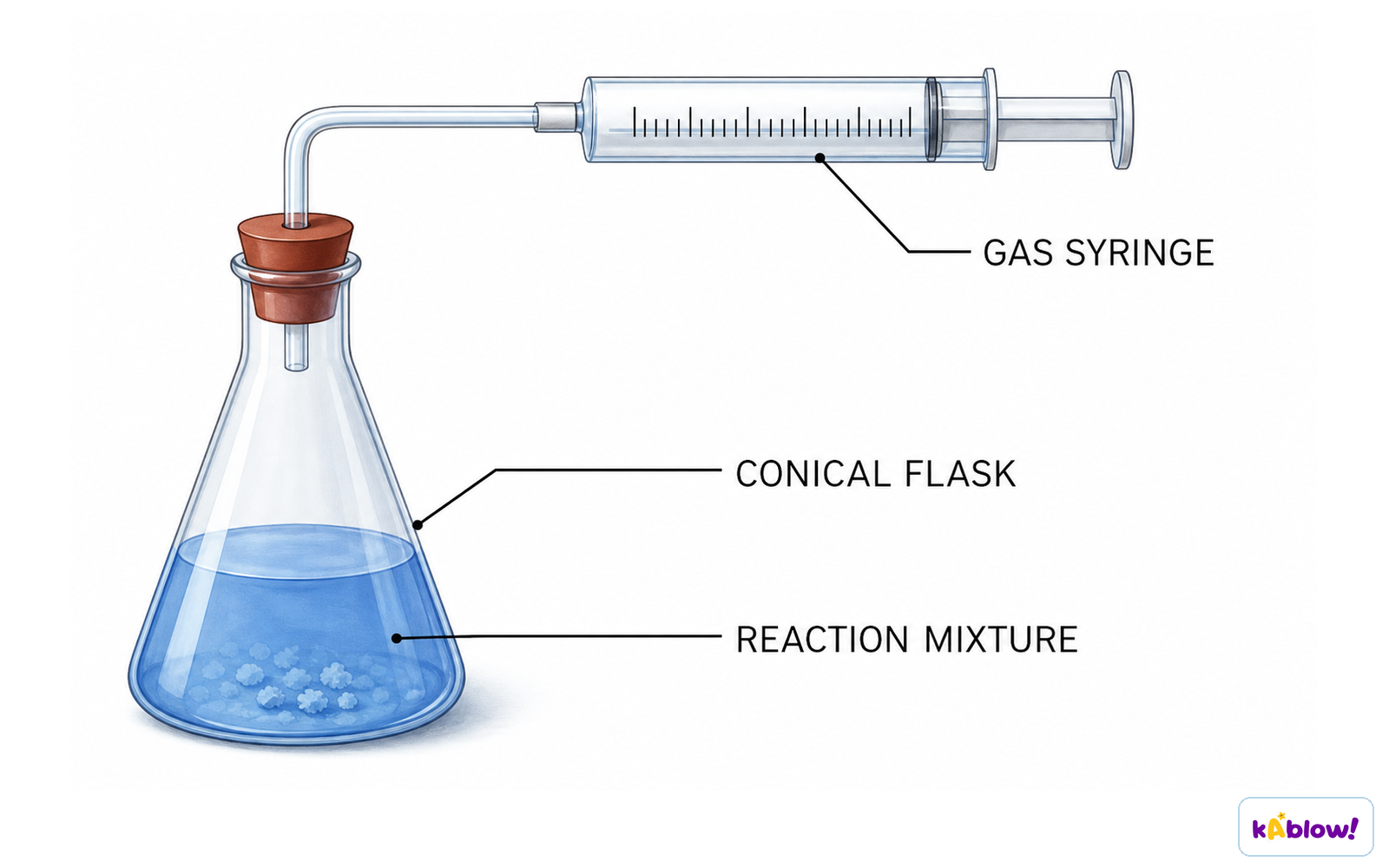
- Gas volume can be measured with a gas syringe or by displacement over water (only for gases with low water solubility).
- Titration can measure concentration changes if samples are taken at intervals and quenched to stop the reaction.
- Conductivity can be used if the concentration of ions changes during the reaction.
- Clock reactions measure the time to reach a visible endpoint, e.g., the disappearing cross with sodium thiosulfate and HCl.
Gas syringe apparatus
Collision Theory
- Kinetic theory explains the properties of matter in terms of particle motion and energy.
- Kinetic energy is given by KE = ½mv²; at the same temperature, lighter particles move faster.
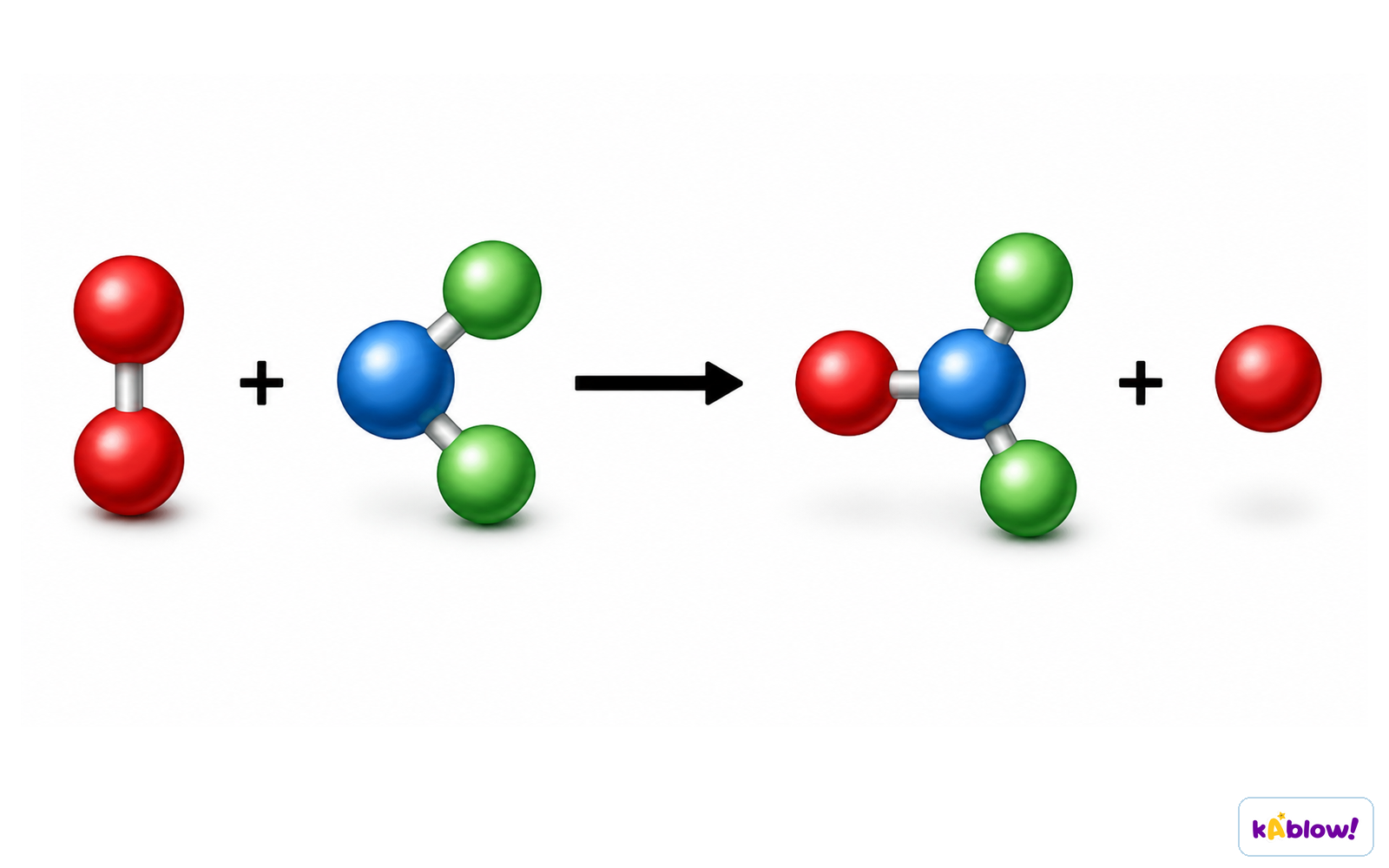
- For a reaction to occur, particles must collide with sufficient energy and the correct orientation.
- Collision frequency is the number of collisions per unit time.
- Collision energy is the combined energy of colliding particles.
- Activation energy (Ea) is the minimum energy required for a successful collision.
- Most collisions are unsuccessful because they do not have enough energy, not because of orientation.
A successful collision
Factors Affecting Rates of Reaction
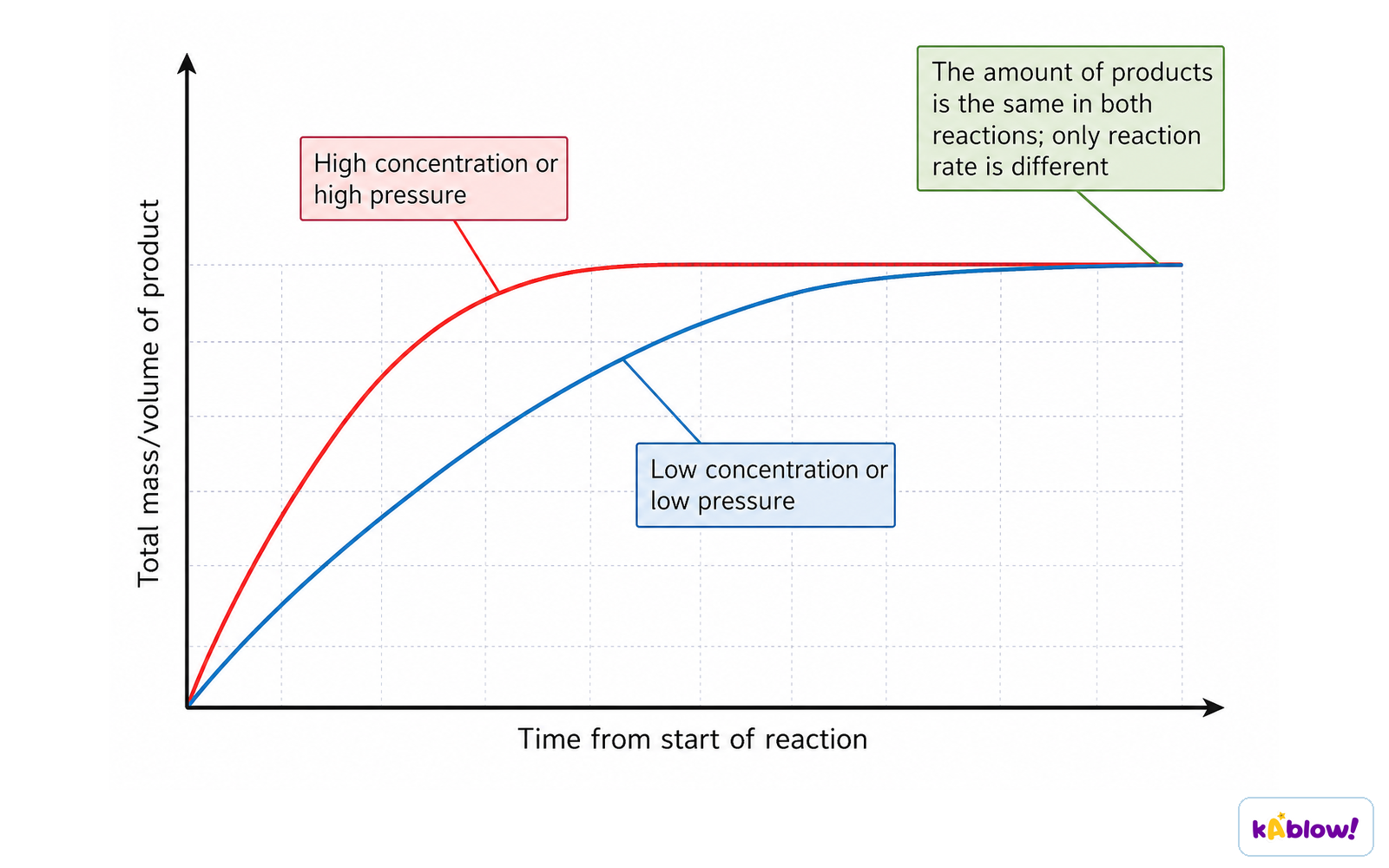
- Concentration: higher concentration means more particles per unit volume, increasing collision frequency and rate.
- Pressure: for gases, higher pressure has the same effect as higher concentration, increasing collision frequency.
- Temperature: higher temperature increases both collision frequency and the proportion of particles with energy ≥ Ea.
- Surface area: smaller particles (e.g., powder) expose more surface, increasing collision frequency.
- Catalysts: provide an alternative pathway with lower activation energy, increasing the proportion of successful collisions.
Concentration and reaction rate
Activation Energy
- Activation energy (Ea) is the minimum energy that colliding particles need to react.
- In exothermic reactions, reactants are higher in energy than products.
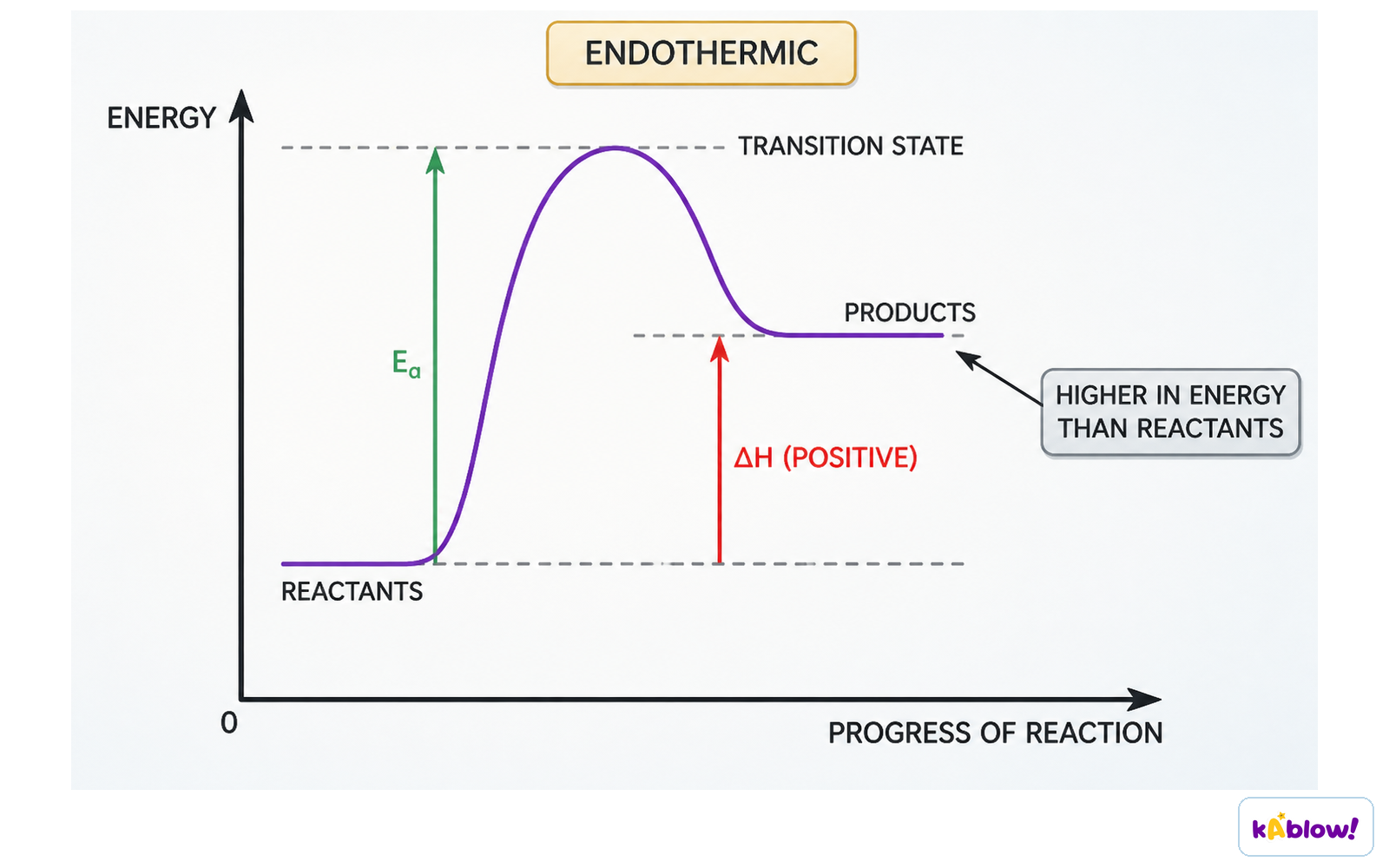
- In endothermic reactions, reactants are lower in energy than products.
- For a successful collision, particles must collide with the correct orientation and with energy ≥ Ea.
- The activation energy for the reverse reaction can be found from the energy profile: for exothermic, reverse Ea = ΔH + Ea(forward); for endothermic, reverse Ea = Ea(forward) – ΔH.
Reaction pathway diagrams
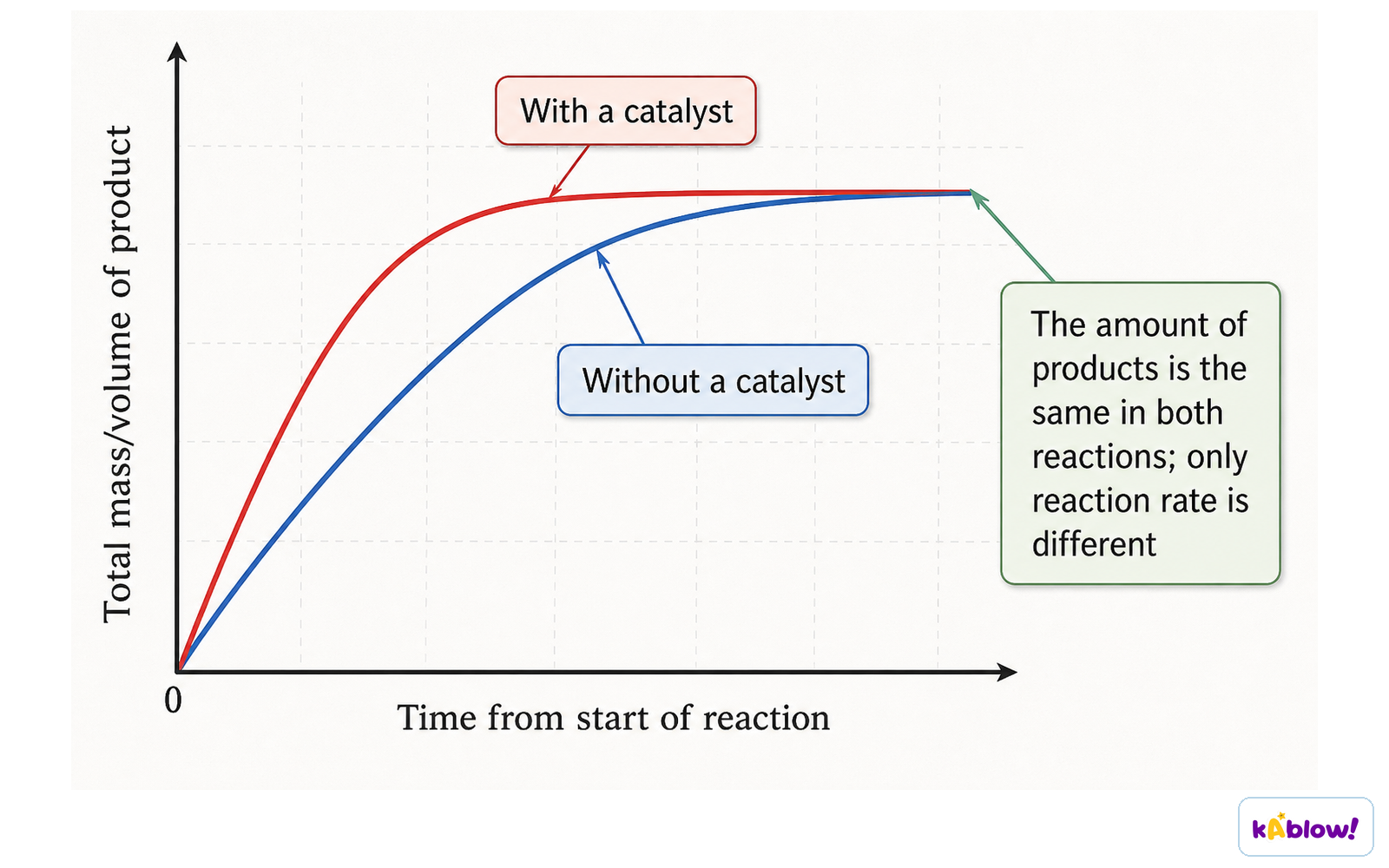
Energy Profiles With & Without Catalysts
- A catalyst increases rate by providing an alternative reaction pathway with lower activation energy.
- The catalyst is chemically unchanged at the end of the reaction.
- Catalysts do not change the enthalpy change (ΔH) of the reaction.
- Homogeneous catalysts are in the same phase as reactants; heterogeneous catalysts are in a different phase.
- Enzymes are biological catalysts; transition metals are often catalysts due to variable oxidation states.
- Catalysts reduce energy requirements, waste, and can increase selectivity in industrial processes.
Catalysts and reaction rate
Maxwell-Boltzmann Distribution Curves
- A Maxwell-Boltzmann distribution shows the distribution of molecular energies at a given temperature.
- The curve starts at the origin and approaches but never touches the x-axis.
- The peak represents the most probable energy (Emp).
- The area under the curve represents the total number of particles.
- At higher temperatures, the curve flattens and the peak shifts to the right; a greater proportion of particles exceed Ea.
- A catalyst lowers Ea, increasing the proportion of particles with energy ≥ Ea, but does not change the shape of the distribution.
投影片
練習題
免費預覽——61 題中的 8 題。註冊即可查看全部。
1.A catalyst provides an alternative reaction pathway with a lower activation energy.
EasyTrue or false?
2.Which of the following is the correct unit for the rate of reaction?
Easy- Amol dm⁻³ s⁻¹
- Bmol dm⁻³
- Cs⁻¹
- Dmol s⁻¹
3.Which of the following factors can increase the rate of a chemical reaction? (select all that apply)
Medium- AIncreasing the concentration of a reactant in solution
- BIncreasing the total pressure in a reaction involving gases
- CIncreasing the particle size of a solid reactant
- DRaising the temperature of the reaction mixture
- EAdding a catalyst
4.Match each term with its correct definition.
Easy- Rate of reaction
- Activation energy
- Collision frequency
- Successful collision
- The change in concentration of a reactant or product per unit time
- The minimum energy colliding particles need to react
- The number of collisions between particles per unit time
- A collision with correct orientation and sufficient energy to react
5.Which method would be most suitable for monitoring the rate of the reaction between calcium carbonate and hydrochloric acid, which produces carbon dioxide gas?
Easy- AMeasuring the loss in mass of the reaction vessel over time
- BMeasuring the pH of the solution continuously
- CMeasuring the colour intensity of the solution using a colorimeter
- DMeasuring the electrical conductivity of the solution
6.Increasing the temperature of a reaction mixture increases the rate of reaction only because the particles collide more frequently.
MediumTrue or false?
7.On an energy profile diagram for an exothermic reaction, how is the activation energy represented?
Medium- AThe energy difference between the reactants and the products
- BThe energy difference between the reactants and the transition state (peak)
- CThe energy difference between the products and the transition state (peak)
- DThe energy difference between the transition state and the zero energy line
8.Which of the following are valid ways to monitor the rate of a chemical reaction? (select all that apply)
Medium- AMeasuring the volume of gas produced over time
- BMeasuring the change in mass of the reaction vessel over time
- CMeasuring the colour intensity of a solution using a colorimeter
- DMeasuring the temperature of the reaction mixture over time
- EMeasuring the pH of the reaction mixture over time