Drugs In Medicine
邊玩邊學
回答這些題目賺取能量,接著就能釣魚、探索。不需要帳號。
給教育者: 為 Drugs In Medicine(Biology、CIE)準備好可直接使用的課程投影片, 複習筆記——用於你的課程,或把這個主題當成互動班級活動,讓學習者以即時遊戲的方式進行。
課程筆記
What is a drug?
- A drug is any substance taken into the body that modifies or affects chemical reactions in the body.
- Medicinal drugs are used to treat the symptoms or causes of a disease (e.g., antibiotics).
- The liver is the primary site of drug metabolism.
Antibiotics
- Antibiotics are chemical substances made by certain fungi or bacteria.
- They affect bacterial cells by disrupting their structure/function or preventing reproduction.
- Antibiotics are effective against bacteria but not against viruses.
- They target processes/structures specific to prokaryotic cells, so they generally do not harm animal cells.
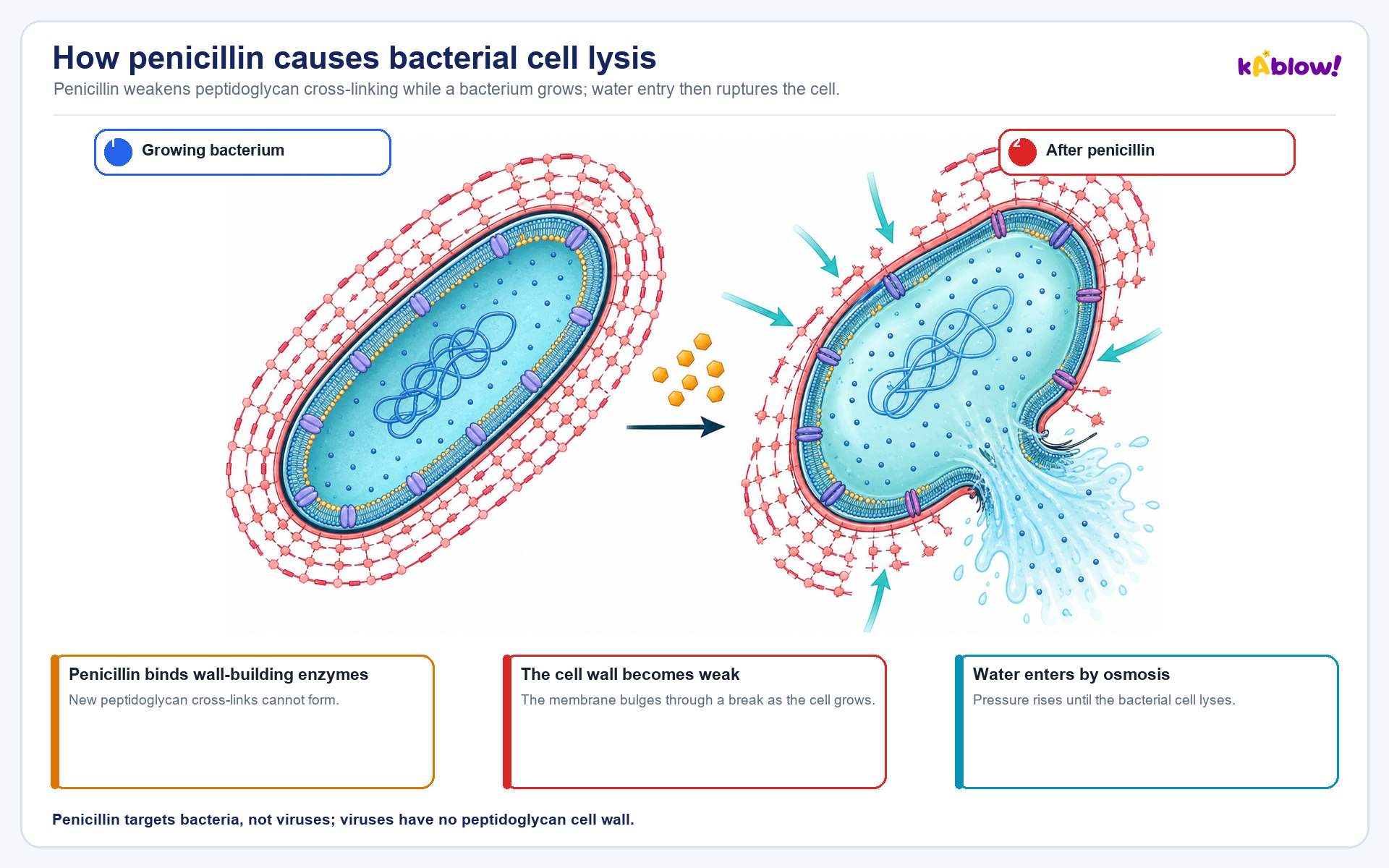
How antibiotics work: penicillin interferes with bacterial cell wall formation
Antibiotic resistance
- Overuse and unnecessary prescribing of antibiotics reduce their effectiveness.
- Patients failing to complete the full prescribed course contributes to resistance.
- Large-scale use in farming (even when animals are not sick) increases resistance.
- Resistant bacteria are called superbugs (e.g., MRSA).
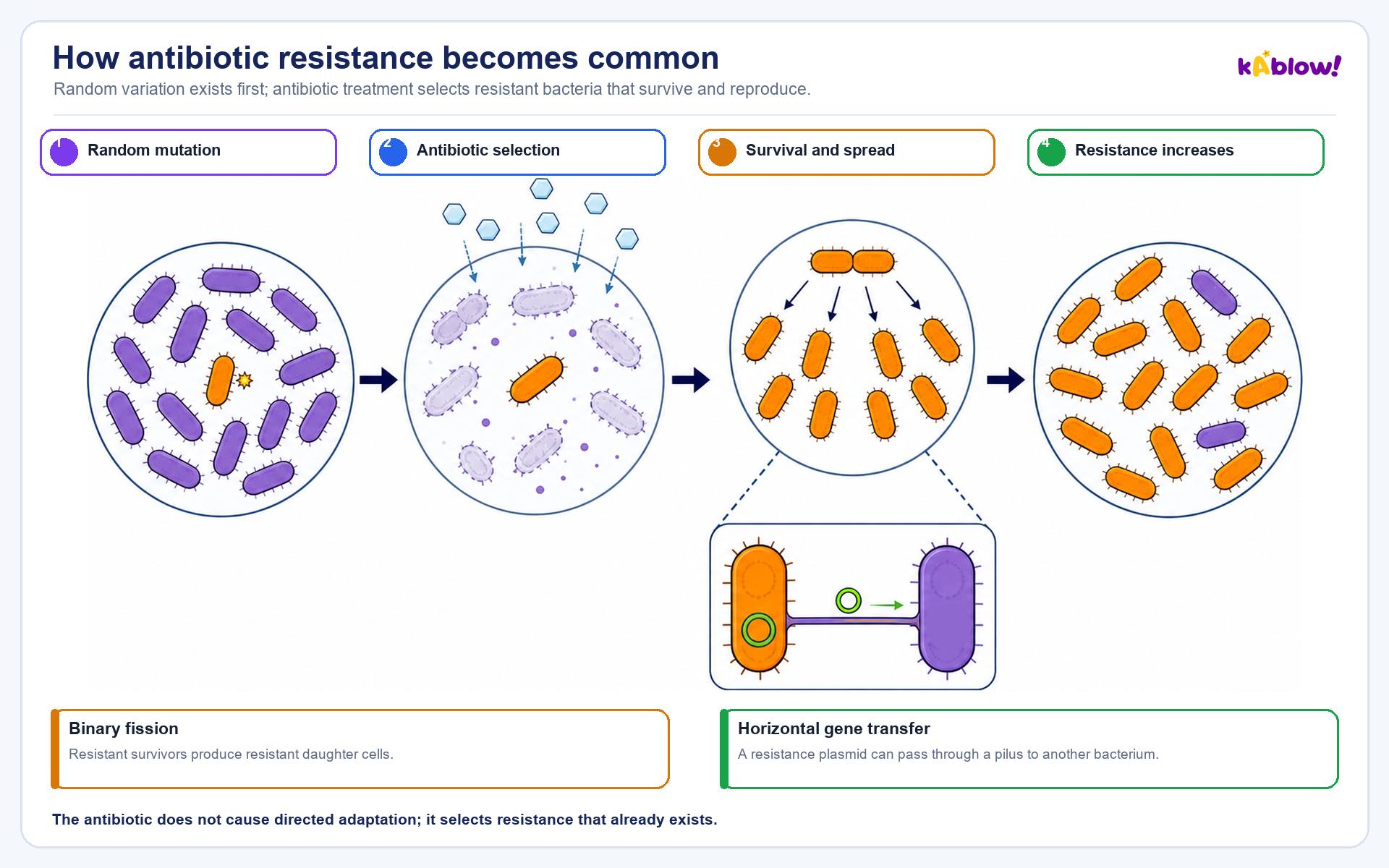
Mechanism of antibiotic resistance
Preventing antibiotic resistance
- Only take antibiotics when absolutely essential.
- Always complete the entire prescribed course, even if you feel better.
- Doctors should not prescribe antibiotics for viral infections.
投影片
練習題
免費預覽——42 題中的 8 題。註冊即可查看全部。
1.Which of the following gives the most accurate definition of a drug?
Easy- AAn addictive or harmful substance.
- BA substance taken into the body that modifies or affects chemical reactions.
- CA plant extract that kills bacteria.
- DA substance that produces side effects as well as therapeutic effects.
2.Which organ is the primary site of drug metabolism?
Easy- AKidney
- BLiver
- CHeart
- DLungs
3.Which group of drugs is used to treat the symptoms or causes of a disease?
Easy- AAntibiotics
- BMedicinal drugs
- CPainkillers
- DVaccines
4.Which class of drugs is used to treat bacterial infections?
Easy- AAntibiotics
- BAntivirals
- CPainkillers
- DVaccines
5.Antibiotics are effective against bacteria but not against viruses because
Medium- Aviruses have cell walls that are different from bacterial cell walls
- Bviruses do not have the cellular structures that antibiotics target
- Cviruses are too small for antibiotics to affect
- Dviruses produce enzymes that break down antibiotics
6.A patient feels better after taking only part of a prescribed course of antibiotics. Why is it important to complete the full course?
Easy- ATo ensure all bacteria are killed and reduce the chance of resistance developing
- BTo prevent side effects from stopping early
- CTo make the antibiotics work faster
- DTo avoid the infection becoming viral
7.Which of the following is NOT a reason why antibiotics are becoming less effective?
Easy- AOveruse of antibiotics in farming
- BPatients failing to complete the full course
- CAntibiotics 'wearing out' through overuse
- DBacteria evolving defence mechanisms
8.What is the name of the small circular loop of DNA that can be passed between bacterial cells and can carry antibiotic resistance genes?
Easy- AChromosome
- BPlasmid
- CRibosome
- DNucleoid
歷屆試題
這個主題的歷屆試題練習即將推出。
即將推出