Respiration
邊玩邊學
回答這些題目賺取能量,接著就能釣魚、探索。不需要帳號。
課程筆記
Respiration in Cells
- Respiration is a chemical process that breaks down nutrient molecules (especially glucose) to release energy stored in their bonds.
- Respiration is enzyme-controlled and occurs in all living cells; most aerobic reactions take place in mitochondria.
- Respiration can be aerobic (with oxygen) or anaerobic (without oxygen). Aerobic releases much more energy per glucose molecule.
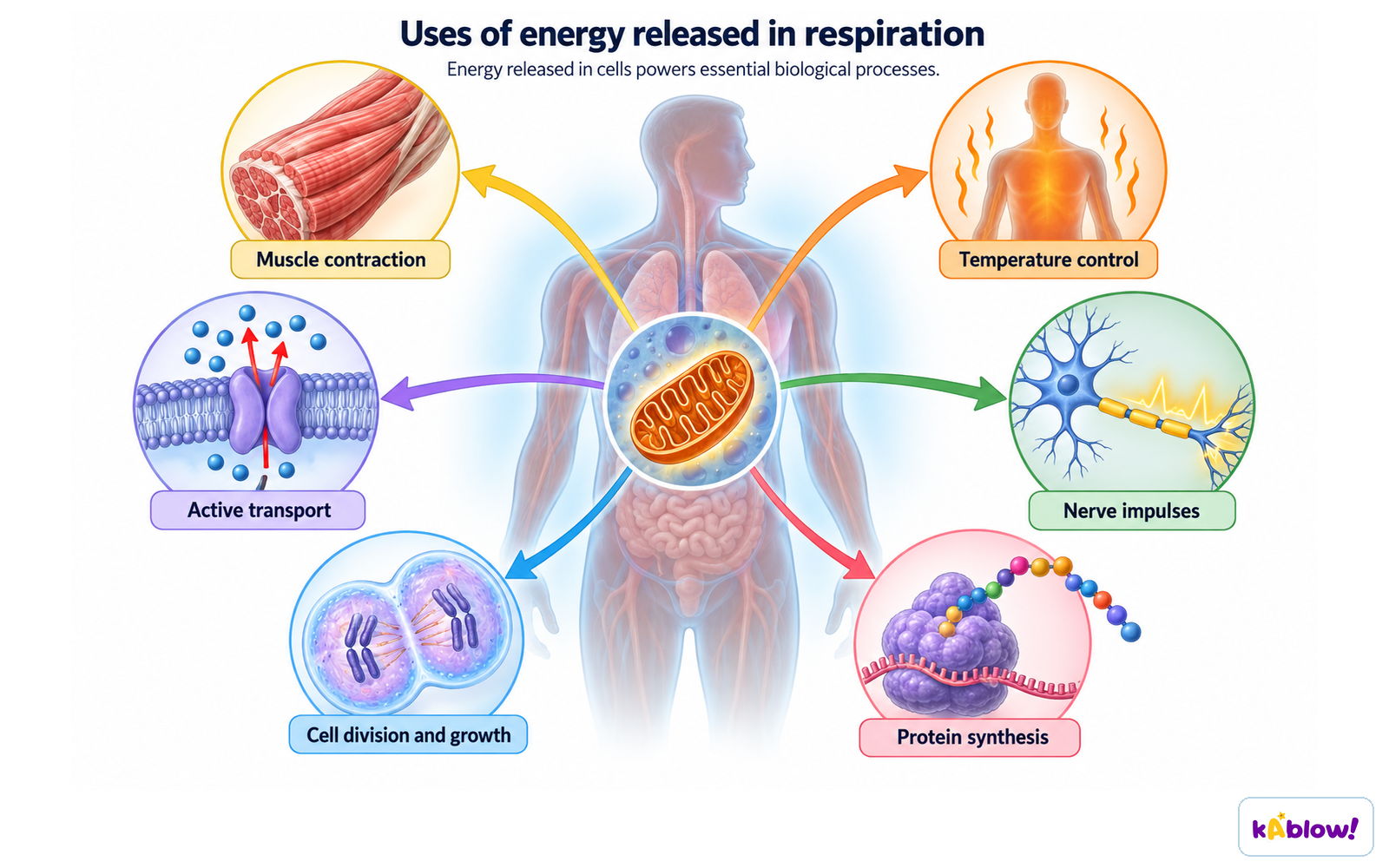
- Energy released is used for: muscle contraction, protein synthesis, cell division, growth, active transport, nerve impulses, and maintaining body temperature.
Uses of energy released in respiration
Aerobic Respiration
- Aerobic respiration uses oxygen to completely break down glucose, releasing a relatively large amount of energy.
- Word equation: glucose + oxygen → carbon dioxide + water
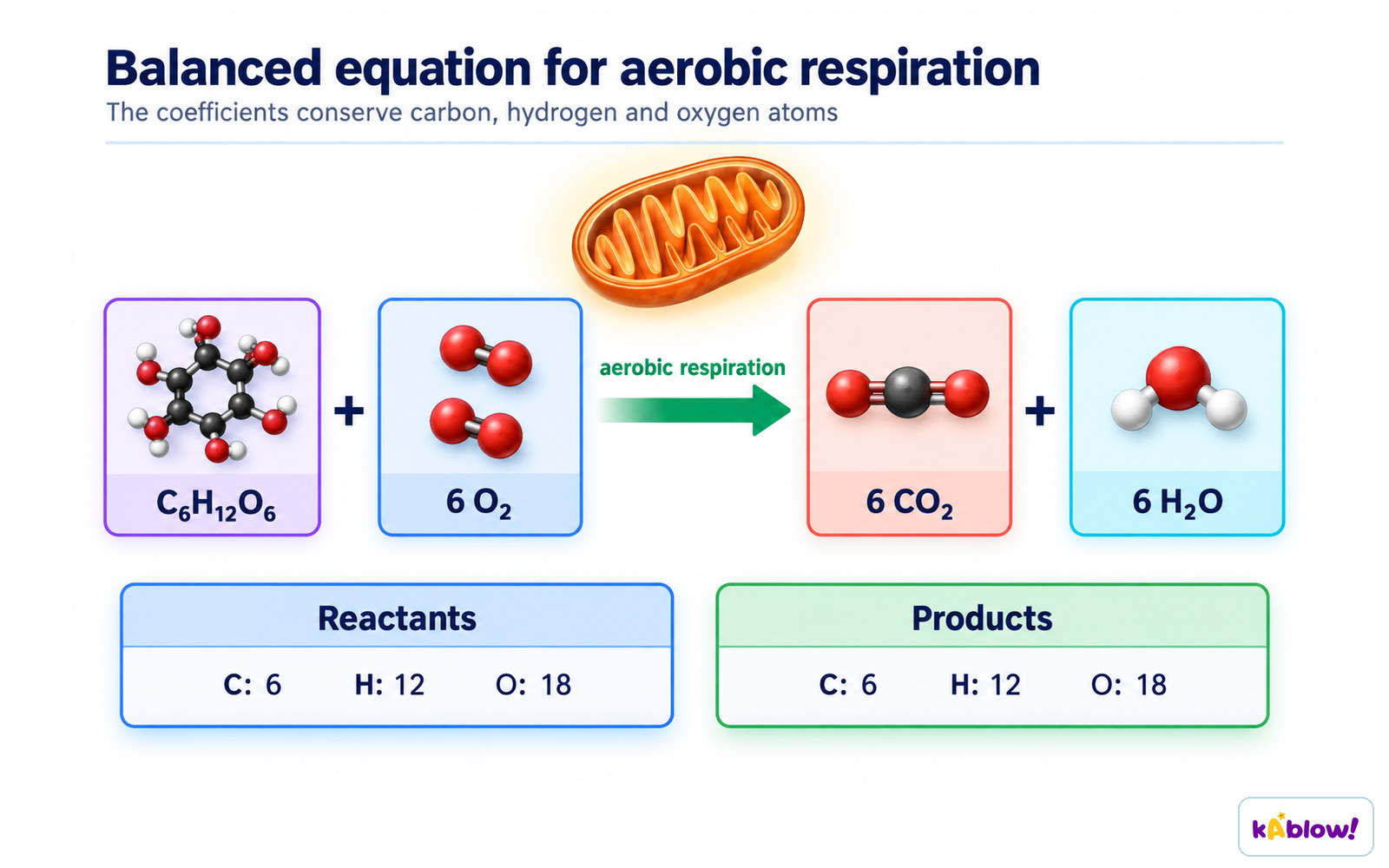
- Balanced symbol equation (Extended): C₆H₁₂O₆ + 6O₂ → 6CO₂ + 6H₂O
- Products are carbon dioxide and water; energy is released for cellular processes.
Balanced equation for aerobic respiration
Anaerobic Respiration in Animals
- Anaerobic respiration does not use oxygen; it is the incomplete breakdown of glucose, releasing less energy.
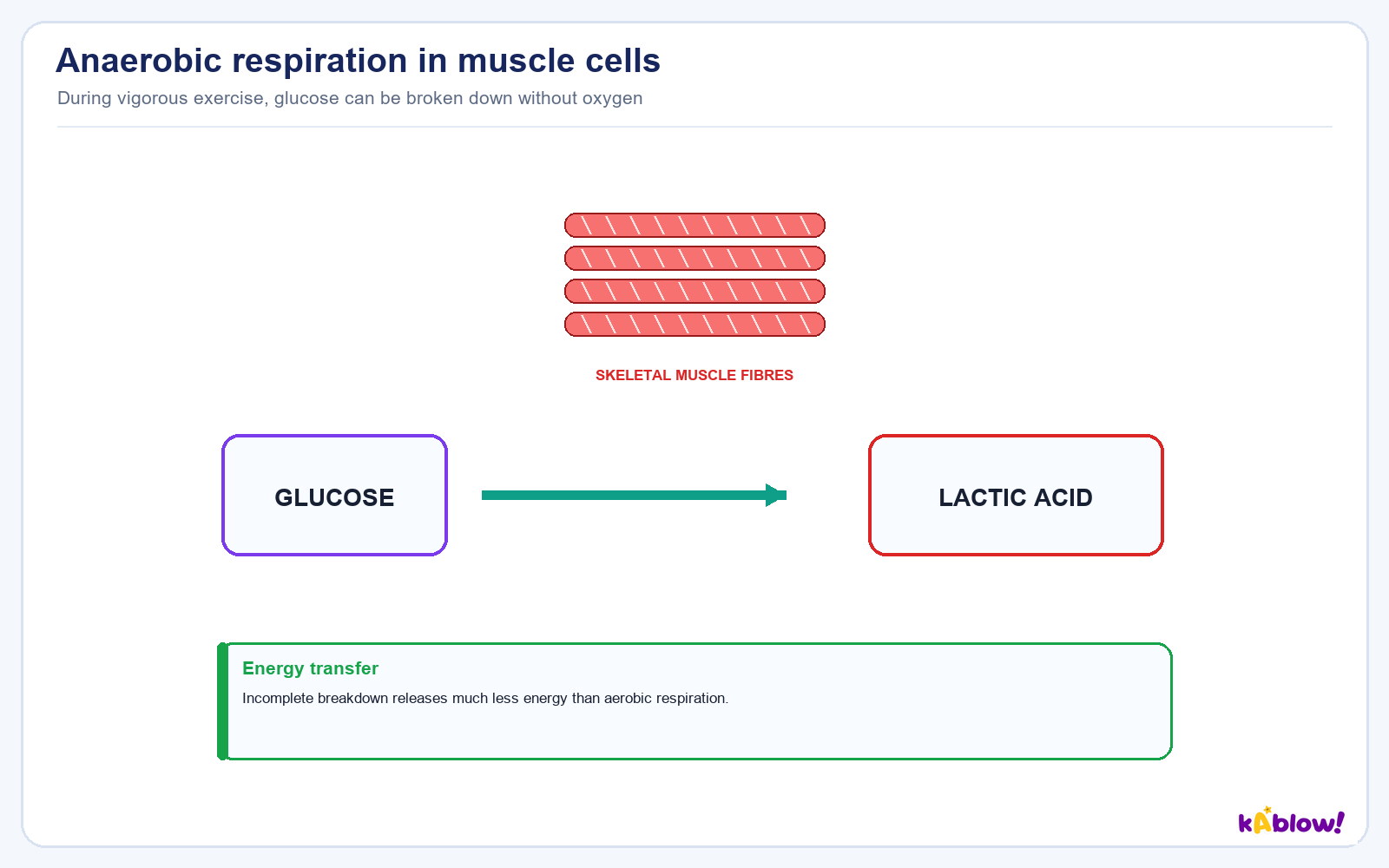
- In animals (e.g., during vigorous exercise), glucose is converted to lactic acid.
- Word equation: glucose → lactic acid
- Lactic acid build-up lowers pH in muscle cells, which can denature enzymes; it must be removed.
Word equation for anaerobic respiration in animals
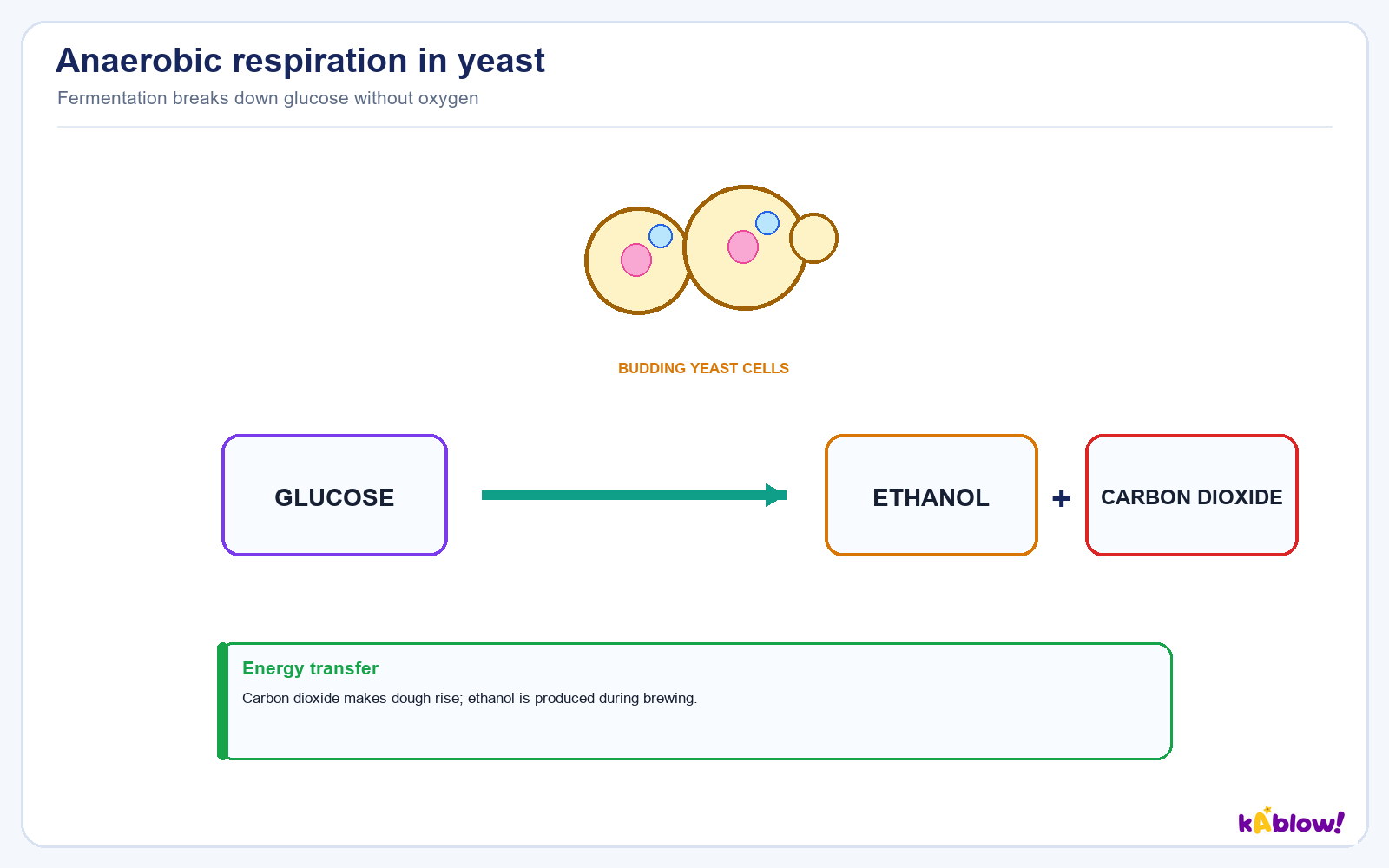
Anaerobic Respiration in Yeast
- In yeast, anaerobic respiration produces ethanol and carbon dioxide.
- Word equation: glucose → ethanol + carbon dioxide
- Balanced symbol equation (Extended): C₆H₁₂O₆ → 2C₂H₅OH + 2CO₂
- Used in bread-making (CO₂ makes dough rise) and brewing (ethanol gives alcohol, CO₂ gives fizz).
Word equation for anaerobic respiration in yeast
Oxygen Debt (Extended)
- After exercise, lactic acid is transported to the liver and oxidised (using oxygen) to CO₂ and H₂O.
- This requires extra oxygen, known as repaying the oxygen debt.
- Breathing rate and heart rate remain high after exercise to deliver oxygen to the liver for lactic acid oxidation.
Comparing Aerobic and Anaerobic Respiration
- Aerobic: uses oxygen, complete breakdown, large energy release, products CO₂ + H₂O.
- Anaerobic (animals): no oxygen, incomplete, small energy release, product lactic acid only.
- Anaerobic (yeast): no oxygen, incomplete, small energy release, products ethanol + CO₂.
- Anaerobic respiration in animals does not produce CO₂ – that is a common exam mistake.
Balanced equation for aerobic respiration
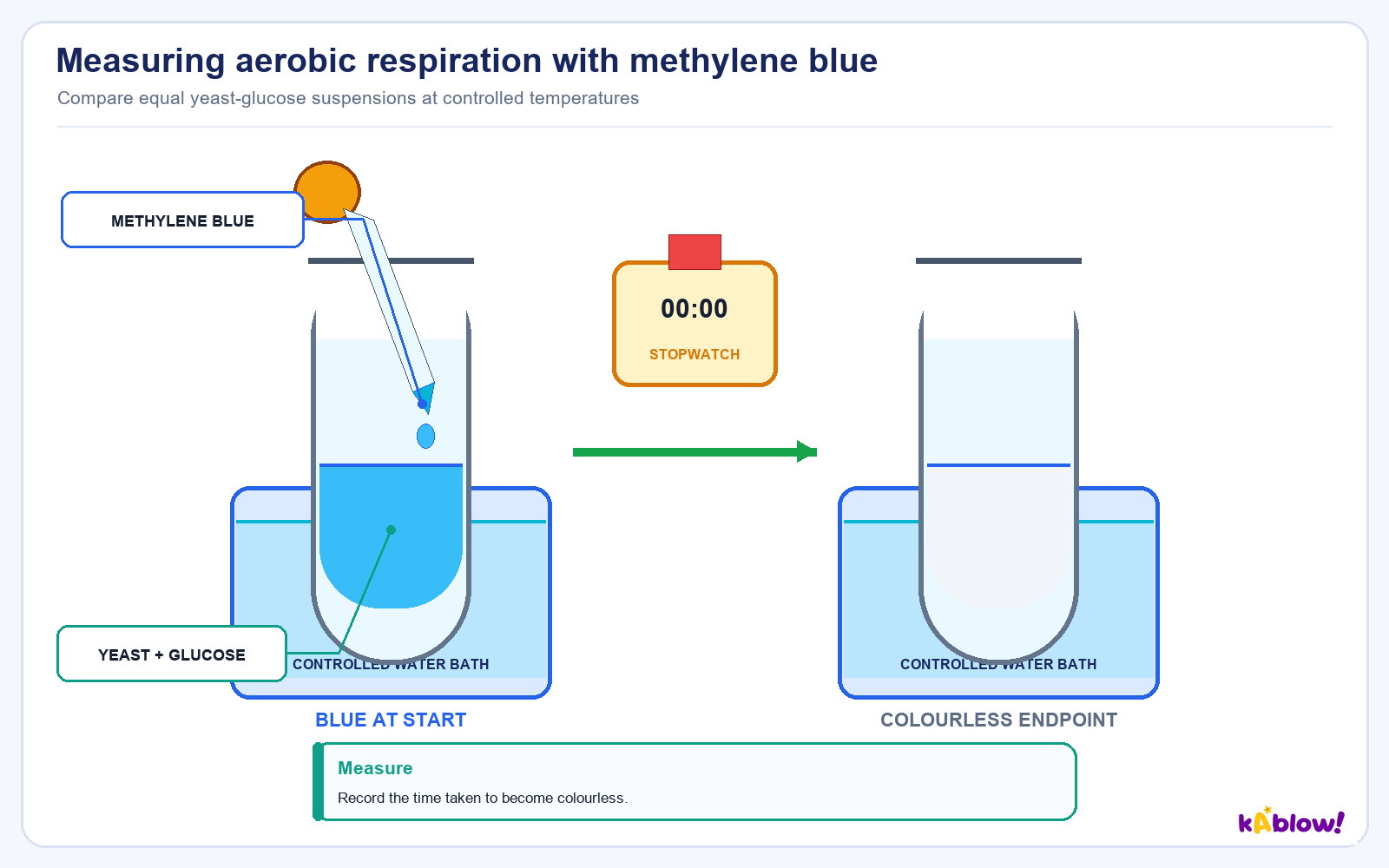
Effect of Temperature on Respiration (Yeast Experiment)
- Methylene blue dye is added to a yeast-glucose suspension; it turns from blue to colourless as respiration occurs.
- The time for colour change measures the rate of respiration (faster change = faster rate).
- Independent variable: temperature; dependent variable: rate of respiration (time for colour change).
- Control variables: volume/concentration of dye, yeast, glucose; pH (use buffer).
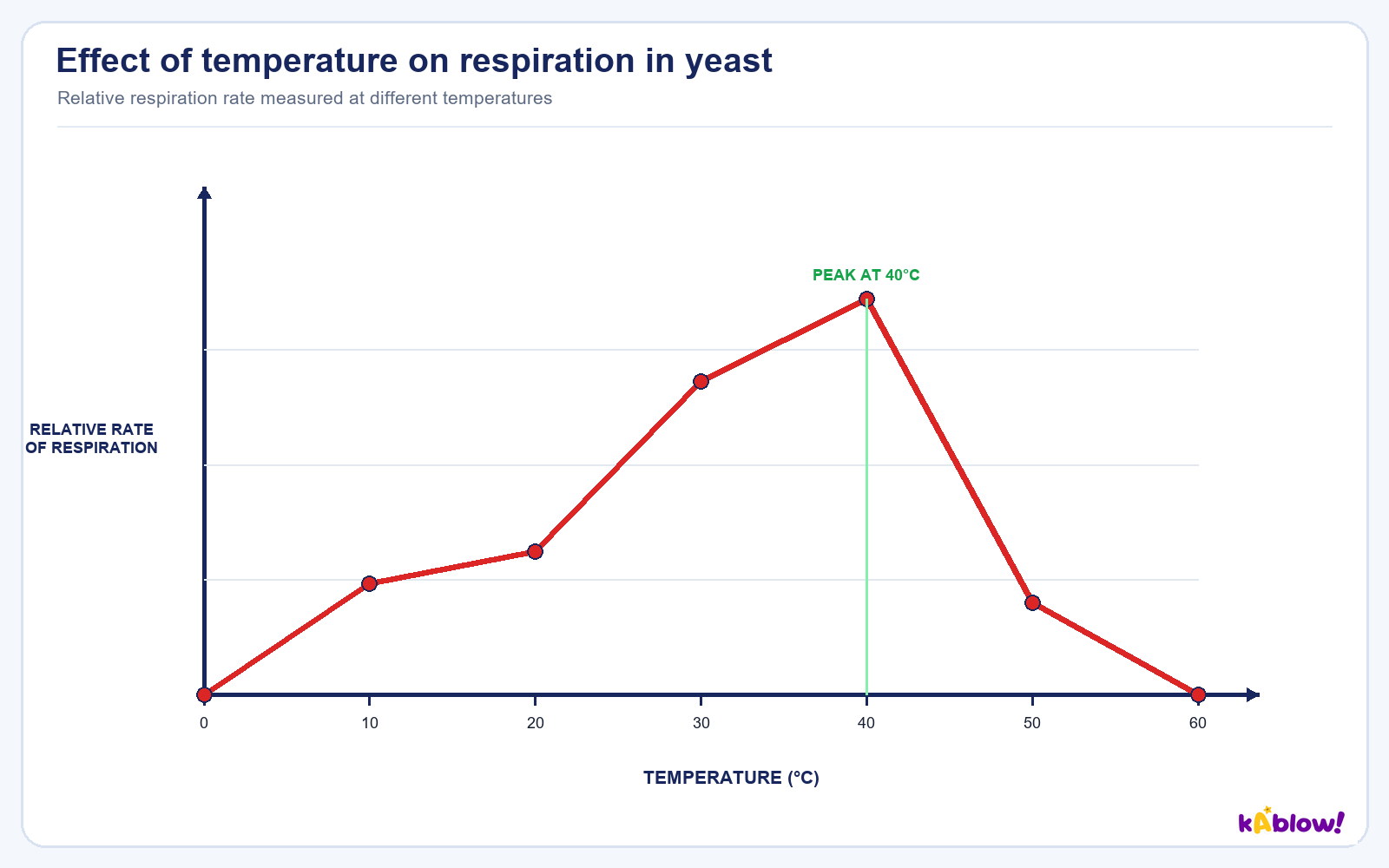
- Rate increases up to ~40 °C (more kinetic energy, more enzyme-substrate collisions), then decreases as enzymes denature above optimum temperature.
Methylene blue apparatus
投影片
練習題
免費預覽——57 題中的 8 題。註冊即可查看全部。
1.Which of these shows the correct products of aerobic respiration?
Easy- Aenergy, water, carbon dioxide
- Benergy, lactic acid, carbon dioxide
- Cenergy, water, lactic acid
- Dwater, carbon dioxide, lactic acid
2.What is the correct word equation for aerobic respiration in plants?
Easy- Aglucose + oxygen → carbon dioxide + water
- Bcarbon dioxide + water → glucose + oxygen
- Cglucose + water → carbon dioxide + oxygen
- Dglucose + carbon dioxide → water + oxygen
3.Which of the following processes require, and are dependent on, the activity of enzymes? 1. aerobic respiration 2. glucose → lactic acid 3. osmosis 4. anaerobic respiration in yeast
Medium- A1 and 2
- B1 and 3
- C1, 2 and 4
- DAll of them
4.What is produced by anaerobic respiration in humans?
Easy- Aalcohol and carbon dioxide
- Balcohol and lactic acid
- Clactic acid only
- Dcarbon dioxide only
5.Which substances are used during aerobic respiration? 1 carbon dioxide 2 glucose 3 oxygen 4 water
Easy- A1 and 3
- B1 and 4
- C2 and 3
- D2 and 4
6.What is the balanced chemical equation for anaerobic respiration in yeast?
Medium- AC6H12O6 → 2CO2 + 6H2O
- BC6H12O6 → 6CO2 + 6H2O
- CC6H12O6 → 2C2H5OH + 2CO2
- DC6H12O6 → 2C2H5OH + 2H2O
7.Which of these correctly shows the products produced by anaerobic respiration in yeast and in animals?
Medium- AAnimals: lactic acid yes, carbon dioxide no; Yeast: lactic acid no, carbon dioxide no
- BAnimals: lactic acid yes, carbon dioxide no; Yeast: lactic acid no, carbon dioxide yes
- CAnimals: lactic acid no, carbon dioxide yes; Yeast: lactic acid yes, carbon dioxide no
- DAnimals: lactic acid yes, carbon dioxide yes; Yeast: lactic acid no, carbon dioxide yes
8.During vigorous exercise, lactic acid builds up in muscles. How is this lactic acid removed during recovery?
Medium- Aexcretion of lactic acid by the kidneys
- Banaerobic respiration of lactic acid in the muscles
- Caerobic respiration of lactic acid in the liver
- Dexcretion of lactic acid by the lungs