Atomic Structure & The Periodic Table
邊玩邊學
回答這些題目賺取能量,接著就能釣魚、探索。不需要帳號。
給教育者: 為 Atomic Structure & The Periodic Table(Chemistry、CIE)準備好可直接使用的課程投影片, 複習筆記, 圖表——用於你的課程,或把這個主題當成互動班級活動,讓學習者以即時遊戲的方式進行。
課程筆記
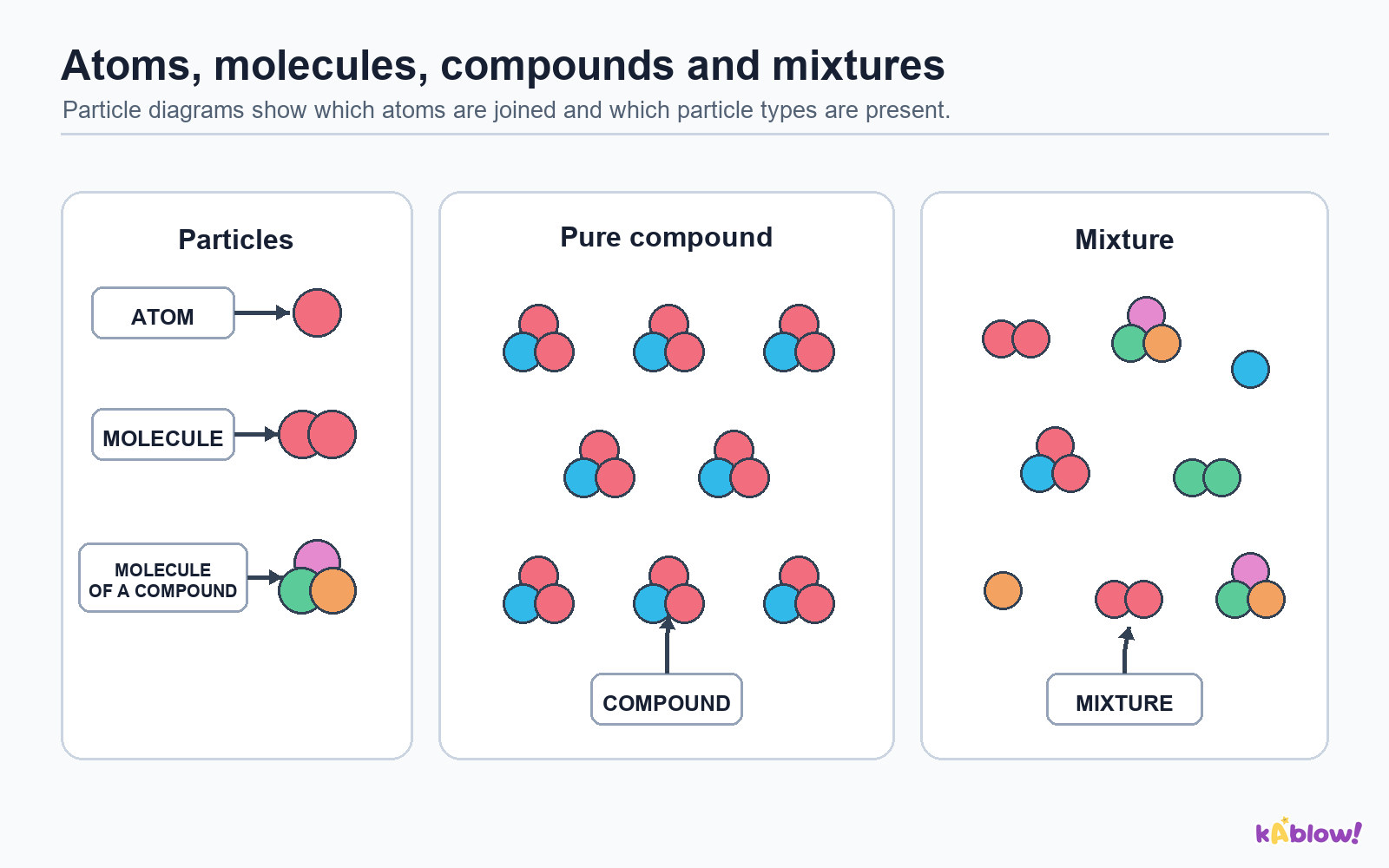
Elements, Compounds & Mixtures
- Element: substance made of atoms with the same number of protons; cannot be split chemically.
- Compound: pure substance of two or more elements chemically combined; cannot be separated by physical means.
- Mixture: combination of substances not chemically combined; separable by physical methods (e.g., filtration).
- Examples: element = copper; compound = CO₂; mixture = sand and water.
Particle diagram showing elements, compounds and mixtures
Atomic Structure
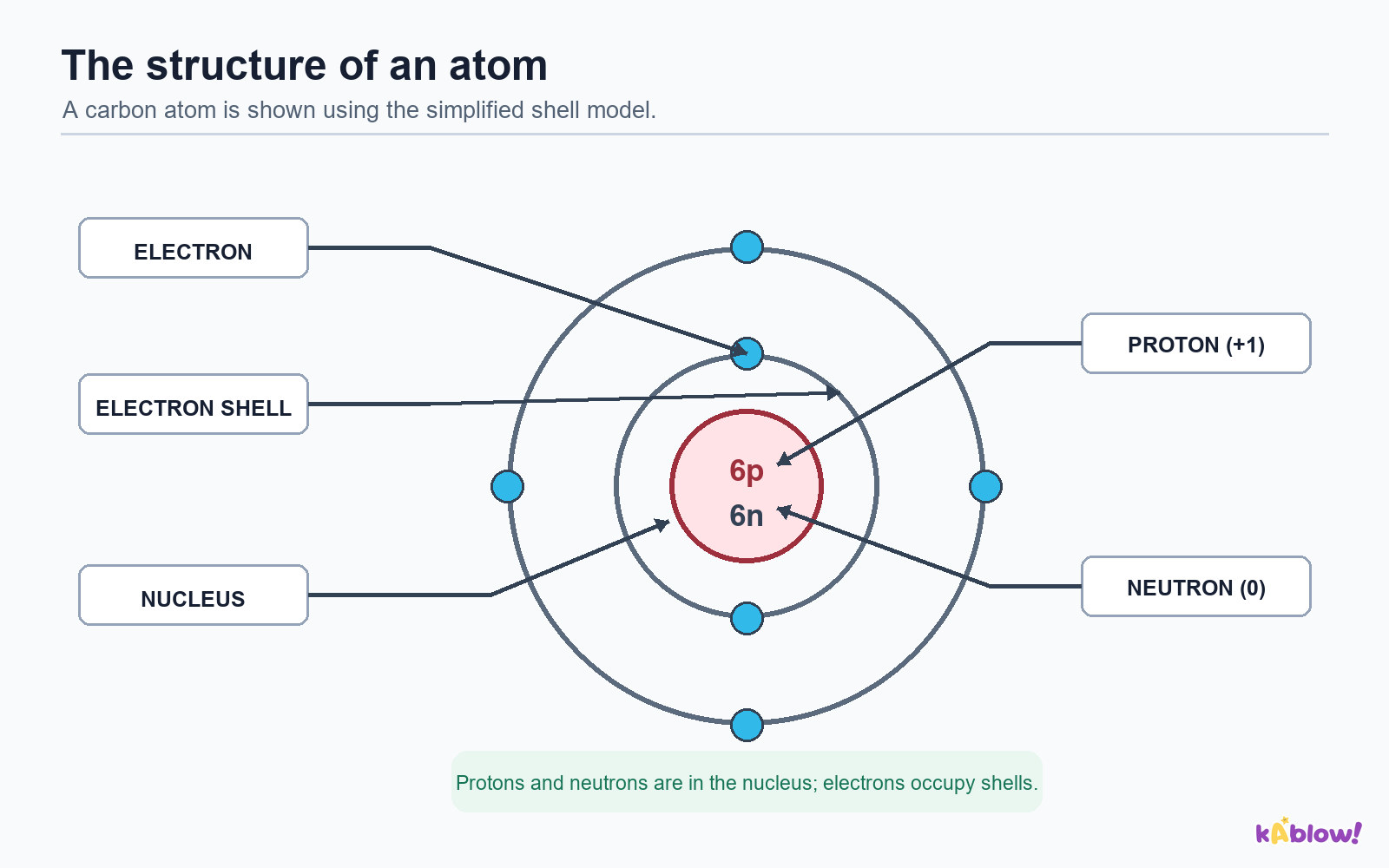
- Atoms consist of protons, neutrons (in nucleus) and electrons (in shells).
- Proton: relative mass 1, charge +1; Neutron: relative mass 1, charge 0; Electron: relative mass 1/1840, charge -1.
- Atomic number (Z) = number of protons; determines element and equals electrons in neutral atom.
- Mass number (A) = total protons + neutrons; also called nucleon number.
- Number of neutrons = mass number – atomic number.
The structure of the carbon atom
Electronic Configuration
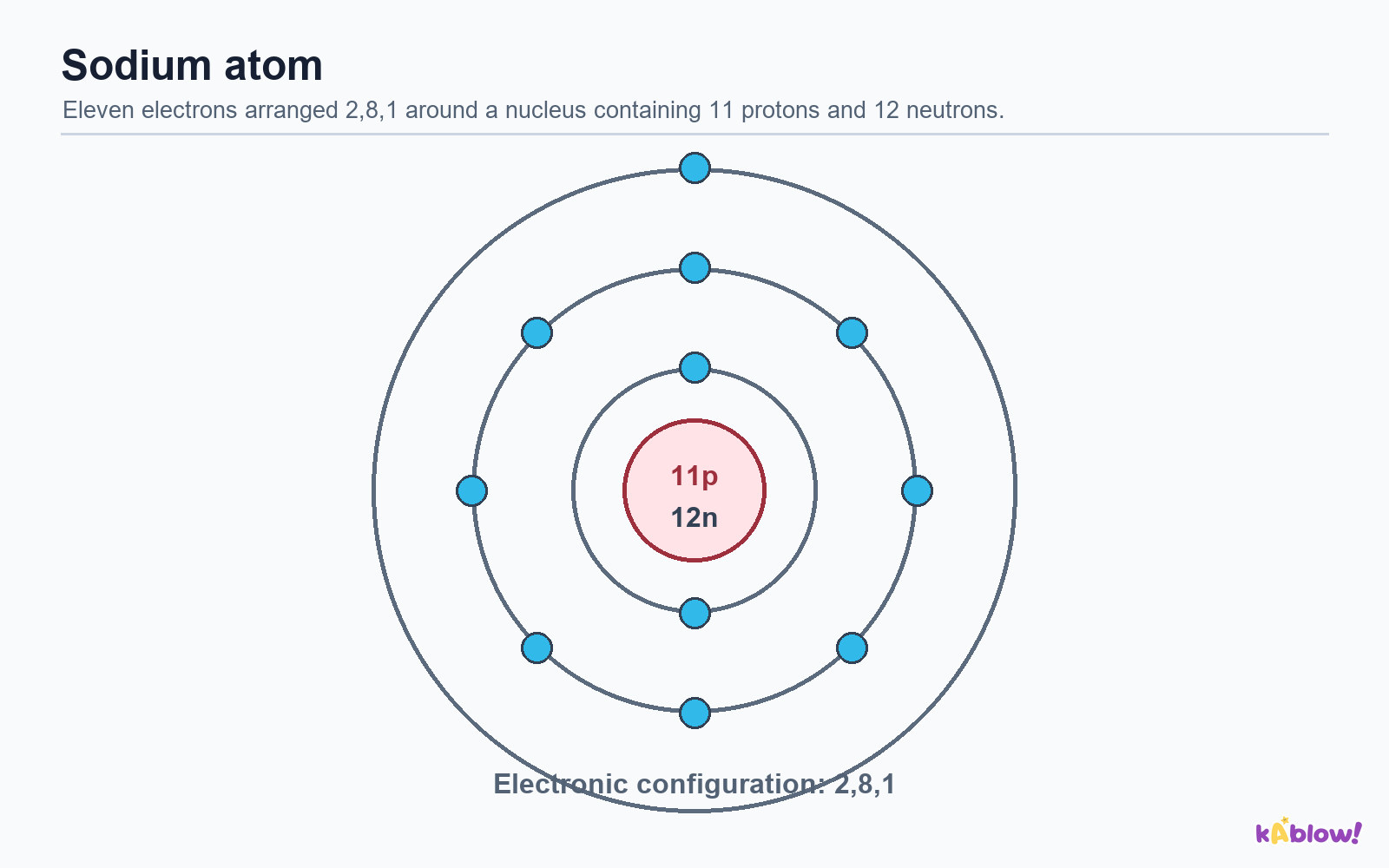
- Electrons occupy shells (energy levels); first shell holds 2, second 8, third 8 (simplified).
- Electronic configuration lists electrons per shell, e.g., carbon = 2,4.
- Outermost shell (valence shell) determines chemical properties; full outer shell = stable (noble gas).
- Number of occupied shells = Period number; number of outer electrons = Group number (for Groups I–VII).
- Ions: e.g., Na⁺ has configuration 2,8 (lost one electron).
Sodium atom: electron configuration 2,8,1
Isotopes
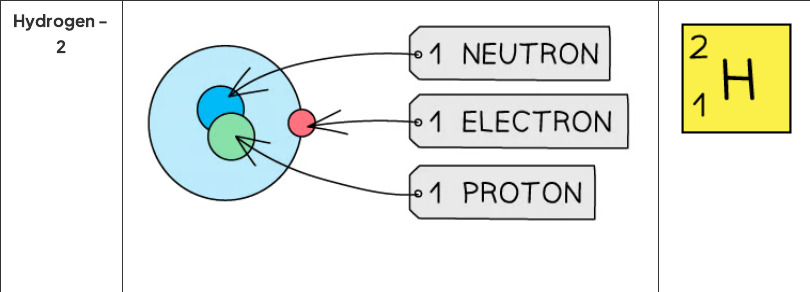
- Isotopes: same element, same number of protons, different number of neutrons.
- Isotopes have identical chemical properties (same outer electrons) but different physical properties (mass).
- Notation: e.g., carbon-14 or ¹⁴C.
The structure of a hydrogen-2 (deuterium) atom
Relative Atomic Mass (Extended)
- Relative atomic mass (Aᵣ) = weighted average mass of all isotopes compared to 1/12 mass of carbon-12.
- Formula: Aᵣ = (Σ(% abundance × mass)) / 100.
- Example: rubidium: (72×85 + 28×87)/100 = 85.6.
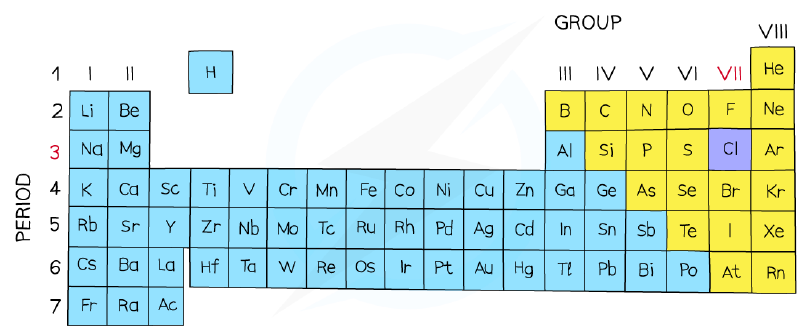
Periodic Table & Groups
- Elements in same Group have same number of outer electrons and similar chemical properties.
- Noble gases (Group 0/VIII) have full outer shells and are unreactive.
- Group number for Groups I–VII equals number of outer electrons.
- Period number equals number of occupied electron shells.
The Periodic Table showing groups and periods
投影片
練習題
免費預覽——40 題中的 8 題。註冊即可查看全部。
1.Which option correctly describes the relative charges and masses of the subatomic particles?
Easy- AProton +1, neutron 0, electron -1; relative mass of proton 1, neutron 1, electron 0.00054
- BProton +1, neutron 0, electron -1; relative mass of proton 0.00054, neutron 1, electron 0
- CProton 0, neutron +1, electron -1; relative mass of proton 1, neutron 1, electron 0.00054
- DProton +1, neutron 0, electron 0; relative mass of proton 1, neutron 1, electron 0.00054
2.The atomic number of element Q is 9 and its mass number is 19. In which group of the Periodic Table should element Q be placed?
Easy- AGroup 0
- BGroup I
- CGroup VII
- DGroup II
3.The diagram shows the atomic structure of an element. Which element is it?
Easy- ACarbon
- BBeryllium
- COxygen
- DBoron
4.Which two atoms are isotopes?
Easy- AQ and S
- BQ and T
- CR and T
- DR and S
5.Which of the following statements is correct?
Easy- AElements contain different atoms
- BCompounds consist of elements that are not chemically combined
- CMixtures consist of elements that are chemically combined
- DA mixture can contain elements and compounds
6.Which statement about carbon is correct?
Medium- AIt has 4 electron shells.
- BIt has 2 outer shell electrons.
- CIt has 12 nucleons.
- DIt has an electron configuration of 2,8,2.
7.Two atoms, X and Y can be represented as shown: ³₇X and ³₈Y. Which row is correct for both atoms?
Medium- Aelectron configuration of X: 2,1; electron configuration of Y: 2,1; Is Y an isotope of X? Yes
- Belectron configuration of X: 2,1; electron configuration of Y: 2,6; Is Y an isotope of X? Yes
- Celectron configuration of X: 2,5; electron configuration of Y: 2,1; Is Y an isotope of X? No
- Delectron configuration of X: 2,5; electron configuration of Y: 2,6; Is Y an isotope of X? No
8.Element X contains 12 of each sub-atomic particle. What is the correct Group number for element X?
Medium- AGroup 0
- BGroup I
- CGroup VII
- DGroup II
歷屆試題
這個主題的歷屆試題練習即將推出。
即將推出