Energy And Feeding Relationships
邊玩邊學
回答這些題目賺取能量,接著就能釣魚、探索。不需要帳號。
給教育者: 為 Energy And Feeding Relationships(Co-ordinated Sciences (Double Award) [CIE]、Biology)準備好可直接使用的課程投影片, 複習筆記——用於你的課程,或把這個主題當成互動班級活動,讓學習者以即時遊戲的方式進行。
課程筆記
Transfer of Energy
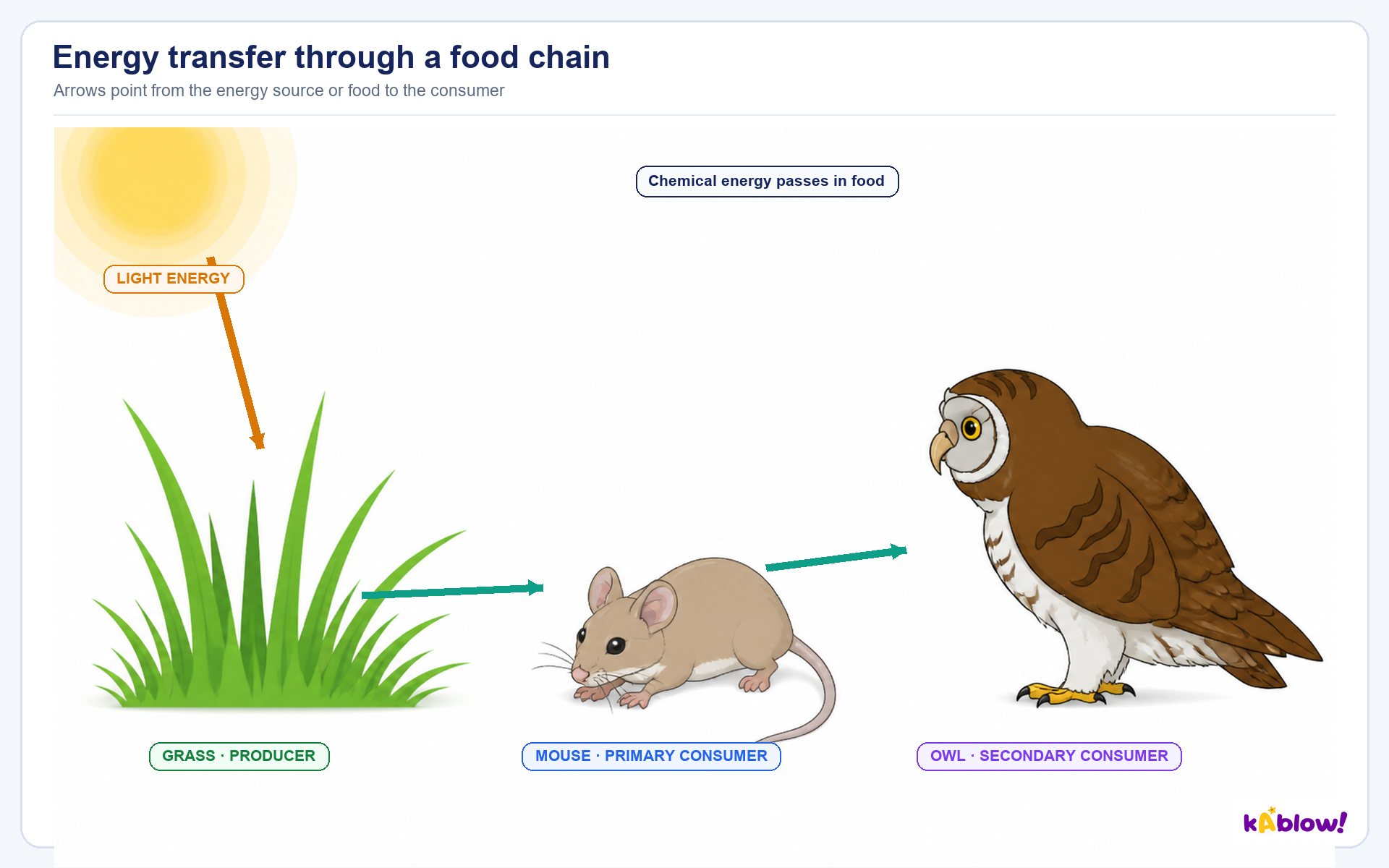
- The Sun is the principal source of energy input to biological systems.
- Energy flows through living organisms as light energy and chemical energy.
- Energy is transferred from the Sun through food chains and eventually lost to the environment as heat.
Energy is transferred from the sun and through the food chain
Food Chains & Food Webs
- A food chain shows the transfer of energy from one organism to the next, starting with a producer.
- Arrows in a food chain represent the transfer of energy from one trophic level to the next.
- Energy is transferred between organisms by ingestion (eating).
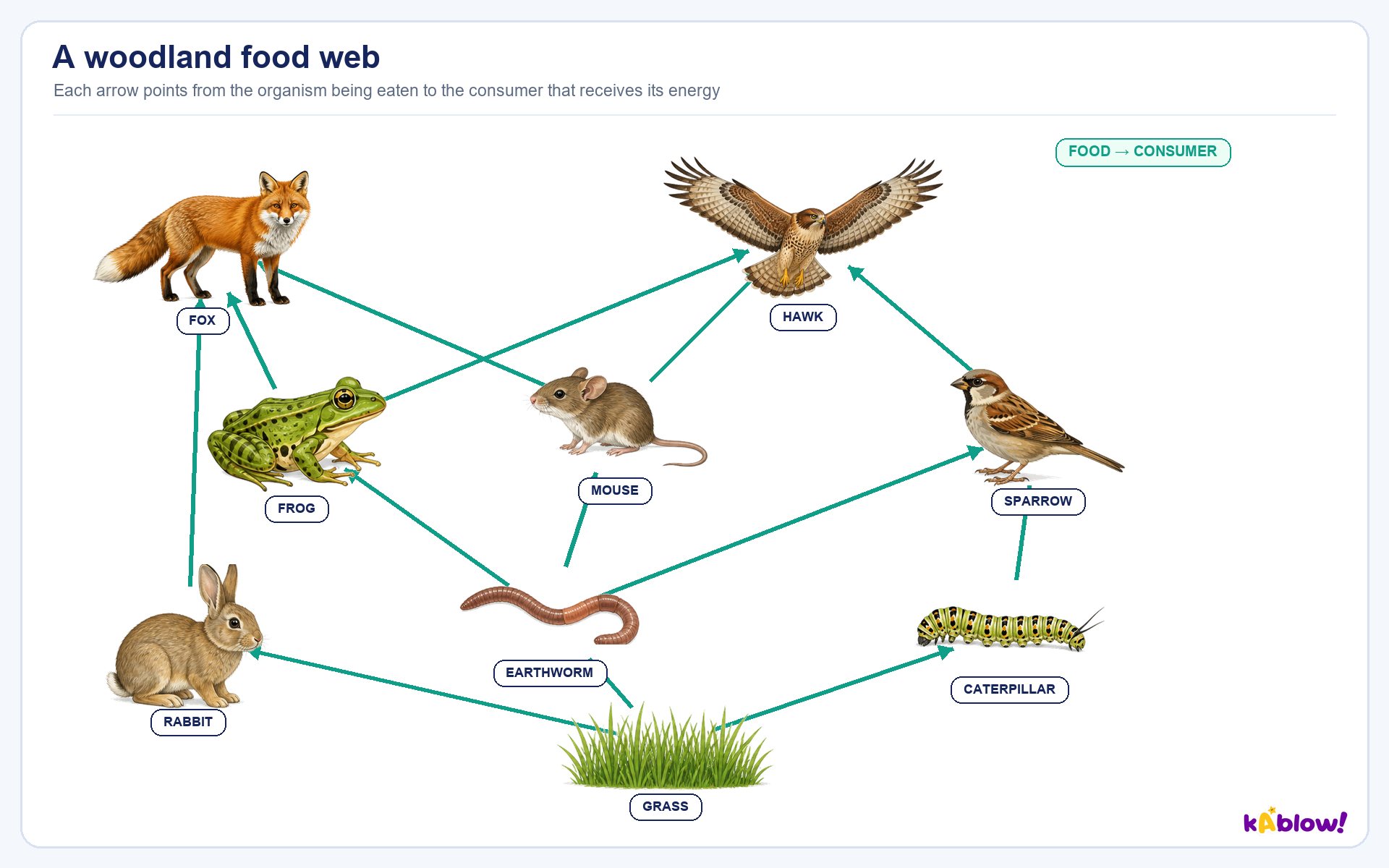
- A food web is a network of interconnected food chains, showing more realistic feeding relationships.
- Food webs illustrate interdependence – a change in one population affects others.
- Most population changes result from human impact (e.g., overharvesting, introducing foreign species).
A food web shows the interdependence of organisms
Trophic Levels (Extended)
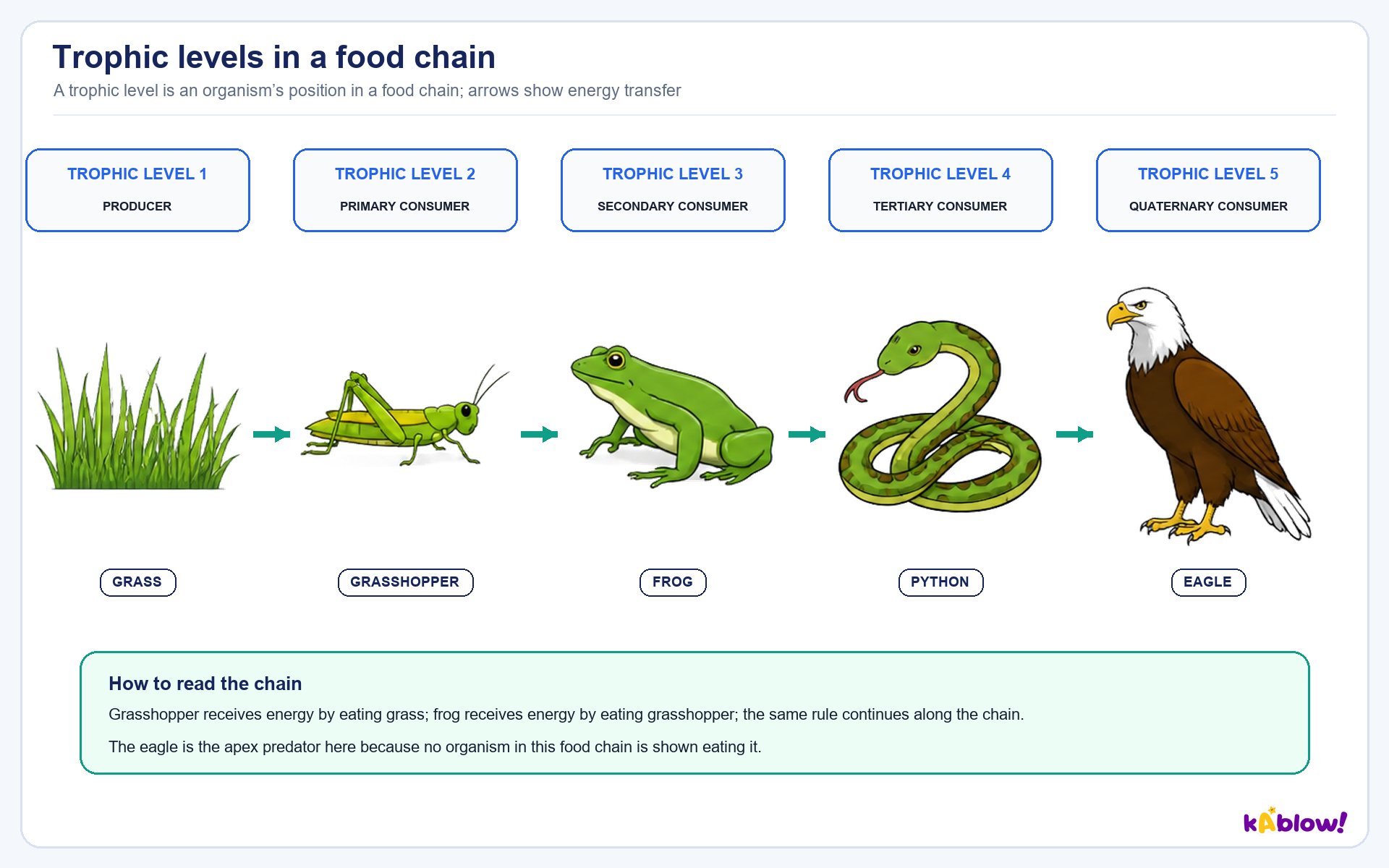
- A trophic level is the position of an organism in a food chain or web.
- Producers form the first trophic level.
- Primary consumers (herbivores) are the second trophic level.
- Secondary consumers are the third, tertiary consumers the fourth, and quaternary consumers the fifth.
- Food chains rarely exceed 5 trophic levels due to energy loss.
Trophic levels describe the position of organisms in a food chain
Efficiency of Energy Transfer (Extended)
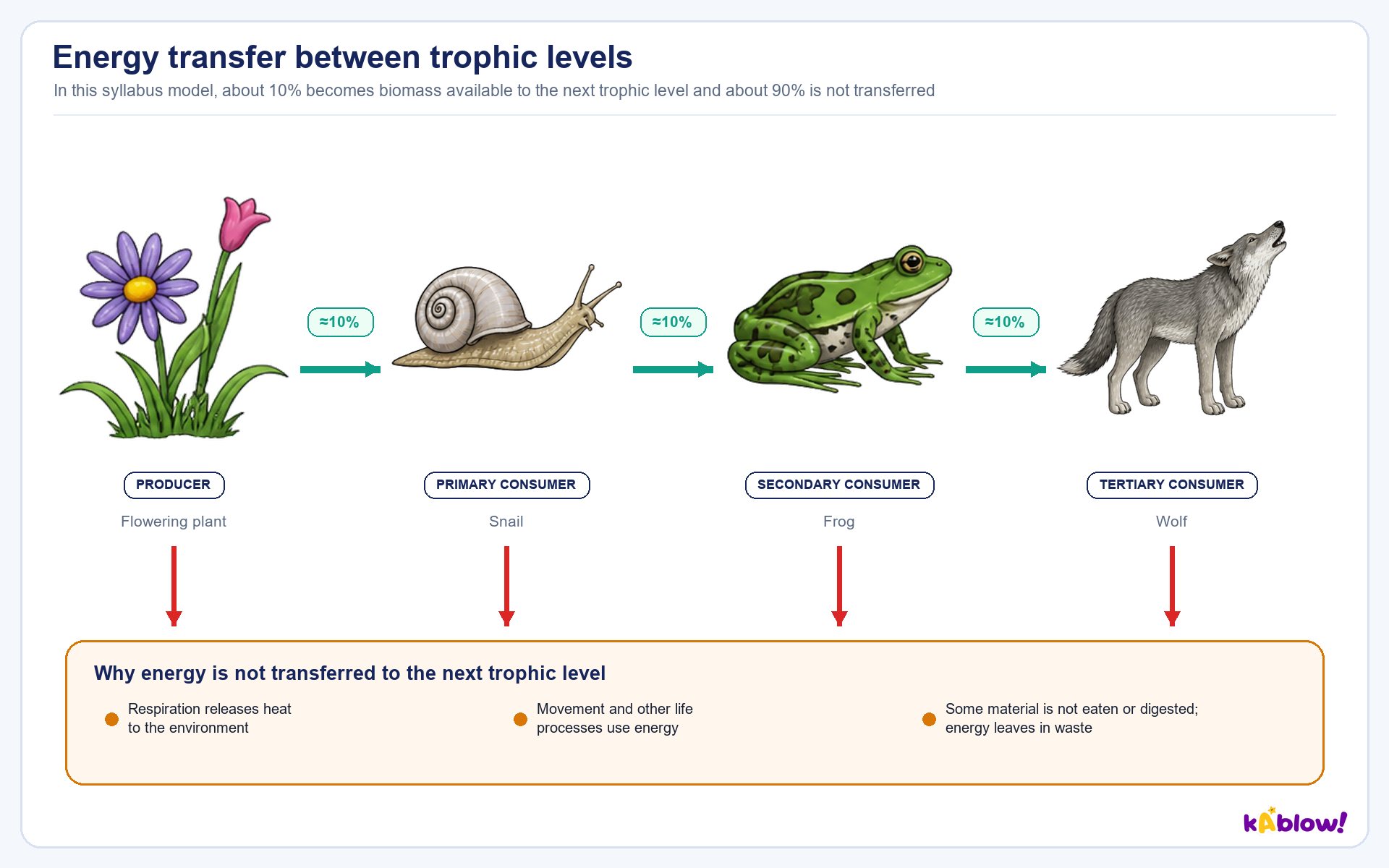
- Energy transfer between trophic levels is not efficient; much energy is lost to the environment.
- Energy is lost through movement, respiration (heat), and excretion (e.g., urea).
- Energy in inedible parts (bones, fur, roots) or undigested waste (faeces) does not pass to the next level.
- Energy loss explains why food chains are rarely more than 5 organisms long.
- It is more energy efficient for humans to eat plants directly than to eat herbivores.
Energy loss at each trophic level
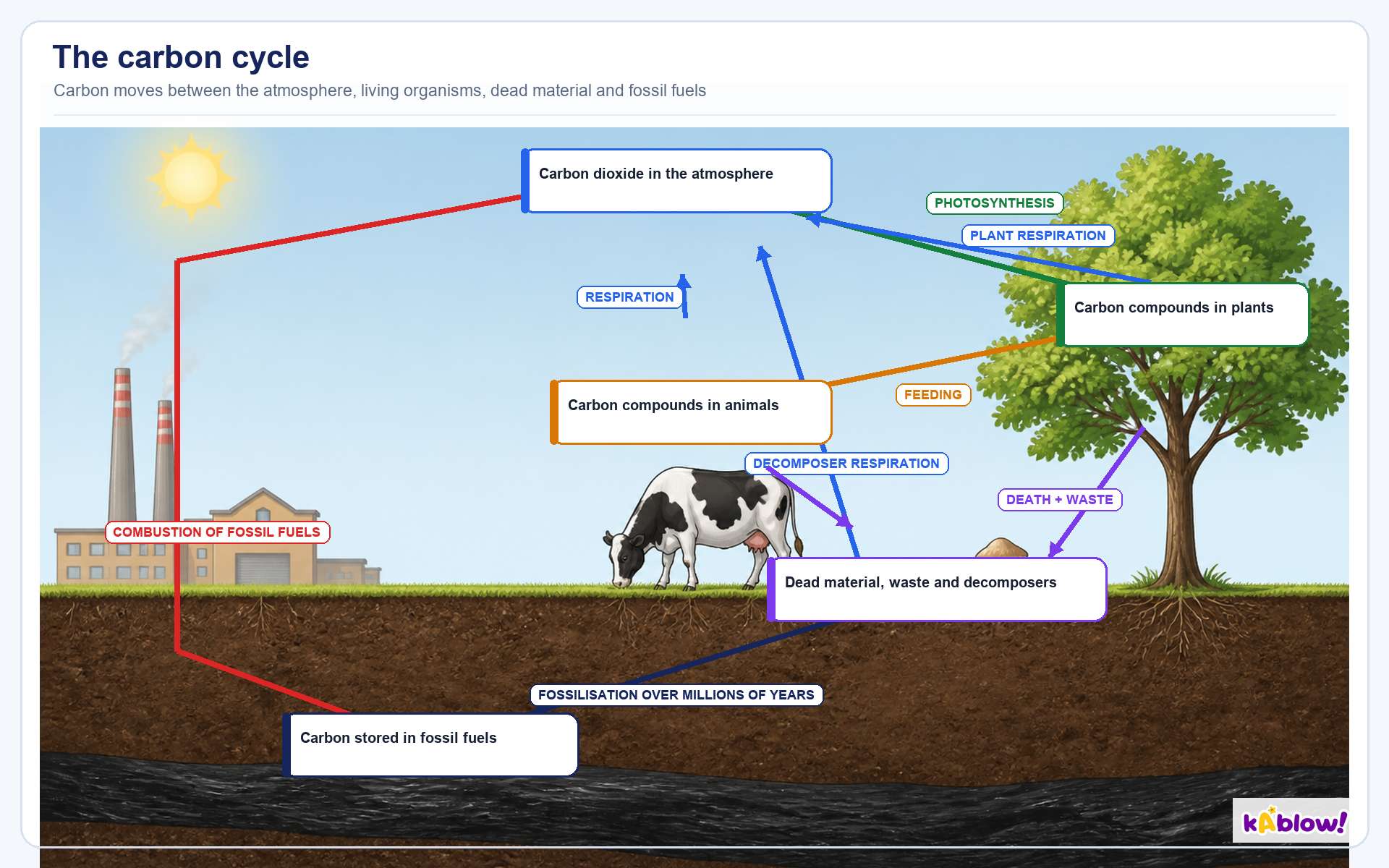
The Carbon Cycle
- Carbon is taken from the atmosphere as CO₂ by plants during photosynthesis.
- Carbon is passed to animals and decomposers through feeding.
- Carbon is returned to the atmosphere as CO₂ by respiration of plants, animals, and microorganisms.
- Dead organisms can form fossil fuels over millions of years if decomposers are absent.
- Combustion of fossil fuels releases CO₂ back into the atmosphere.
- Human activities (burning fossil fuels, deforestation) increase atmospheric CO₂ levels.
The Carbon Cycle
投影片
練習題
免費預覽——52 題中的 8 題。註冊即可查看全部。
1.Define the term herbivore.
Easy2.State the principal source of energy for food chains.
Easy3.Complete the sentence about energy flow.
EasyThe arrows in a food chain show the transfer of ____ from one trophic level to the next.
4.Which of the following is a producer in the food chain: grass → rabbit → fox?
Easy- Agrass
- Brabbit
- Cfox
- Dsun
5.A food web is a network of interconnected food chains.
EasyTrue or false?
6.Name the trophic level of topi in the African grassland food web, given that topi eat star grass and are eaten by cheetahs.
Easy7.State what the arrows in a food chain represent.
Easy8.Match each process in the carbon cycle with its description.
Medium- Photosynthesis
- Respiration
- Combustion
- Takes in carbon dioxide
- Releases carbon dioxide
- Burning of fossil fuels releases carbon dioxide
歷屆試題
這個主題的歷屆試題練習即將推出。
即將推出