Solids Liquids And Gases
邊玩邊學
回答這些題目賺取能量,接著就能釣魚、探索。不需要帳號。
給教育者: 為 Solids Liquids And Gases(Co-ordinated Sciences (Double Award) [CIE]、Chemistry)準備好可直接使用的課程投影片, 複習筆記, 圖表——用於你的課程,或把這個主題當成互動班級活動,讓學習者以即時遊戲的方式進行。
課程筆記
Kinetic Theory & States of Matter
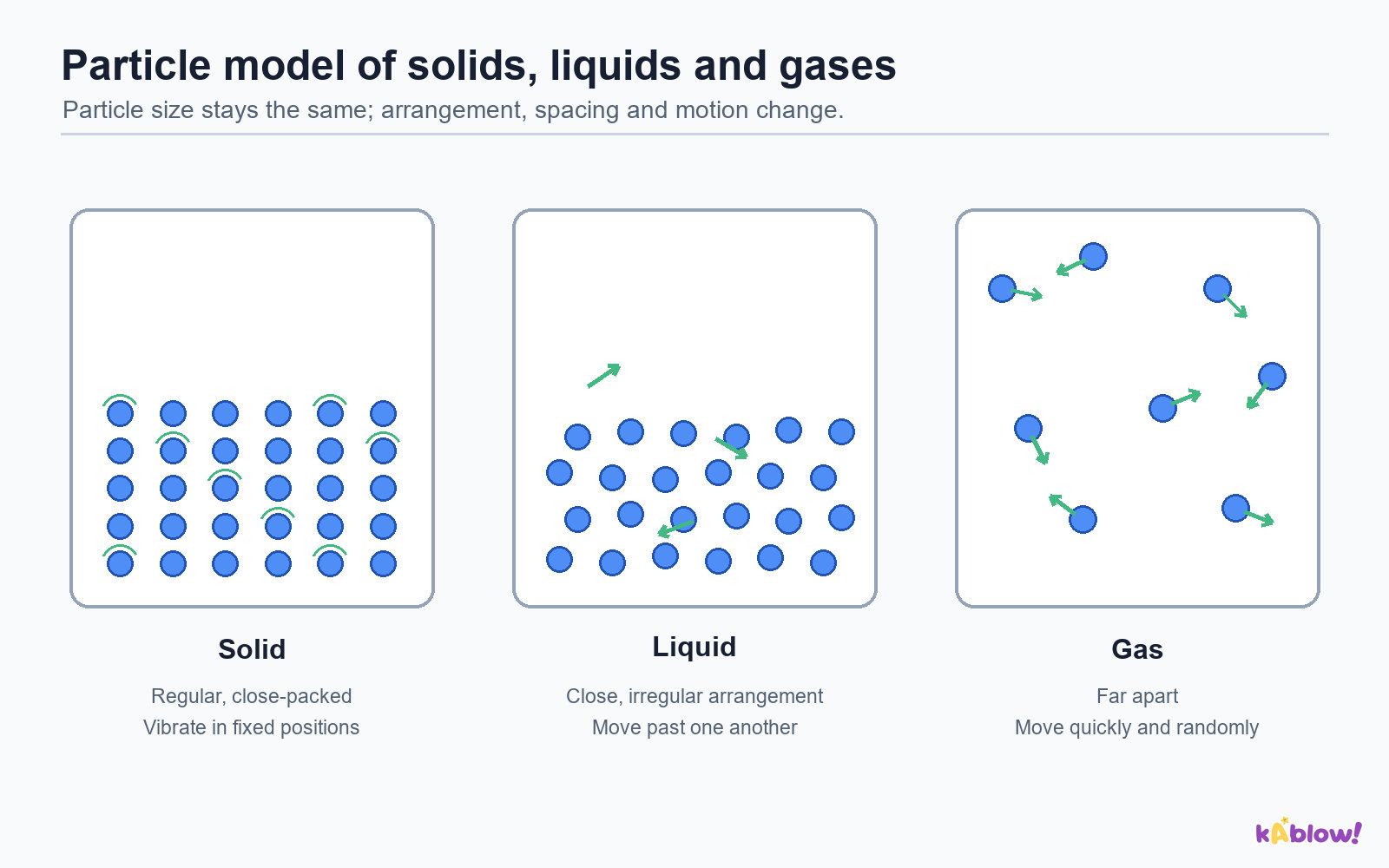
- The kinetic theory describes matter as tiny particles in constant motion.
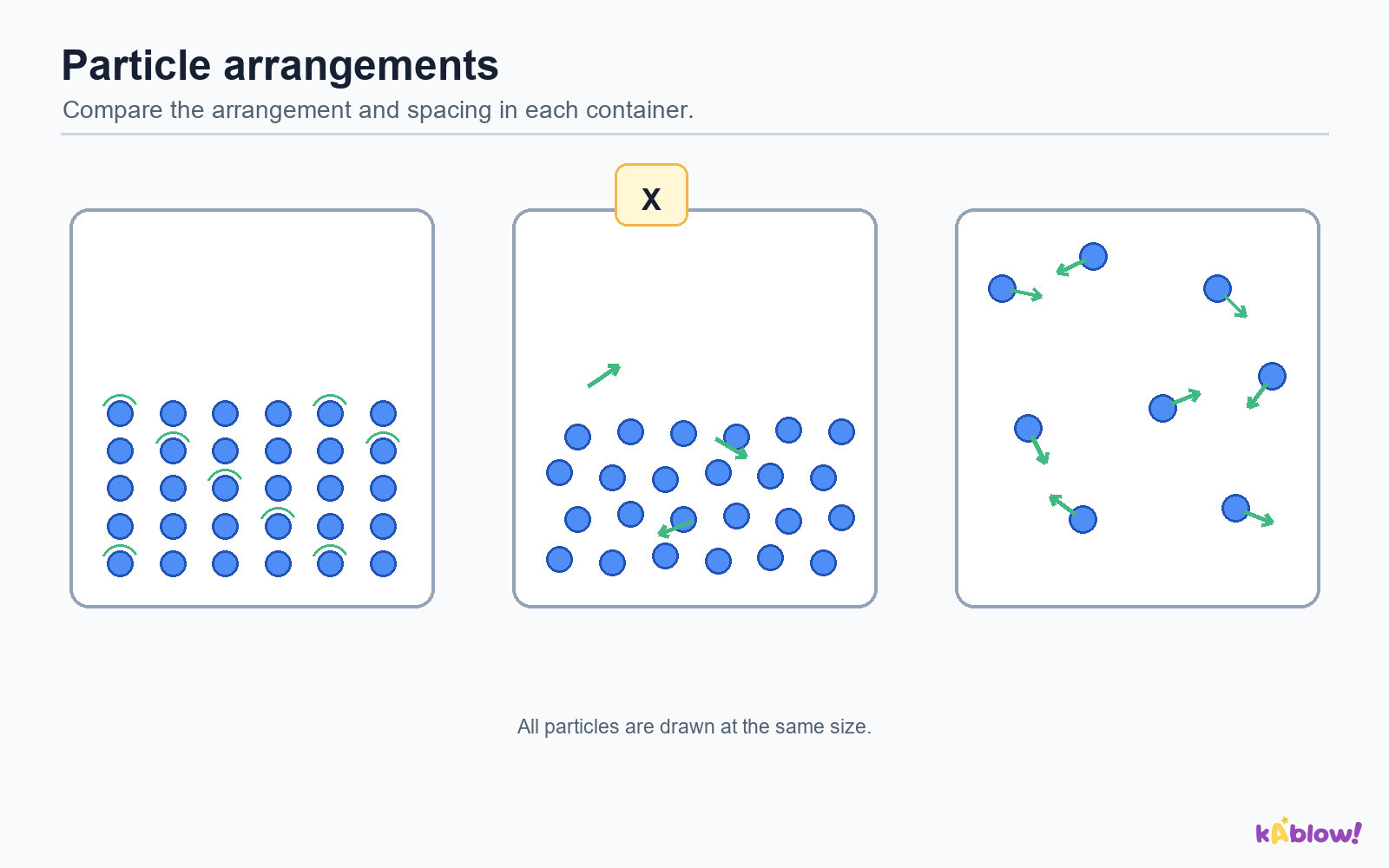
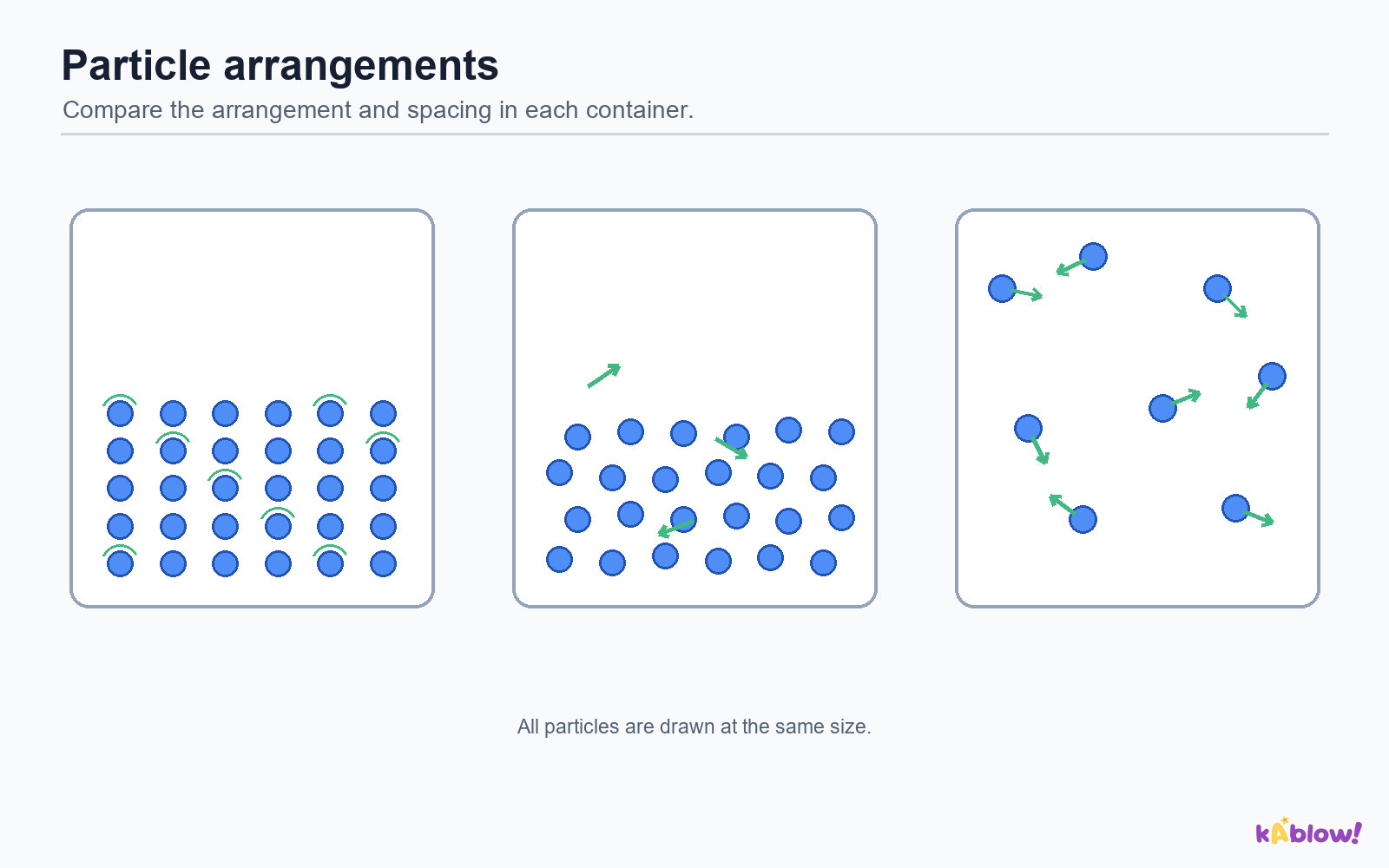
- Solids: particles packed closely in a fixed, regular pattern; vibrate in position; high density.
- Liquids: particles close but randomly arranged; slide past each other; adopt container shape; medium density.
- Gases: particles far apart, move randomly and quickly (~500 m/s); low density; easily compressed.
- Particle energy increases from solid (low) → liquid → gas (highest).
Particle arrangement in solids, liquids, and gases
Changes of State
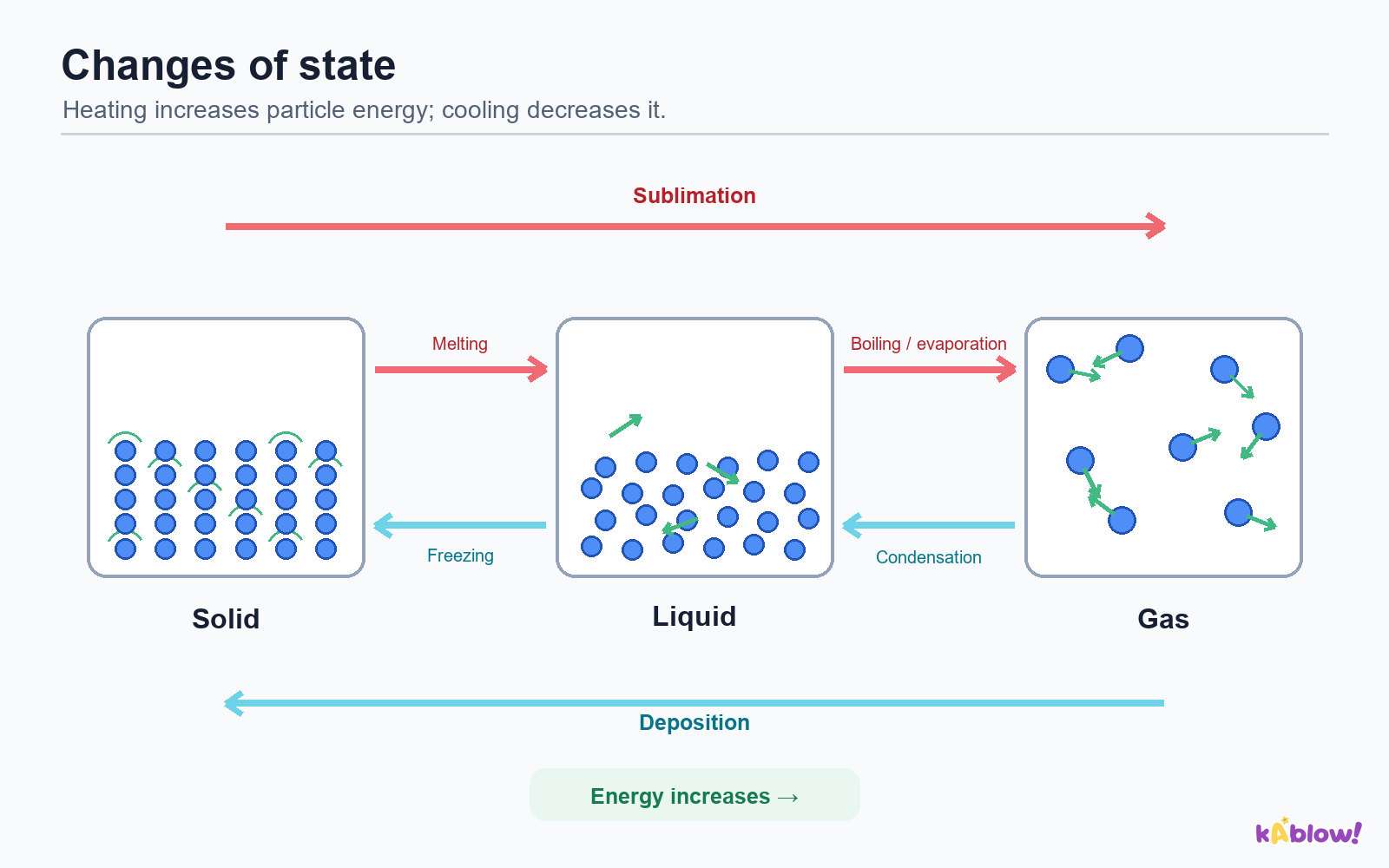
- Melting: solid → liquid at a specific melting point; requires heat to increase particle kinetic energy.
- Freezing: liquid → solid at the same temperature as melting point.
- Boiling: liquid → gas at a specific boiling point; bubbles form throughout the liquid.
- Evaporation: liquid → gas at the surface, below boiling point; faster with larger surface area and higher temperature.
- Condensation: gas → liquid on cooling; particles lose energy and group together.
- State changes are reversible (⇌).
The state changes
Heating & Cooling Curves (Extended)
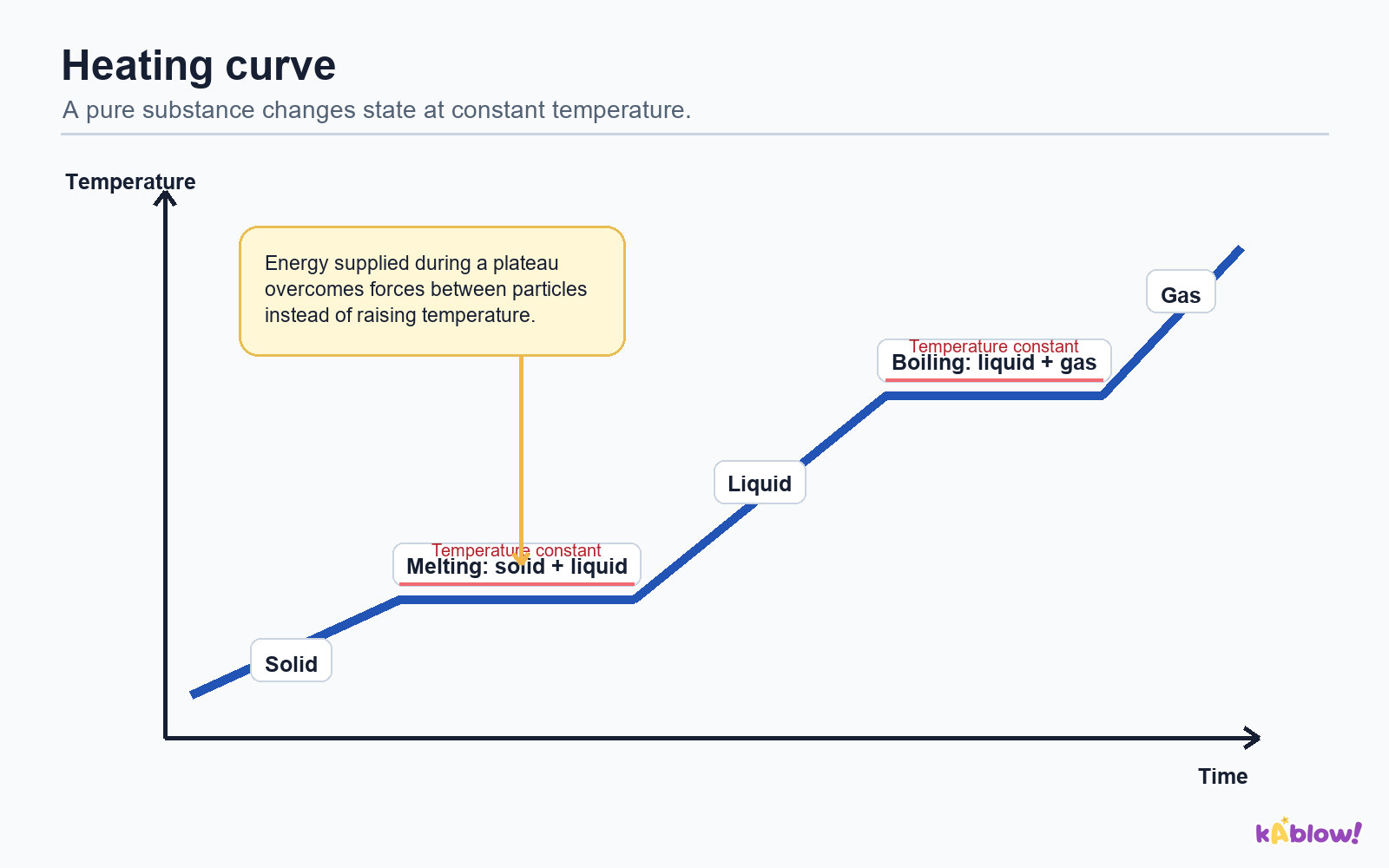
- A heating curve shows temperature vs. time as a substance is heated.
- Horizontal sections indicate a change of state with no temperature change (energy used to overcome forces).
- A cooling curve is the mirror image of a heating curve.
A heating curve
Pressure & Temperature in Gases
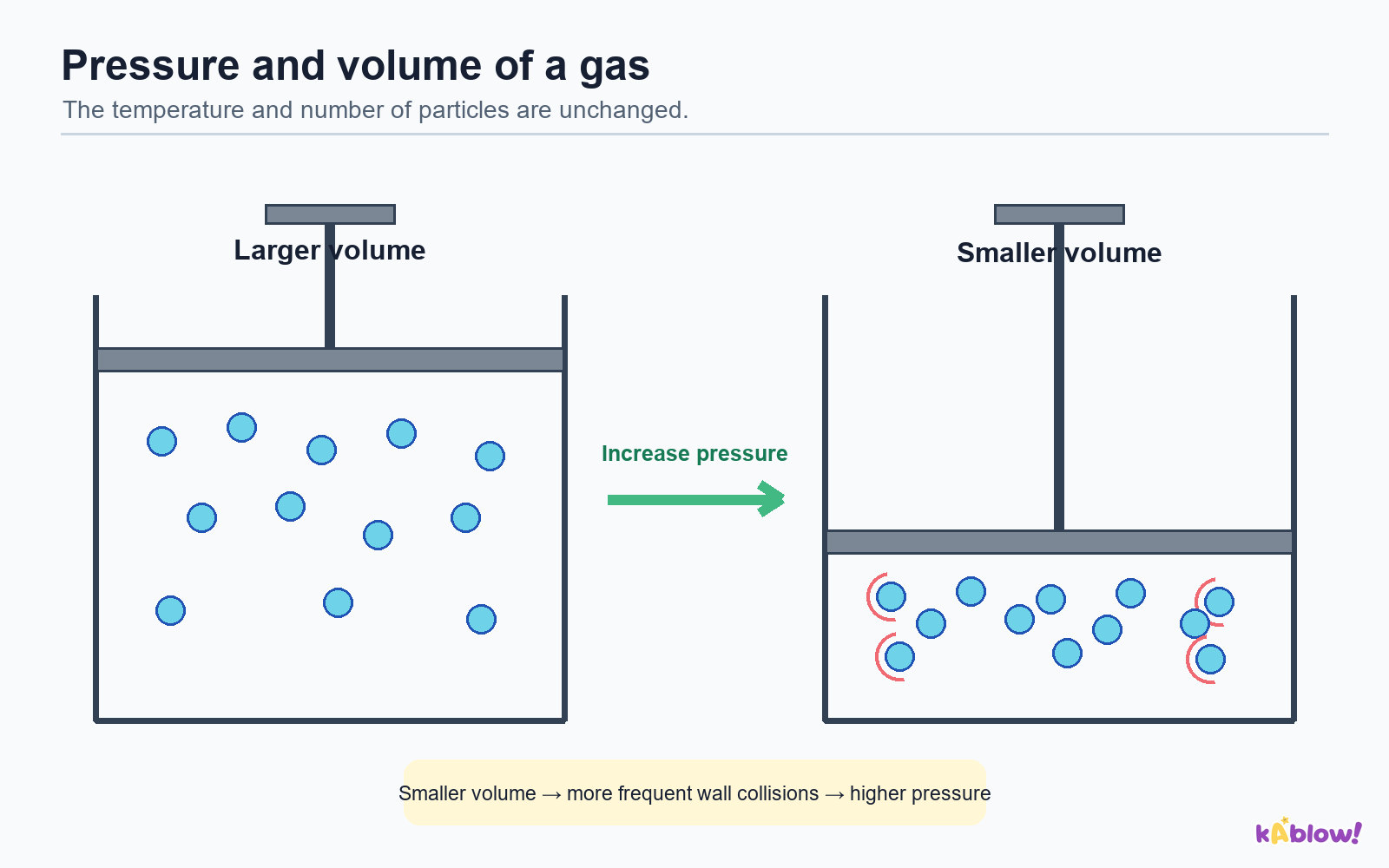
- Gas pressure is caused by particles colliding with container walls.
- Increasing temperature increases particle kinetic energy → more frequent collisions → volume expands if container flexible.
- Increasing pressure (same number of particles in smaller volume) decreases volume; particles hit walls more often.
- If pressure is too high, container may leak or explode.
Pressure increases as volume decreases
Diffusion
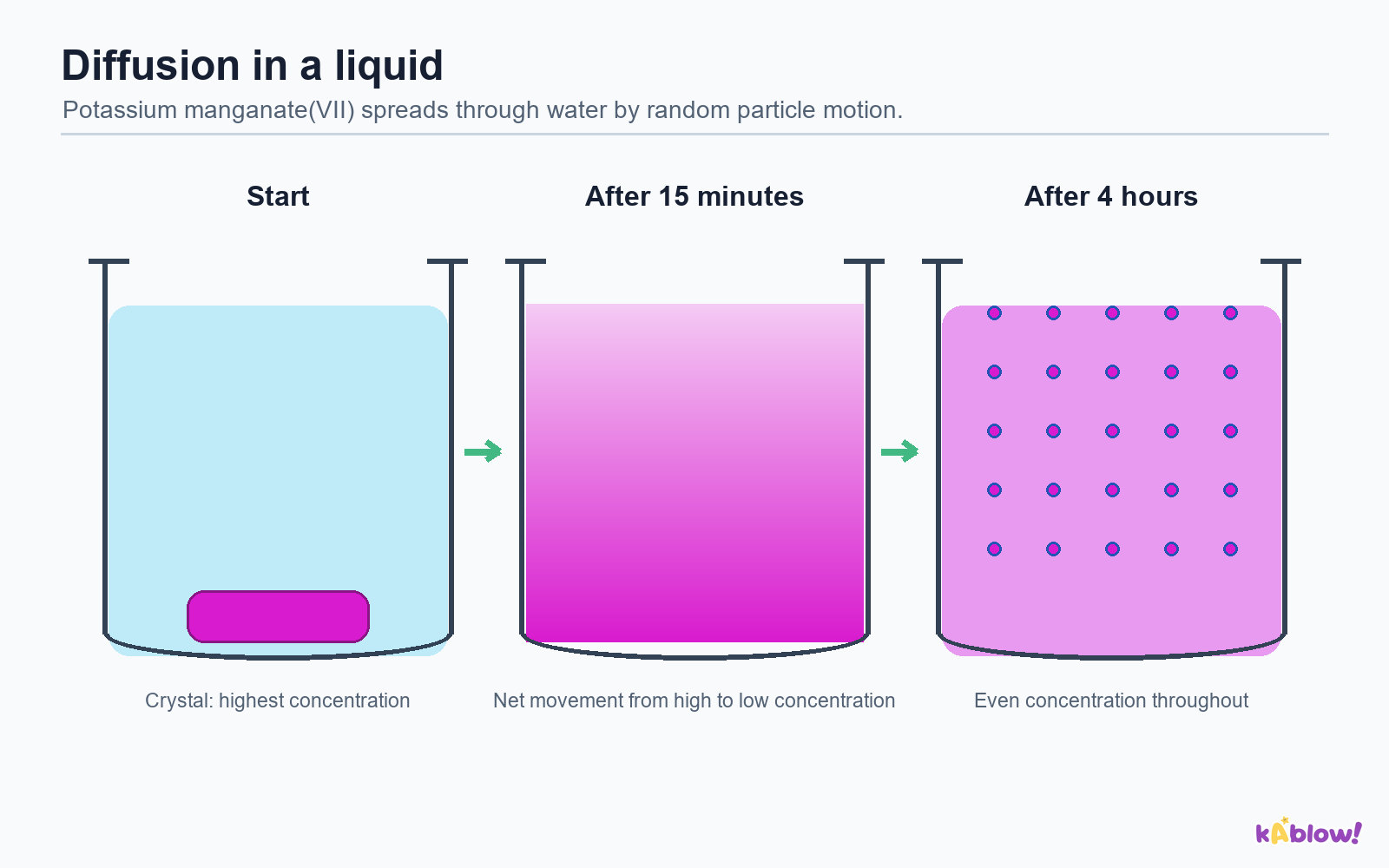
- Diffusion: net movement of particles from high to low concentration due to random motion.
- Occurs in liquids and gases; no energy input required; faster at higher temperatures.
- Diffusion is faster in gases than liquids because gas particles have more kinetic energy.
- Example: potassium manganate(VII) in water spreads until evenly coloured.
Diffusion of potassium manganate(VII) in water
Diffusion & Molecular Mass (Extended)
- At the same temperature, gases with lower relative molecular mass diffuse faster.
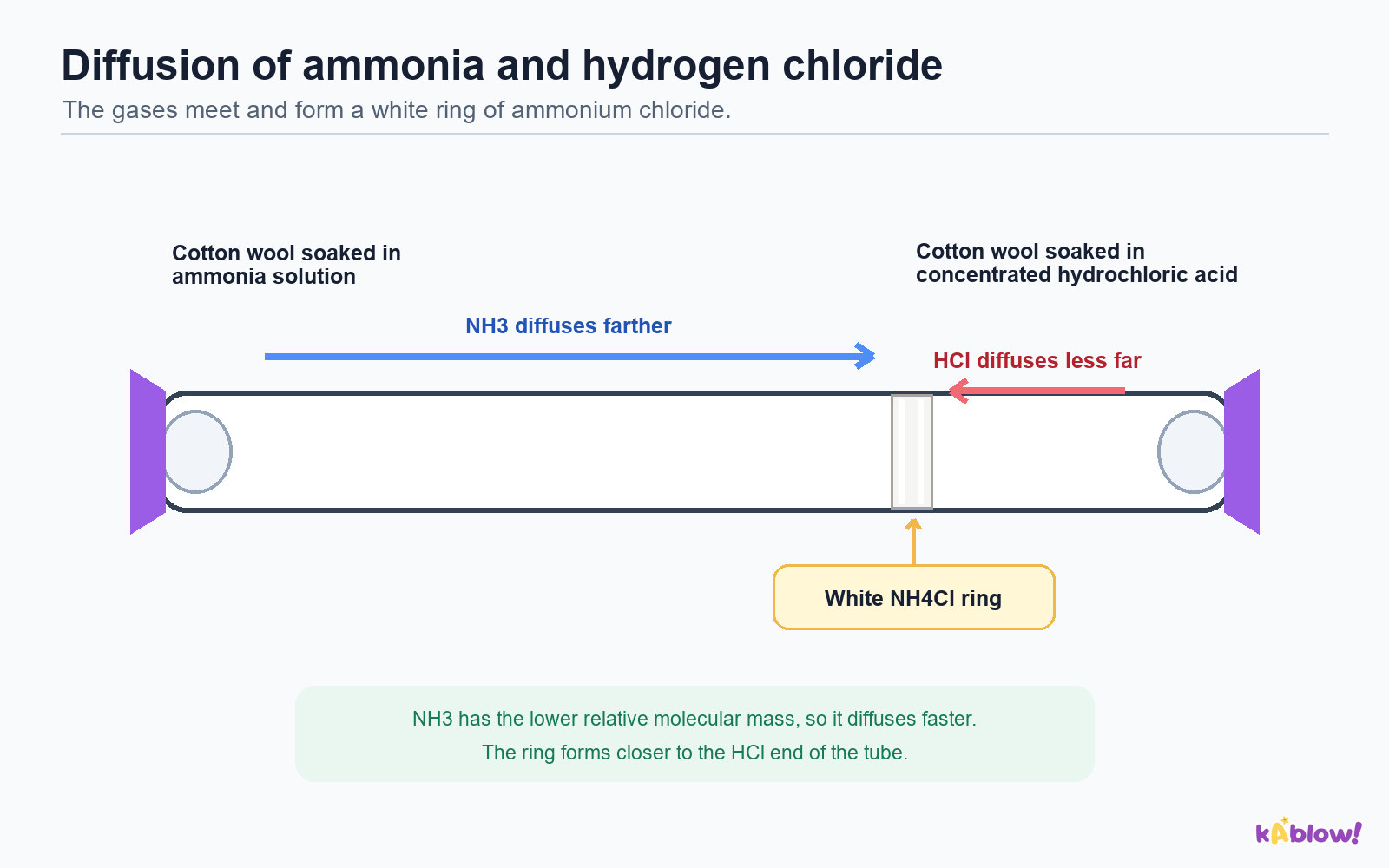
- Example: ammonia (Mᵣ = 17) diffuses faster than hydrogen chloride (Mᵣ = 36.5).
- In a tube, NH₃ and HCl react to form NH₄Cl; the white ring forms closer to the HCl end.
Diffusion of ammonia and hydrogen chloride
投影片
練習題
免費預覽——51 題中的 8 題。註冊即可查看全部。
1.Which statement about the arrangement of particles in a solid is correct?
Easy- AParticles are far apart and move randomly
- BParticles are close together and arranged randomly
- CParticles are close together in a fixed regular pattern
- DParticles are far apart and vibrate in fixed positions
2.Which statement about the movement of particles in a liquid is correct?
Easy- AParticles vibrate about fixed positions
- BParticles move around each other
- CParticles move quickly in all directions
- DParticles do not move
3.In a gas, the particles are far apart and move randomly.
EasyTrue or false?
4.State the term for the change of state from a solid to a liquid.
Easy5.Water boils at 100 °C. What is the boiling point of water in Kelvin?
Easy- A410
- B373
- C336
- D447
6.Complete the sentence about diffusion.
EasyDiffusion is the movement of particles from an area of ____ concentration to an area of ____ concentration.
7.Match each state of matter with its particle arrangement.
Medium- Solid
- Liquid
- Gas
- Regular arrangement, closely packed
- Randomly arranged, close together
- Randomly arranged, far apart
8.Ammonia (Mr = 17) and hydrogen chloride (Mr = 36.5) diffuse from opposite ends of a tube. Where does the white smoke of ammonium chloride form?
Hard- AExactly in the middle of the tube
- BCloser to the ammonia end
- CCloser to the hydrogen chloride end
- DAt both ends equally
歷屆試題
這個主題的歷屆試題練習即將推出。
即將推出