Diffusion
邊玩邊學
回答這些題目賺取能量,接著就能釣魚、探索。不需要帳號。
給教育者: 為 Diffusion(KS3 Science、Chemistry)準備好可直接使用的課程投影片, 複習筆記, 圖表——用於你的課程,或把這個主題當成互動班級活動,讓學習者以即時遊戲的方式進行。
課程筆記
What is Diffusion?
- Diffusion is the movement of particles from a high concentration to a low concentration.
- It occurs in fluids (liquids and gases).
- Diffusion is a passive process – no energy input is needed.
- Particles move due to their random motion (kinetic energy).
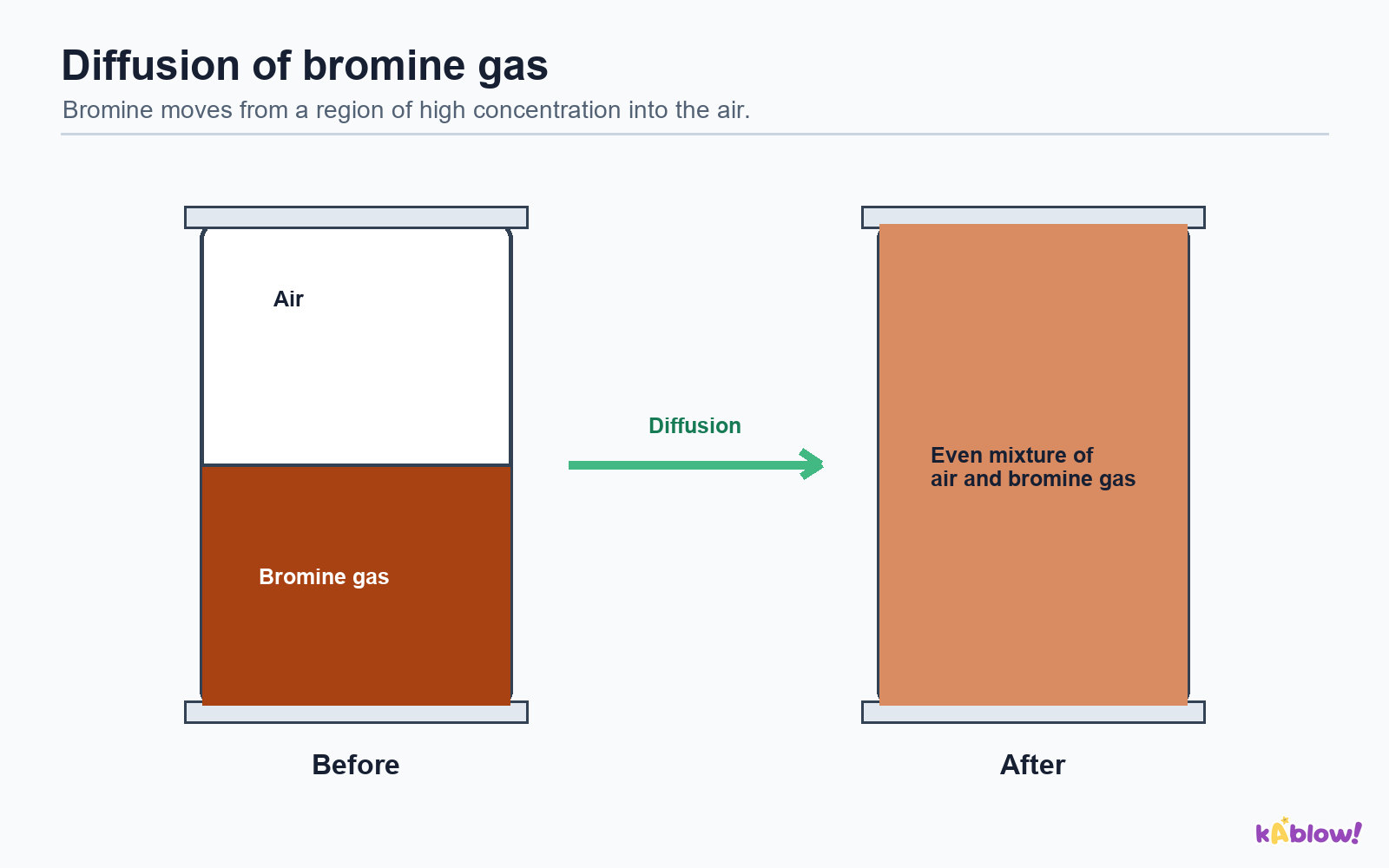
Bromine gas spreads upwards from the bottom of the container until it is evenly mixed with the air.
Particle Motion in Fluids
- In liquids, particles are in contact but can flow past each other.
- In gases, particles are far apart and move quickly in random directions at a range of speeds.
- Random motion of particles causes Brownian motion.
- Particles in a fluid are constantly moving and colliding.
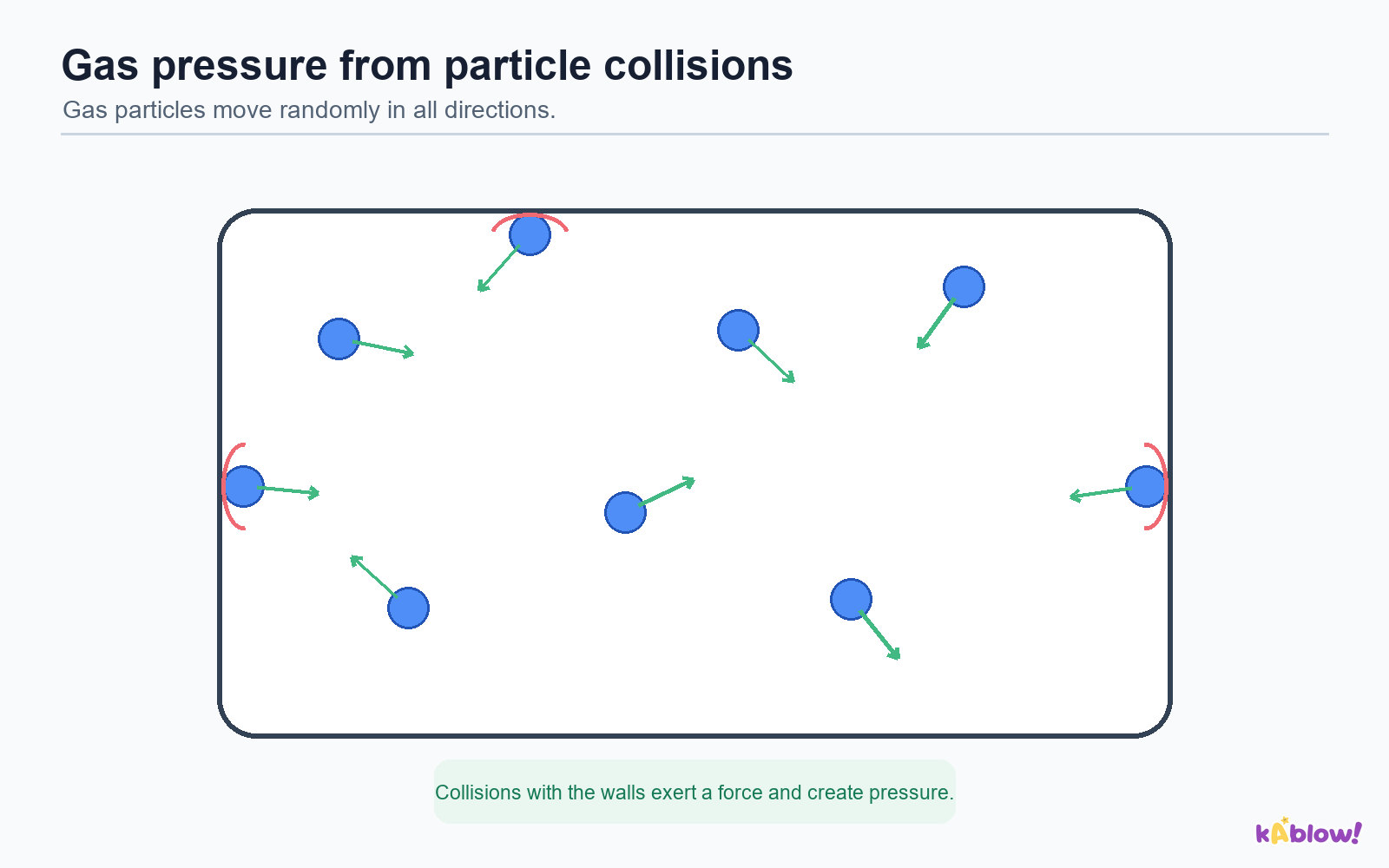
Randomly moving gas particles collide with the container walls and produce pressure.
Factors Affecting Diffusion Rate
- Temperature: higher temperature → particles move faster → diffusion is faster.
- Stirring (in liquids) speeds up diffusion by distributing particles.
- Concentration gradient: steeper gradient → faster diffusion.
- Air currents (e.g., a fan) can speed up diffusion in gases.
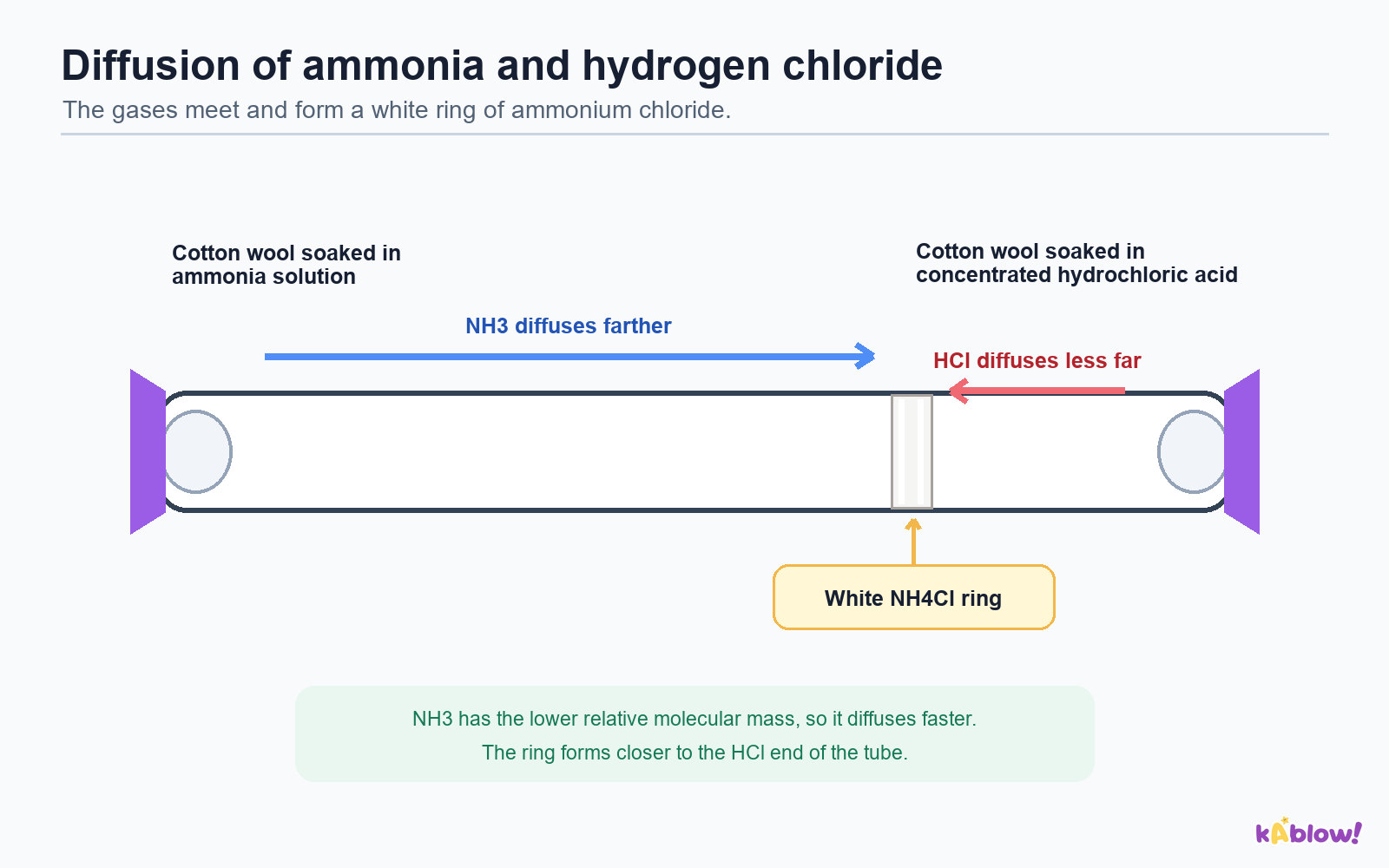
Ammonia diffuses faster than hydrogen chloride, so the ammonium chloride ring forms closer to the hydrochloric acid end.
Examples of Diffusion
- Dye spreading in water: dye particles move from high to low concentration until evenly spread.
- Deodorant spreading in a room: gas particles diffuse through the air.
- Smell of food cooking travels through the kitchen.
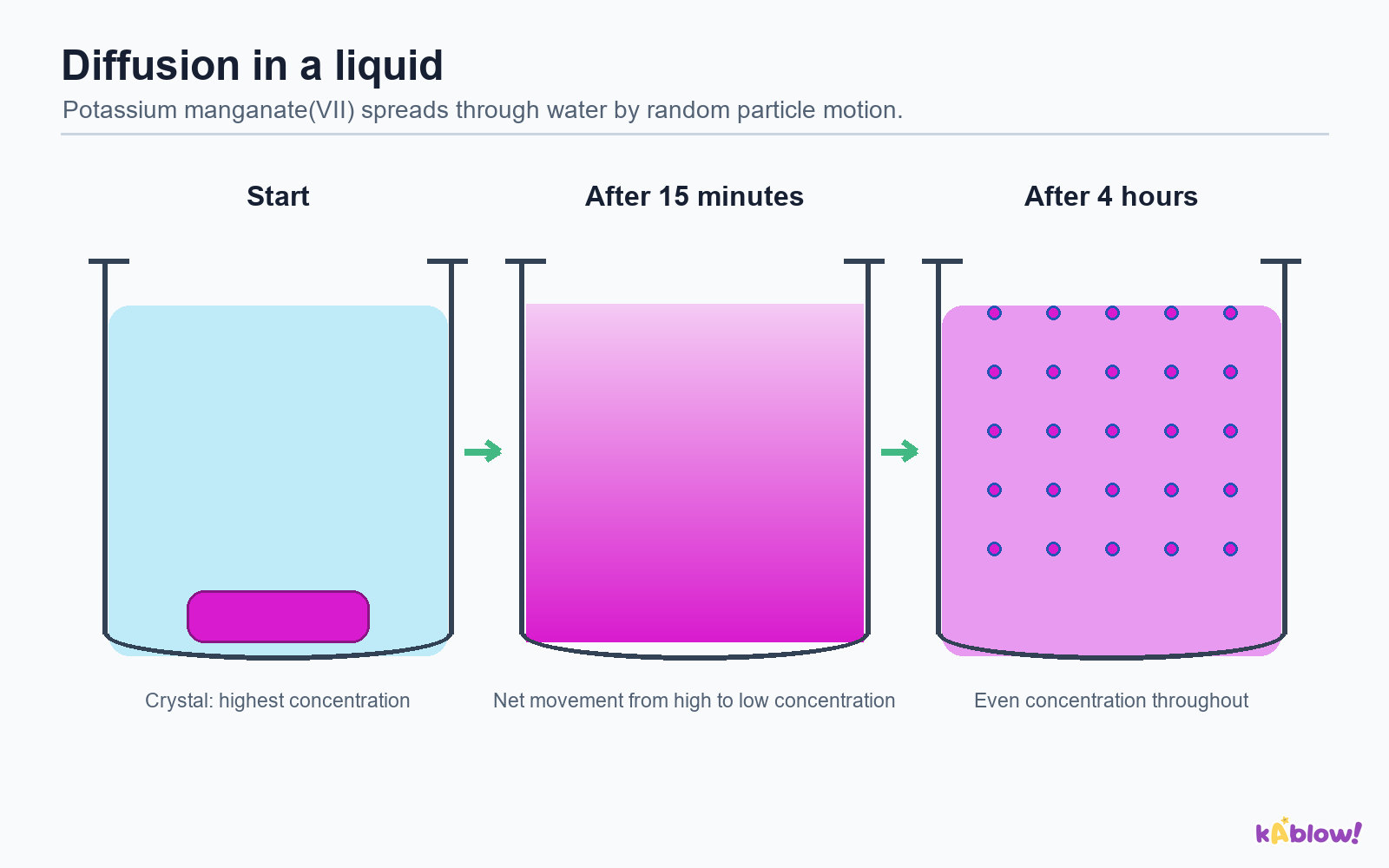
Potassium manganate(VII) particles diffuse through water from high to low concentration until the solution is evenly coloured.
Key Points to Remember
- Diffusion is not from low to high concentration – that is false.
- Diffusion happens in both liquids and gases, not just one.
- Rate of diffusion increases with temperature.
- Stirring or using a fan increases the rate of diffusion.
Particle arrangement in solids, liquids, and gases. Diffusion occurs in liquids and gases where particles can move.
投影片
練習題
免費預覽——58 題中的 8 題。註冊即可查看全部。
1.Which of the following best describes diffusion?
Easy- AMovement of particles from a high concentration to a low concentration
- BMovement of particles from a low concentration to a high concentration
- CMovement of particles only in solids
- DMovement of particles only in gases
2.In which states of matter can diffusion occur?
Easy- ALiquids and gases
- BSolids and liquids
- CSolids and gases
- DSolids, liquids and gases
3.Which of the following statements about diffusion is true?
Easy- ADiffusion happens at the same rate regardless of temperature
- BDiffusion can be sped up by heating the liquid or gas
- CDiffusion only occurs when a liquid is stirred
- DDiffusion is faster in cold liquids than in hot liquids
4.What type of motion do particles in a liquid or gas exhibit?
Easy- ARandom motion
- BVibrational motion only
- CCircular motion
- DStraight-line motion only
5.Two beakers contain water at different temperatures. Beaker A is at 20 °C, Beaker B is at 50 °C. Red dye is added to both. In which beaker will the dye spread faster?
Medium- ABeaker A, because cold water has more space between particles
- BBeaker B, because the particles have more kinetic energy and move faster
- CBeaker A, because diffusion is slower at higher temperatures
- DBeaker B, because hot water has fewer particles
6.A student sprays deodorant in a room. How does the deodorant spread throughout the room?
Easy- ABy convection currents only
- BBy diffusion of deodorant particles from high to low concentration
- CBy evaporation of the liquid into the air
- DBy the force of gravity pulling the particles
7.A fan is turned on in a room where deodorant has been sprayed. What effect does this have on the rate of diffusion?
Easy- AIt decreases the rate because the fan blows particles away
- BIt increases the rate because the fan mixes the air, moving particles faster
- CIt has no effect on the rate of diffusion
- DIt stops diffusion completely
8.Which of the following is an example of Brownian motion?
Medium- AThe movement of pollen grains suspended in water as seen under a microscope
- BThe spreading of a smell across a room
- CThe flow of water through a pipe
- DThe movement of a gas from a high-pressure to a low-pressure region
歷屆試題
這個主題的歷屆試題練習即將推出。
即將推出