Earth's atmosphere
邊玩邊學
回答這些題目賺取能量,接著就能釣魚、探索。不需要帳號。
給教育者: 為 Earth's atmosphere(KS3 Science、Chemistry)準備好可直接使用的課程投影片, 複習筆記, 圖表——用於你的課程,或把這個主題當成互動班級活動,讓學習者以即時遊戲的方式進行。
課程筆記
Composition of Earth's Atmosphere
- Nitrogen is the most abundant gas, making up 78% of the atmosphere.
- Oxygen is the second most abundant at 21%.
- Argon accounts for 0.9%.
- Carbon dioxide is present at 0.04%, along with small amounts of other gases.
Early Atmosphere
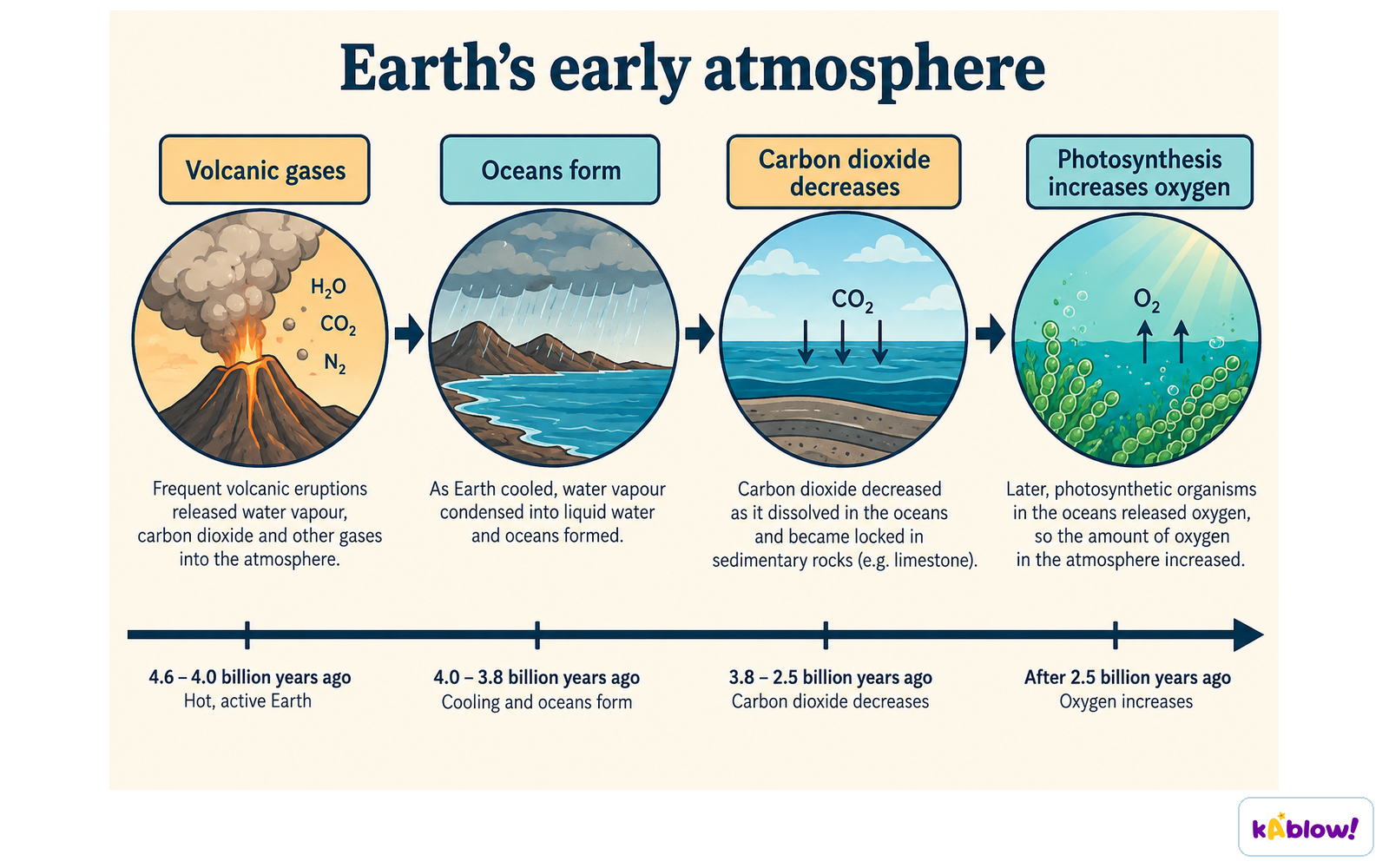
- Earth formed about 4.5 billion years ago with intense volcanic activity.
- The early atmosphere consisted mostly of carbon dioxide and some water vapour.
- As Earth cooled, water vapour condensed to form oceans.
Volcanic gases contributed to Earth’s early atmosphere. Water condensed into oceans, and photosynthetic organisms later increased atmospheric oxygen.
Role of Cyanobacteria
- Cyanobacteria were single-celled organisms that carried out photosynthesis.
- Photosynthesis uses carbon dioxide and water to produce glucose and oxygen.
- Cyanobacteria were responsible for producing oxygen in the atmosphere.
Greenhouse Gases and Global Warming
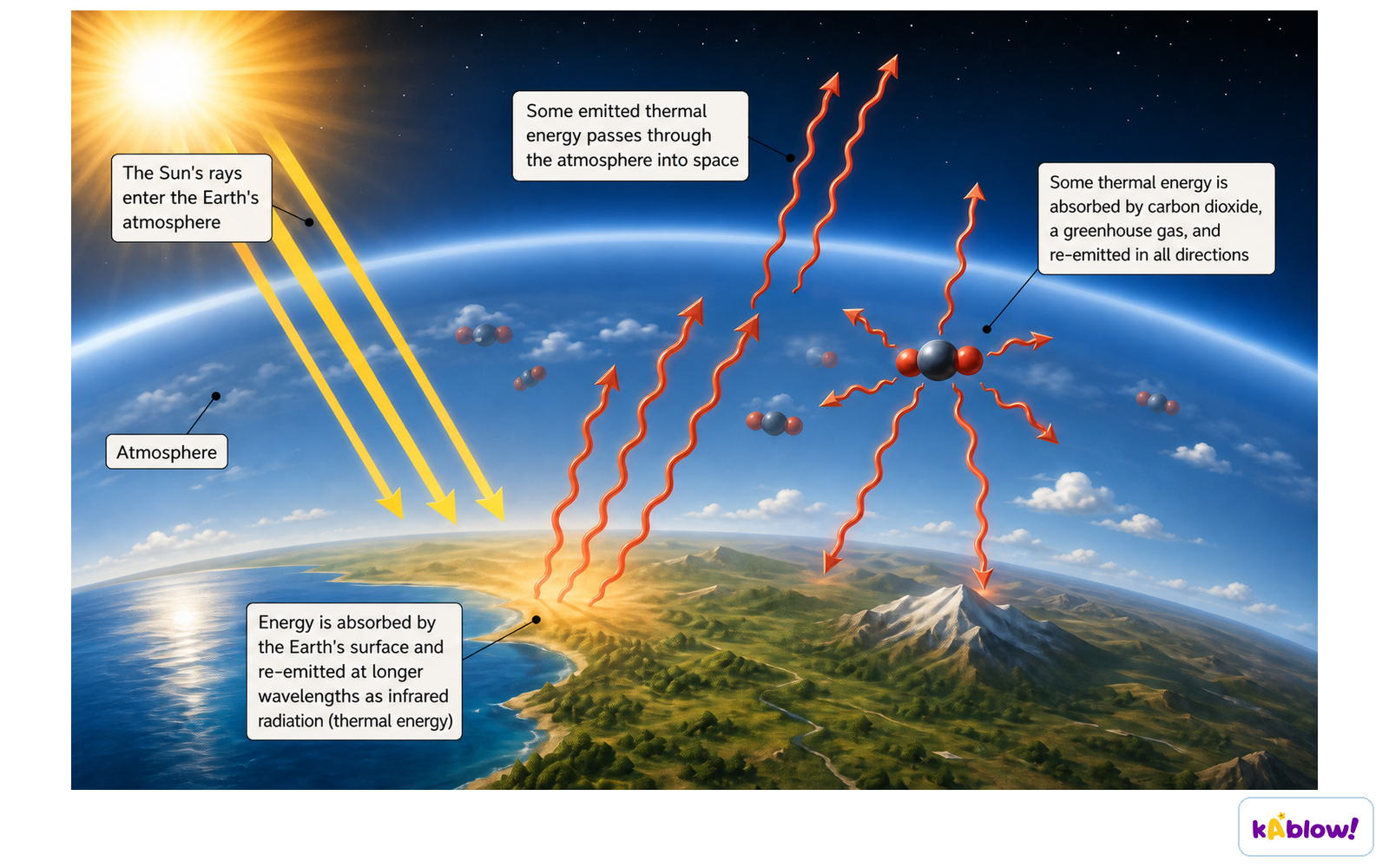
- Carbon dioxide is a greenhouse gas that contributes to global warming.
- Greenhouse gases reflect some infra-red radiation back to Earth, raising the average temperature.
- Burning fossil fuels (coal, oil, gas) increases atmospheric carbon dioxide.
- Effects of global warming include extreme weather, melting polar ice caps, and flooding of low-lying areas.
Diagram showing how the greenhouse effect occurs
Particle arrangement in solids, liquids, and gases. The atmosphere is a mixture of gases with particles far apart and moving rapidly.
投影片
練習題
免費預覽——40 題中的 8 題。註冊即可查看全部。
1.Which gas is the most abundant in Earth's atmosphere?
Easy- ANitrogen
- BOxygen
- CArgon
- DCarbon dioxide
2.What percentage of Earth's atmosphere is oxygen?
Easy- A78%
- B21%
- C0.9%
- D0.04%
3.Earth's early atmosphere consisted mostly of which gas?
Medium- ANitrogen
- BOxygen
- CCarbon dioxide
- DArgon
4.Which organism was responsible for producing oxygen in Earth's early atmosphere?
Medium- ACyanobacteria
- BPlants
- CAlgae
- DAnimals
5.How do greenhouse gases cause global warming?
Medium- AThey absorb all incoming solar radiation.
- BThey reflect infra-red radiation back to Earth.
- CThey prevent oxygen from entering the atmosphere.
- DThey increase the amount of water vapour.
6.What is global warming?
Easy- AA decrease in Earth's average temperature.
- BAn increase in Earth's average temperature.
- CAn increase in the amount of oxygen in the atmosphere.
- DA decrease in the amount of carbon dioxide.
7.Burning fossil fuels increases the amount of which gas in the atmosphere?
Easy- ANitrogen
- BOxygen
- CCarbon dioxide
- DArgon
8.Which of the following is NOT a fossil fuel?
Easy- AOil
- BCoal
- CNatural gas
- DWood
歷屆試題
這個主題的歷屆試題練習即將推出。
即將推出